Home textiles in India have long been tied to the country’s deep-rooted heritage and craftsmanship. However, the sector remained largely focused on exports and domestic utility-based consumption for much of the post-independence era. In recent years, though, the landscape has started to transform. What was once limited to basic household items like bedsheets, towels, and curtains has now evolved into a lifestyle-driven industry that emphasizes design, sustainability, and personal expression.
India’s home textile industry is undergoing a significant shift, fueled by changing consumer preferences and a rising desire for elevated living standards. As more Indians invest in their living spaces, the sector is seeing increased demand for premium products that offer both style and comfort
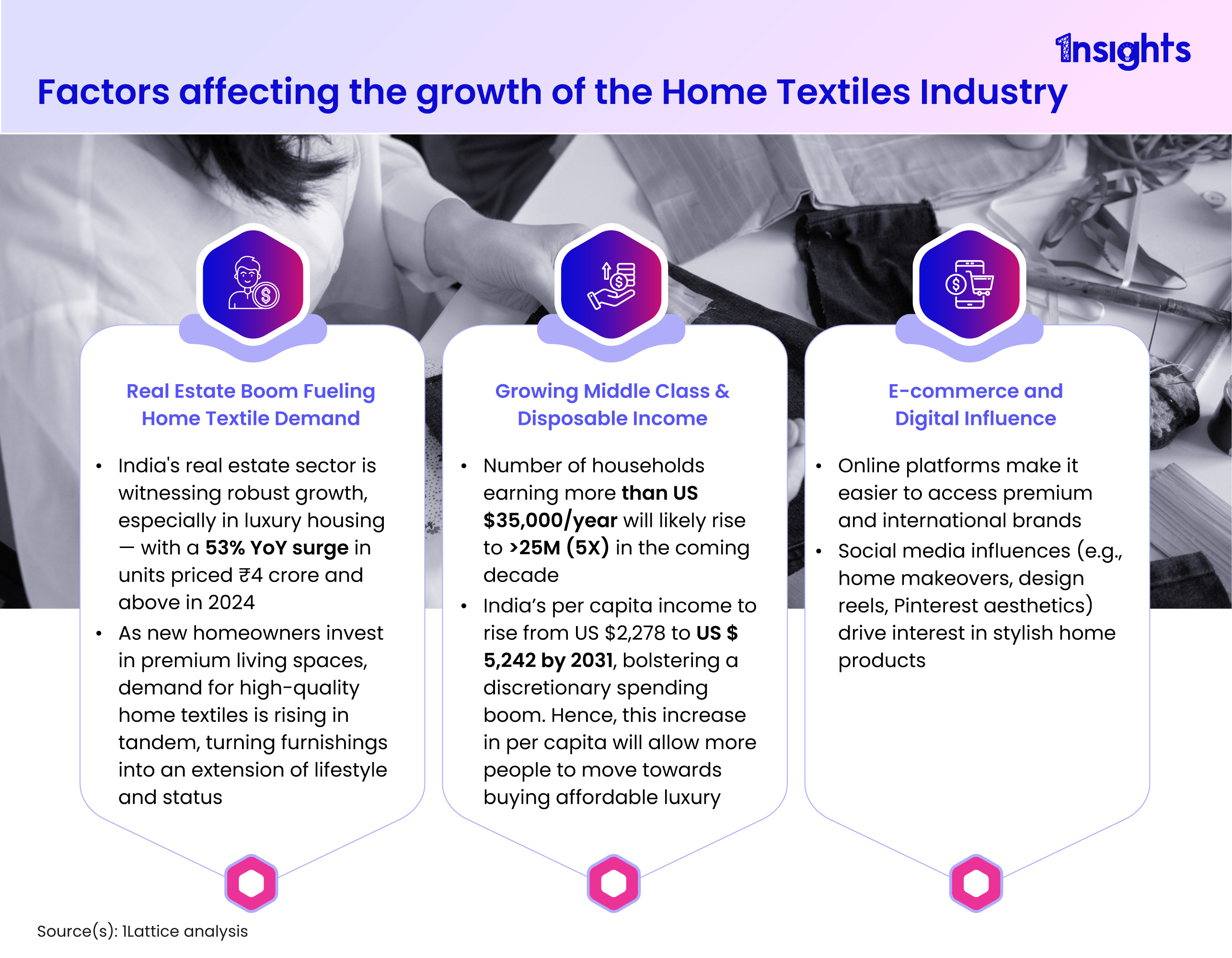
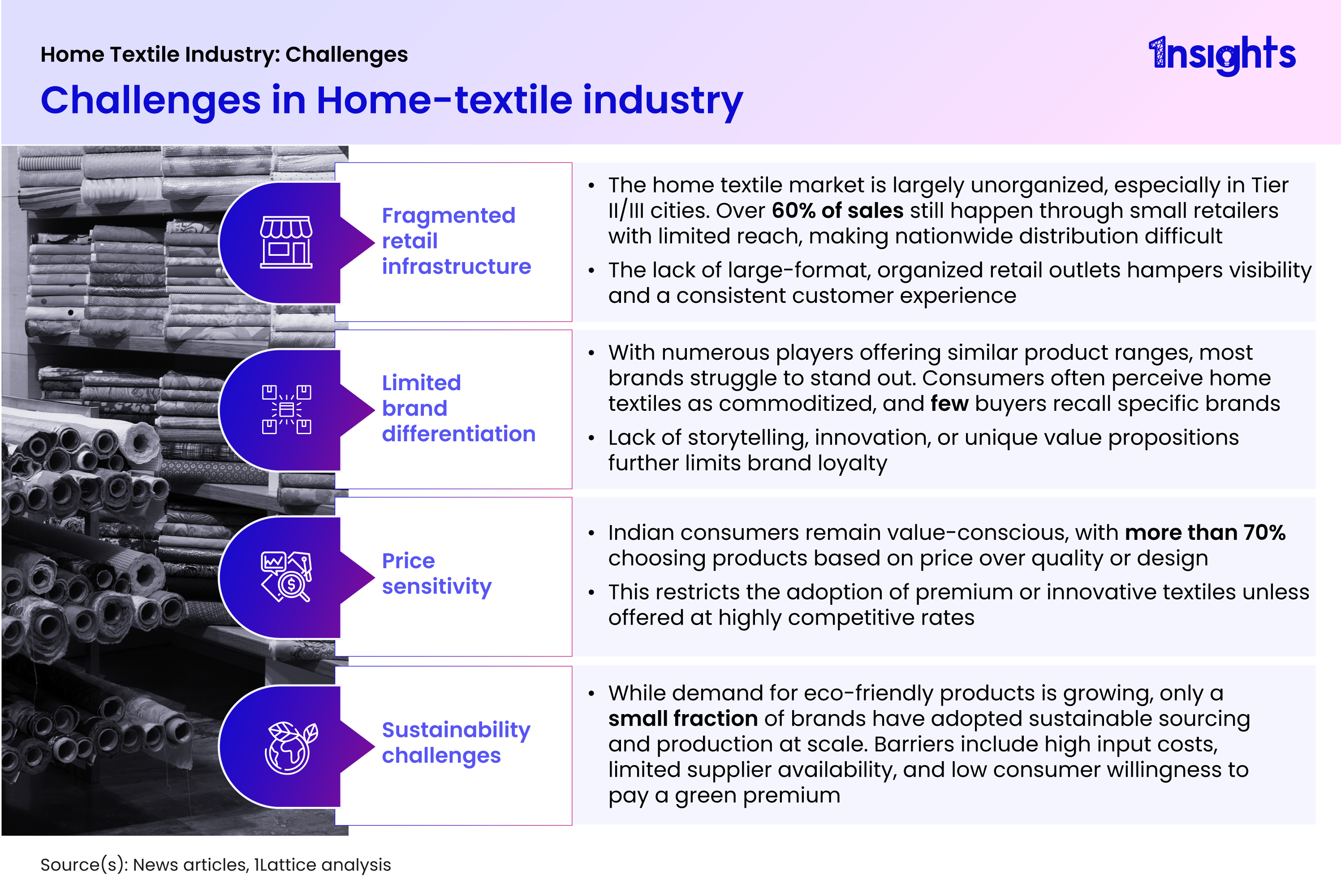
This growth is being driven by a confluence of socio-economic factors. Rising disposable incomes—particularly among the middle and upper-middle classes—are empowering consumers to invest more in home improvement and interior décor. Rapid urbanization is not only increasing the number of new homes but also amplifying the emphasis on stylish, functional interiors. The pandemic has further deepened the emotional connection people have with their homes, encouraging the creation of personalized, comforting living spaces. At the same time, the rise of e-commerce has broadened access to curated, design-forward collections, reaching consumers even in semi-urban areas. However, the industry continues to face notable challenges. Retail infrastructure remains fragmented, especially outside major metropolitan areas, limiting consistent access and brand visibility. In an increasingly crowded market, many brands struggle to stand out and foster long-term consumer loyalty. Price sensitivity remains a key factor, particularly in regions where affordability takes precedence over aspiration. Additionally, while interest in sustainable products is on the rise, high production costs for eco-friendly textiles still present a significant hurdle for many manufacturers and brands
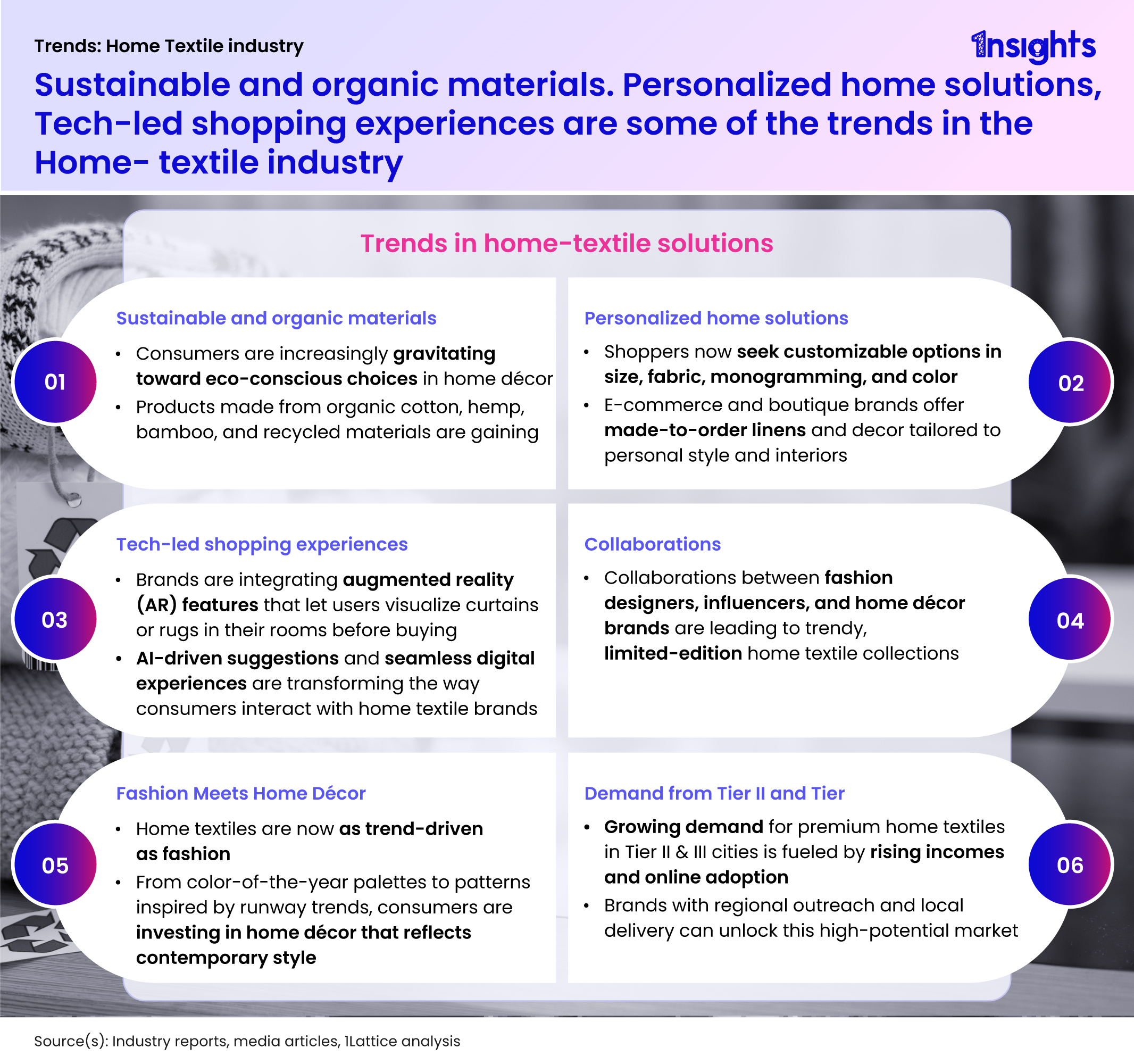 Global and local brands are beginning to take note of this shift. Collaborations between fashion and home décor companies are producing collections that feel fresh, aspirational, and in sync with broader design trends. Tier II and III cities, which are seeing a significant rise in aspiration and purchasing power, represent a massive opportunity. However, the lack of premium retail infrastructure in these areas remains a challenge that brands will need to creatively overcome
In conclusion, the home textiles sector in India is poised for a vibrant evolution. As consumer expectations continue to change, and home becomes more than just a place to live—turning into a statement of lifestyle and personality, brands that can respond with innovation, design sensibility, and purpose-driven strategies will find themselves well-positioned to lead in this dynamic and expanding market.
Our Experience
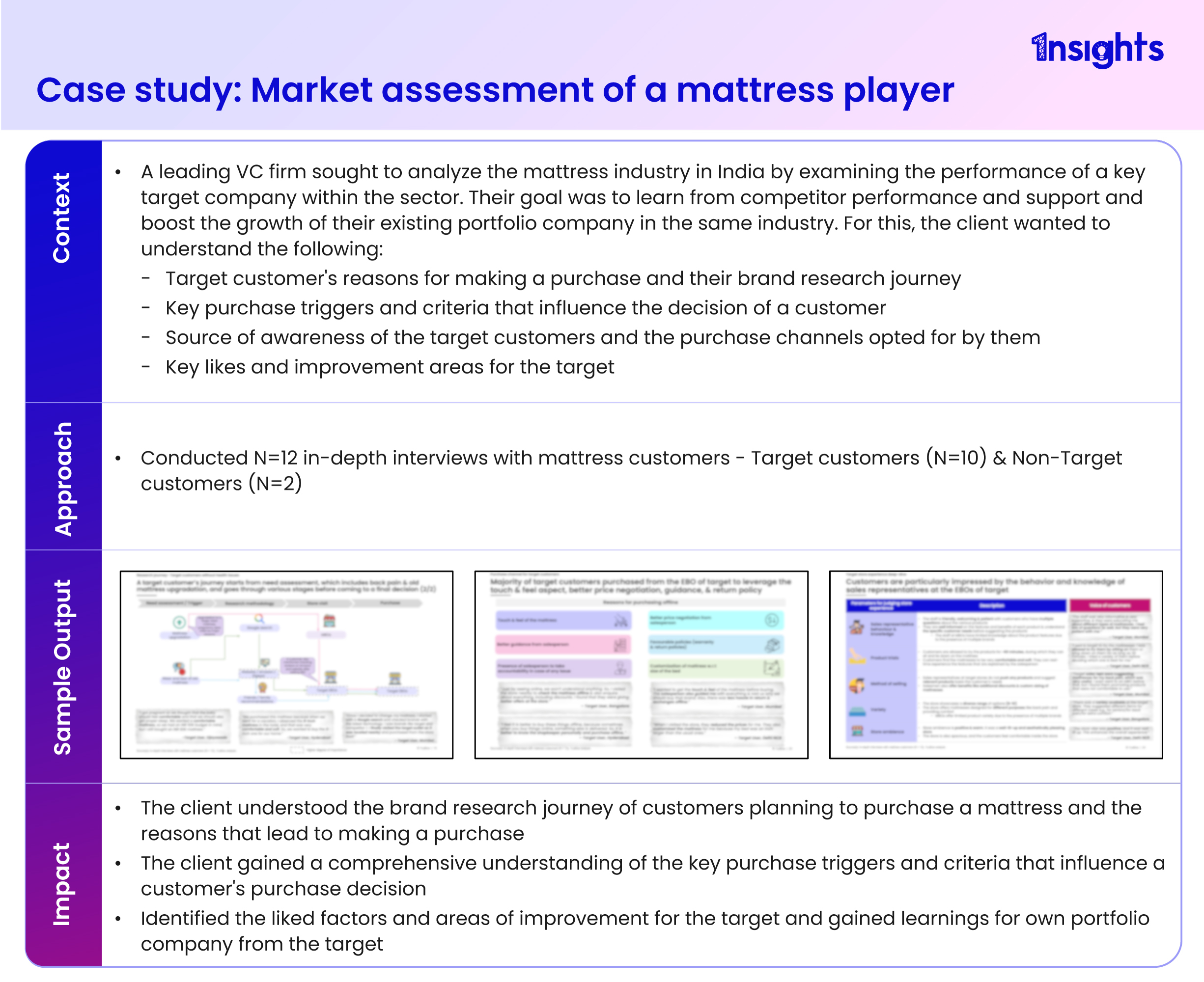
We recently collaborated with a leading venture capital firm to evaluate the performance of a key target company in India’s mattress industry. The goal was to benchmark this company against its competitors and uncover actionable insights to support the growth strategy of the client’s existing portfolio brand. Our approach combined in-depth stakeholder interviews with a comprehensive consumer survey, allowing us to explore key aspects of buyer behavior, ranging from purchase triggers and decision-making criteria to brand discovery paths, preferred sales channels, and consumer perceptions of the target brand’s strengths and areas for improvement