
NFTs became a rage primarily in 2021, with netizens flocking to ‘purchase’ digital artwork using unique ‘digital tokens’ to establish ‘authority’ of this digital ‘asset’. Fundamentally, this looks like buying or trading stock/equity on public markets which signifies ownership of a part of the company. However, NFTs are purely digital, cryptographic assets on a blockchain that are uniquely linked to their owner – in layman’s terms – a virtual document that certifies virtual ownership of a virtual good. So, while the first NFT got created in May 2014 - the value ascribed to these tokens to date is often, intangible – making it difficult for investors to tangibly value the startups whose backbone is built on this virtual reality.
As the term non-fungible suggests, this digital asset is not replaceable and is cryptographically assigned to prove the authority of the purchaser. "Tokenizing" this digital asset makes its buying, selling, and trading an efficient process with the added benefit of reducing fraud. NFT could be anything digital – art, collectibles, gaming avatars, movies, film stars, and the list is endless.
As per a report by NFT Club, India ranks third in terms of # NFT companies in the world, just behind Singapore and the US. Not just startups, India ranks fifth in the number of Google keyword searches for keywords related to NFT.
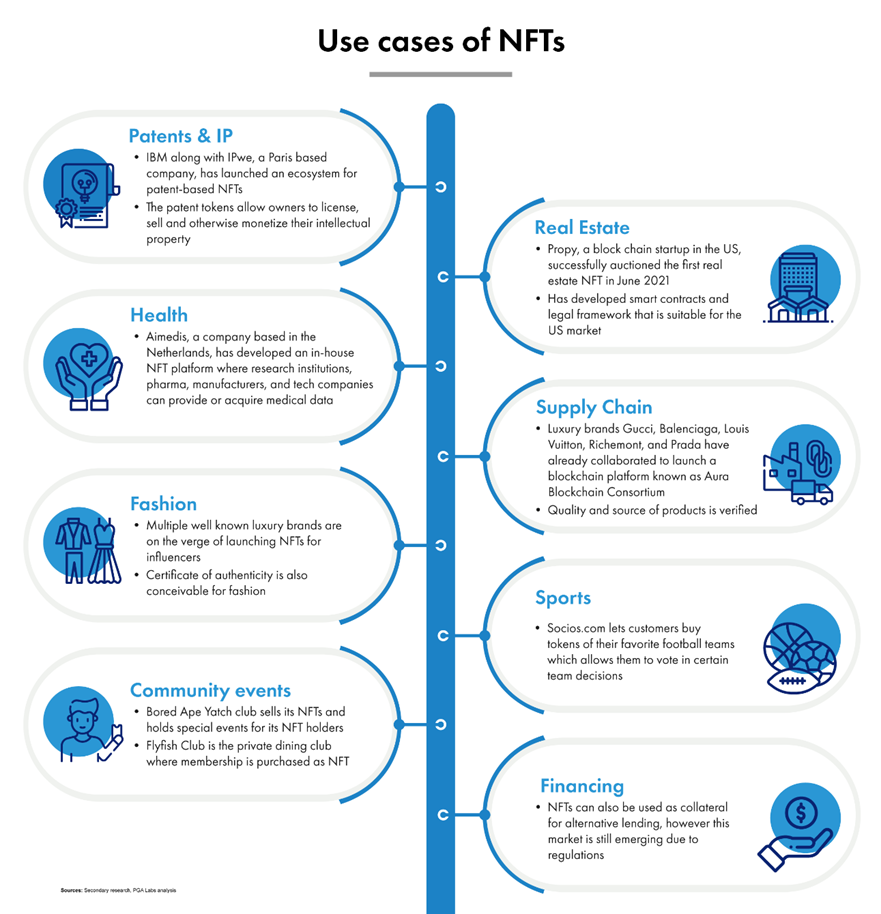
Though nascent, NFTs are finding applications across a multitude of use cases for instance patents, establishing unique identities, data management & transfers, among others.
A quick understanding of how founders are creating the ecosystem around NFTs – and which are emerging players/trends in this sector.
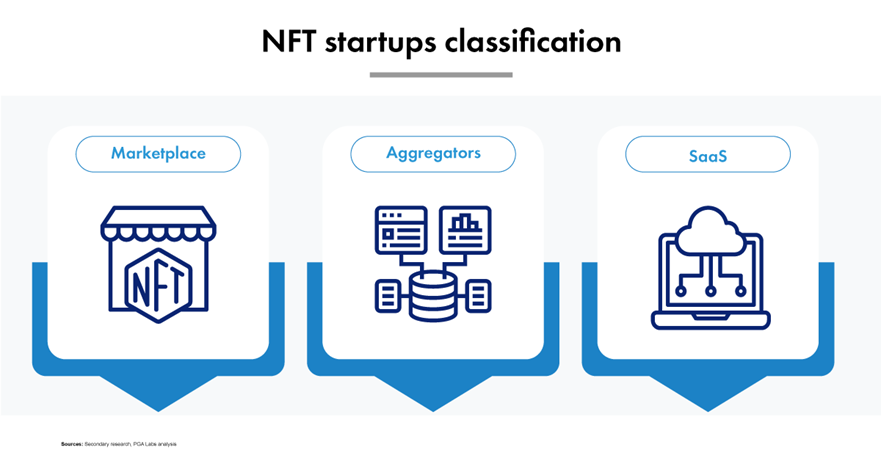
As of today, NFT startups can be classified primarily into 3 categories:
- Marketplace: Companies’ issuing NFT based on certain themes, backed by a campaign. Eg: OpenSea
- Aggregators: This is a P2P marketplace for NFTs where users can purchase, sell and auction NFTs. Eg: Genie
- SaaS: Outsourced services for launching NFT store and marketplace. Eg: NFTically
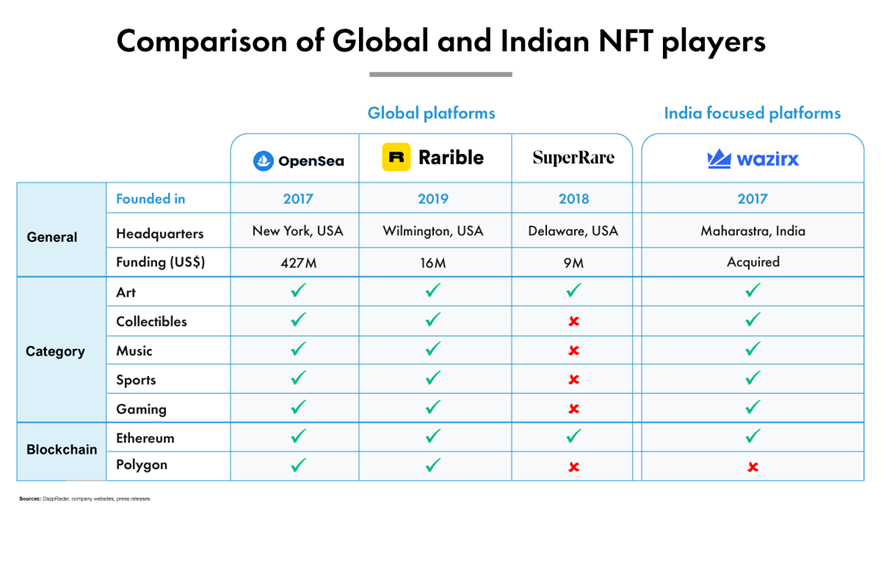
Among these, most startups have emerged in the marketplace model both in India (WazirX) and globally (OpenSea, Rarible and SuperRare).
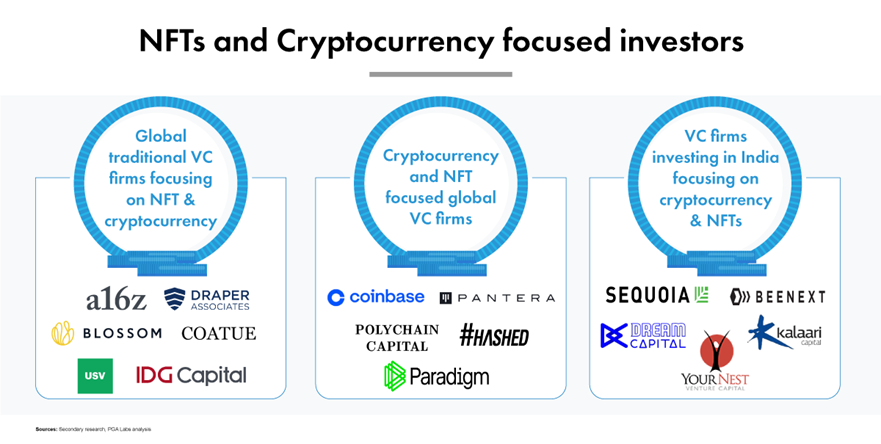
Given the widescale applicability and potential of NFTs, startups in this domain have garnered significant investor attention over the last 18 months – both by traditional VC firms and Crypto-focused funds. For instance, Andreessen Horowitz and Paradigm, two of the biggest cryptocurrency venture fund managers have announced their latest USD $2.5B and USD $4.5B funds respectively, solely dedicated to seed and venture investments on upcoming NFT-based startups. In India, Sequoia Capital and Antler, along with several angel investors have been active on Indian NFT startups and have shown interest and continue to evaluate this space for the near future
Despite
various regulatory concerns and volatility issues, many experts remain bullish
on NFTs and believe that what currently looks like collectibles, will soon turn
into assets as the gates of Web3 and Metaverse open. Further, experts claim
NFTs to be the most exciting development in the Crypto domain in the past few
years and will define how brands interact with consumers in this virtual world.