
In a bid to disrupt Ecommerce in India, startups have been ‘quick’ to enhance shopping experiences for customers. In a value-conscious population, price has long been the most important purchase criteria (KPC) across categories – but does that hold true even for Q-commerce? How does category, assortment, need, customer persona influence the selection criteria?
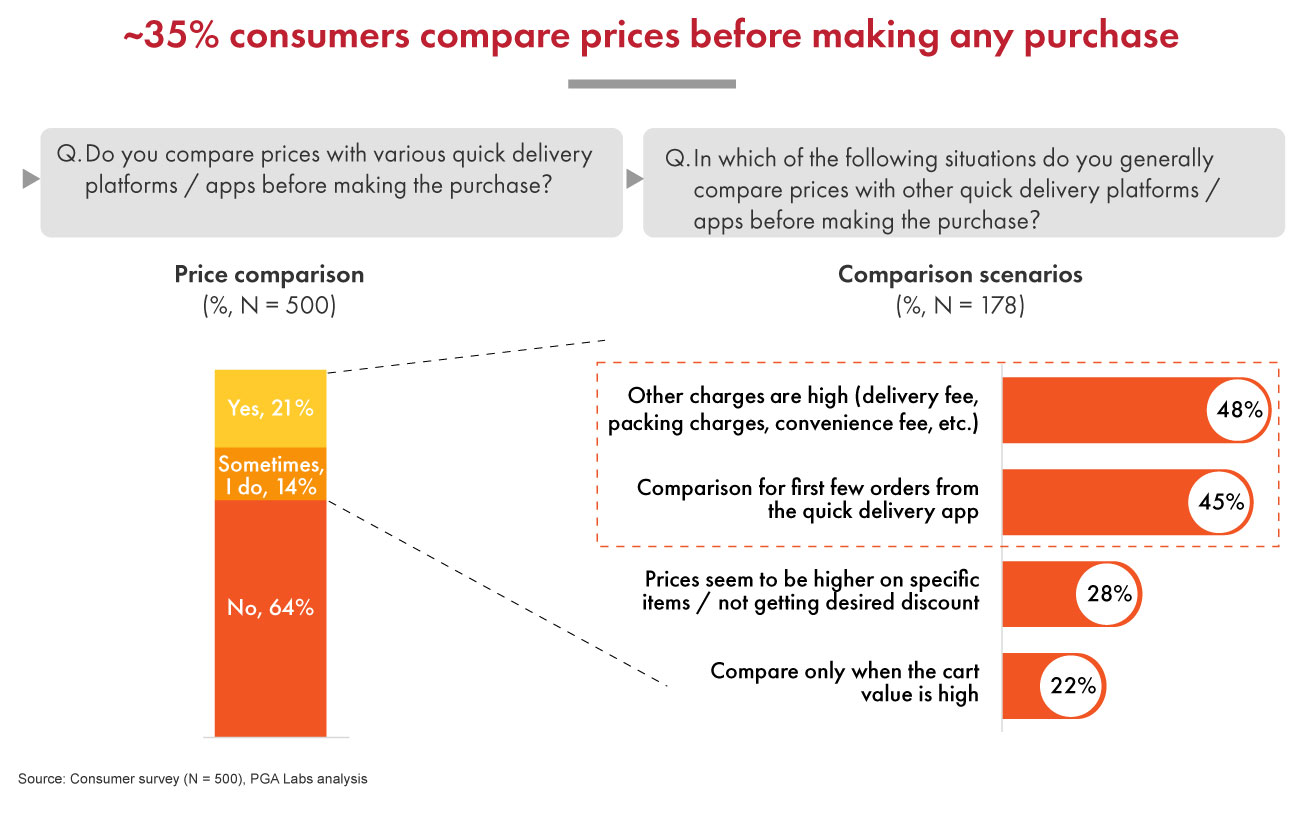
According to a recent PGA Labs study, we found that Q-commerce customers are no longer prioritizing product price across apps before making a purchase. Market leaders have started seeing a defined use case for their respective customer segments. Those who do indulge in price comparisons typically are new users who just started using these apps (< 1 month).
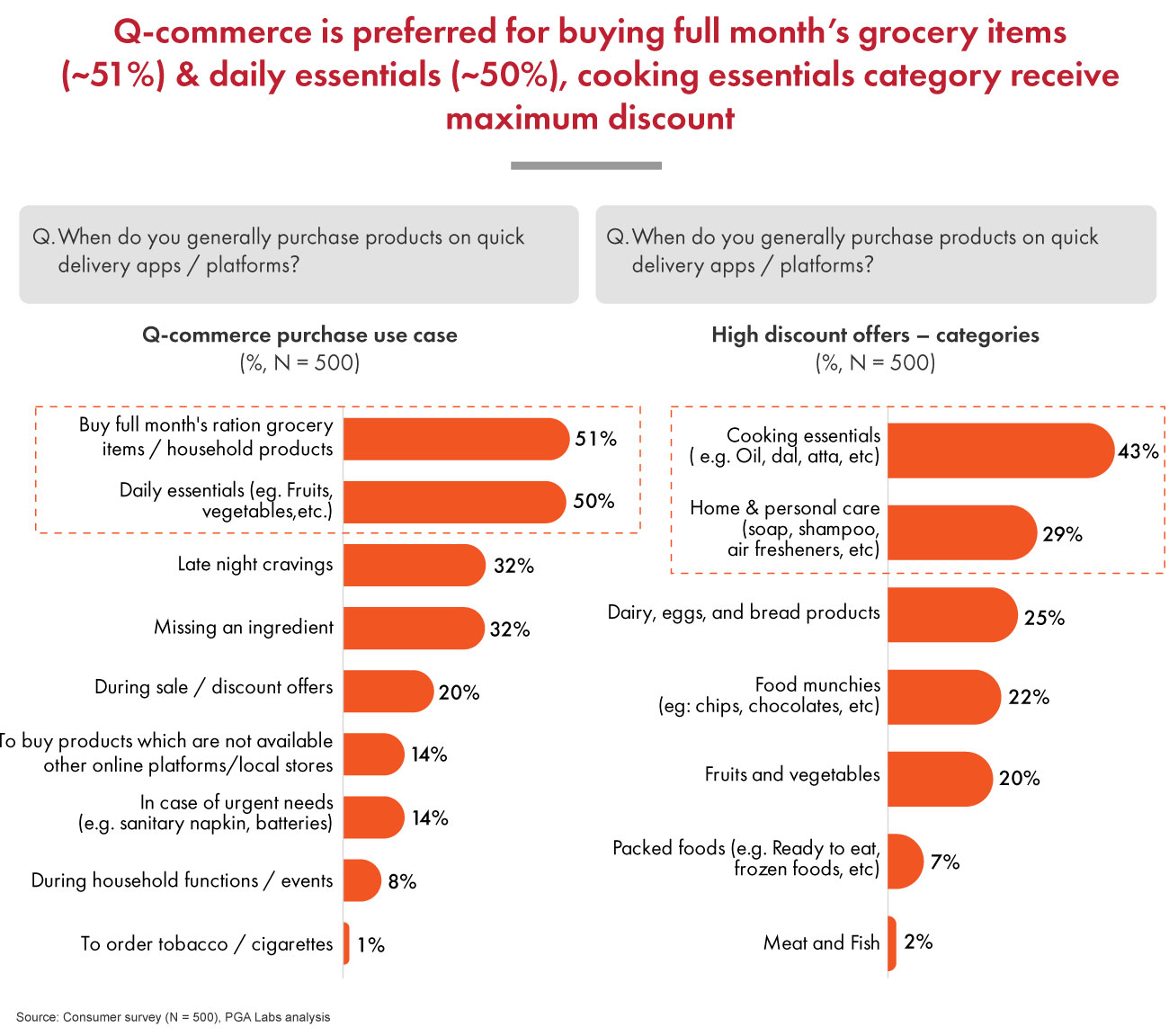
Monthly groceries and daily essentials are still the primary use case for Q-commerce apps. However, late-night cravings and emergency ingredients are closing following suit. Cooking essentials and personal care products which perceived to have the highest discounts on offer across apps.
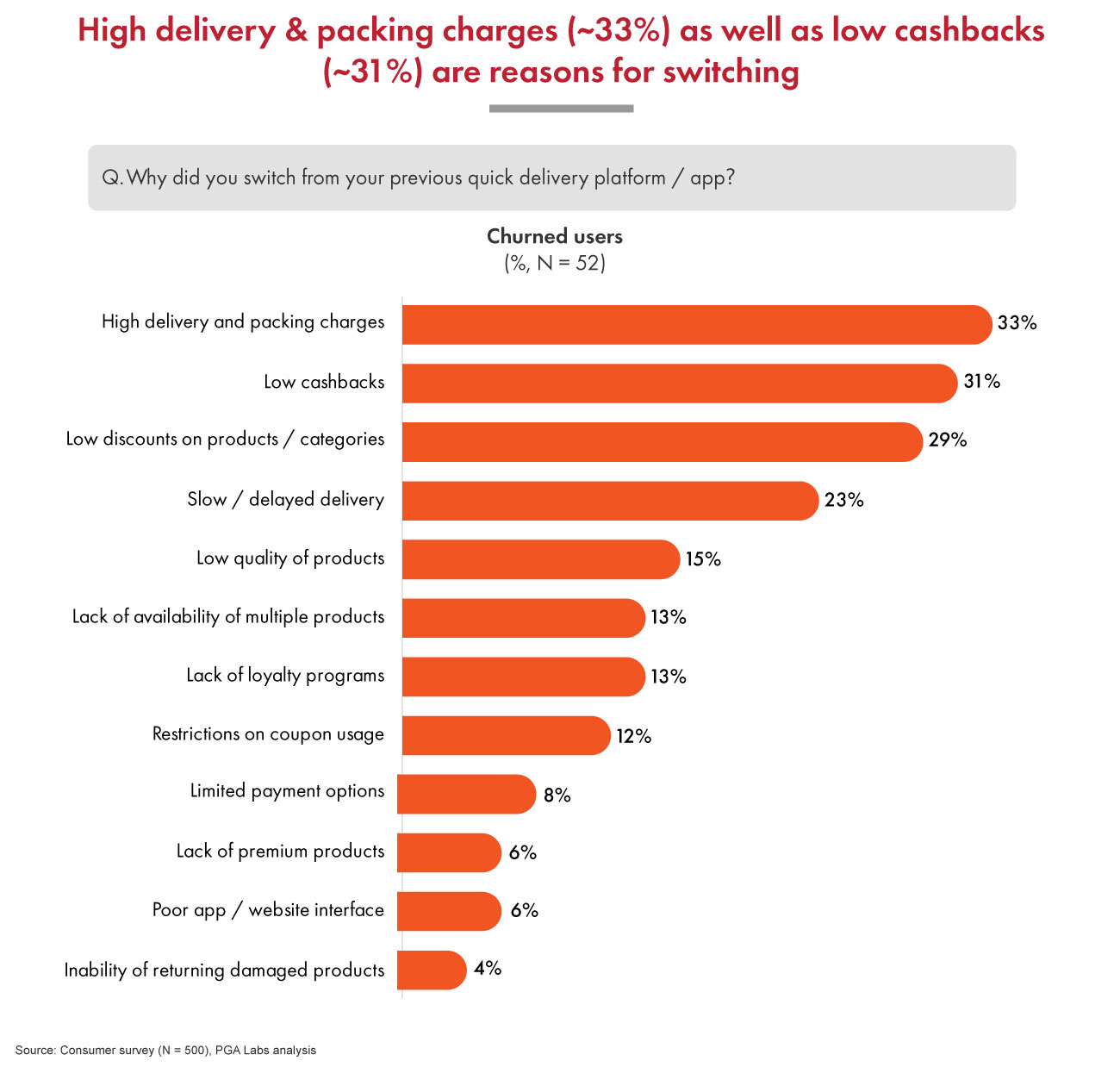
High delivery and packing charges are major triggers for customers to churn to a different app. This is followed by lower cashbacks and discounts.
While these are early trends, Indian customers are gradually placing ‘utility’ over price albeit in a niche category like Q-commerce. Would be interesting to see how this pans out in other categories where customers get comfortable paying a premium for quality services across other categories as well.
Authored by (at the time of writing):
Vaibhav Tamrakar, Senior Vice President - PGA Labs