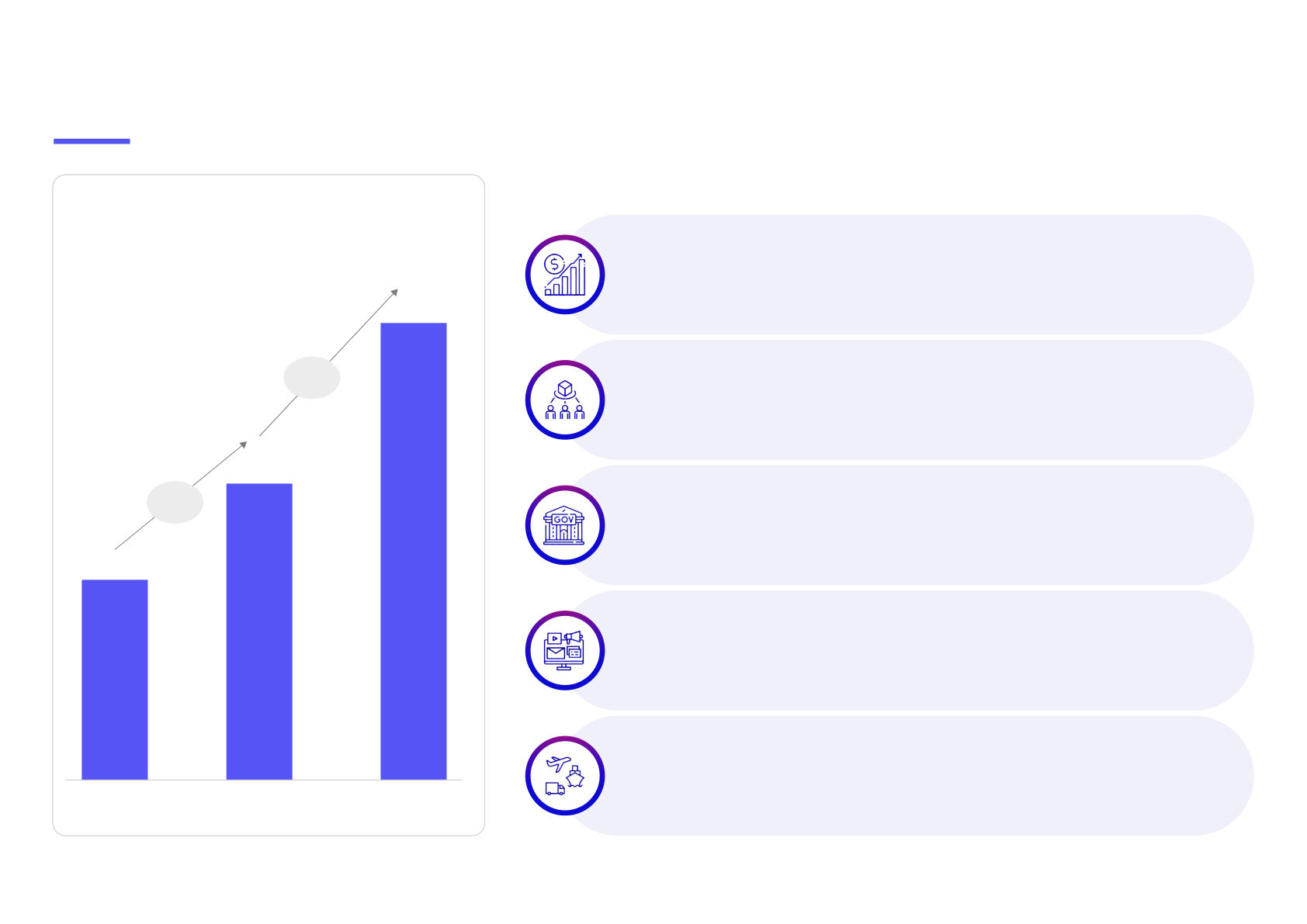
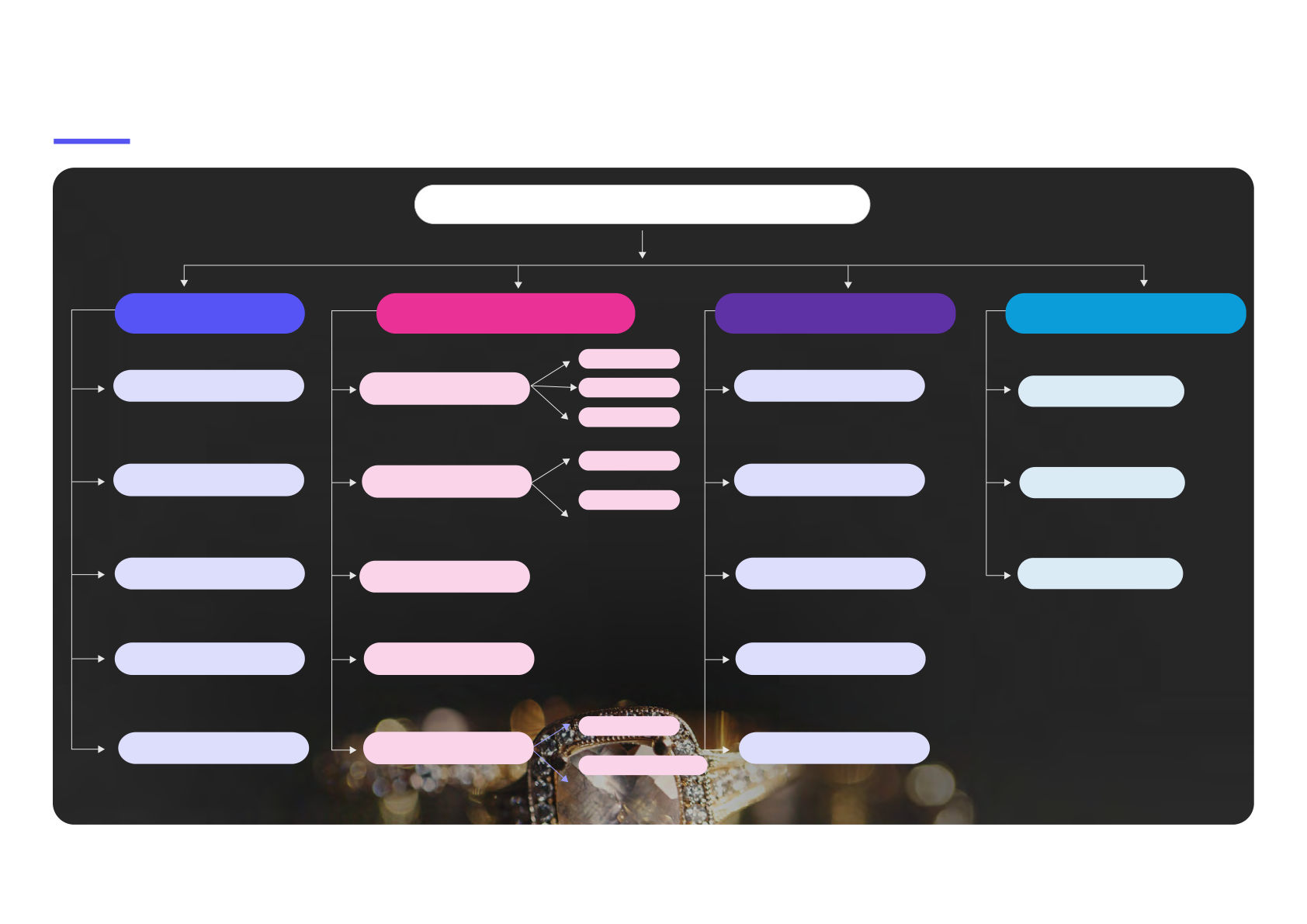
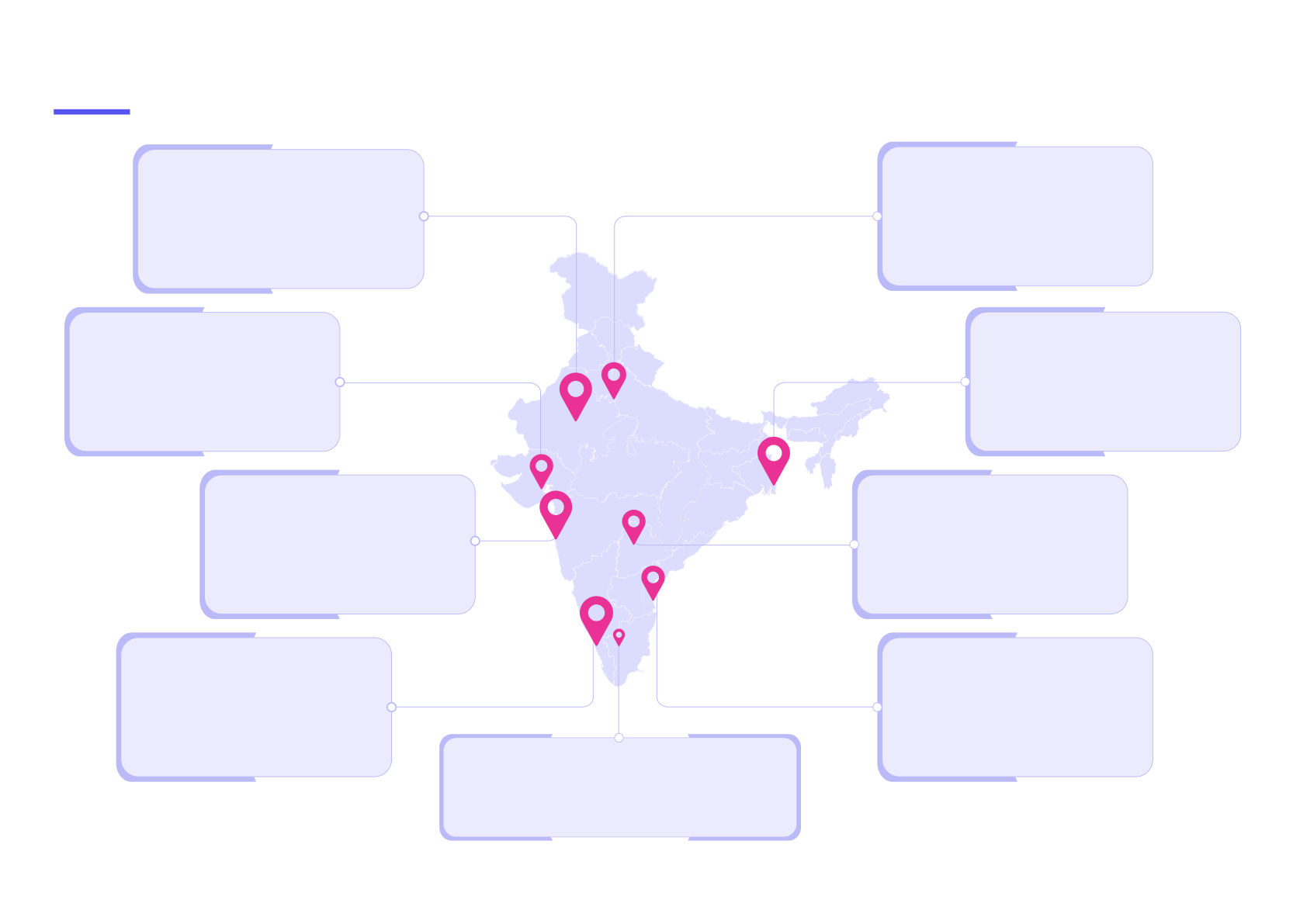
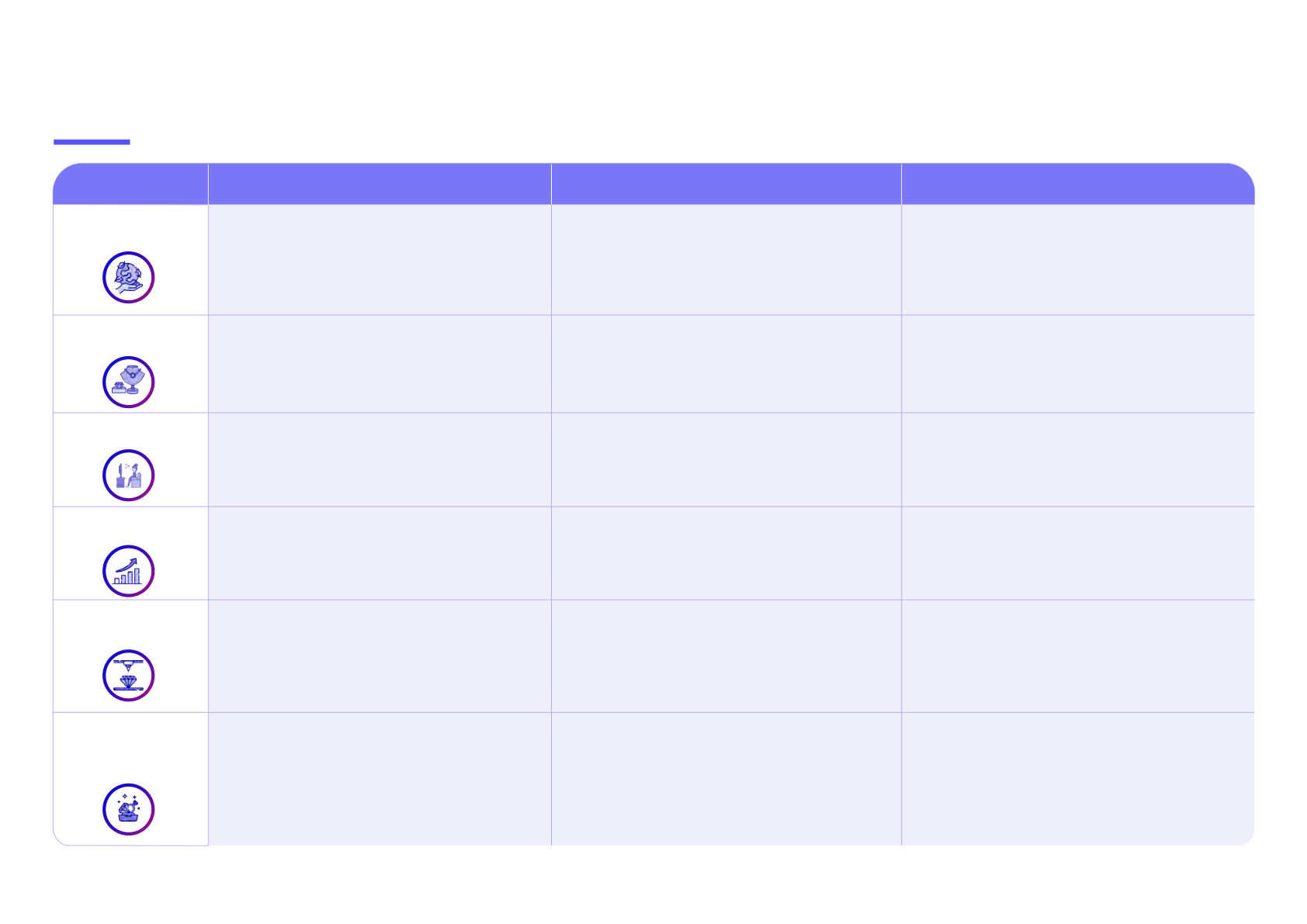
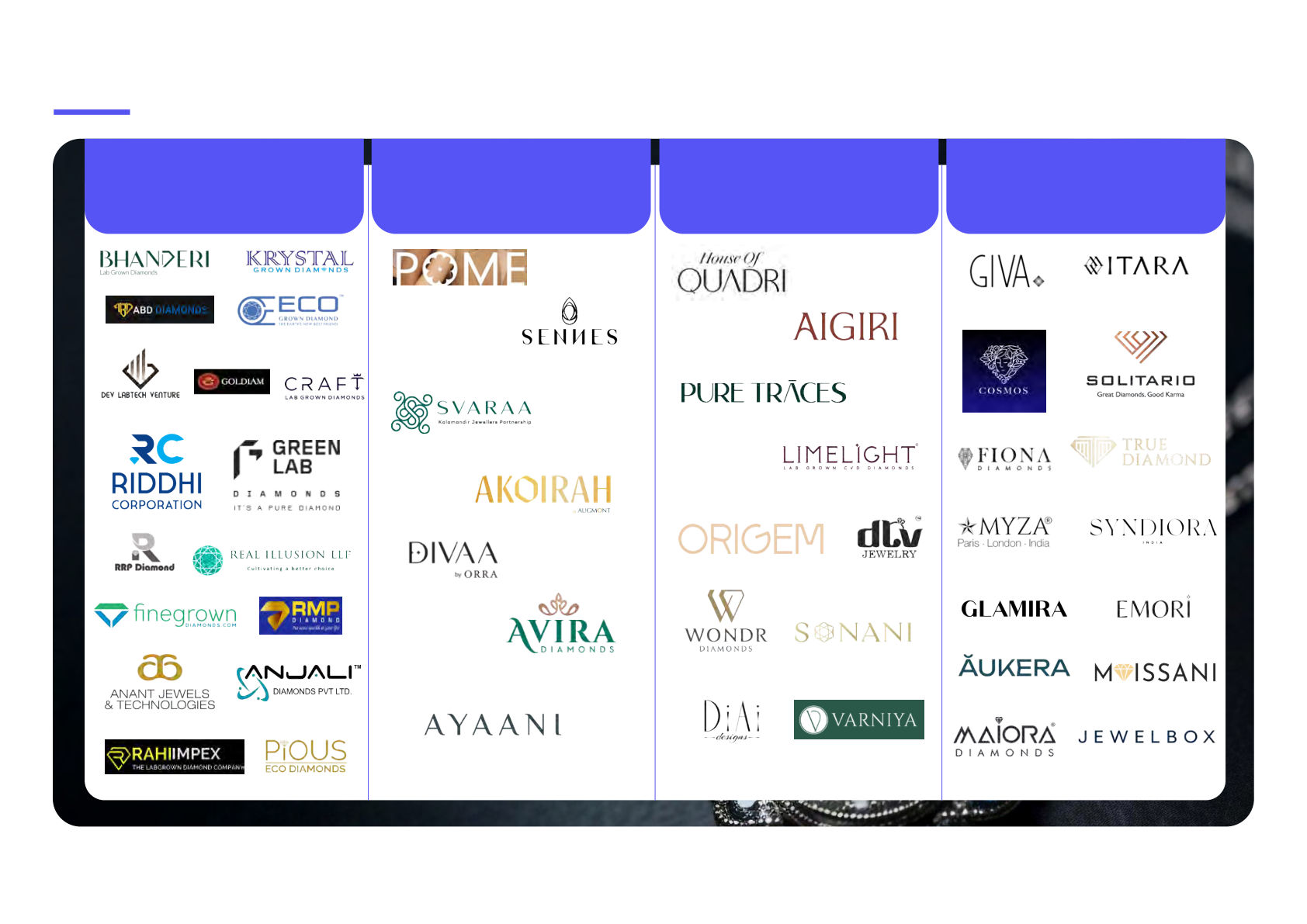
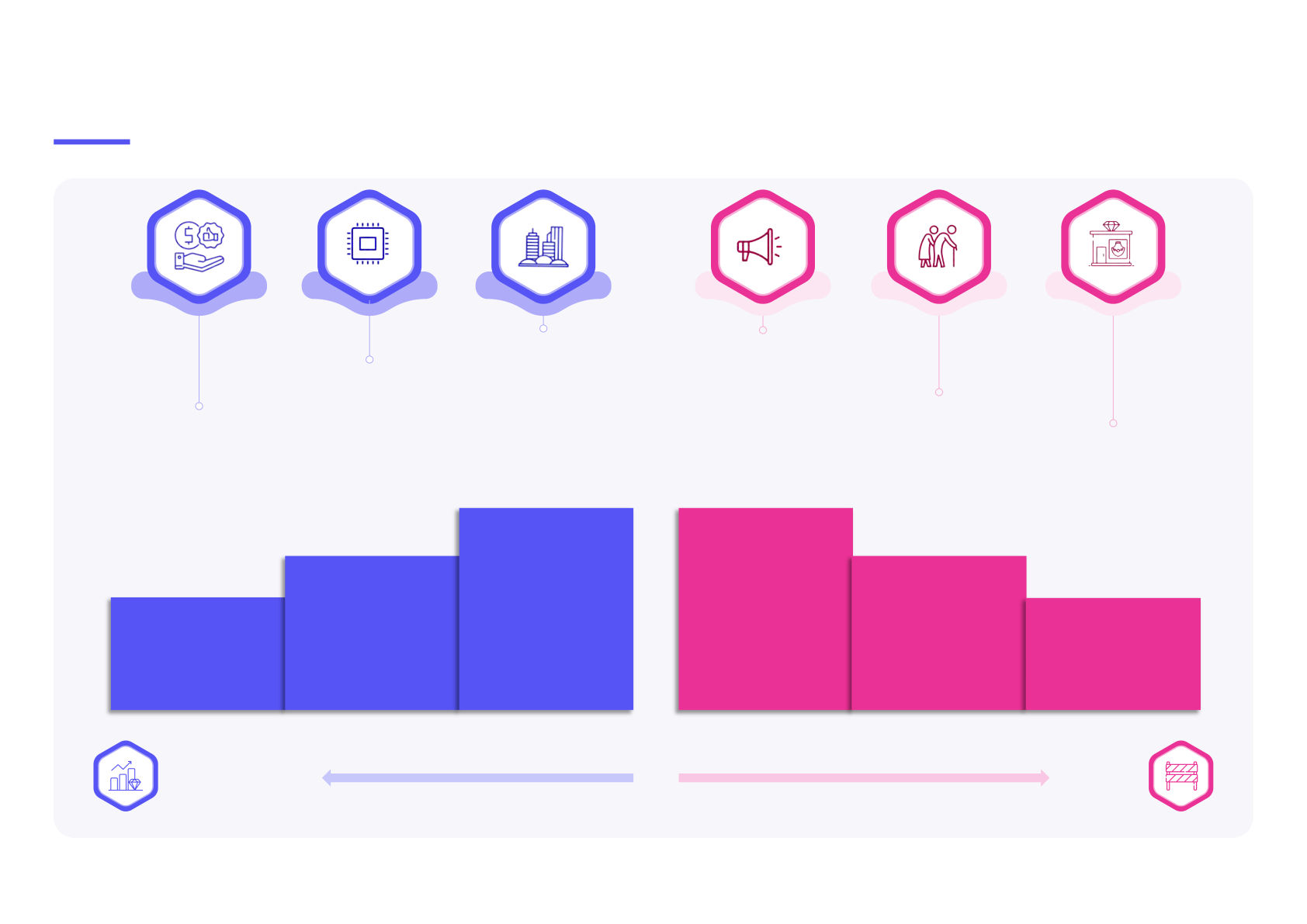
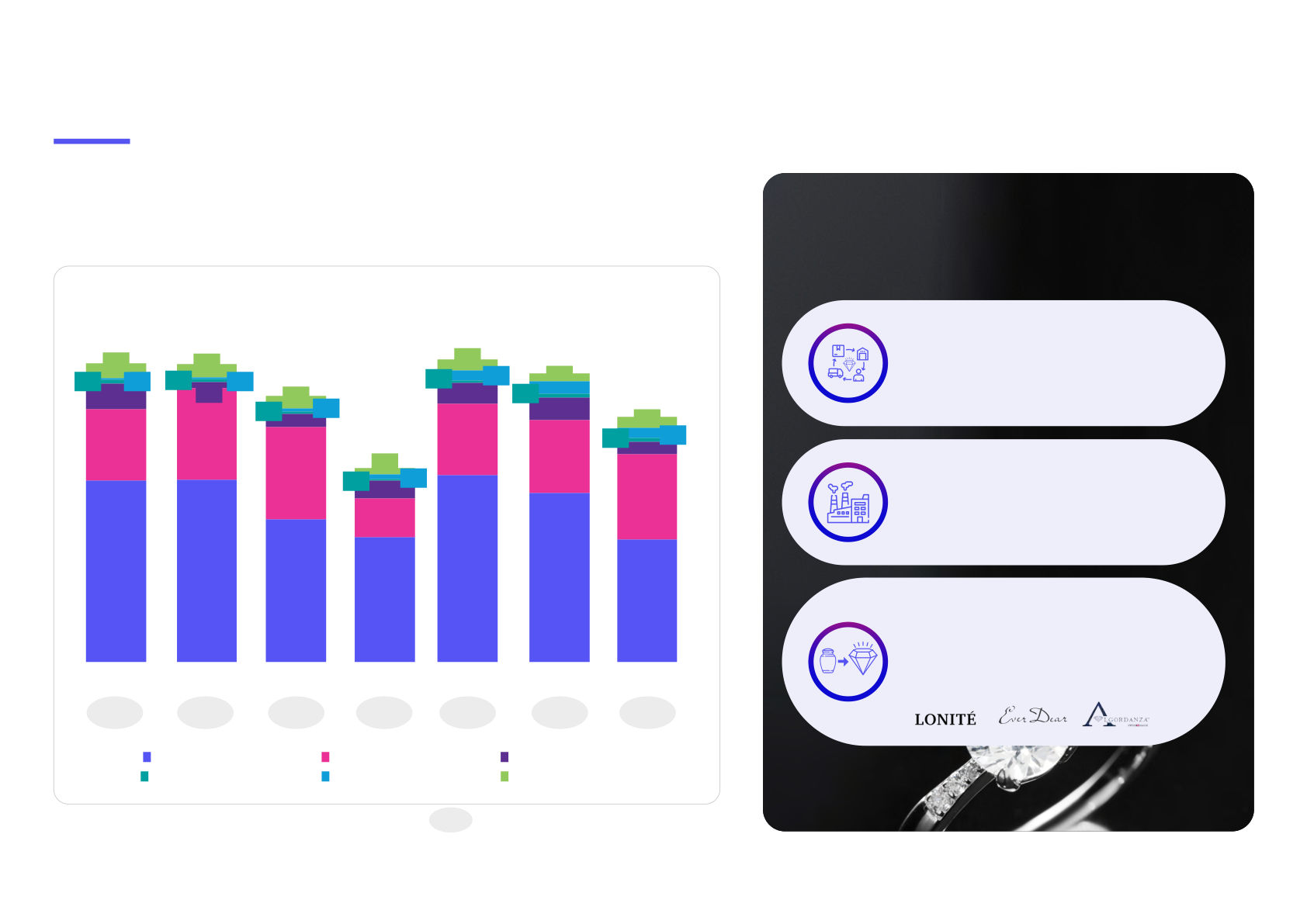
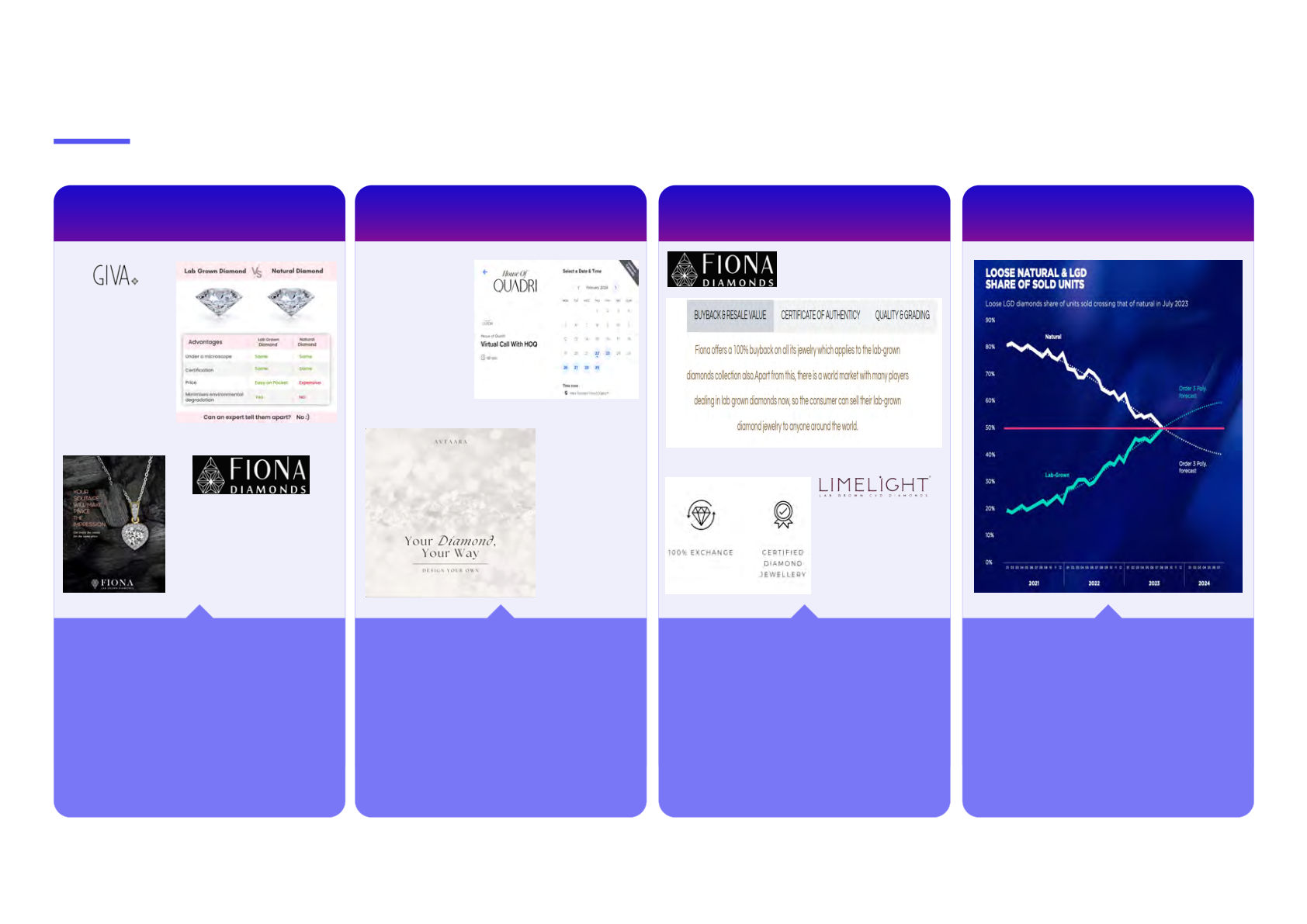
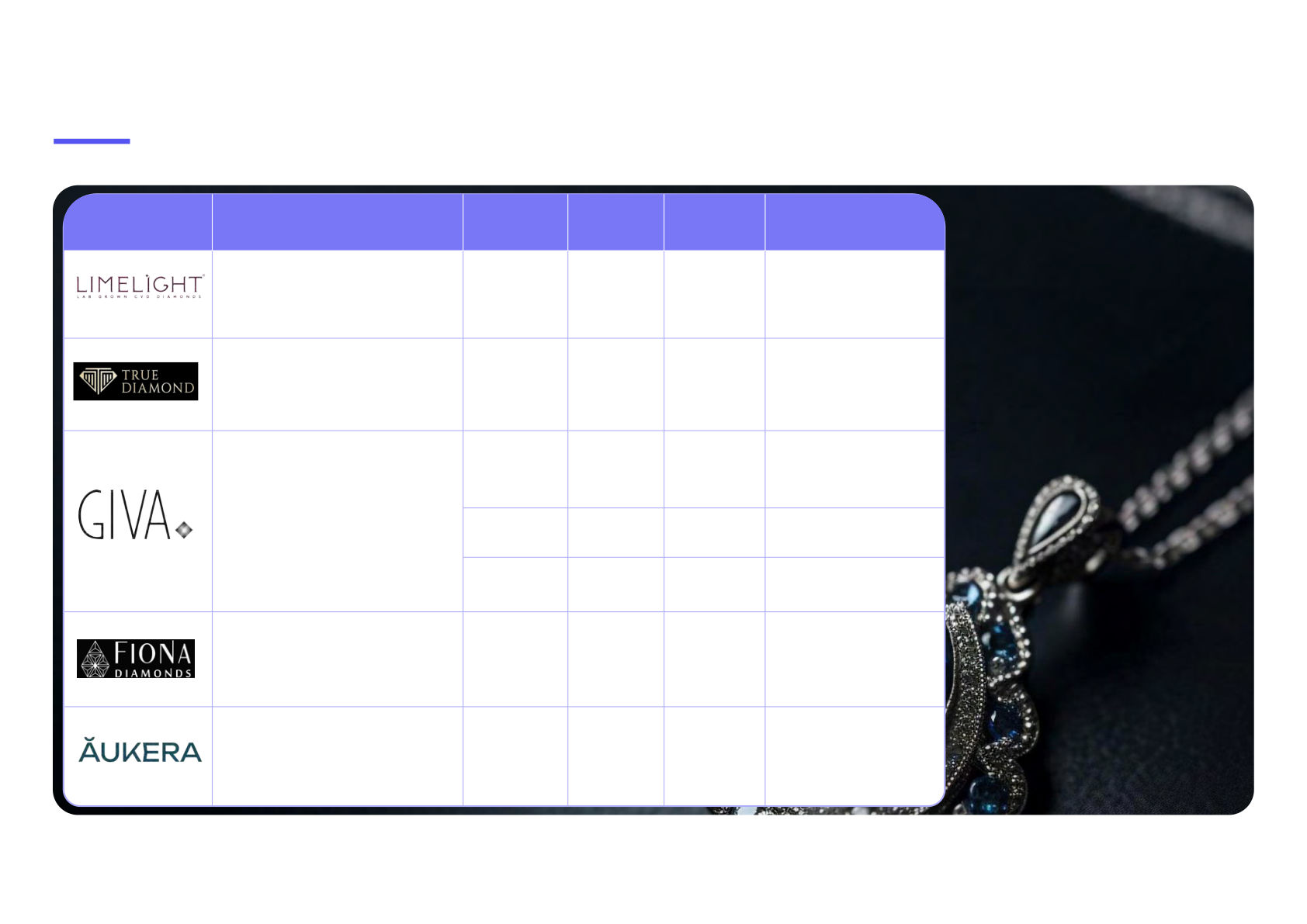
APRIL 2025 Confidential and proprietary © 1Lattice Pvt. Ltd. Foreword India’s gems and jewelry industry stands at the While the industry faces challenges such as intersection of heritage and innovation, fluctuating gold prices, regulatory shifts, and evolving rapidly to meet shifting consumer international competition, India remains a preferences, technological advancements, and global leader in jewelry exports and global market dynamics. With a projected domestic consumption. By embracing digital CAGR of 8.3%, the industry is poised to reach transformation, sustainable practices, and US$ 128B by 2029, driven by rising disposable innovation in lab-grown diamonds, the income, demand for certified jewelry, and sector is well-positioned for long-term digital transformation. growth and international dominance. India's lab-grown diamond (LGD) exports have At 1Lattice, we are committed to fostering Ashish Dhir grown 8 times since FY21, with the domestic meaningful conversations and driving Senior Director, Consumer and Retail market also witnessing significant growth strategic actions that help businesses thrive fueled by rising interest from PE / VC investors. in this dynamic landscape. As India’s gems The increasing preference for sustainability and jewelry industry continues to shine on and affordability is driving domestic demand, the global stage, its ability to balance while the omnichannel presence of new tradition with innovation will be key to entrants is reshaping the industry. Beyond shaping a brilliant future. jewelry, LGDs hold substantial industrial value in sectors like semiconductors, aerospace, and optics. However, India currently lacks domestic HPHT (High-Pressure High-Temperature) machine fabrication, highlighting an investment opportunity in building an end-to-end LGD supply chain. Product in Spotlight - Insights Powered by 1nsights, our latest report, “ Glimmers of Growth: The Indian Gems & Jewelry Market”, deep dives into one of India's most iconic and evolving sectors. Backed by rich data and on-ground analysis, the report unpacks key market drivers-from the surge in lab-grown diamonds and digital retail transformation to shifting consumer preferences across age, region, and income segments. 1nsights, our cutting-edge intelligence platform, continues to empower industry leaders with actionable insights and future-ready strategies. With robust analytics, real-time forecasting, and deep sector expertise, 1nsights equips business leaders with the clarity and confidence to act ahead of the curve. TABLE OF CONTENTS The Indian gems and jewelry market: Overview Market size and drivers of the market Market segmentation Clusters in the market 01 Key trends of the market Challenges of the market The Indian lab-grown Conclusion diamonds market: Overview Market size Market overview 02 Growth drivers and barriers Lab-grown vs Natural 03 diamonds market Key trends of the market Executive summary India’s gems and jewelry market is set to reach US$ 128B by 2029 ~9% CAGR, while lab-grown diamonds will hit US$ 1.2B by 2033 ~15% CAGR INDIAN 84.4% GEMS & US$ 128B ~9.5% 86% (Rise in Y-o-Y FDI inflows to gems & jewelry industry (Projected gems (Gems & jewelry (Share of gold JEWELRY during April to & jewelry market CAGR from in gems and September size for CY29) CY24-29P) jewelry market) MARKET 2024) INDIAN LAB GROWN US$ 1.2B ~15% 8X 60% (Projected LGD (LGD CAGR from (Growth in India’s (Contribution of LGDs DIAMOND market size 2033) CY24-33P) LGD exports in the to IGI’s certification last 4 years) business MARKET © 1Lattice | 05 THE INDIAN 01 GEMS AND JEWELRY MARKET: OVERVIEW Market sizing: Indian gems & jewelry market The Indian gems and jewelry market is estimated to grow at a CAGR of ~9% to reach US$ 128B by 2029 Gems & jewelry market strong growth trajectory Indian gems and jewelry market size (US$ B, CY19-29P) Rising disposable income • Increasing wealth among India’s middle class is boosting spending on luxury items, including jewelry, with gold accounting for 86% share in the jewelry • Urbanization is reshaping consumer behavior, with more people viewing 128 jewelry as both an investment and a fashion statement Demand for certified jewelry CAGR • A shift toward branded jewelry and certified authenticity is driving 9.5% organized retail growth • Consumers increasingly prefer transparency and trust in the quality of their purchases 83 Government initiatives CAGR • Reduction of gold import duties has made jewelry more affordable, 4.5% supporting domestic demand • Mandatory hallmarking and quality standards have improved consumer confidence in product authenticity 56 Digital transformation • E-commerce platforms are reaching a younger, tech-savvy audience that prefers online shopping for convenience • Brands are using digital marketing and virtual try-on features to engage consumers and drive sales Increased exports • India’s global reputation in diamond processing and jewelry manufacturing is expanding export markets 2019 2024 2029P • The gross exports of gems and jewelry for Q3 (Oct-Dec 2024) reached US$ 8.58B reflecting a decline of 11.01% compared to the same period in 2023 Source(s): Media articles, industry reports, Gem & Jewellery Export Promotion Council, 1Lattice analysis © 1Lattice | 07 Market segmentation: Indian gems & jewelry market Indian gems and jewelry market is segmented based on product type, material, consumer segments & distribution channels Gems & jewelry market in India By Material By Product type By Consumer Segment By Distribution channel 22 Karat Wedding jewelry Gold jewelry Gold 18Karat Organized Retail 14Karat Natural Diamond jewelry Daily wear jewelry Diamond Unorganized Retail Lab-grown Silver jewelry Occasional jewelry Online Retail Silver Men’s jewelry Gemstone jewelry Platinum Precious Platinum jewelry Gemstones Children’s jewelry Semi-precious Source(s): 1Lattice analysis © 1Lattice | 08 Indian gems & jewelry market Clusters in the gems and jewelry market of India JAIPUR DELHI Jaipur is renowned for colored Delhi’s jewelry market caters to gemstones and traditional Kundan, both traditional and modern Meenakari, and Polkistyles, making tastes, focusing on high-end gold it the "gemstone capital" of India, jewelry retail and distribution by trading in stones like emeralds, rubies and sapphires SURAT KOLKATA Known as the diamond capital of Known for intricate gold filigree India, Surat is a major hub for work, Kolkata produces traditional diamond cutting and polishing. Delhi Bengali jewelry, popular for its The city combines skilled lightweight and handcrafted Jaipur craftsmanship with advanced designs technology Surat Kolkata MUMBAI HYDERABAD Known as India's "diamond hub," Famous for pearls, earned the title Mumbai Hyderabad Mumbai specializes in diamond "City of Pearls." It is renowned for trading, cutting, and polishing, its cultured pearl industry and and serves as a major export unique designs that blend modern Nellore and traditional aesthetics center for luxury jewelry Thrissur Coimbatore NELLORE THRISSUR Focused on the production of Known as the "gold capital of diamond-studded gold jewelry, it India," Thrissur has a thriving gold domestic market with traditional supports the growing demand for jewelry manufacturing sector, designs lightweight, affordable diamond catering primarily to the domestic jewelry in India market with traditional designs COIMBATORE Specializes in casting and machine-made jewelry, Coimbatore is a leading center for manufacturing lightweight gold ornaments Source(s): India Brand Equity Foundation, 1Lattice analysis © 1Lattice | 09 Key trends: Indian gems & jewelry market Sustainability, customization and growth of online retail are some of the trends shaping the future of Indian jewelry market Treands Description Government initiatives Market impact Sustainable & • Consumers prioritize environmentally friendly • Government initiatives like 'Make in India' • Sustainable jewelers drive 2030 goals of and ethically sourced jewelry, emphasizing fair promote traditional craftsmanship & reducing greenhouse emissions by 50% and ethical jewelry trade & transparency sustainable practices among small artisans value chain emissions by 40% • There is a growing focus on reducing the • These initiatives also provide economic benefits • They drive innovation, such as the circular environmental impact of jewelry to local communities innovation of using recycled silver and gold in the crafting of jewelry • Demand for personalized jewelry reflecting • Government supports small and medium-sized • Customization in jewelry boosts consumer Customization & individual style and emotions is growing jewelers with financial & technical assistance engagement and enables premium pricing personalization helping them expand custom jewelry offerings • Technological advancements like 3D printing • It attracts younger and diverse demographics while preserving traditional craftsmanship and and CAD enable custom designs while driving technological innovation with 3D adopting modern technologies printing and CAD software Growth of • The rise of e-commerce leads more consumers • The Digital India campaign has boosted online • Online retail helps small & medium jewelers to online platforms for jewelry purchases due to jewelry retail by improving internet access, expand market reach & offer competitive online retail convenience and extensive selection digital literacy, and consumer protection pricing with lower overhead costs • Innovative digital tools like virtual try-ons • Tax breaks and funding for e-commerce • The online jewelry market has the potential to enhance the online shopping experience startups fosters innovation & market expansion reach 10% of the total jewelry market Influence of pop • Pop culture, Bollywood, social media • Government promotes traditional jewelry • Media exposure in jewelry marketing boosts culture & media influencers, & celebrity endorsements shape making by supporting artisan craftsmanship, brand visibility and engages consumers jewelry trends, influencing consumer hosting exhibitions, to enhance the global through storytelling enabling targeted purchase decisions visibility of Indian jewelry brands segmentation and increasing competition • Advanced technologies like 3D printing, laser • The Indian government provides skill • Technological innovations in jewelry Technological cutting, and CAD are revolutionizing jewelry development programs for artisans & jewelers manufacturing improve product quality precise innovations manufacturing with complex designs and in advanced manufacturing technologies craftsmanship and enable efficient greater precision customization • It offers subsidies and financial incentives to • Using AI and automation in manufacturing small and medium-sized enterprises for • Methods like laser cutting and 3D printing modern machinery reduce waste and costs • There is a growing consumer shift toward • Government revised importduties on raw • The rise in diamond and platinum options Increased demand diamond and platinum jewelry, driven by their diamonds and platinum to enhance the jewelry diversifies consumer choices & stabilizes the for diamond & modern appeal and luxury symbolism industry's competitiveness and meet rising jewelry market platinum jewelry consumer demand • These options are also perceived as having a • Increased demand prompts jewelers to invest in technology for quality verification, reflecting higher investment value compared to • Initiatives like the "Make in India" campaign traditional gold jewelry promote the sector by establishing special the growth of India’s luxury market economic zones with tax incentives Source(s): Industry reports, media articles, 1Lattice analysis © 1Lattice | 10 Shifts in consumer preferences Consumers in South prefer more of temple jewelry and pure gold items while lightweight gold and diamond jewelry is more favoured in East Preferences by region Preferences by age group NORTH SOUTH 18-25 years 26-35 years Consumers prefer heavy, There is a strong inclination Younger consumers lean This age group is drawn traditional gold jewelry , often towards temple jewelry and towards trendy, affordable, to versatile jewelry seeking ornate designs for pure gold items , with a and customizable jewelry, suitable for both work weddings and festivals, reflecting preference for heritage designs valuing pieces that reflect their and social occasions the cultural emphasis on that symbolize cultural pride individuality opulence EAST WEST 36-50 years 50+ years Consumers favor lightweight A focus on modern, Consumers in this range often Older consumers prefer gold and diamond jewelry, minimalist jewelry styles is seek investment-worthy traditional gold jewelry, often often influenced by Bengali evident, with younger jewelry, such as gold and with cultural or religious craftsmanship and intricate consumers showing a growing diamond pieces, balancing style significance, viewing it as a designs preference for platinum and with value retention secure asset contemporary designs Preferences by gender Preferences by spending behaviour Budget-conscious Female Male High-end consumers consumers Social media and influencer trends High-end customers prioritize With a rising emphasis on With the rise of online shopping, play a major role in shaping exclusivity and brand legacy, self-expression, men now look budget-conscious consumers preferences, especially for often gravitating towards jewelry for personalized and statement are exploring brands that offer statement earrings, stackable that showcases unique jewelry, often with bold designs trendy yet cost-effective rings, and customized pieces. craftsmanship and premium or embedded gemstones. options, with an emphasis on Sustainability is also gaining materials. They are highly Men’s jewelry has also seen traction among female buyers, customization and flexibility, attentive to certification, origin, growth in demand for platinum with growing interest in ethically such as adjustable ring sizes and ethical sourcing , as luxury and white gold, reflecting a sourced and lab-grown diamonds and mix-and-match sets , and buyers seek quality and socially shift towards subtle luxury responsible brands seek value-for-money options Source(s): Industry reports, media articles, 1Lattice analysis © 1Lattice | 11 Challenges: Indian gems & jewelry market India’s gems & jewelry market faces key hurdles as it navigates inventory management, rising inflation, the rapid shift to digital technology, etc. Market Increasing Disruption Inventory High gold research and demand for Rising labour from digital management prices technology sustainable costs technologies adoption sourcing The traditional Retailers using Gold prices rise due Increasing labor The industry has been Consumers not only in-store shopping separate systems to inflation and costs are hindering slow to adopt digital prefer sustainable experience has for inventory, online economic instability, industry growth, with tools that can practices but actively evolved into an orders, and which negatively these price hikes streamline demand them. omnichannel retail manufacturing lack impacts the sales of ultimately impacting operations, improve Jewelry shoppers are approach, driven by a cohesive view, gold jewelry, as gold the cost of the final customer experience, keen to understand changing consumer leading to is a key component in product and posing and facilitate better the origins of their behaviors and stock-outs, Indian jewelry. High substantial decision-making. purchases and the preferences. As a overstock problems, prices lead to a shift challenges to Implementing individuals involved in result, a brand's and supply chain in consumer business expansion. comprehensive retail creating the online presence will disruptions. preferences towards Skilled labor comes at software, augmented products. Increased play a crucial role in Therefore, inventory more affordable and a premium, and reality for virtual awareness of safe shaping brand loyalty and logistics must lighter jewelry options jewelry producers try-ons, and and ethical labor and consumer be planned in a and retailers need to multi-channel conditions influences perception streamlined way to explore strategies to marketing could purchasing decisions tackle these retain talent prove advantageous across nearly all industry challenges industries Source(s): Industry reports, media articles, 1Lattice analysis © 1Lattice | 12 The Indian 02 lab-grown diamonds market Market overview India’s ~US$ 350M LGD* market in 2024 is expected to grow at a ~15% CAGR over the next decade; India’s contributes ~15% to global production of LGD Lab-grown market in India Key highlights Sales of LGD Jewelry (US$ M, CY24-33P) CAGR ~15% 14.8% contribution to the global 1,200 production of 850 lab-grown India’s exports of LGDs have 650 diamonds grown 8X in 4 years , export- 500 400 ing LGDs worth US$ 1.3B in 345 FY24 Government announced a 5% custom duty cut on seeds 2024 2025P 2027P 2029P 2031P 2033P used to manufacture LGDs in the 2023 budget Govt approved 5-year research grant (US$ 30M) to “LGD* market in India is witnessing a steady rise in demand, IIT Madras in FY24 budget for with a growing number of consumers opting for it due to its LGD machinery, seeds & affordability. Retailers & online platforms are also offering a recipes wide range of LGDs to meet the increasing demand.” - Chairman, Gems and Jewelry Export Promotion Council Note(s): *Lab-grown diamond © 1Lattice | 14 Source(s): Company websites, 1Lattice analysis Lab-grown vs Natural diamonds Lab-grown diamond players in India Established LGD brands owned New-age LGD brands Prominent retailers launching by polishers & with increasing manufacturers LGD brands manufacturers online focus By Trent By Senco Gold By Pooja Gold Palace By Raadhe Jewelers Note(s): Illustrative list of brands © 1Lattice | 15 Source(s): Industry reports, media articles, player websites, 1Lattice analysis Lab-grown diamonds overview The concept of lab-grown diamonds is transforming the jewelry ecosystem globally India’s leadership in production Investment and government support • India is emerging as a global hub for LGD • Government initiatives like subsidies for LGD manufacturing, with Gujarat leading the manufacturing and R&D are bolstering the charge in production capacity sector • Investment in technology and R&D has • Policies aimed at promoting LGD exports positioned India as a key player, contributing and creating an ecosystem for growth are significantly to global LGD supply accelerating adoption Role in export growth Technological leadership • The Indian gems and jewelry export • India’s expertise in cutting and polishing sector has seen rapid growth, with natural diamonds is transitioning LGDs becoming a key contributor due seamlessly into the LGD segment to rising global demand • Use of advanced techniques like • LGDs are helping Indian exporters automated diamond cutting and AI-driven diversify offerings and expand into quality grading is enhancing efficiency new international markets Contribution to sustainability goals Shaping the future of affordable luxury • As a low-carbon alternative to mined diamonds, • LGDs are democratizing luxury by making LGDs support global sustainability efforts, high-quality diamonds accessible to a aligning with corporate ESG (Environmental, broader audience Social, Governance) objectives • Emerging trends include LGDs in minimalist • Brands are increasingly integrating LGDs into designs and everyday jewelry collections collections to showcase their commitment to green initiatives Note(s): LGD: Lab-grown diamonds © 1Lattice | 16 Source(s): 1Lattice analysis Growth drivers & barriers While affordability, advanced tech & ethical nature of LGD drive the market, low awareness poses a key barrier Increased consumer LGDs often interest due to confused with Tech eco-friendliness & American advancements ethical nature of LGDs, Diamonds or enhance quality & LGDs perceived as unlike mined diamonds Zircons , which are personalization in less superior than that disrupt the ecology used in fashion LGDs priced at Legacy retailers LGDs; New entrants mined diamonds; and often support poor Jewelry, affecting ~50-60% lower hesitant to stock are also entering Moreover, gold is working conditions in customer than mined LGDs due to intrinsic to Indian the market the mines perception diamonds, ambiguity in supported by PE / culture appealing to a buyback structure VC investments in cost-consciousc & lower perceived the space onsumer market intrinsic value than like India mined diamonds Sustainability Low consumer Technological orientation awareness advancements & Skeptic older growing PE / VC generation Resistant Affordability interest traditional retailers Growth drivers Barriers Source(s): 1Lattice analysis © 1Lattice | 17 Lab-grown diamonds: Introduction LGD exports have more than doubled since FY21; Scope for Indian brands to leverage HPHT machine fabrication & industrial application A new era of luxury jewelry market HPHT machines, industrial application & Share of lab-grown diamonds exports rose from memorial diamonds are areas that can 0.6% to 4.4% from FY18 to FY24 be leveraged by Indian brands Exports of gems & jewelry from India (US$B, FY18-23) HPHT machines in India • India currently lacks the capability to 1.9 1.4 1.6 fabricate HPHT machines, posing a 1.0 1.3 0.3 0.4 0.2 0.4 0.2 challenge to achieving an 1.7 0.8 0.4 2.7 1.6 3.4 end-to-end supply chain 0.4 2.9 0.3 1.7 1.4 11.9 0.5 0.5 9.3 9.3 1.6 9.6 0.8 Industrial application 12.0 0.6 0.2 2.3 • There are 15+ application areas of 11.1 LGDs beyond jewelry due to their 5.0 hardness, thermal conductivity, & electrical properties 24.4 23.7 23.8 22.0 18.7 16.3 16.0 Memorial diamonds • Transforming human ashes or hair into diamonds by extracting carbon from them and using advanced FY18 FY19 FY20 FY21 FY22 FY23 FY24 HPHT processes ** ** 0.6% 0.6% 1.2% 2.5% 3.3% 4.5% 4.4% ** Natural Diamonds Gold jewellery Silver jewellery Coloured gemstones LGD diamonds Others LGD % of total gems & jewelry exports Note(s): LGD – lab-grown diamonds, High-Pressure High Temperature (HPHT) ; *Others include Israel, Belgium, Singapore, Thailand, Australia, etc.; **Companies based outside of India © 1Lattice | 18 Source(s): Euromonitor International, Gem & Jewellery Export Promotion Council, industry reports, 1Lattice analysis Lab-grown vs Natural diamonds Lab-grown vs. Natural Diamonds: Redefining value, sustainability, and consumer choices Parameters Natural diamonds Lab-grown diamonds • Produced in controlled laboratory environments using • Formed deep within the Earth's crust over processes like Chemical Vapor Deposition (CVD) or billions of years under high pressure and Definition & High-Pressure High Temperature (HPHT) temperature formation • This mimics the natural conditions to form diamonds • Mined from the Earth chemically and physically identical to natural ones • Still dominates in terms of emotional and • Increasing adoption due to lower cost (20-40% cheaper), Market trends cultural value, particularly for high-end jewelry ethical sourcing, and sustainability appeal & growth and luxury segments • Their market is growing rapidly, especially among younger, eco-conscious consumers • There are concerns over the environmental • Positioned as a more sustainable and ethical option due to Sustainability minimal environmental impact compared to mining and social costs of mining that have led to and ethical increased focus on traceability & responsible • However, their energy-intensive production processes are considerations sourcing initiatives scrutinized • Preferred for traditional, high-value purchases, • Attractive for consumers seeking affordable luxury and such as engagement rings and cultural Consumer modern values like sustainability and transparency occasions preferences • Popular for fashion jewelry and customization • Seen as timeless and emotionally significant • High cost due to rarity, mining, and long • Up to 8X cheaper than natural diamonds for similar size and formation process Price quality comparison • Considered a luxury investment with higher • More accessible, appealing to budget-conscious consumers resale value • Facing challenges in establishing premium positioning against • The need to defend market share by natural diamonds Definition & emphasizing rarity, authenticity, and heritage, • Opportunities lie in enhancing product storytelling and formation while addressing environmental concerns educating consumers about quality Source(s): Industry reports, media articles, 1Lattice analysis © 1Lattice | 19 Key trends Entry of traditional players, rising desire for customized Jewelry, and introduction of customer-friendly policies are key trends in the LGD market Rising desire for Customer-centric Higher participation of lower Foray of traditional retailers into LGD market customised jewelry policies socio-economic classes offers 100% buyback Brands such policy on its Jewelry as House of has Quadri infographics offering on their virtual website to consultation spread s to tap into awareness this desire Avtaara provides customized jewels and engagement through their ads offers 80% rings to their push the message buyback policy clients of legitimacyand on its Jewelry affordability and 100% lifetime exchange • Companies such as Fiona and • Customers nowadays have a • Buyback and exchange policy • The affordability of LGD enables a GIVA that were previously only in greater desire for customization has always been ambiguous larger subset of people to gain mined silver and diamonds have of jewels based on color, shape, when it comes to natural access to them as previously started to offer LGD as well clarity, engravings, logos etc. diamonds less than 5% of Indian women owned a diamond due to their • These companies have also • Made in a controlled • LGD brands like Fiona, Limelight high costs taken initiatives to clear any environment, customers are ensured to provide 80-100% misconceptions about LGD provided made-to-order buyback and exchange to their • This allows companies to tap into regarding their legitimacy and unique LGDs that compete with customers, gaining their a previously untapped strata of qualityto raise awareness natural diamond designs confidence the demographic through their LGD offerings Source(s): Company websites, Industry reports, Secondary research, 1Lattice analysis © 1Lattice | 20 Investment landscape Online-focused lab-grown diamond brands have attracted PE / VC investment, indicating increasing interest towards an omnichannel approach in the industry Amount PE / VC investors Company Description Round Deal year (US$ M) Internet first brand Series A 11 2025 Undisclosed offering lab-grown diamond jewelry Online fashion brand Titan Capital, Zero- offering multi-category pearl Ventures, Seed 1 2024 lab-grown diamond-based Huddle Ventures jewelry products Premji Invest, Edel- weiss Group, Epiq Series B 30 2024 Capital Online platform offering silver and gold jewellery Series B 12 2024 Premji Invest products Spring Marketing Series B 13 2024 Capital Internet first brand offering Anikarth Ventures, lab-grown diamond Seed 1 2024 AC Ventures, Ven- jewelry ture Catalysts Internet first brand Series A 3 2024 Fireside Ventures offering jewellery products Source(s): DealPulse by 1Lattice – PE / VC deal database, media articles, 1Lattice analysis © 1Lattice | 21 Conclusion The Indian gems and jewelry market is set to reach $128 billion by 2029 , growing at a 9% CAGR , driven by rising disposable income, branded jewelry demand, and strong exports. Government initiatives, such as reduced gold import duties, have further boosted accessibility. A key growth driver is the lab-grown diamond (LGD) segment, with India, particularly Gujarat, emerging as a global LGD hub due to advancements in automated cutting and AI-driven quality grading. LGDs are gaining traction as a sustainable, affordable alternative to mined diamonds, appealing to eco-conscious consumers and businesses with ESG priorities. Their rise aligns with trends favoring minimalist and everyday jewelry, further strengthening India’s export potential. To capitalize on growth, industry players should position jewelry—including LGDs—as both an investment and a fashion statement. Strengthening transparency through certification, branding, and pricing strategies will enhance market penetration. Additionally, expanding global trade partnerships will reinforce India’s leadership in the sector, ensuring long-term profitability in this evolving landscape. © 1Lattice | 22 Authors Ambuj Gupta Ashish Dhir Praneet Singhal Group Manager, Senior Director, Director, Consumer & Retail Consumer & Retail Financial Investors & 1Alpha - ECM E: ambuj.gupta@1lattice.com E: ashish.dhir@1lattice.com E: praneet.singhal@1lattice.com For media queries, Urbashree Bayan Associate Manager – Corporate Communications please contact E: communications@1lattice.com www.1lattice.com Disclaimer: This material has been prepared by 1Lattice, which is the trade name of Lattice Technologies Private Limited (“1Lattice”, “we” or “our”) with the intent to showcase our capability and disseminate learnings to potential partners/clients. This material can be referred to by the readers on the internet but should be referenced to 1Lattice, if reused or adapted in any form, or medium and on any forum. The frameworks, approaches, tools, analysis and opinions are solely 1Lattice’s intellectual property and are a combination of the collection of the best data we could find publicly, and the 1Lattice team’s own experiences and observations. Any information provided herein is only for informational purposes and you are advised to perform an independent analysis of the same before making any decision based on such information. The information does not constitute any business advice or guidance and is to be construed as a general summary based upon the publicly available information and our interpretation of the same using our resources. For this material, we may have relied upon different sources of information which may be primary sources, publicly available information, and relevant information available with us. We make no representation or warranty, expressed or implied, that such information is accurate or complete, and nothing contained here can be construed as definitive predictions or forecasts. Before reading further, the Recipient expressly agrees that this might not address any and all risks and challenges facing the Recipient, its business, and the markets within which it operates, nor all possible market conditions. Any use of the information provided herein by the viewer shall be at the sole risk of the viewer and 1Lattice or its business partners, affiliates, agents, officers or employees shall not be liable for any unintended or adverse effect or outcome from the use of such information by the reader. 1Lattice does not have any duty to update or supplement any information in this document. 1Lattice shall not be responsible for any business or commercial loss sustained by any person who relies on any information provided herein. Any and all logos of companies used in the information provided herein have been published for information purposes only and 1Lattice does not hold any liability in connection therewith. What We Do Making organizations effective through data-driven insights, innovative products solutions Vision 4 200+ and proven expertise to enable better decisions Offices in Annual India engagements To provide technology led solutions that unlock Mission that power of trustable data, actionable research, and deep network of experts 130+ 50+ Team Inhouse members research team Technology 1,000+ 2M+ On-ground staff B2C Panel People/ Professionals/ Data + Accumulated knowledge Service providers 300K+ 100K+ B2B Panel Experts & professionals 20% 100% Cost savings Controlled output & timeline Research +91 987 165 4747 ashish.dhir@1lattice.com Delhi NCR | Mumbai | Bengaluru | UAE | KSA | Singapore