
India’s wellness spending now reaches well beyond medicines and doctor visits. Consumers are buying nutritional supplements, fitness memberships, sleep solutions, ergonomic furniture, and health-monitoring devices. These once-separate categories now sit in a single wellness basket, competing for the same household budget.
Key takeaways
- ~50% of consumers are taking proactive steps to improve their health, turning prevention into everyday consumption.
- The wellness basket now spans nutrition, fitness, sleep, ergonomics, and preventive diagnostics.
- Affordability and trust remain the biggest barriers: ~55% of consumers find healthier alternatives too expensive.
Why is preventive health becoming part of everyday spending in India?
Health is shifting from treating illness to managing everyday outcomes: energy, sleep quality, physical comfort, and long-term fitness. For consumer businesses, this opens opportunities beyond conventional healthcare, along with new competition for household spending.
Consumers are taking charge of their health:
- ~50% are proactively taking steps to improve their health and wellness
- ~55% have purchased wearables to support their health goals
Policy is moving in the same direction. India’s focus is gradually extending from food security to nutrition security, drawing more attention to functional foods, nutraceuticals, and better nutritional outcomes. Still, the shift goes beyond nutrition, spanning products and services that address many aspects of everyday wellbeing.
So which categories make up this wider wellness basket?
Which categories make up India’s wellness basket?
- Nutrition: moving from generic immunity and protein to gut health, energy, women’s health and healthy aging. The opportunity lies in targeted formulations and recurring consumption, built on credible, transparent claims.
- Fitness: expanding from gyms to yoga, Pilates, boutique studios, home workouts and hybrid formats. The opportunity lies in accessible, convenient and affordable memberships.
- Sleep: demand is extending beyond mattresses to ergonomic pillows, specialized bedding, accessories and monitoring devices. The opportunity lies in products positioned on sleep quality, comfort and support.
- Ergonomics: sedentary routines and screen time are raising attention to posture. The opportunity lies in chairs, adjustable desks, lumbar supports and cushions that solve specific discomforts.
- Preventive diagnostics and wearables: consumers are tracking personal health metrics more actively. The opportunity lies in preventive checkups, including beyond the metros.
How is nutrition becoming more targeted?
Supplements and nutraceuticals now address specific needs such as gut health, energy, women’s health and healthy aging. Product credibility, ingredient transparency and substantiated claims will remain central to winning consumer trust.
Is fitness participation growing in India?
Fitness is spreading into everyday routines, but participation is uneven. An estimated 820 million Indians aged 18–62 remain physically inactive, a wide gap between awareness and regular activity. Accessible, convenient and affordable formats will be key to turning interest into habit.
Why is sleep becoming a wellness category?
Sleep is now seen as a core part of wellbeing. Mattress and home furnishing companies are positioning products around sleep quality, comfort and physical support rather than just material and design. That creates room for both established home brands and specialized sleep businesses.
How is ergonomics bringing wellness into homes and offices?
Long hours at screens are turning posture and comfort into purchase drivers. Ergonomic products are becoming natural extensions of the home and office furniture market.
Are preventive health checkups rising beyond the metros?
Yes. An analysis of more than 25 lakh health checks found that nearly 60% of diagnostic bookings were preventive. Tier 2 cities recorded a higher preventive checkup share than Tier 1 markets, suggesting the opportunity reaches beyond large metros.
Rising interest, however, doesn’t always translate into sustained spending.
What is holding back wellness spending in India?
Cost and trust are the two biggest hurdles:
- Price: ~55% consider healthier alternatives too expensive
- Trust: ~45% don’t fully trust the effectiveness of health improvement products and services
- Financial strain: ~35% say investing in staying healthy has challenged their finances
- Stress: ~80% report experiencing stress
The pressure shows up in wider health spending too. According to the latest National Health Accounts estimates for FY2022–23, out-of-pocket expenditure accounted for 43.4% of India’s total health expenditure, while government health expenditure stood at 1.43% of GDP.
The takeaway: consumers may value preventive health, but products must justify their price through tangible benefits, convenience, and credibility.
India’s wellness wallet is expanding beyond healthcare
Consumers are spending across supplements, fitness, sleep, ergonomics and preventive care to stay healthier, but affordability and trust remain a constraint.
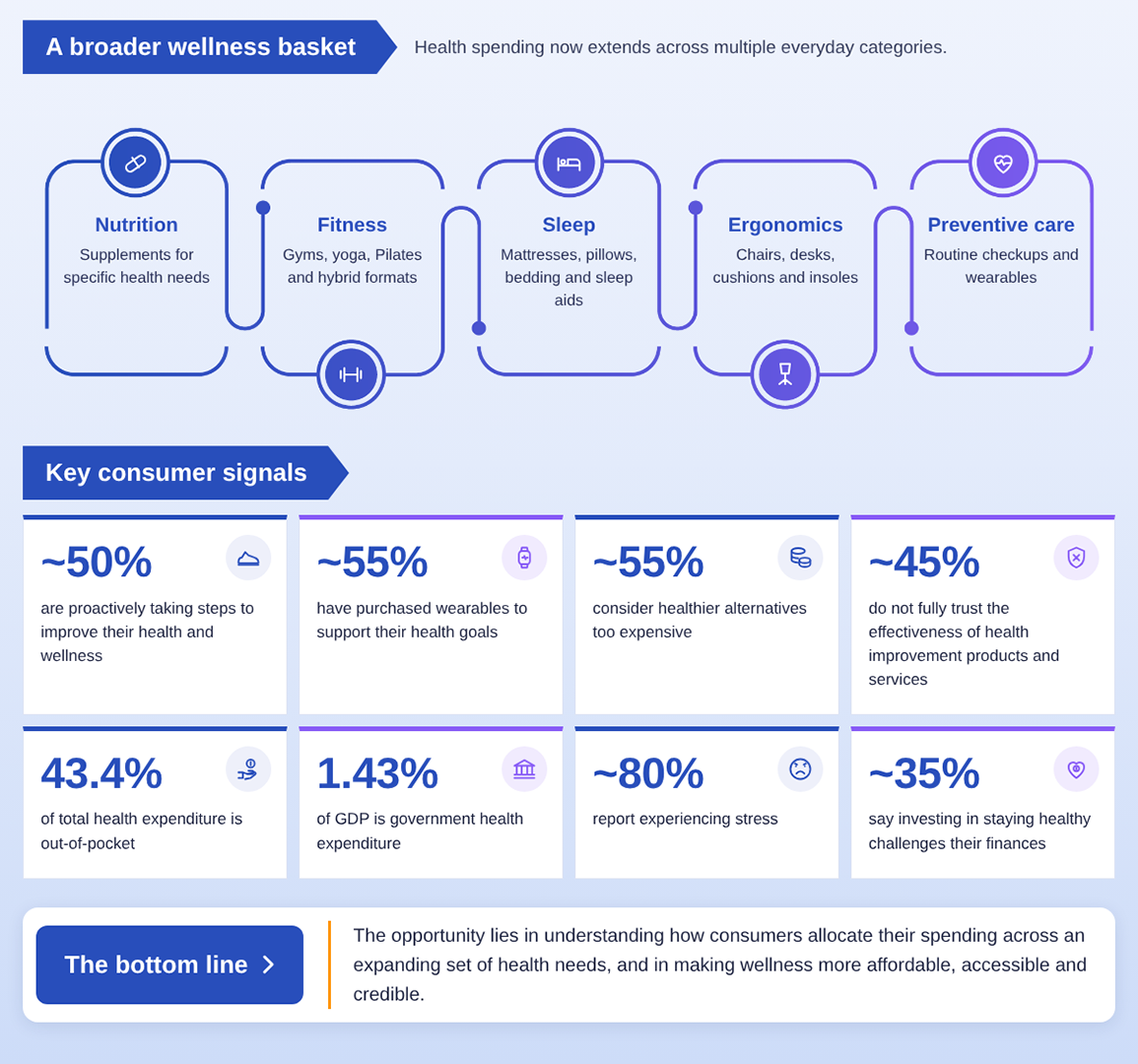
What does this mean for consumer brands? The 1Lattice view
The opportunity lies not only in growing individual categories, but in understanding how consumers divide their spending across an expanding set of health needs.
- The competition is for the wellness wallet. Supplements, fitness memberships, sleep products and health devices compete for the same discretionary rupee. Brands need to know which needs drive repeat purchases and where consumers will trade up.
- Affordability will decide adoption. Entry-level products, smaller packs, trial formats and accessible subscriptions can reach interested but cautious consumers.
- Credibility will drive differentiation. Clear product information, transparent labeling and substantiated health benefits will matter more as consumers judge what works.
How 1Lattice can help
As wellness spending spreads across categories, brands need to know what consumers prioritize, what they will pay for and what brings them back.
As Asia’s leading market intelligence platform, 1Lattice helps businesses assess these opportunities through market assessments, consumer research, usage and behavior studies, brand diagnostics and channel studies. Through 1Sense, our consumer research identifies emerging needs, evaluates category potential, clarifies purchase barriers and assesses what drives adoption and loyalty.
The result: informed decisions on category entry, product positioning, pricing, distribution and growth.