
Diabetic foot ulcers (DFUs) represent a major complication of diabetes in India, driven by high recurrence and amputation risks. The landscape of DFU prevention, diagnosis, and treatment is evolving alongside developments in advanced wound care, point-of-care diagnostics, telemedicine, multidisciplinary care, and treatment innovation.
This newsletter explores the disease burden and clinical impact of DFUs, current treatment approaches and key industry players, government initiatives supporting early detection and standardized care, and emerging developments shaping DFU management across India.
The growing burden of diabetic foot ulcers
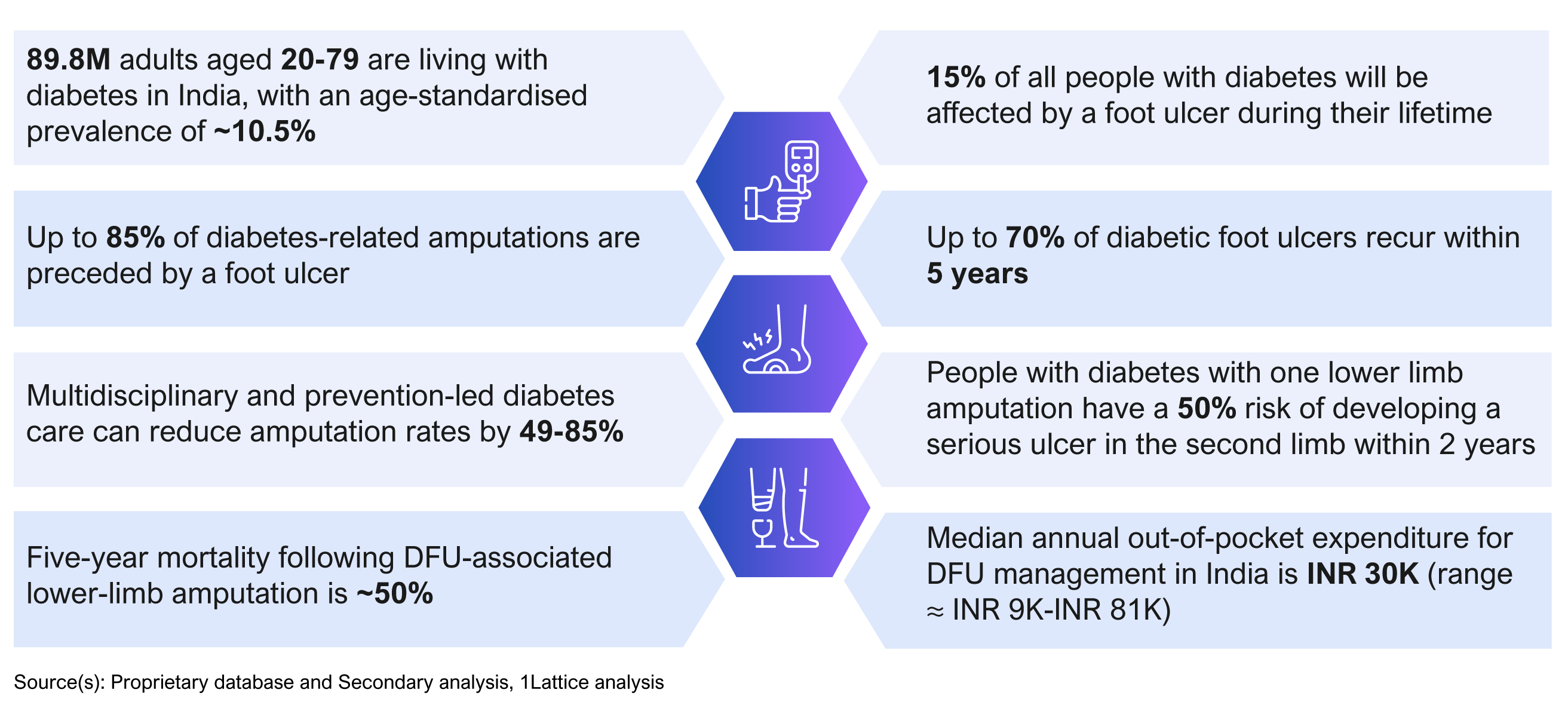
Diabetic foot ulcers (DFUs) represent a major complication of diabetes in India, with significant clinical, quality-of-life, and economic implications. Multidisciplinary, prevention-focused care can reduce amputation rates by 49–85%, underscoring the clinical, quality-of-life, and economic burden associated with DFUs.
High recurrence and amputation risk make diabetic foot ulcers a critical complication of diabetes in India
- Diabetic foot ulcers (DFUs) are wounds or sores that commonly develop on the feet of people with diabetes. These ulcers are often a result of a combination of factors, including nerve damage, poor blood circulation, and reduced sensation. DFUs account for 22% of total chronic wounds, making them one of the largest categories in the overall wound burden
- DFUs often co-exist with vascular insufficiency and are the major cause of gangrene and amputation in people with diabetes
- Diabetic foot ulcers represent a huge risk to the patient’s quality of life, escalating wound/infection management and costs, and account for a large proportion of all national healthcare budgets
How DFUs are managed
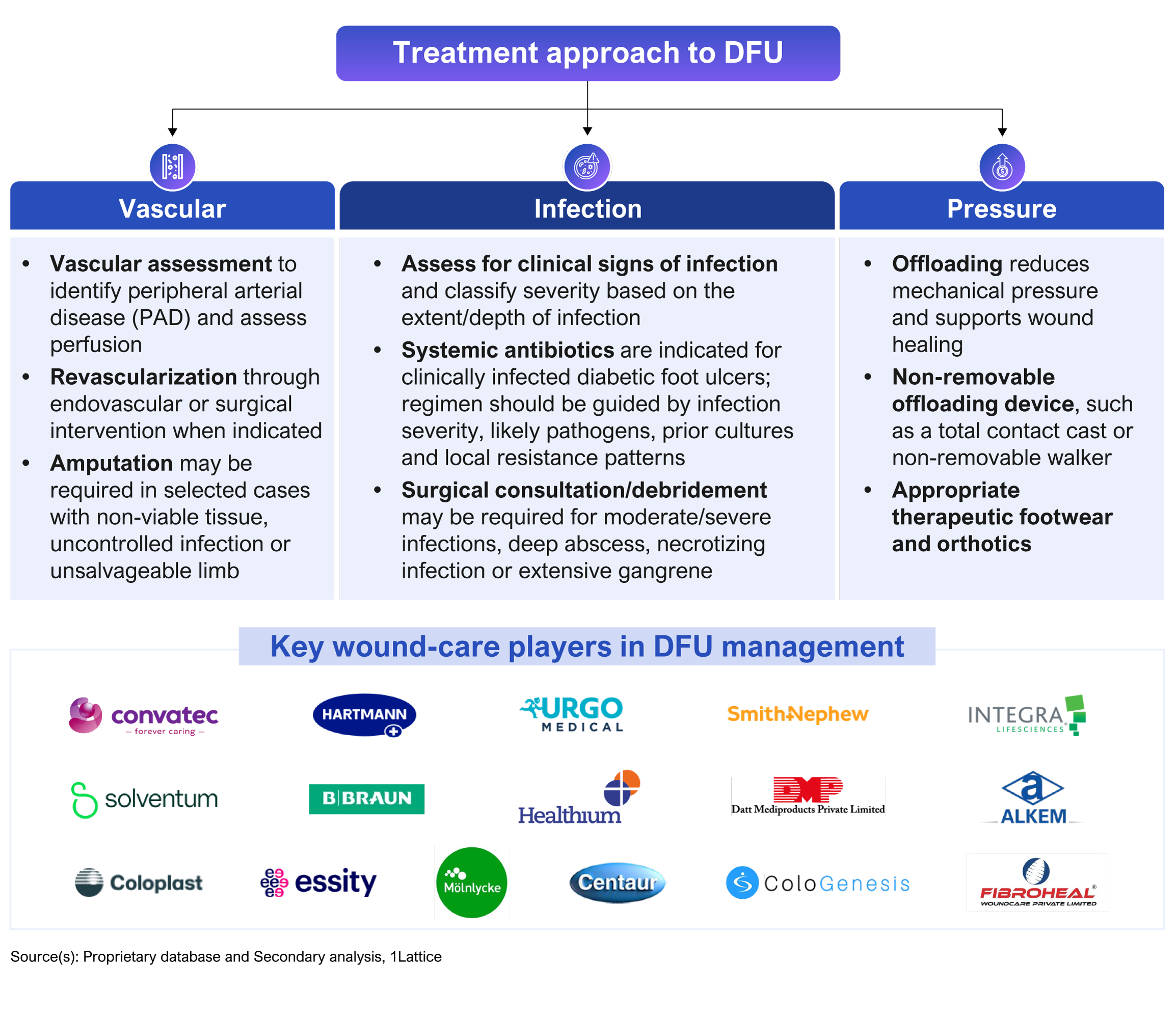
DFU management centers on three core pillars:
1. Vascular assessment
Vascular assessment helps identify peripheral artery disease (PAD) and other perfusion issues. Revascularization or amputation may be required when needed.
2. Infection control
Management involves clinical assessment and severity classification, with systemic antibiotics guided by cultures and resistance patterns. Surgical debridement may be required for moderate-to-severe cases.
3. Pressure offloading
Pressure offloading can involve non-removable devices such as total-contact casts or walkers, alongside therapeutic footwear and orthotics.
The DFU treatment landscape
The wound-care ecosystem includes a range of established players active in this space, including:
ConvaTec, HARTMANN, Urgo Medical, Integra LifeSciences, Alkem, Smith+Nephew, Solventum, B. Braun, Healthium, Datt Mediproducts, Mölnlycke, Coloplast, Essity, Centaur, ColoGenesis, and Fibroheal.
For related market context, explore 1Lattice’s Indian surgical landscape and surgical consumables market.
Diabetic foot ulcer management requires vascular assessment, appropriate infection management and effective pressure offloading
Policy is strengthening prevention and early detection
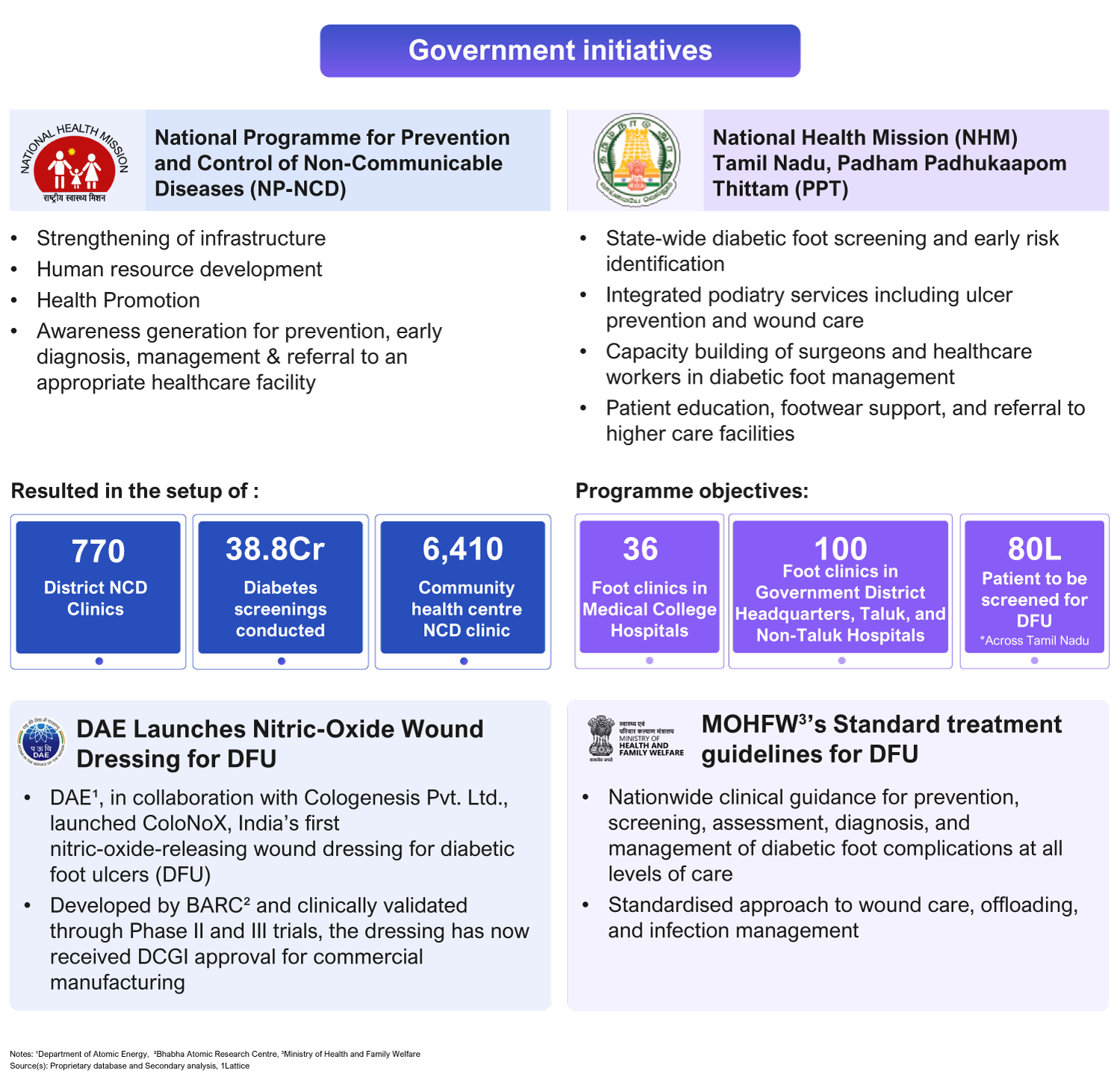
Government initiatives are increasingly strengthening DFU prevention and management through screening, standardized care, and infrastructure development.
National NP-NCD program
The national NP-NCD program focuses on strengthening NCD infrastructure, workforce capacity, awareness, and early diagnosis.
The program has resulted in:
- 770 District NCD Clinics
- 6,410 Community Health Centre NCD clinics
- 38.8 crore diabetes screenings
Tamil Nadu’s Padham Padhukaapom Thittam
Tamil Nadu’s Padham Padhukaapom Thittam further emphasizes statewide screening, podiatry services, patient education, and referral.
The program plans include:
- 36 medical college foot clinics
- 100 district/taluk hospital clinics
- Screening of 80 lakh patients
In parallel, standardized national treatment guidelines and locally developed advanced wound dressings are supporting more consistent and effective DFU care.
Government initiatives strengthen DFU prevention through screening, standardized care, infrastructure expansion, and advanced wound management
Technology is reshaping DFU management
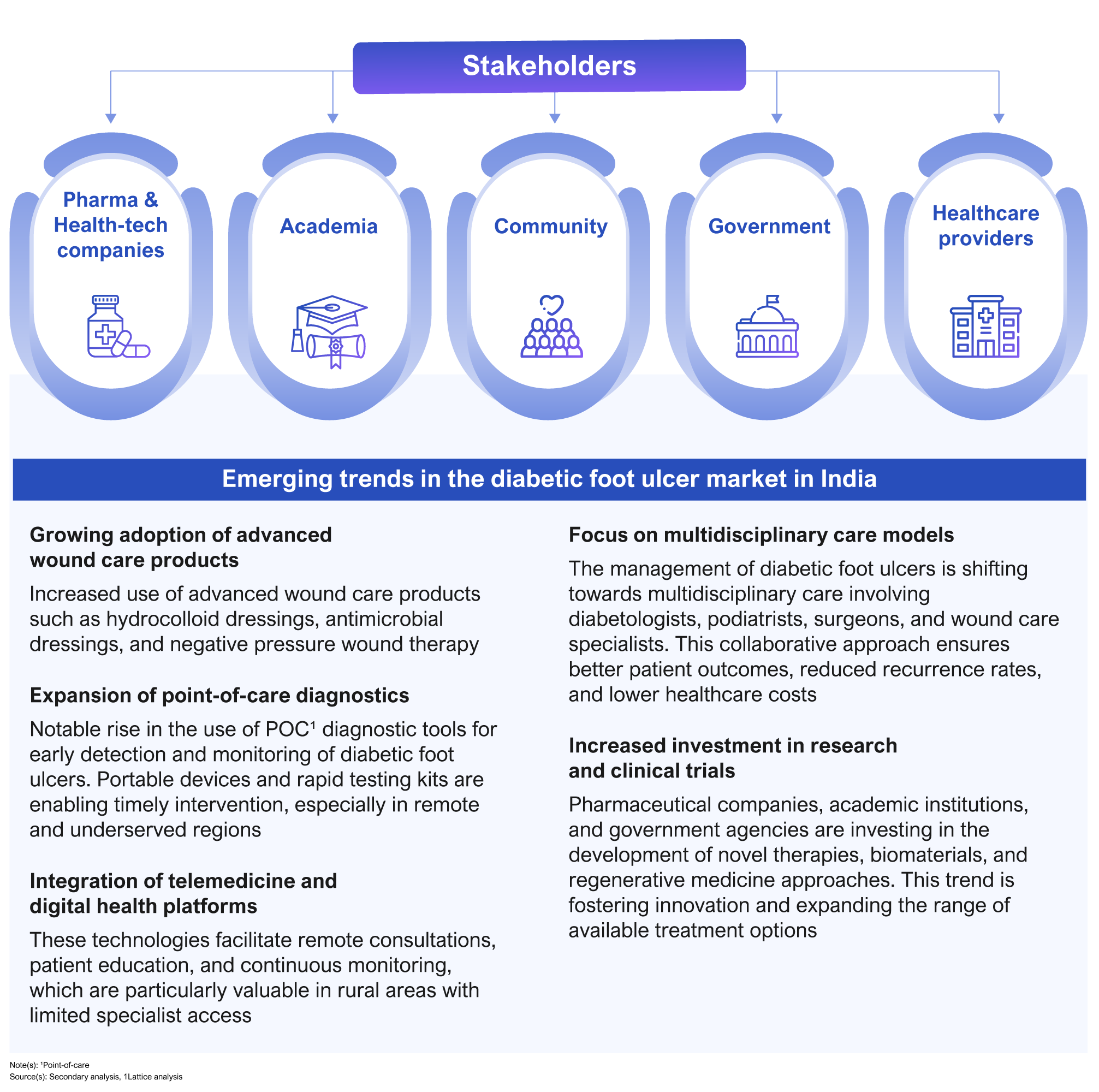
The diabetic foot ulcer market in India is evolving through collaboration among healthcare providers, government agencies, academia, communities, pharmaceutical companies, and health-tech companies.
- Advanced wound care: Adoption of advanced wound-care solutions is growing across antimicrobial dressings, hydrocolloid dressings, and negative pressure wound therapy.
- Point-of-care diagnostics: Point-of-care diagnostics are expanding to support faster detection and monitoring of foot ulcers.
- Telemedicine and digital health: Telemedicine and digital health platforms are improving access to specialist care, patient education, and remote monitoring, particularly in underserved regions.
- Multidisciplinary care: There is increasing emphasis on multidisciplinary care models integrating diabetologists, podiatrists, surgeons, and wound-care specialists to improve clinical outcomes and reduce recurrence and healthcare costs.
- Research and innovation: Continued investment in research, biomaterials, regenerative medicine, and clinical trials is further expanding the range of innovative treatment options available for DFU management.
Collaboration among various stakeholders has resulted in several positive changes in the Diabetic Foot Ulcer care segment
Beyond diabetic foot ulcer management
DFU management sits at the intersection of disease burden, treatment ecosystems, medical devices, diagnostics, and healthcare delivery.
Explore related 1Lattice perspectives across Pharma and Biotech, Medical Devices, and MedIQ.
Stay informed on the healthcare markets, technologies, and developments shaping India.