- India’s in vitro diagnostics (IVD) market is evolving, driven by recurring reagent demand, expanding diagnostic testing and growing adoption of analysers and molecular platforms.
- Clinical chemistry, clinical immunoassay and haematology account for ~77% of India’s IVD market, while competition is increasingly shaped by test-menu breadth, cost per test and instrument uptime.
- Government initiatives, point-of-care testing and diagnostic network expansion are shaping opportunities for IVD manufacturers, medtech players and diagnostics businesses across India.
India’s in vitro diagnostics (IVD) market is evolving as diagnostic testing expands, competition shifts beyond individual products, and domestic manufacturers strengthen their presence across diagnostic platforms. The market’s economics are shaped by a combination of instrument placements and recurring reagent demand, while test-menu breadth, cost per test and instrument uptime are becoming increasingly important competitive factors.
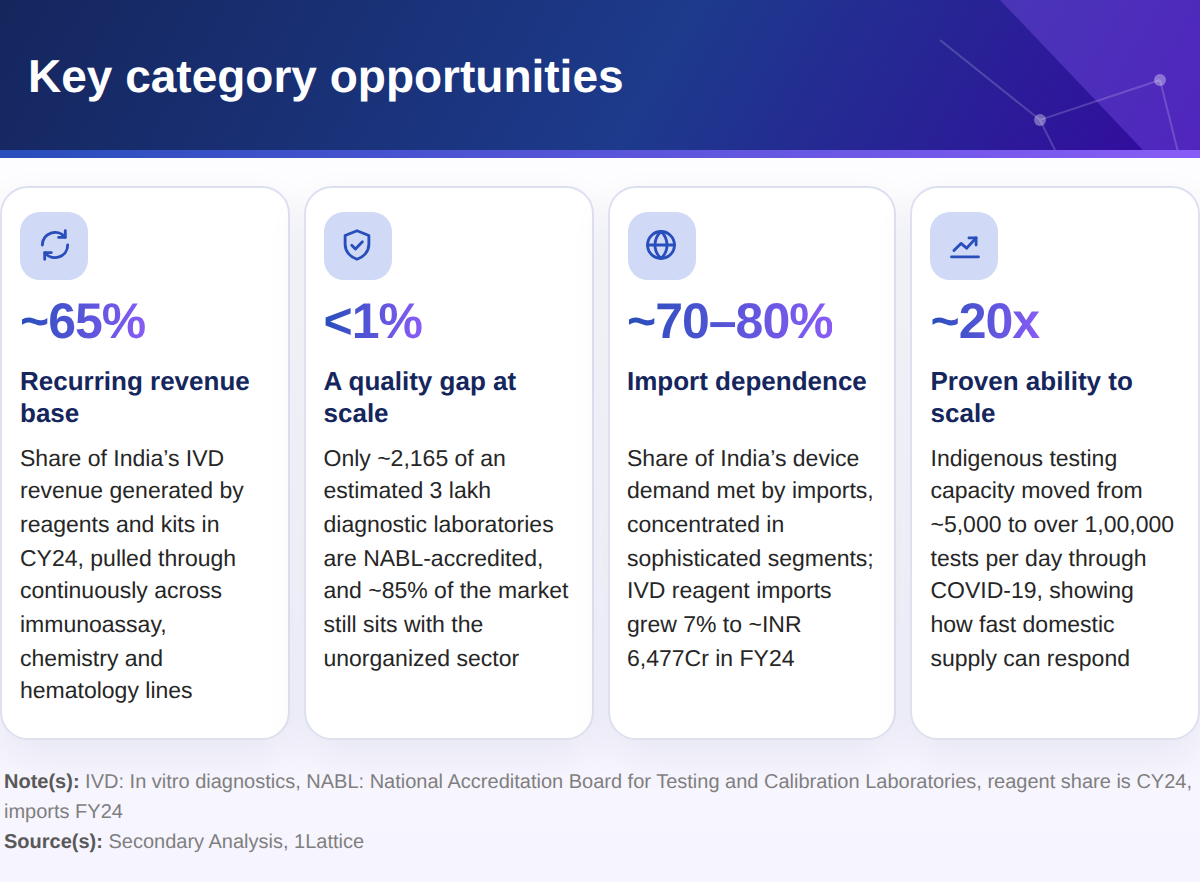
India’s IVD market remains highly fragmented, with limited laboratory accreditation and significant import dependence highlighting gaps in quality assurance and domestic supply. At the same time, Indian manufacturers are expanding beyond rapid tests into analyzers and molecular platforms, broadening the competitive landscape across both instruments and consumables.
Reagents account for ~65% of India’s IVD revenue, creating a recurring revenue stream; high import dependence of ~70-80% also creates opportunities for domestic players
- Demand is shifting from episodic sick-care to repeat, protocol-driven testing - chronic monitoring, pre-surgical panels, and employer/insurer screening
- Competition is shifting from instrument specs to menu breadth, cost per test, and uptime, with reagent contracts driving margins
- Testing volumes are decentralising faster than they are growing, moving from metro reference labs to Tier 2-3 centres and point-of-care settings
- Indian players have expanded from rapid tests into analysers and molecular platforms, making menu position rather than capability the key battleground with MNCs
A market built around instruments and recurring reagent demand
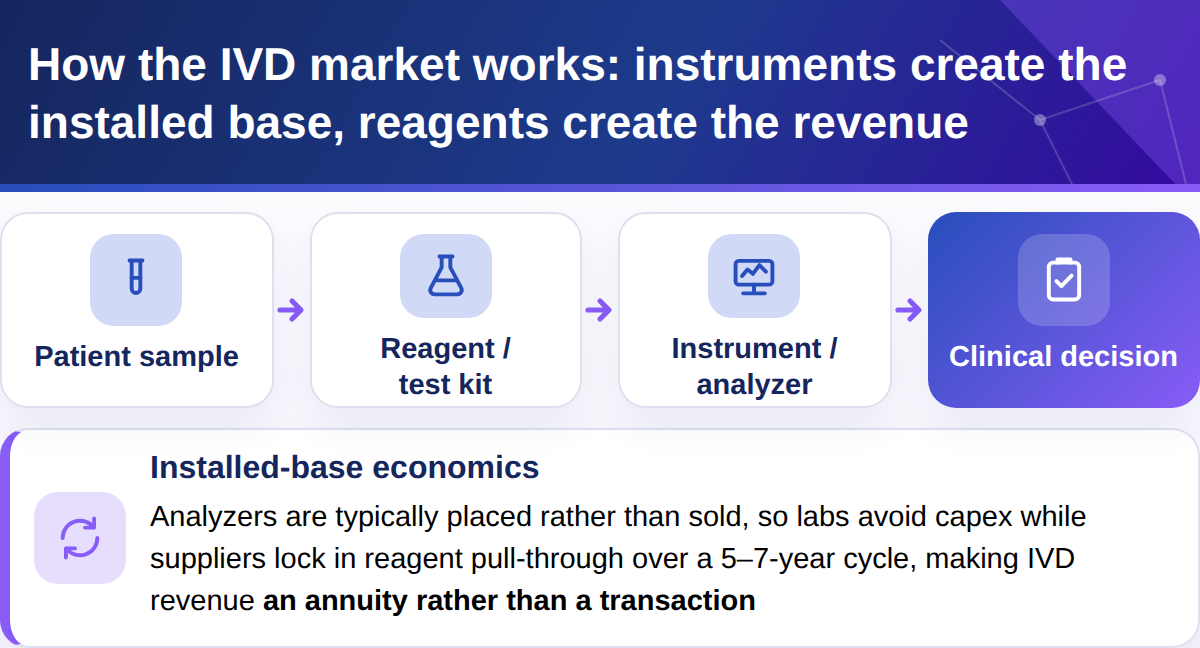
IVD follows a distinctive business model in which instrument placements can establish a long-term presence within laboratories, while recurring reagent consumption supports ongoing demand. This makes the installed instrument base an important consideration for companies competing across the diagnostics value chain.
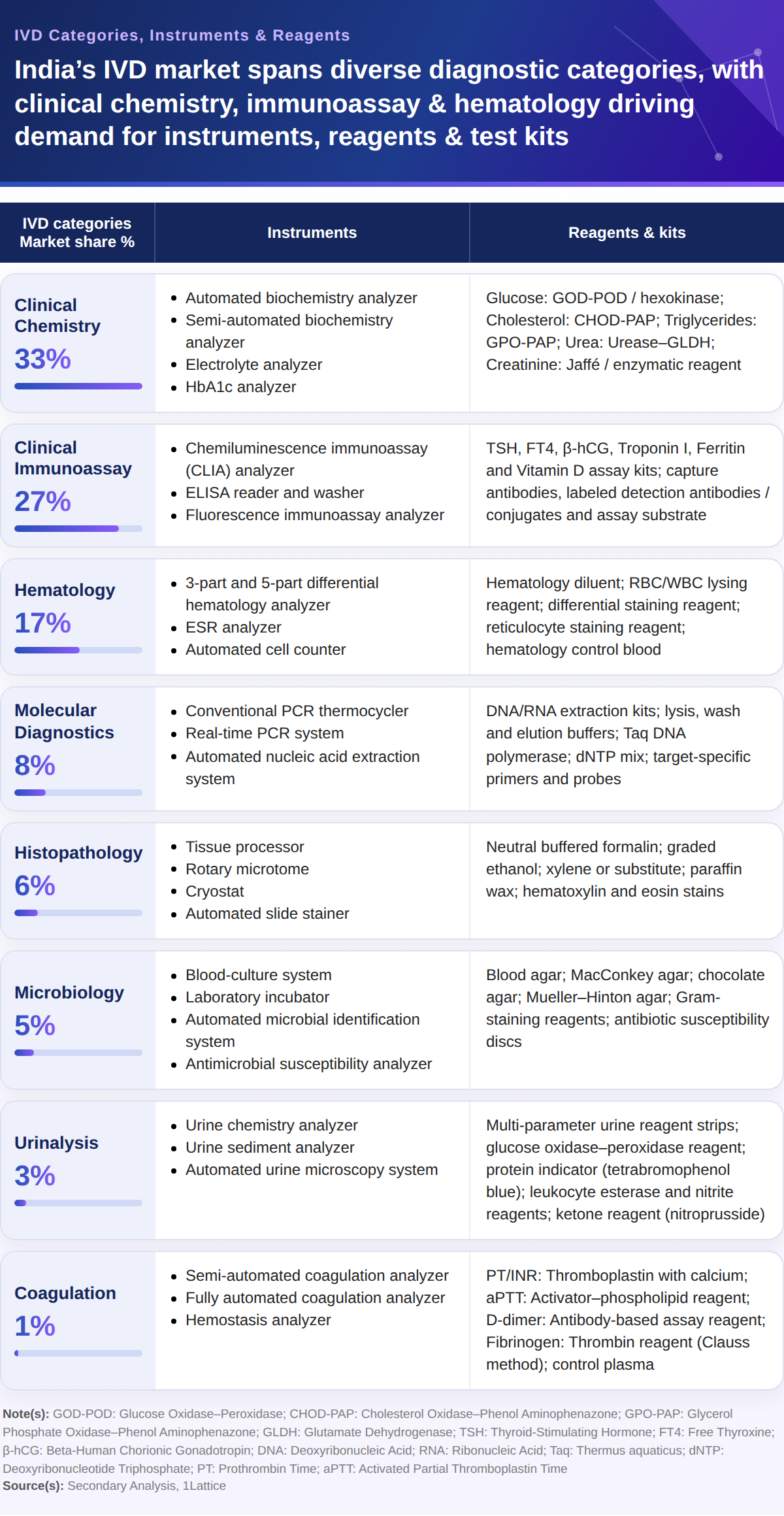
India’s IVD market spans a broad range of diagnostic categories, each supported by specialised instruments and test-specific reagents. Clinical chemistry, clinical immunoassay and haematology together account for approximately 77% of the market, underscoring their importance to routine diagnostic testing.
Other segments, including molecular diagnostics, histopathology, microbiology, urinalysis and coagulation, address more specialised testing requirements. Across these categories, instruments enable the analysis of patient samples, while reagents and test kits support the detection or measurement of specific parameters.
This diversity creates distinct product and commercial requirements across the IVD landscape, ranging from routine laboratory testing to specialised diagnostic applications.
Competition is expanding across platforms and consumables
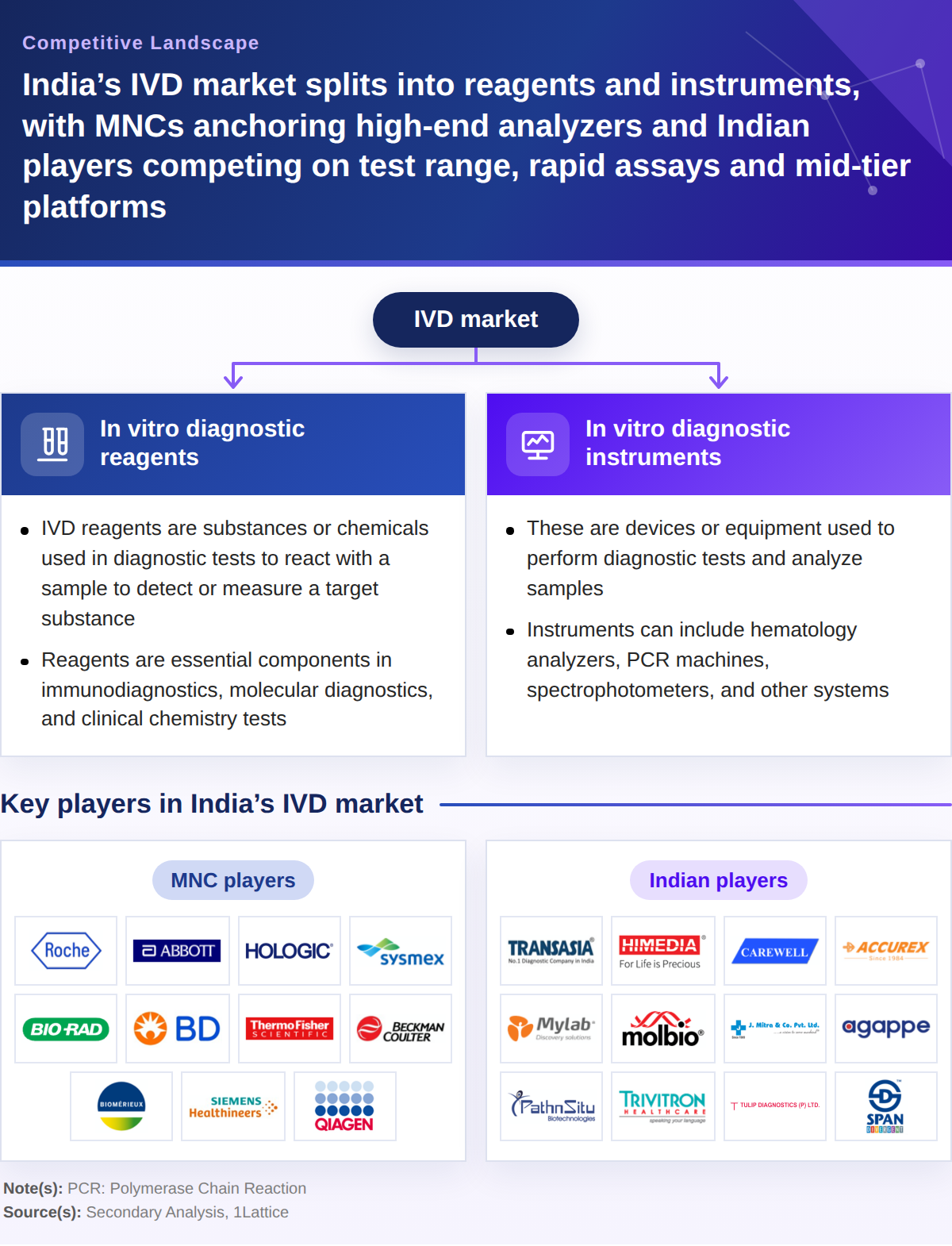
The competitive landscape reflects distinct roles across instruments and reagents. Multinational companies remain prominent in the high-end analyser segment, while Indian players are expanding their presence through broader test menus, rapid assays and mid-tier platforms.
Competition therefore extends beyond the sale of diagnostic equipment. The availability and performance of reagents, test-menu breadth, cost per test and instrument uptime are increasingly important to laboratories evaluating diagnostic solutions.
For market participants, this creates opportunities across both diagnostic platforms and the consumables required to support routine and specialised testing.
Demand is expanding, but access and capability gaps remain
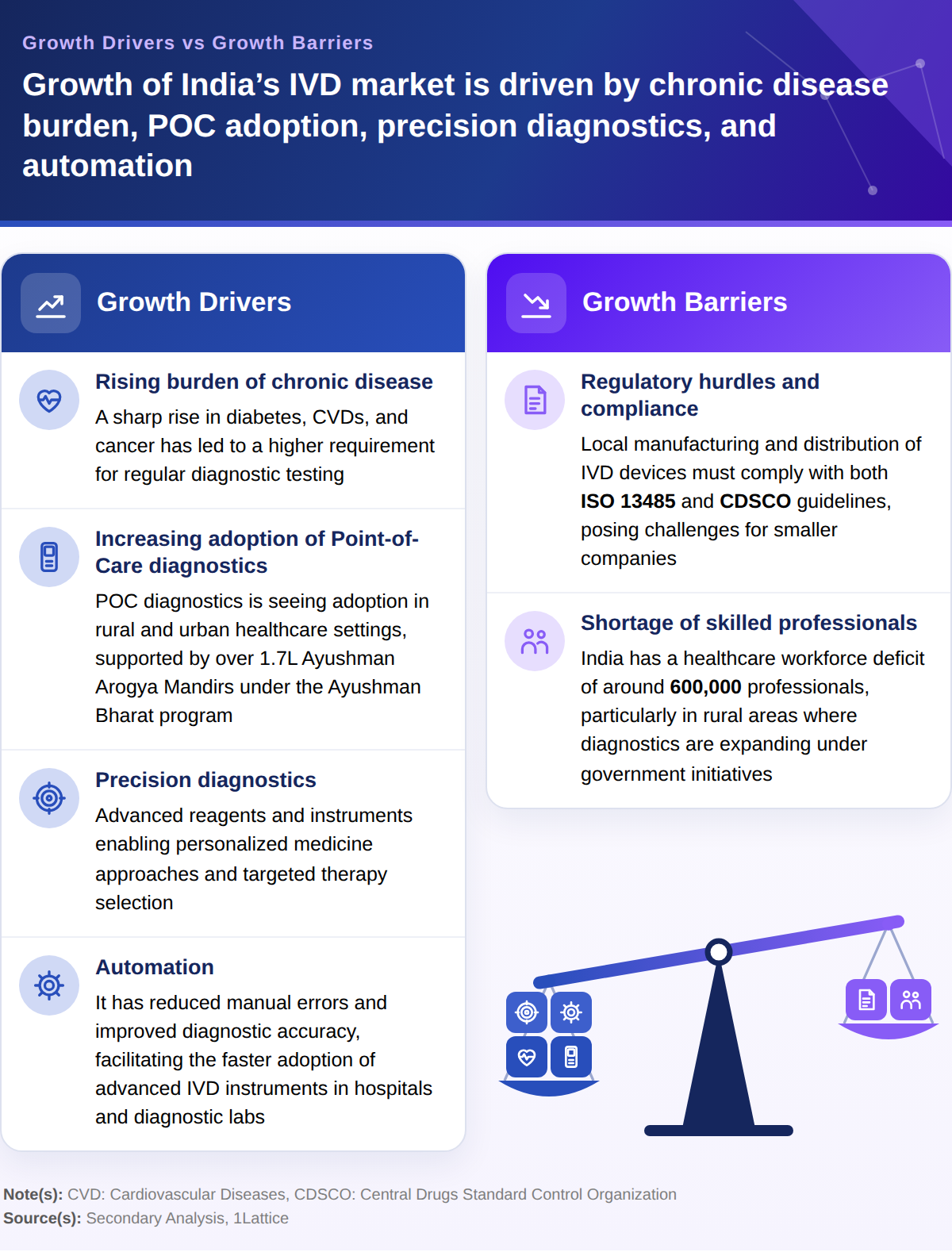
Rising chronic disease prevalence, greater adoption of precision diagnostics and increasing automation are supporting IVD demand. The expansion of point-of-care testing through more than 1.7 L Ayushman Arogya Mandirs is also helping extend diagnostic access.
However, regulatory compliance requirements and an estimated workforce deficit of around 6 L, particularly in rural areas, remain important constraints for the sector.
These dynamics point to a market where future growth will depend not only on expanding diagnostic volumes, but also on improving the availability, affordability and reliability of diagnostic infrastructure.
Policy and network expansion could reshape the opportunity
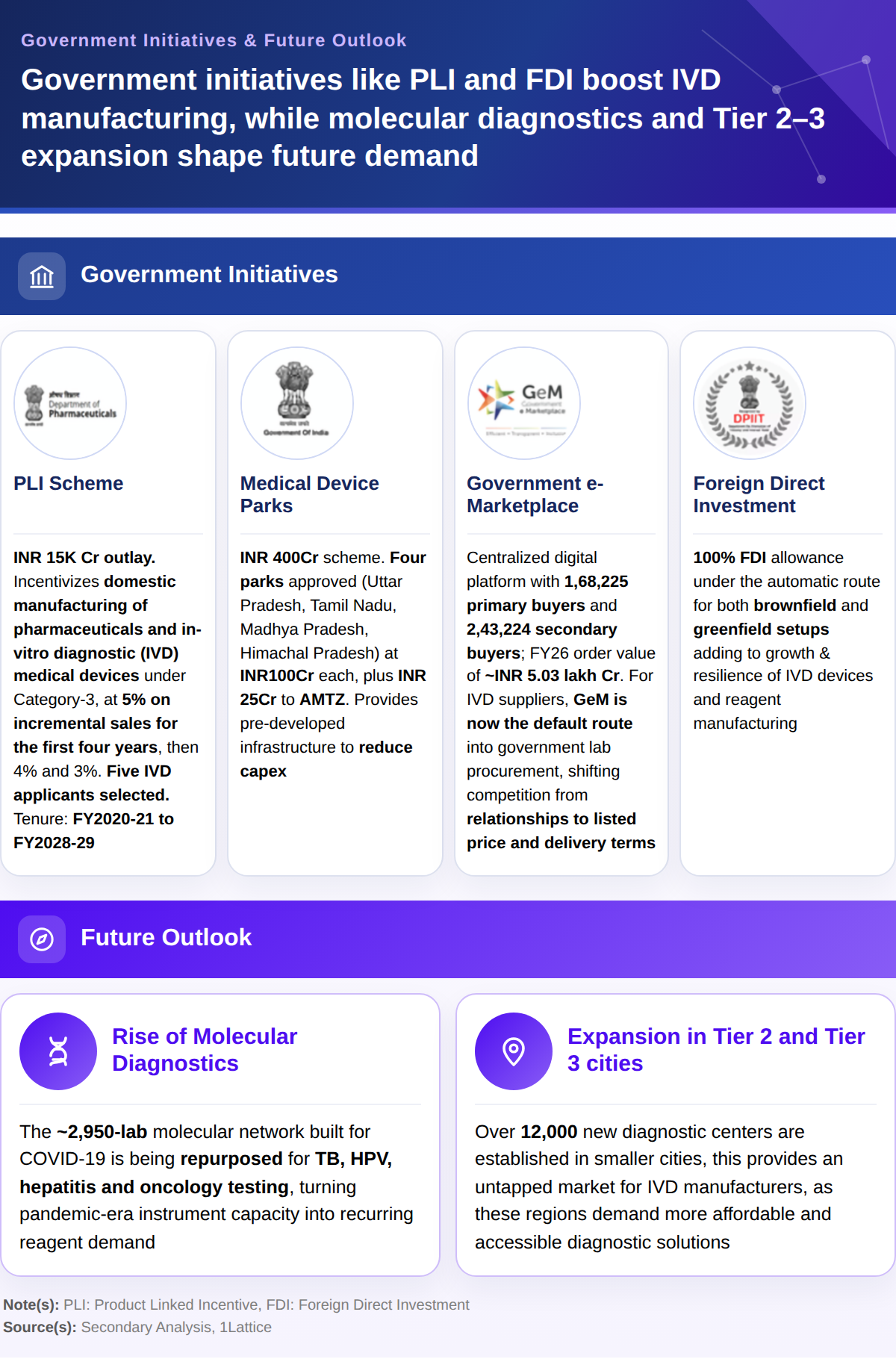
Government initiatives such as the Production Linked Incentive (PLI) scheme, medical device parks and the Government e-Marketplace (GeM) are supporting domestic manufacturing and creating additional procurement opportunities.
Looking ahead, the repurposing of COVID-era molecular testing infrastructure and the addition of more than 12K diagnostic centres in smaller cities could expand access to diagnostic testing and create additional recurring demand for reagents.
Together, these developments could strengthen the role of domestic manufacturing while expanding the addressable market for diagnostic platforms and consumables.
MediQ: Mapping India’s diagnostics opportunity
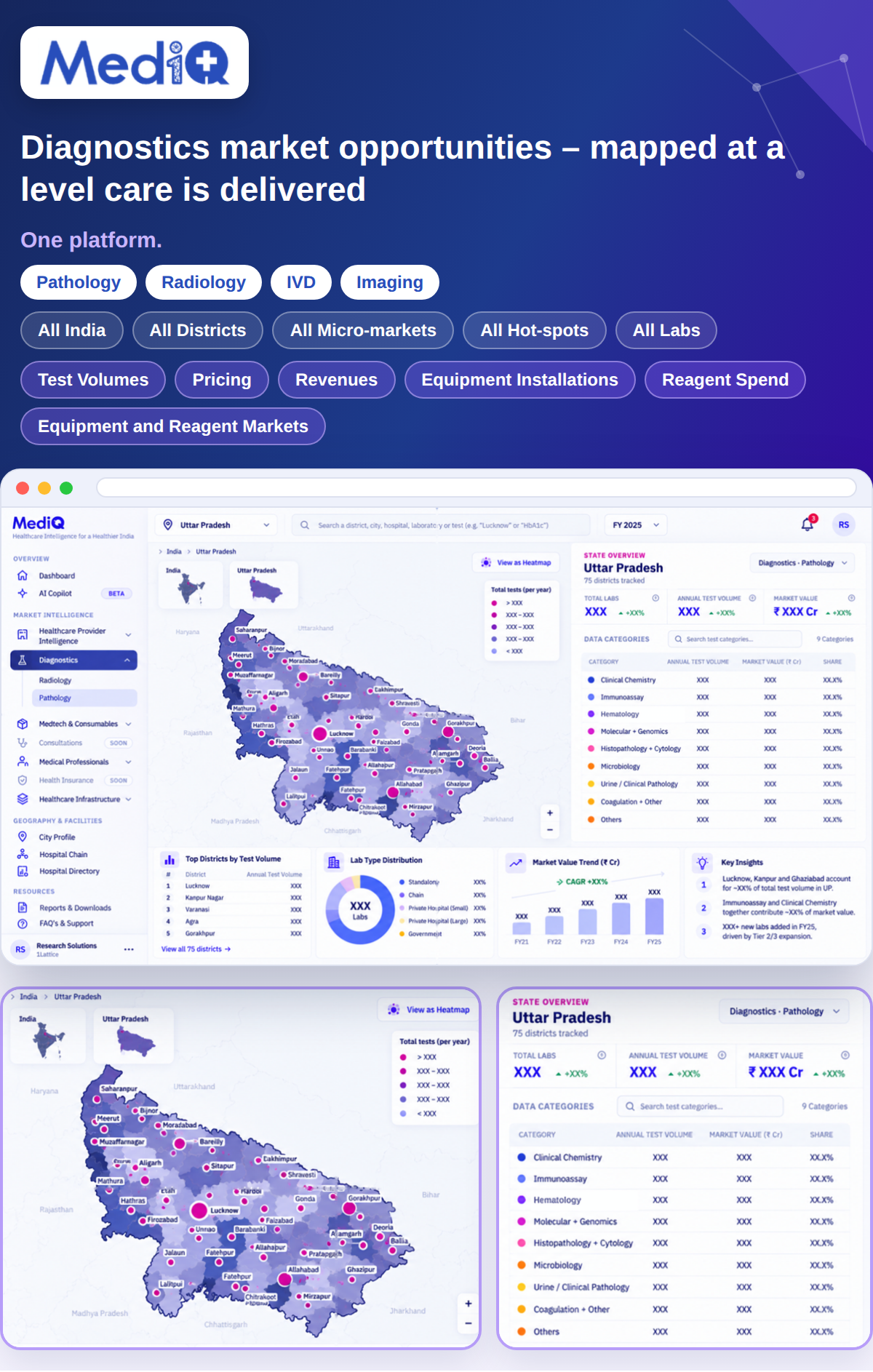
MediQ by 1Lattice provides a granular, India-wide view of the diagnostics market, helping businesses understand where and how diagnostic care is delivered.
It maps pathology, radiology and IVD markets across states, districts, cities, hospitals and laboratories, with data covering test volumes, pricing, market value, laboratory infrastructure, equipment installations, reagent spend and market shares.
This enables diagnostics companies, medtech players, hospitals and investors to identify high-potential markets and facilities, size opportunities, benchmark competitors, prioritise geographies, and support market-entry, sales and expansion decisions.