
In FY27, investment in India’s healthcare and life sciences (HLS) sector is flowing mainly to private hospitals, specialty care chains, and pharma manufacturing: businesses with predictable revenue, a clear path to scale, and multiple routes to exit. Private equity remains active, and the stock market has reopened to healthcare listings. Digital health is still attracting capital, but more selectively, as many models are still proving their economics.
Key takeaways
- Investors favor healthcare businesses with predictable revenue, scale potential, and clear exit routes, especially hospitals, specialty care chains, and pharma manufacturing.
- Private hospitals sit at the center of the investment story, with regional chains that have strong local brands in particular demand.
- India’s IPO market has reopened to healthcare listings, giving PE-backed companies and founders an alternative to private sales.
Why is India’s healthcare sector attracting investors?
India’s HLS sector has become a core destination for both domestic and global capital. The long-term drivers are strong:
- Rising incomes
- A growing burden of chronic disease
- Wider insurance coverage
- A persistent gap in quality care outside large cities
FY27 has added more supportive conditions, with private equity staying active and public markets open to healthcare companies again. Still, a few large deals can skew headline numbers, so it’s worth looking beyond total deal value to deal activity, the types of investors involved, and where their money is going.
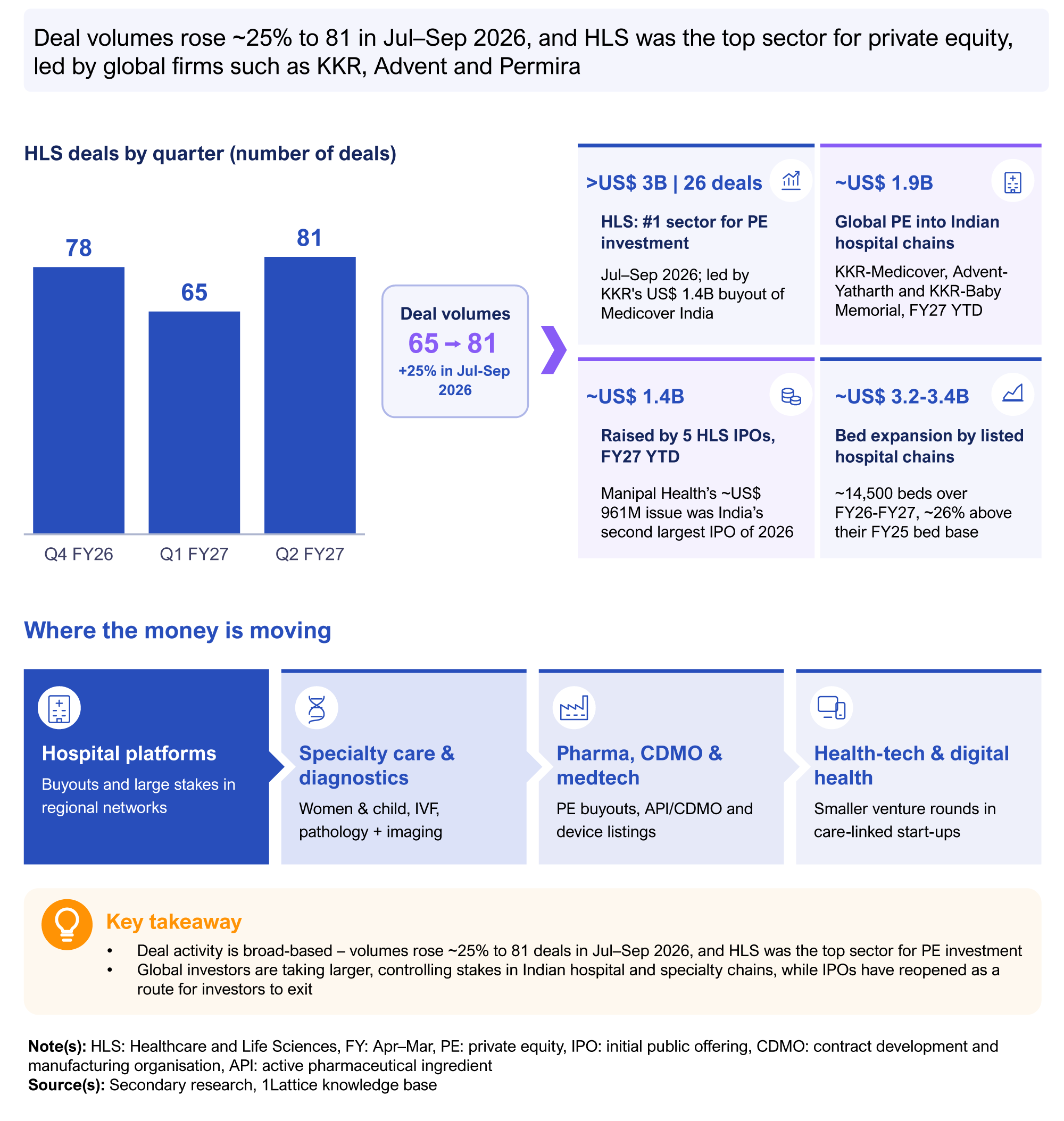
Investment in India’s healthcare and life sciences sector gained pace in FY27, led by global private equity in hospitals and a reopened IPO market
Which healthcare businesses attract the most investment?
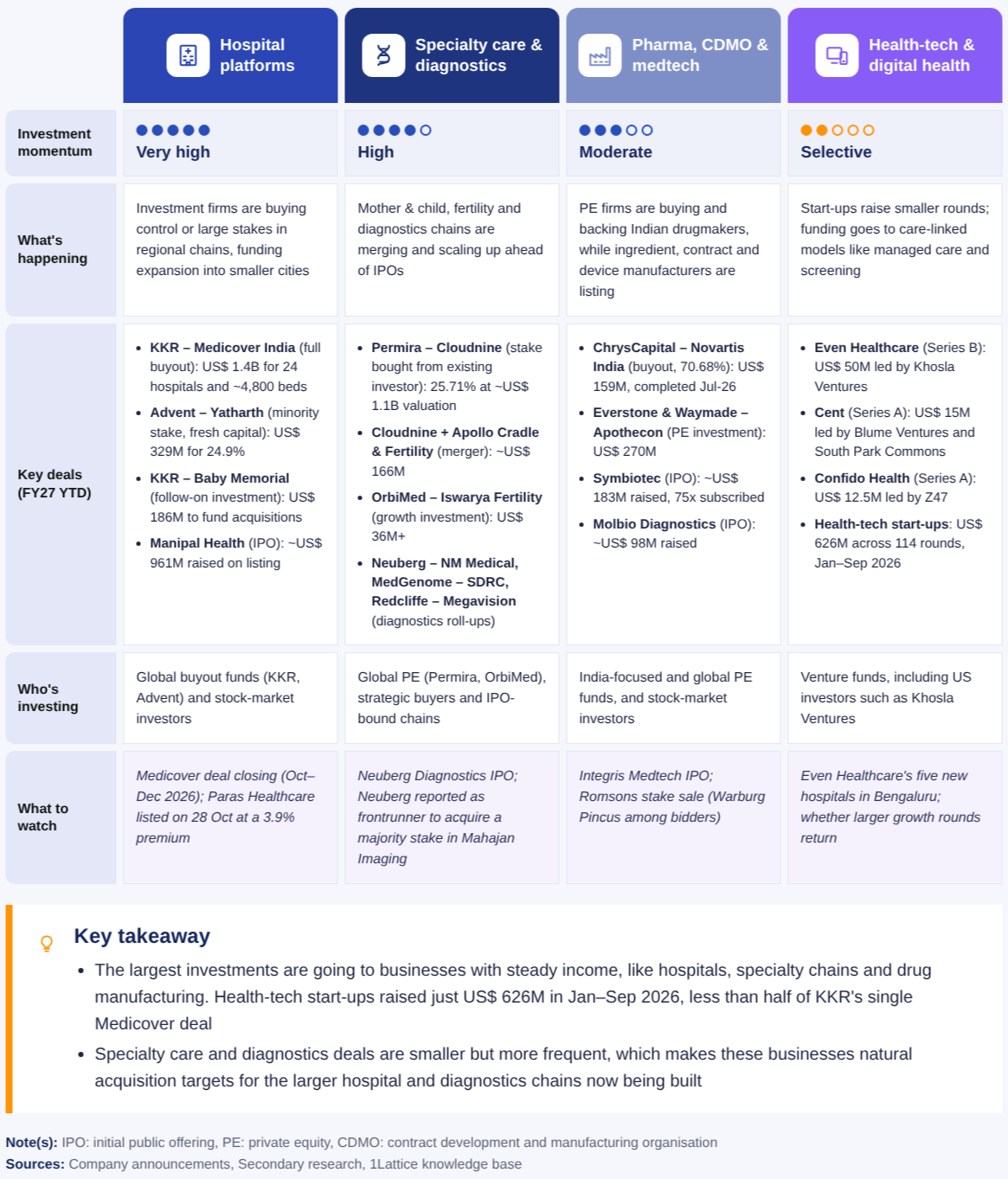
Not every part of the healthcare and life sciences sector draws capital equally. Investors look for predictable revenue, a clear path to scale, and multiple routes to an eventual exit. Hospitals, specialty care chains, and pharma manufacturing fit that profile well. Digital health funding is more selective, as many models are still proving they can make money.
Each segment also attracts a different type of investor: global buyout funds, healthcare-focused private equity, strategic buyers and venture capital firms. That’s why deal sizes, structures and timelines vary so widely across the sector.
Healthcare and life sciences investment in India is flowing mainly to hospitals, specialty care and pharma, while health-tech start-ups are raising smaller amounts
Why are investors focusing on private hospitals in India?
Private providers deliver a large share of India’s hospital care, and demand for quality specialist and tertiary treatment keeps outpacing supply, especially beyond the major metros. For long-term investors, hospitals offer:
- Visible, sustained demand
- Revenue growth through more complex treatments
- Room to expand through new beds and acquisitions
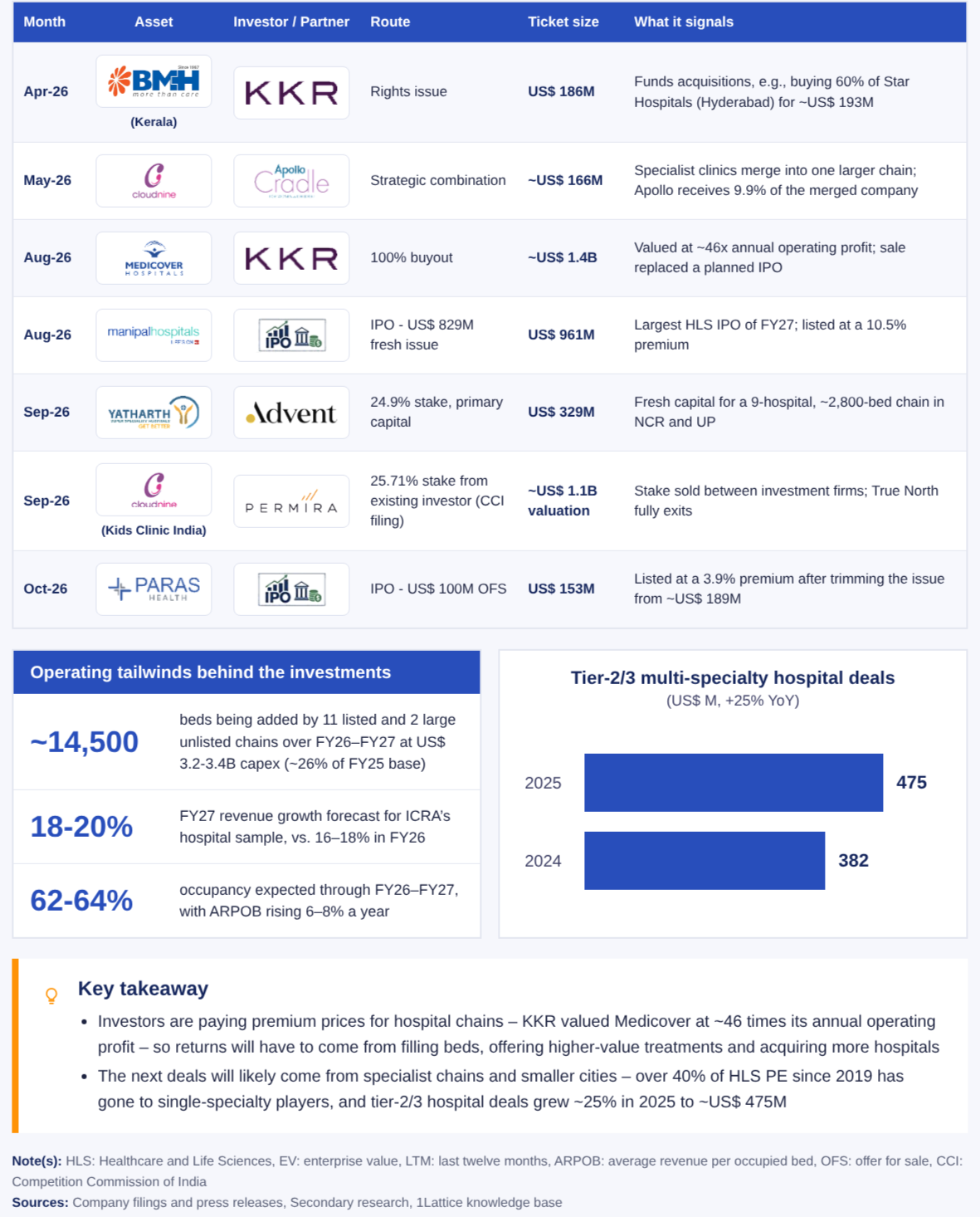
This has made regional hospital chains with strong local brands and expansion potential increasingly sought after. But hospitals take time and significant capital to build and integrate, so valuations, operating performance and growth plans need careful assessment.
Private hospitals draw a large share of FY27 healthcare and life sciences investment, supported by rising revenues, steady occupancy and new beds
Is the IPO market open for healthcare companies in India?
Yes, after a period of selective activity, Indian equity markets have again become receptive to healthcare IPO listings. That gives PE-backed companies and founders an alternative to private sales.
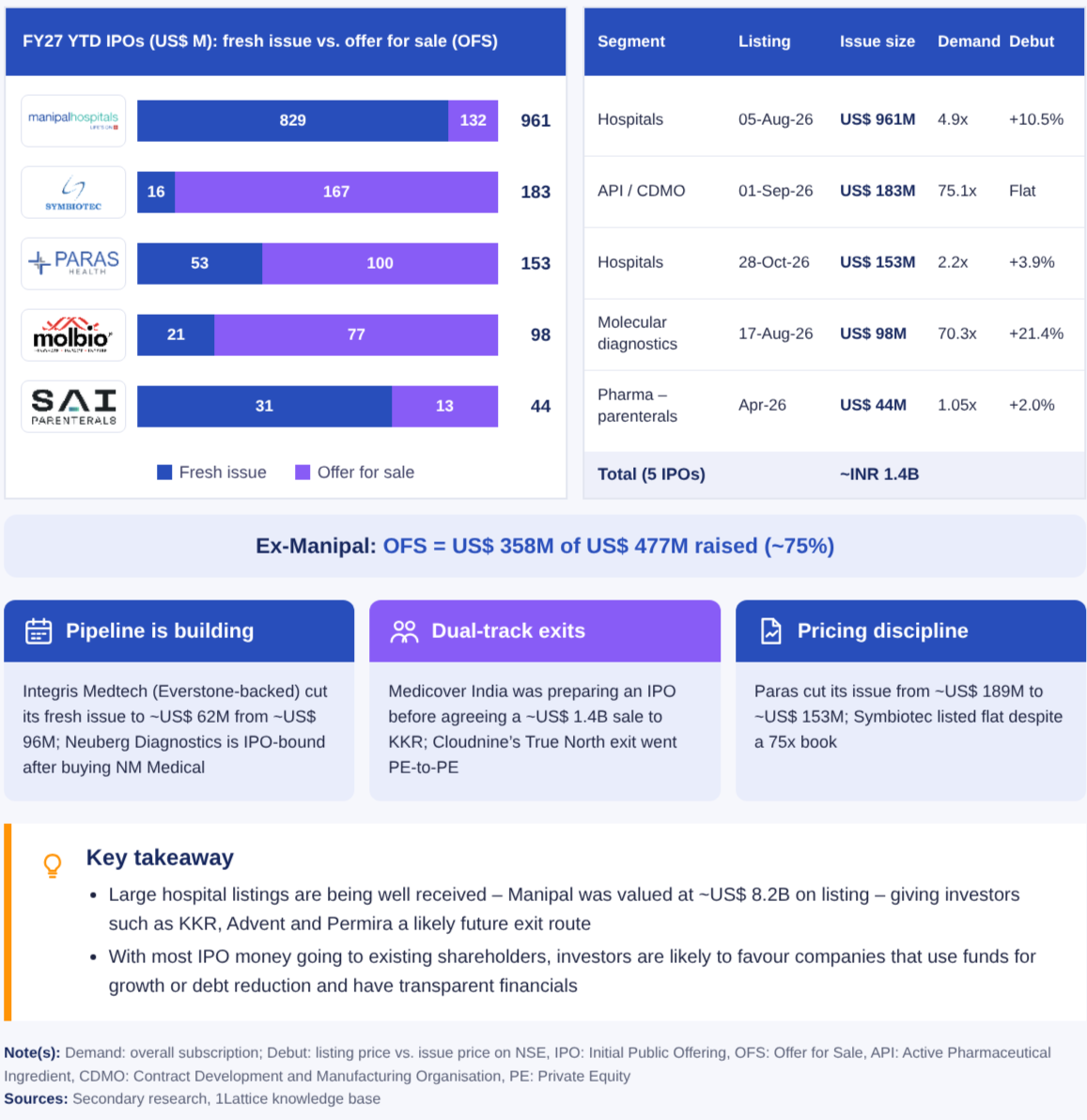
An IPO can serve two purposes: raising fresh capital to fund growth, or letting existing shareholders sell part of their stake. The balance between the two, and how public investors respond to pricing, shows whether healthcare ipo listings are mainly funding growth or providing exits.
Healthcare and life sciences IPOs raised ~US$ 1.4B in FY27 YTD; excluding Manipal, ~75% of the money went to existing shareholders rather than to the companies
What trends will shape healthcare investment in India for the rest of FY27?
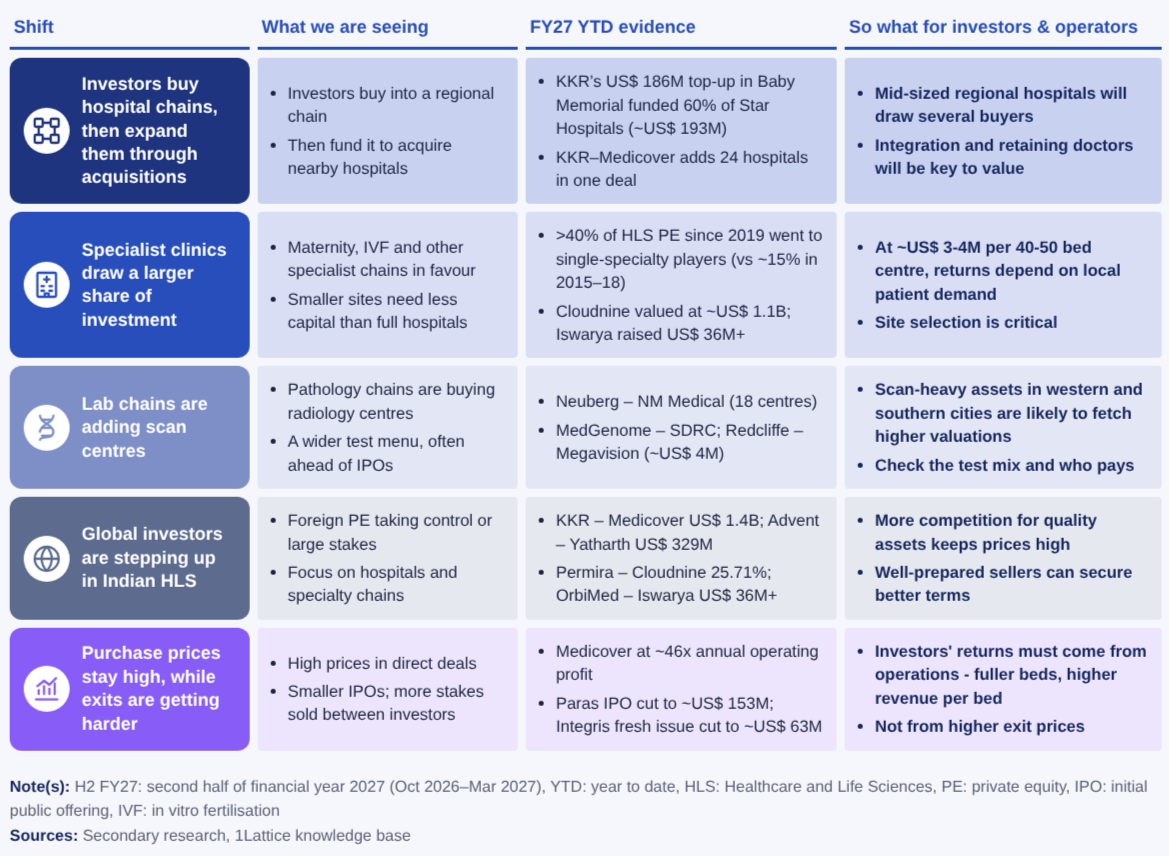
Beyond individual deals, five broader shifts are reshaping the sector:
- Consolidation of hospital networks
- The growing appeal of specialist care formats
- Closer integration within diagnostics
- Rising interest from global investors
- A more demanding environment for exits
These shifts will influence which businesses attract capital, and on what terms. Spotting them early can help investors build stronger deal pipelines and help operators position their businesses for future investment.
Healthcare and life sciences investment in H2 FY27 is likely to centre on hospital consolidation, specialist care and global investors, at persistently high valuations
How 1Lattice can help
MediQ healthcare market intelligence helps investors and healthcare operators see where demand, capacity, and growth are concentrated across India’s hospital landscape. As Asia’s leading market intelligence platform, 1Lattice supports investors in building stronger deal pipelines, and operators in preparing for their next round of investment.