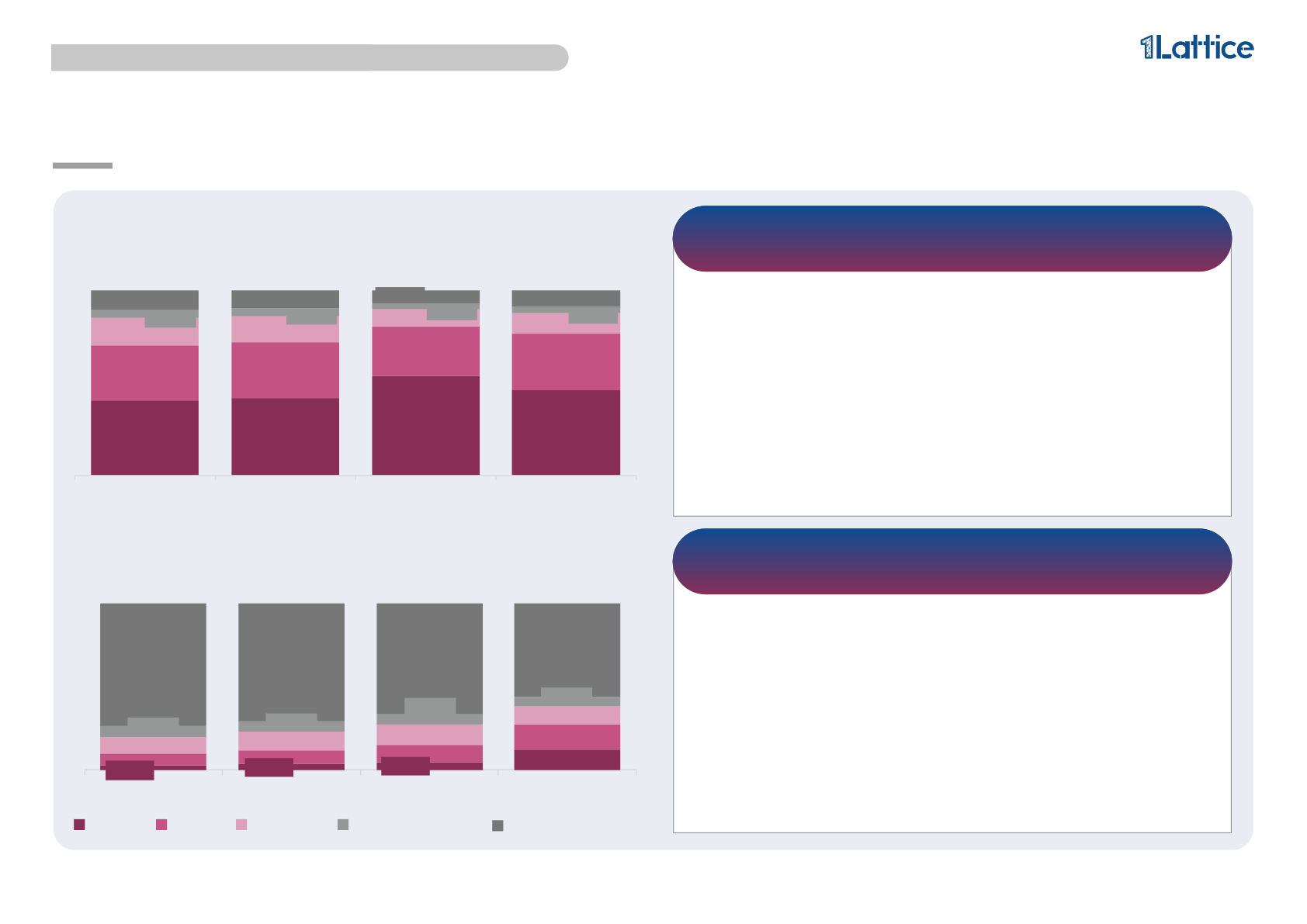
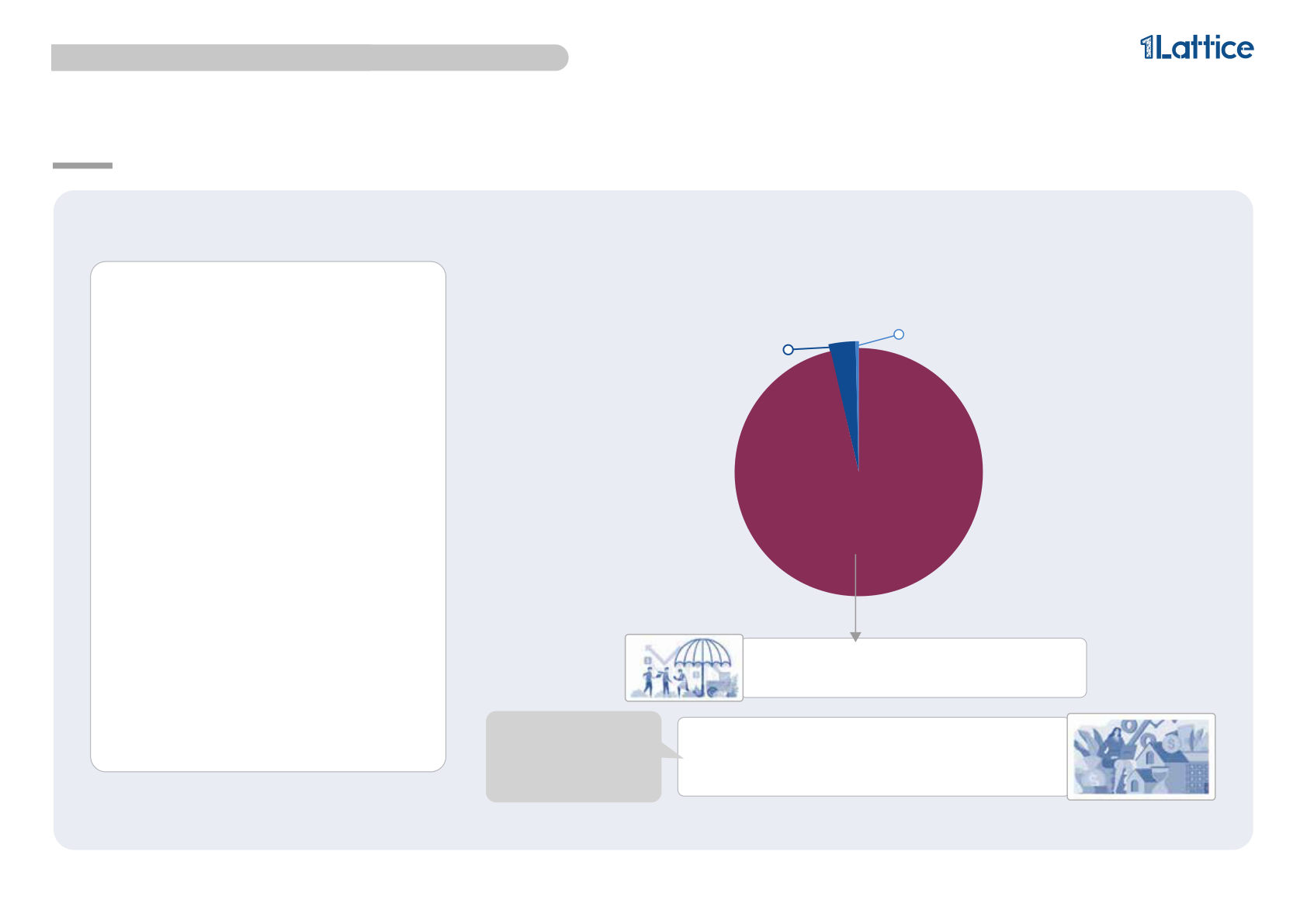
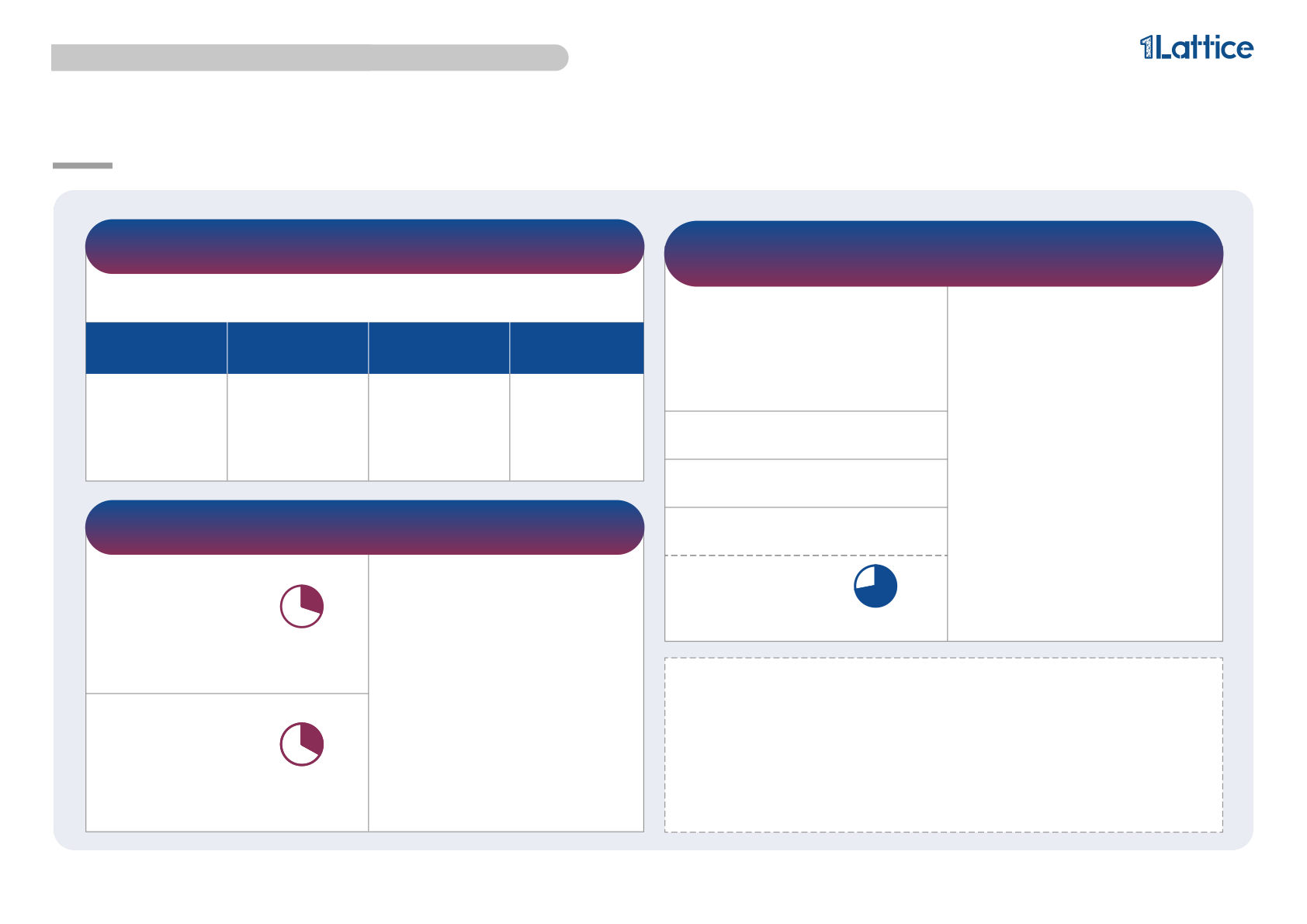
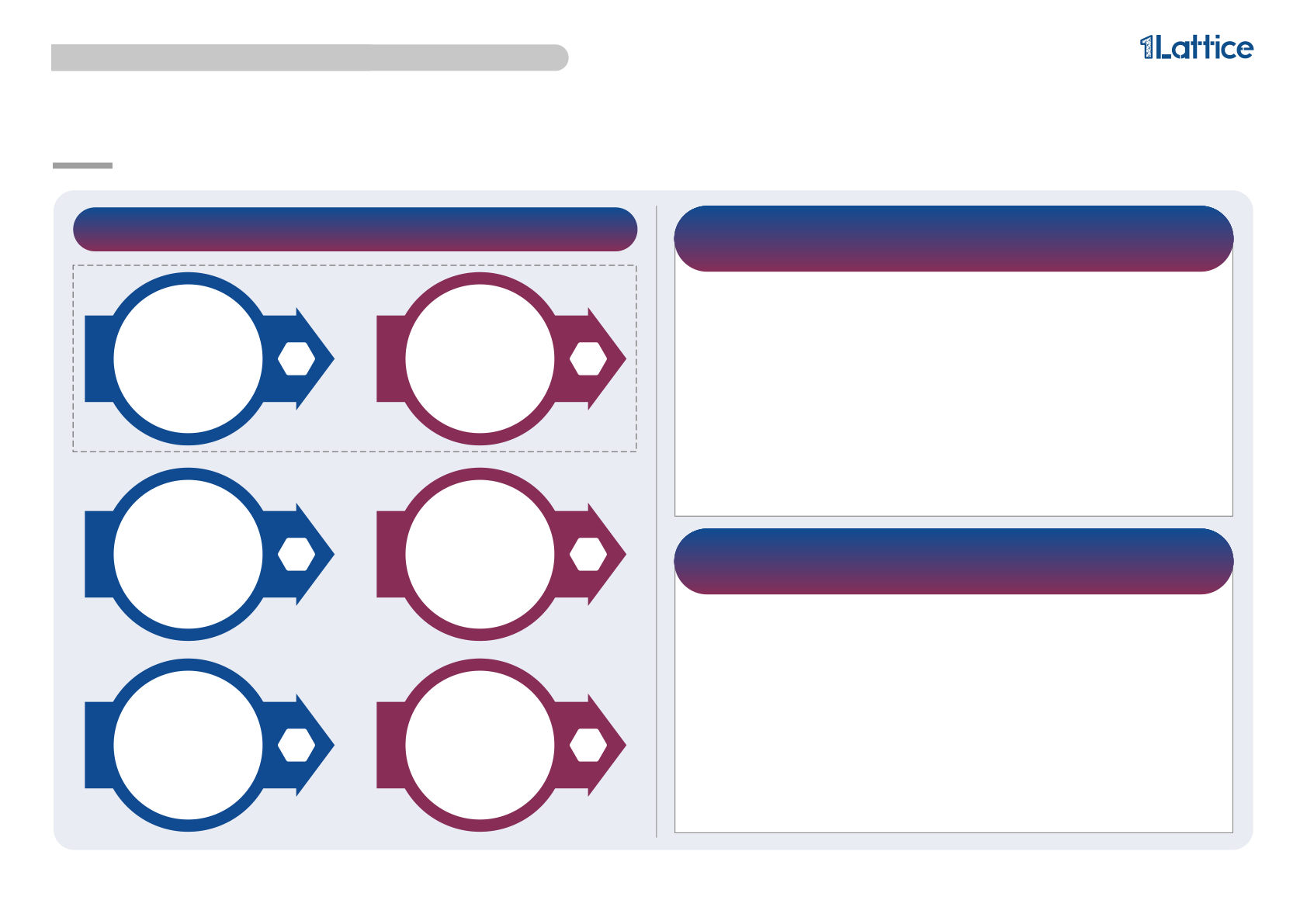
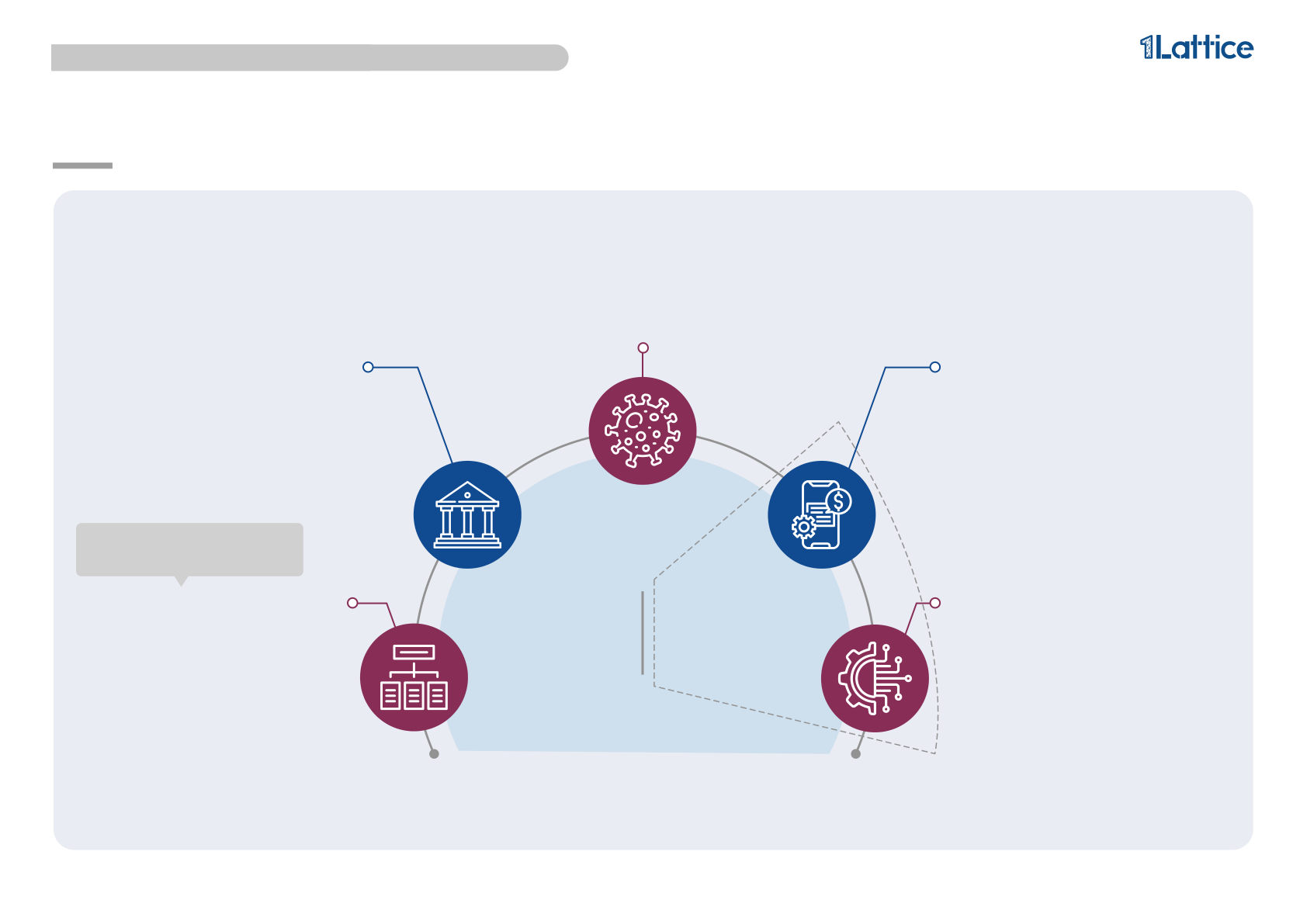
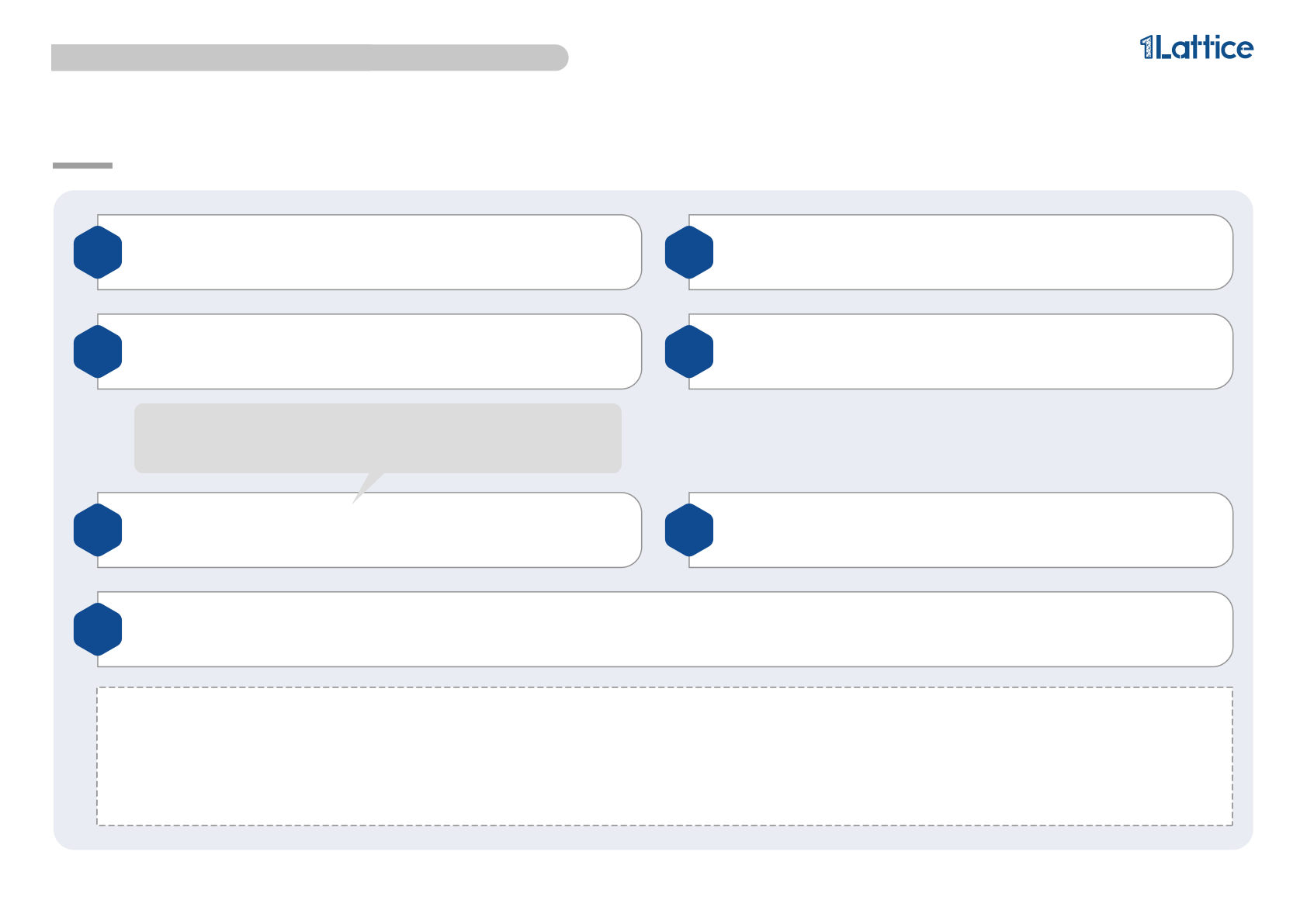
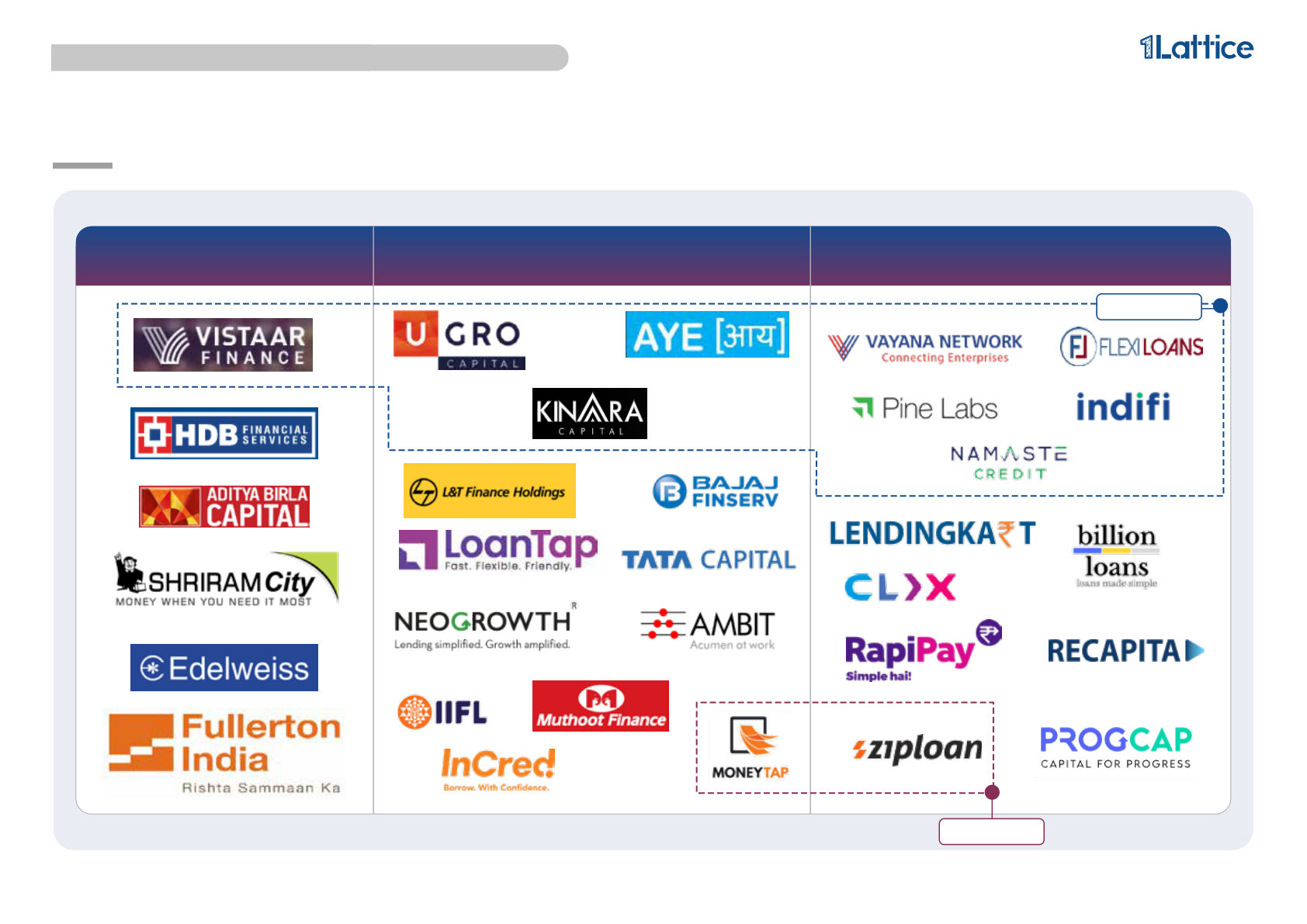
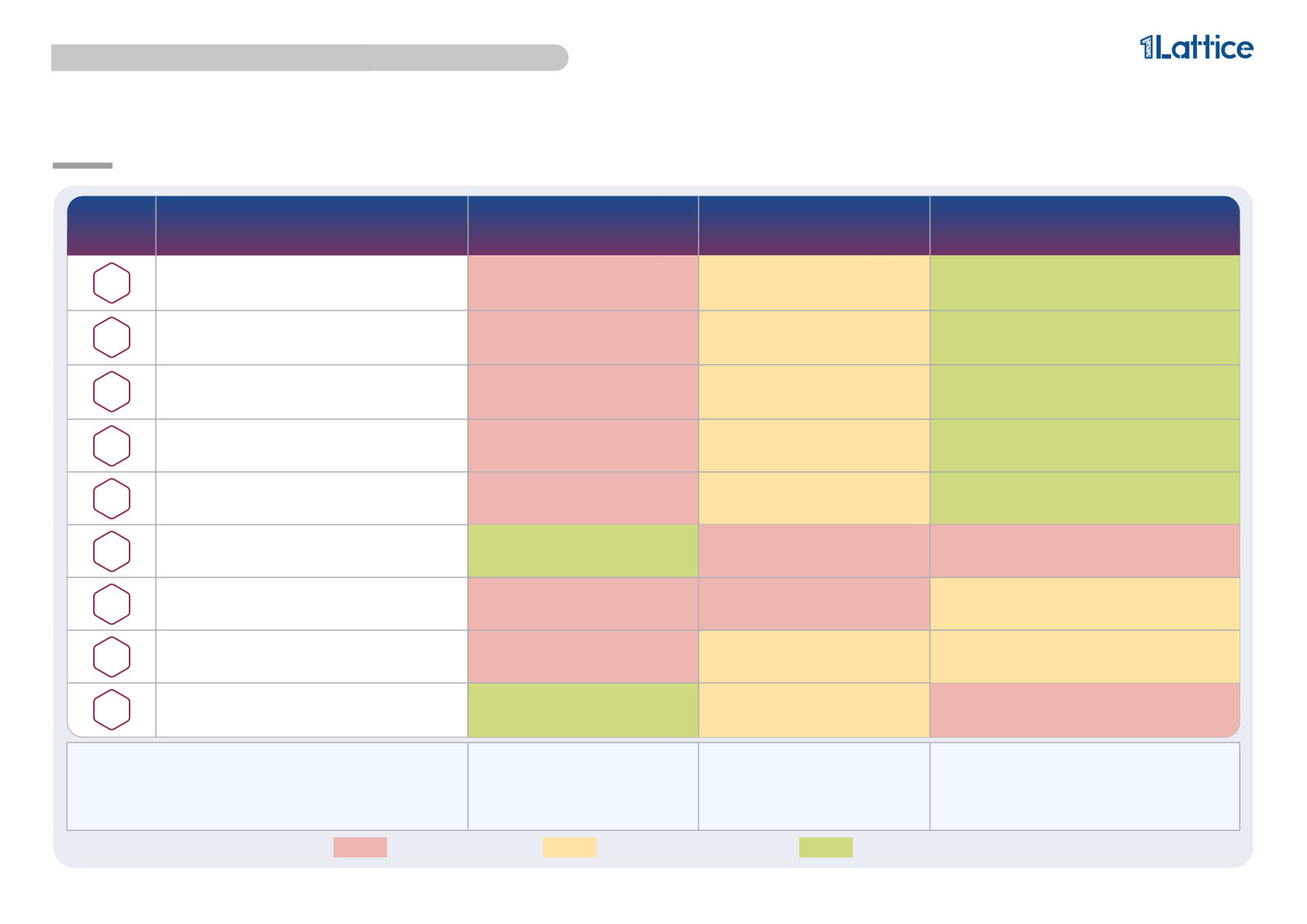
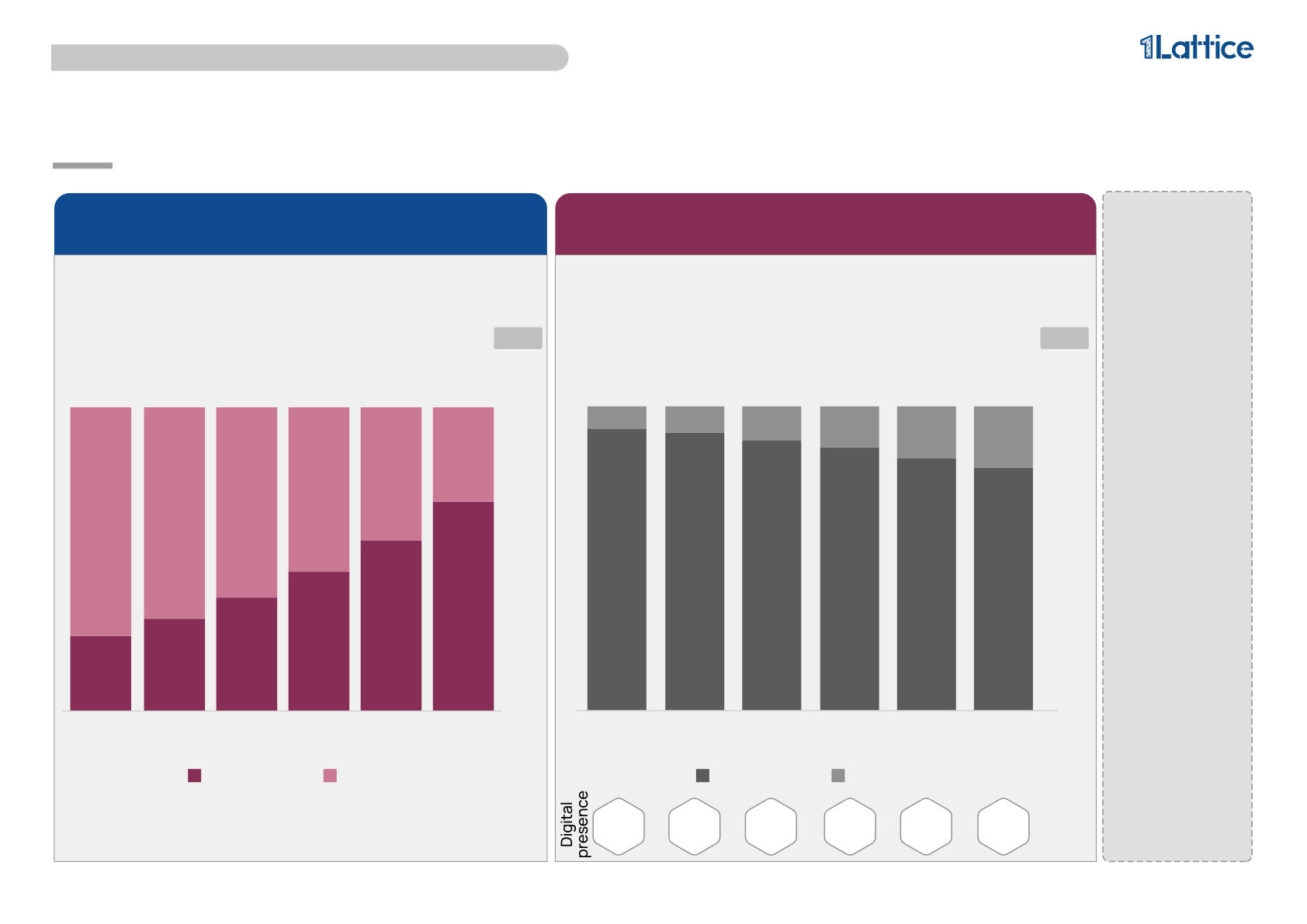
MSME WORKING CAPITAL LANDSCAPE November 2023 @Lattice Technologies Pvt. Ltd. About the product At 1Lattice, we proudly tailor our array of solutions to develop insightful micro-market assessments to meet the unique needs of our esteemed clients in the facilitate exploration into new geographies, whether it Financial Services and Fintech sectors. Our flagship be new locations within bustling Metro and Tier 1 product, 1nsights, consistently takes center stage in cities or burgeoning Tier 2 and Tier 3+ cities these partnerships. 1nsights has been the linchpin in our efforts to create 1nsights offers an extensive range of services, a comprehensive and actionable Credit and MSME including market assessments with comprehensive Working Capital Landscape report. It provided us with market sizing, in-depth exploration of market potential the tools and data necessary to understand the and future outlook, precise customer segmentation market landscape, identify opportunities, and address and persona mapping, thorough competitive challenges, empowering lenders to make informed landscape analysis, and rigorous commercial due decisions and thrive in the Indian MSME lending diligence for potential M&A opportunities. It also helps market. In the dynamic and ever-evolving unsecured MSME lending in India is Foreword landscape of MSME Working capital in poised to reach US$ 90B by FY26, India, this report stands as a with digital lending channels comprehensive exploration of the anticipated to grow at an impressive challenges and opportunities that ~29% CAGR. This report aims to shed shape the financial destinies of light on these growing opportunities millions of Micro, Small, and Medium and the ways in which technology is Enterprises (MSMEs). reshaping the financial landscape for MSMEs. India’s lending market has witnessed remarkable growth, surging ~100% This report is a helpful map for people between FY17 and FY22, reaching an who make important decisions about impressive ~INR 174T. Within this vast money and small businesses. At expanse, we find three key pillars: 1Lattice, we hold an optimistic outlook Retail lending, Microfinance lending, believing that this report will provide and Commercial MSME lending. Retail valuable insights. We eagerly and Commercial lending, each anticipate the opportunity to engage contributing ~49% and MFI ~2% of in an open dialogue with our partners the total lending market as of March across diverse industries. Together, 2022, are the twin engines propelling we can create a better and more India’s financial landscape. inclusive economy for everyone. The projection indicates that Harsh Salgaonkar Associate Vice President, BFSI Agenda Executive summary Credit lending landscape MSME landscape and working capital lending Way forward for MSME lending Executive summary – [1/2] • The lending space in India can broadly be categorized into retail lending, Microfinance lending, & commercial MSME lending • The total Indian loan outstanding market stands at ~INR 174T and grew ~100% between FY17 and FY22. Retail and Commercial lending each account for ~49.5% of the total lending market as of March’22 • Despite its importance in shaping country’s socio-economic development, MSMEs face a major challenge in obtaining sufficient financing , with an estimated credit gap of INR 33T , according to the IFC MSME sector (India) • With a 30% share of the economy’s GDP and 45% share of the total employment , MSMEs are the growth engines of the Indian economy • GoI revised MSME classification by inserting a composite criterion for both investment in plant & machinery & annual turnover • Rise in digital adoption presents prospects for further growth for MSMEs which are encouraged to market their products on the e-commerce site, especially through Government e-Marketplace (GeM) Challenges faced by the industry • The MSME industry largely faces pressing issues like labor, regulatory issues, lack of technology & standardized policies & access to affordable and timely credit • Exclusion of many MSMEs from formal lending ecosystems inhibits their growth; Only ~15% of MSMEs have access to formal credit - Lack of data, collateral, or documentation and lack of formal credit history as required by traditional financial institutions Working capital needs of MSMEs • The overall finance demand by MSMEs is INR 69.3T , with 70% of the credit requirement attributed to filling working capital gaps • Covid-19 further increased working capital requirements as MSME’s faced issues with financial liquidity & debt repayment © 1Lattice | © 1Lattice 05 Executive summary – [2/2] • It is highly incumbent upon stakeholders to facilitate flow of working capital and sort challenges like trust deficit, cumbersome disbursement, limited penetration, collateral requirement & inadequate financial literacy Whitespaces • Fintech and NBFCs are revolutionizing the MSME lending space and helping solve creditworthiness issues among banks using alternate data processing & technology • Pandemic has provided renewed impetus to MSMEs to digitalize and formalize . This helps paint a clear picture and enables brand evaluation for prospective loans and further financing • Collaboration between fintech, NBFCs & banks can expand the MSME reach, while enabling them with better credit decisioning tools • The Government of India has come up with many credit schemes like PMMY, PMEGP, SMILE, CGT MSE, CLCSS etc. to grow credit landscape for MSMEs in India Market outlook (India) • TReDS is an online platform to facilitate the discounting of bills and invoices of MSME suppliers to help them manage their working capital and liquidity needs • The recently introduced Factoring Regulation Amendment Bill 2021 would create a progressive environment to enable factoring ecosystem which has the potential to be one of the most efficient low-cost working capital solutions for MSME • Unsecured MSME lending in India is expected to reach INR 7.5T by FY26 with digital lending channel expected to grow at ~29% CAGR • Untapped potential of MSMEs could be unfolded with the synergy of various credit enablers, market driven solutions, and structured regulatory landscape © 1Lattice © 1Lattice | 06 Agenda Executive summary Credit lending landscape MSME landscape and working capital lending Way forward for MSME lending Credit lending landscape Credit landscape in India is constantly evolving and changing; can broadly be categorized into Retail, Microfinance, and Commercial MSME lending Credit landscape in India MSME Loans is an important component of commercial loan market contributing 85% by volume as of Mar’21 Retail Microfinance Commercial lending lending MSME lending • Personal loans • Women to increase their income • Credit Cards generation Working capital Term • Consumer Durable • Loans for home loans loans loans grown • Two-wheeler loans • Overdraft facility • Secured term loan entrepreneurs on current account • Home loans • Loans to fund the • Emergency medical • Cash credit Kian purchase of • Auto loans loans commercial • Bills discounting • Business loans • Home improvement vehicles loans • Short-term /construction unsecured • Home equipment business loans extension/business • Loans offered improvement loans under the CGTMSE scheme • Bank guarantee • Letter of Credit Source(s): CRIF, Secondary Research, 1Lattice analysis © 1Lattice | 08 Credit lending landscape Commercial lending accounts for ~49.5% of the total lending market of ~INR 174T as of March, 2022, which grew ~100% between FY17 and FY22 Overall S. no. Parameters Micro Finance Key Investors Commercial Retail Portfolio as of Mar’22 174.4 1 85.2 2.9 86.3 (in INR T) Growth 2 13.6% 10% 8.6% 11.1% (%, FY21-22) Contribution to total lending 3 48.9% 1.6% 49.5% (%) Originations Value 4 42.3 2.3 66.5 111.1 (FY22, in INR T) Growth 5 22.9% 23.2% 73.2% (%, FY21-22) Originations Volume 2947.7 6 2310.7 614.8 22.2 (FY22, in L) Growth 7 38.5% 13.1% -4.3% (%, FY21-22) Source(s): CRIF, Secondary Research, 1Lattice analysis © 1Lattice | 09 Credit lending landscape MSME segment witnessed an increase in the originations share by value of ~38% in FY22 as compared to ~27% in FY21 under commercial loans Originations by Volume - MSME segment Rise in digital adoption presents prospects for Trends in MSME borrower segment in (%, L) terms of volume 14.4 14.6 23.2 22.2 • The total volume of originations stands at 22.2L in FY22 out of 7.2% 8.6% 10.3% 9.6% 2.9% which 87.9% (19.5L) accounts for the MSME borrower segment. 4.2% 3.5% 4.4% 9.4% 11.2% 14.0% 15.1% • Micro borrower segment continues to dominate originations (by 26.8% volume). However, there is a decline in share from 53.7% in FY21 30.6% 30.2% 29.7% to 46.1% in FY22 • Originations by value have been dominated by the large 53.7% 46.1% corporation throughout FY19-FY22. However, there has been a 42.0% 40.5% decline in the share from 73.6% in FY 2019 to 56.3% in FY22 FY 19 FY 20 FY 21 FY 22 Originations by Value - MSME segment Rise in digital adoption presents prospects for Trends in MSME borrower segment in (%, INR T) terms of value 58.5 37.6 38.3 66.5 • The total value of originations stands at INR 66.6T in FY22 out of which 38.1% (INR 25.3T) accounts for the MSME borrower 56.3% segment 66.6% 73.6% 70.7% • Increase in originations share (by value) of MSMEs from 27.2% in 5.5% FY21 to 38.1% in FY22 6.3% 10.8% 6.0% • Despite a decline in the Micro segment’s volume in FY22, the 6.8% 10.9% 14.9% 11.4% 9.8% share of value from this segment has surged from 4.7% in FY21 to 10.6% 8.1% 7.1% 12.4% 3.8% 4.7% 12.4% in FY22 2.7% • A steady increase can be witnessed in the value of originations by FY 19 FY 20 FY 21 FY 22 small enterprises from 7.1% in FY19 to 14.9% in FY22 Micro Small Medium Mid corporate Large corporate Note(s): Borrower Segments are defined basis credit exposure as- Micro: INR10L to INR1 Crore; Small: INR1 Cr to INR10 Cr; Mid Corporate: INR50 Cr – INR100 Cr; Large Corporate: >100 Cr © 1Lattice | 10 Source(s): CRIF, Secondary Research, 1Lattice analysis Credit lending landscape – credit gap Despite sitting at the center of India’s economic development, MSMEs face a major challenge of sufficient financing & reflect a huge credit gap of US$ 397B as per IFC Registered MSMEs in India (As on Dec 22, ‘000 units) IFC estimates that the credit gap in India stands at Medium, 39.8, 0% Small, 435.8, 3% INR 33T Credit access can help unorganized MSMEs integrate into the formal economy, compete with global players , and gradually transition into Micro, the organized, formal sector 12,618, 97% 95% of addressable credit demand comes from micro & small enterprises According to IFC report, MSMEs borrow from informal sources for formal credit supply addresses only US$ 165B financing their needs due to lack of (INR 10.9T) worth of MSME documentation or credit footprint financing needs Source(s): Secondary research, 1Lattice analysis © 1Lattice | 11 Agenda Executive summary Credit lending landscape MSME landscape and working capital lending Way forward for MSME lending MSME sector – contribution & importance MSMEs contribute significantly to India’s socio-economic development, accounting for 30% of GDP and 45% of total employment in the country Rise in digital adoption presents prospects for Revised MSME classification further growth for MSMEs Composite criteria: Investment and annual turnover • MSMEs are encouraged to GeM portal market their products on (as of 2nd Aug 23) Classification Micro Small Medium the e-commerce site, especially through Orders volume - 16.34M Manufacturing Investment < Investment < Investment < Government & services INR 1Cr & INR 10Cr and INR 20Cr and e-Marketplace (GeM) Orders value - INR 4.92T Turnover < INR Turnover < Turnover < INR • GeM is owned & run by the 5Cr INR 100Cr 50Cr Govt, where from Registered sellers - 6.65M Ministries & PSUs source Contribution of MSME sector Buyer organizations - 70,568 their procurement • Major contributor to the Share of socio-economic Share in digital payment development of India 72% nominal GDP • Vast network of ~6.3 crore 30% units producing more than • MSMEs are a major yet overlooked drivers of the national 8,000 products economy • ~50% of total MSMEs • Various factors such as complexity of MSME finance, Share in operate in rural areas unavailability of credit, regulatory issues, low scalability, manufacturing • MSME contributes to 45% Labor problems, and absence of standardized policies output 33% 33% of the total employment in have contributed to the problem India Source(s): Secondary research, 1Lattice analysis © 1Lattice | 13 MSME sector – challenges MSME sector faces pressing issues like labor problems, regulatory issues, Lack of technology, & standardised policies & access to affordable and timely credit Rise in digital adoption presents prospects for Rise in digital adoption presents prospects for Exclusion of many MSMEs from formal lending Exclusion of many MSMEs from formal lending Challenges faced by MSME Sector in India ecosystems inhibit their growth • Requirement of a stronger financial stimulus with concessional loans from government & financial institutes Lack of to ensure adequate liquidity & financial support access to Unavailability 1 2 - For different MSME sub-sectors (Micro, Small, & financing of credit solutions Medium) separately • Only 15% of MSMEs have access to formal credit - Lack of data, collateral, or documentation - Lack of formal credit history as required by traditional financial institutions Absence of Skilled labor Rise in digital adoption presents prospects for Rise in digital adoption presents prospects for Need to empower MSMEs by providing them Need to empower MSMEs by providing them standardised 3 4 problems affordable and timely credit Policies • Broaden the financial opportunities of small businesses by creating opportunities and platforms that plug the credit gap via a mix of technology & supply chain evaluation for credit assessment Ease of doing • Leveraging world-class technology & providing risk business – Technological modelling 5 6 Regulatory advancements - Usage of non-traditional & traditional ecosystem data Issues for customers currently left out by traditional financial institutions Source(s): Secondary research, 1Lattice analysis © 1Lattice | 14 MSME lending and working capital – credit gap The overall finance demand by MSMEs is INR 69.3T, with 70% of the credit requirement attributed to filling working capital gaps Overall finance demand by MSME Sector • Working capital finance is an (INR T) important aspect for the fledging MSME business • Imperative to address huge credit gap that exists in meeting 69.3 urgent fund requirements - There are no MSME-focused 70% of the credit sachetized products requirement amongst 48.5 - Lenders rely heavily on assets MSMEs is to fill earmarked against term loans , working capital gaps leaving MSMEs out of sachetized loans for working capital gaps 20.8 Total Finance Working Capital Capex Source(s): Secondary research, 1Lattice analysis © 1Lattice | 15 MSME lending – impact of covid-19 During Covid-19, MSME’s faced issues with financial liquidity, debt repayment, and working capital requirements, and were concerned that non-payment would affect their credit scores Digitalization was a key coping mechanism for Challenges faced by MSMEs during lockdown MSMEs to overcome mobility restrictions A survey found that in 2020-21, Benefits of Going digital for online sales accounted for 27% MSMEs of total sales compared to 19% Reduction in costs in 2019-20 and barely 12% in Impact on business Inability to manage Uncertainty Improved business efficiency 2018-19 operations due to cash flows due to around business Expansion in business restrictions on reduced consumer recovery post MSMEs started selling through through online sales movement demand resumptions e-commerce platforms to improve their sales, better Increased discoverability Findings of a survey conducted by NeoGrowth market linkages and to scale-up through social media Business continuity was not the only challenge 97% of the MSMEs were worried about their credit scores being negatively impacted due to non-payments 40% of the MSMEs had enough liquidity to run their 40% business for less than 3 months only Challenges faced COVID-19 hampered the growth of during the pandemic MSMEs, however, the revival is possible 50% of the MSMEs were comfortable in servicing their due to Indian Government’s and RBI <50% existing debt obligation • Financial liquidity supportive programs like – • Debt repayments • ECLGS scheme, • Working capital 97% of the MSMEs were worried about their credit • Emergency credit line. requirements 97% scores being negatively impacted due to • Reduced compliance burden of non-payments direct tax & GST etc. Source(s): Secondary research, 1Lattice analysis © 1Lattice | 16 MSME working capital - need for WC loans Structured and intuitive working capital management allows MSMEs to seize new business opportunities and acts as a lifeline in turbulent and unforeseen times Need for a working capital loan for MSMEs • MSME working capital loans act as a "cushion" to help with Covid-19 further increased short-term cash issues the need for working • One of the primary reasons for obtaining a working capital loan is to capital of MSMEs due to obtain funds during periods of low demand in the business cycle supply chain disruptions • Access to working capital enables MSME to • Taking a working capital loan allows to tide seize fresh chances that can result in higher over temporary cash flow problems Short-term income & growth - MSMEs face the problem of delayed cash boost Opens • Crucial for MSME to seize opportunities to payment from customers up new benefit from emerging trends Improved • Delay in payments disrupts the required business • Therefore, SMEs can better map trends & cash flow cash flow , hence affecting the ability to opportunities stay ahead of the competition with access pay bills & salaries to the workers to working capital loans • Working capital loans help get through the Tides MSMEs • Working capital loans assist in financing new hard spots and meet unforeseen costs through sales ideas while navigating market ups and downs Operations fluctuations • MSME owners must ensure that they have • Every business has seasonal swings, with sufficient funds to maintain their operations sales increasing during festive periods Preparation - It’s essential to have enough money to • It also helps finance additional inventory for unexpected get through lean periods or delayed needed during peak season to push sales expenses payments from customers • Seasonal fluctuations can be projected, but unforeseen circumstances are hard to predict • For instance, the outbreak of COVID-19 has affected business revenue - such situations greatly impact SMEs’ revenues & require urgent solutions Source(s): Secondary research, 1Lattice analysis © 1Lattice | 17 MSME working capital – challenges At present, MSME landscape is highly constrained due to a lack of adequate financing options: highly incumbent upon stakeholders to facilitate the flow of working capital Cumbersome disbursement • Traditional lending options require MSMEs to furnish a variety of documents • This financing route is not viable when there is an urgent needs of working capital funds Inadequate Financial literacy Collateral requirement • MSME do not own assets such as • Imbalanced working capital ratios and property to hypothecate low credit scores • MSME prefer unsecured business • Failure in choosing the right lender loans from lenders to avoid strict leads to higher interest rates on WC collateral requirements loans Challenges Trust deficit Limited penetration faced when obtaining • Limited penetration in Tier 2 and • Banks believe MSMEs don’t have working capital Rural areas repayment capacity and, thus, apply loans stricter regulations • Fintech/digital players are trying to increase outreach but still have a • Lack of credit rating impacts credit huge way to go eligibility With banks serving the larger corporates and microfinance serving the bottom of the pyramid production needs, the MSMEs in the middle have been largely denied access to reliable capital sources. Source(s): Secondary research, 1Lattice analysis © 1Lattice | 18 MSME working capital – whitespaces Traditional lenders require MSME borrowers to provide credit history, formal records, business vintage, etc, which excludes many small businesses from formal lending ecosystem Effect of Covid Covid-19 disrupted the cash flow across the value chain and made payment recollection difficult, resulting in the need for initial funding for MSMEs to provide the necessary kickstart Fintech / New age players Traditional methods of credit risk assessment New age/ Fintech players have been Heavy reliance on previous credit risk modeling the SME’s by creating history & lack of understanding of digital credit scores (for those who lack lending solutions cause difficulty in previous credit history) so that NTC assessing the creditworthiness of customers are able to get loans MSMEs Eg: LendingKart, Progcap, Capital The MSME lending sector in India Float etc. faced a credit deficit of INR 16 lakh crore. (as of Q1 2020). Structural issues in the Digitization & technology Problem Execution / credit ecosystem / opportunity delivery Adopting digitization for financial Need for better digital lending whitespace whitespace transactions for SME working capital solutions as current formal lenders loan, inventory etc. helps paint a only meet credit scarcity 40% of clear picture and enables brand the time evaluation for prospective loans and further financing Eg: Banks, NBFCs etc. Eg: Pandemic has provided renewed impetus to MSMEs to digitalize and formalize Source(s): Secondary research, 1Lattice analysis © 1Lattice | 19 MSME working capital – solutions Fintech and NBFCs are revolutionizing the MSME lending space and helping solve creditworthiness issues among banks using alternate data processing & technology Fintech & banks tie-up Increased digitalization Fintech and NBFCs can help banks overcome information Demonetization, followed by Covid-19, has significantly altered 1 2 asymmetry regarding MSMEs the mindset of MSMEs that were previously hesitant to digitize Access to high-quality data Efficient underwriting process Alternate data processing and improved access to high-quality More accurate verification & validation of transactional 3 4 data from credible sources like GSTN information enabling stronger underwriting process Although relatively nascent, NBFCs powered by Fintech are paving a hassle-free route to providing faster & tailored credit products for MSMEs. The use of new-age technologies & digital tools such as AI, ML, & data analytics is helping this high-potential space to grow and drive greater financial inclusion across the country. Inclusion in formal credit ecosystem Contactless lending Data analysis and technology to assess the digital footprint and Fintech lending companies operate with these principles: 5 6 establish creditworthiness of MSMEs with lack of credit history contactless, paperless, cashless, and consent-based Customized products 7 Customized products to match cash flow pattern of MSME and cater to the working capital requirements Fintech in lending space in India has evolved in four different phases: • Identity establishment through the Aadhaar project • The PMJDY essentially created a pathway to make credit more accessible • Digitizing money movement through scalable platforms like UPI, IMPS & BBPS • Banks & fintech have formed a strategic alliance to use platforms such as UPI, GSTN & DigiLocker Source(s): Secondary research, 1Lattice analysis © 1Lattice | 20 MSME working capital – MSME lending landscape In India, the unsecured NBFC and fintech lending landscape has emerged, with several new players solely catering to MSME segment Physical Digital Hybrid Hybrid MSME only Retail only Note(s): This is an illustrative slide. © 1Lattice | 21 Source(s): Secondary research, 1Lattice analysis MSME working capital – role of banks, NBFCs, and fintech NBFCs & FinTechs leverage their distribution strength & superior customer underwriting with banks that have cheaper capital & better risk management processes S. no. Parameters Banks Banks NBFC Fintech / New age players Overall S. no. Parameters Micro Finance Key Investors Key Investors Commercial Retail 1 Tailormade products 2 Presence of collateral / guarantee 3 Turn-around time for loans 4 Alternate risk assessment criteria 5 Documentation 6 Affordable capital 7 Accessibility & reach 8 Need for credit history 9 Risk management process Banks raise funds, have The NBFCs move one step Collaboration between fintech players, NBFCs, and Fintechs are reaching the niche pockets & depositors and create finance further, playing an important Banks can expand the reach for MSMEs in India, while underserved markets where banks/NBFCs available for the NBFCs and role in shaping up MSME enabling them with better credit decisioning tools cannot reach Fintechs working capital space Key challenge Moderate challenge Low challenge Source(s): Secondary research, 1Lattice analysis © 1Lattice | 22 MSME Working capital – Government schemes and incentives The Government of India has come up with many credit schemes to facilitate easy and affordable access to finance for MSMEs in India Loan amount Loan amount INR 10 lakhs for micro and non-corporate businesses Average loan is for more than INR 25 lakhs • Companies can avail a loan of up to Rs.10 lakhs to kickstart their business . • NSIC has signed MoUs with several private and public banks to provide MSMEs fast, easy, and special-purpose loans. • Provided to income generating small and micro enterprises engaged in trading, Manufacturing, & services sector . • For units requiring working capital limits up to INR 5 crores , requirement is assessed as 25% of the projected turnover for the next year. PRADHAN MANTRI MUDRA YOJANA (PMMY) CREDIT FACILITATION THROUGH BANKS BY NSIC 40.82Cr loans amounting to INR 23.3T were disbursed as of FY23 Credit facilitation of INR 3978.99 Crore was provided to the units in FY21 Loan amount Loan amount INR 25 lakhs in the manufacturing industry & INR 10 lakhs in the Up to INR 200 lakhs business/service sector • Aims to generate employment opportunities in rural as well as urban • Set up jointly by Ministry of MSME, Govt. of India and SIDBI. areas through setting up of self-employment ventures . • In exchange for financial support, CGT MSE pays the lender a guarantee • Beneficiaries can get a subsidy amounting to 15-35% of the project cost fee that ranges from 75 to 85% of the sanctioned loan amount. from the Government. CREDIT GUARANTEE TRUST FUND FOR MICRO PRIME MINISTER EMPLOYMENT GENERATION PROGRAMME (PMEGP) & SMALL ENTERPRISES (CGT MSE) 67,596 units established with a disbursed subsidy of INR 2,217 Cr in FY23 11.6 lakh guarantees approved for an amount of INR 1,04,781 Cr in FY23 Loan amount Loan amount Upfront subsidy of 15% on institutional credit up to INR 1 Cr Between INR 10 lakhs & INR 25 lakhs • Initiated by the Government of India to make MSMEs take active part in • Objective is to facilitate technology upgradation in MSEs. the ‘Make in India’ campaign • providing an upfront capital subsidy of 15% (on institutional finance of • Offer loan with Soft terms to meet the debt-equity ratio for upto Rs 1 crore availed by them) establishment of an MSME CREDIT LINKED CAPITAL SUBSIDY SCHEME (CLCSS) SIDBI MAKE IN INDIA SOFT LOAN FUND FOR MSMES (SMILE) 15,188 MSE units supported with capital subsidy support of Loan sanctions to disbursement ratio of 92.91% in FY22 INR 1,100.87 Cr in FY21 Source(s): Secondary research, 1Lattice analysis © 1Lattice | 23 Agenda Executive summary Credit lending landscape MSME landscape and working capital lending Way forward for MSME lending Way forward – push by the Government Indian Government have taken several initiatives to make the lending industry more conducive to growth and ease of doing business for MSMEs Emergency Credit Interlinking the Increasing adoption Factoring Linked Guarantee Surety Bonds E- Portals of TReDS Scheme (ECLGS) RBI’s factoring Interlinking of smart Close to 130 lakh Surety bonds will now MSMEs continue to amendment bill 2021 portals, such as MSMEs will get be an acceptable struggle with unpaid would enable about Udyam, e-shram, additional credit under substitute for bank invoices from vendors, 9,000 non-banking National Career this scheme. The guarantees in and COVID has only financial companies Service (NCS) and extension of the government added to the situation. (NBFCs) to participate Atmanirbhar Skilled scheme to March procurements. As they The Trade Receivables in the factoring Employee Employer 2023, and an are cheaper than bank Discounting System or market, instead of just Mapping (ASEEM), additional amount of guarantees, the cost TReDS is an online 7 now which will in turn these services will INR 50,000 crore burden on MSMEs will platform that allows help the cash relate to credit reserved exclusively reduce significantly MSME suppliers to strapped MSME sector facilitation for MSMEs. for hospitality-related and it’d be easier for discount their bills and to procure working enterprises, will them to procure invoices. capital by factoring expand its guarantee working capital loans. their receivables to a cover to a total of INR third party. 5 lakh crore. Source(s): Secondary research, 1Lattice analysis © 1Lattice | 25 Way forward – push by the Government (TReDS) is an online platform to facilitate the discounting of bills and invoices of MSME suppliers to help them manage their working capital and liquidity needs Background Benefits Benefits Benefits Benefits Benefits Benefits Benefits Benefits • First presented • TReDS is a completely digital by central bank platform connecting MSME in 2014 sellers, buyers, and financiers. • 3 platforms are • Helps MSME manage their granted licenses working capital requirements Buyers Sellers Financiers to operated • Offers institutional support to TReDS • Lower cost of inputs • Competitive price • Access to a broader MSMEs by discounting their mechanism in for buyers discovery market invoices through a transparent 2017 • Lower administrative • Can choose the best • TReDS ensures online bidding mechanism cost bid instrument qualification • Can avail extended • No follow-up with the Platforms credit period buyers for payment • Reduces operational cost • Competitive price • Not dependent on Mynd Solutions’ • MSMEs registered on TReDS can discovery single financier M1Xchange upload their invoices drawn on their buyers registered with the • Efficient cash-flow • Small amount of Invoicemart (a joint platform. management paperwork and venture between money required • Post-acceptance by their buyers • Ensure that their mjunction services obtain funds within 48 hrs at an vendors are not and Axis Bank ) average interest rate as low as strapped for cash/ RXIL (a joint venture 8% per annum working capital between NSE and Features In a survey, only 10% of the MSMEs surveyed got their payments SIDBI) within 45 days and 44% said the payments were unpredictable • Working Capital with no Collateral • Access to working capital in 24-72 • MSMEs are constrained in terms of liquidity of their receivables hours by bill discounting unpaid These 3 platforms • One of the challenges faced by MSMEs is the delayed payment from invoices together have done bill corporate buyers leading to a shortage of working capital for regular discounting worth INR • Shorter Cash cycles business operations 39,000 Cr by FY 21 • Off – balance –sheet • TReDS enables MSMEs to get funds against their receivables within 45 days • Competitive discount rates as per the MSMED Act Source(s): Secondary research, 1Lattice analysis © 1Lattice | 26 Way forward – push by the Government There is significant room for market expansion in the factoring sector, which has the potential to be one of the most efficient low-cost working capital solutions for MSME Factoring as the most effective low-cost According to a report endorsed by working capital solutions for MSMEs the Parliamentary Standing Committee on finance, the Seller- Financiers- factoring market accounts for only Uploads invoice Disburses funds to seller 0.2% of India’s GDP , trailing Buyer- considerably from developing Financiers- Pays financier on Bids for invoice economies such as Brazil (4.1%) due date When a seller and China (3.2%). uploads an invoice to the platform and creates a Factoring Unit, New Factoring Regulation a factoring Amendment Bill can help resolve transaction begins working capital woes • Upon exhausting collateral, MSMEs required funds beyond their capital to keep their businesses going • One of the most cost-effective solution is to use receivables as an asset and Factoring is an Financier- Seller- effective way to finance their Receives Accepts bid Working Capital needs outstanding Buyer- Seller- Receives funds amount • This was so far only available to Accepts invoice within 24 hours of invoice corporates in India acceptance • RBI’s Factoring Regulation Factoring is essentially a transaction in which an entity (such as an MSME) sells its Amendment Bill 2021 presented receivables (dues from customers) to a third party (a 'factor' such as a bank or NBFC ) in opportunity for MSME inclusion exchange for immediate funds . Source(s): Secondary research, 1Lattice analysis © 1Lattice | 27 Way forward – push by the Government India recently passed crucial bills and amendments to create a progressive environment to enable factoring ecosystem to solve for working capital requirements of MSMEs Benefits of Factoring and Government schemes enabling the growth Factoring Regulation Act & its evolution Benefits for the MSME 1 4 The new law aimed to improve credit availability to MSMEs and improve transparency and financial inclusion in the The Factoring Regulation Act The bill also gives the central country. 2011 established a cohesive bank the authority to establish legal framework that governs standards for better oversight all factoring transactions. of the US$ 6 billion factoring It would enable as many as 9,000 NBFCs to participate in the market . factoring market as compared to just 7, helping MSMEs procure working capital easily and conveniently . 2 3 Once the bank/factoring company verifies and clears the The aim was to facilitate The Factoring Regulation Bill invoice with customer , the seller can receive a funding of up access to cost-efficient 2020, a revised amendment to to 80-90% of the invoice amount working capital cash flows . the previous act, allowed banks and NBFCs to provide factoring services . Government initiatives along with The factor or factoring agency Factoring is not technically a loan , This will increase their cash flow the banks/factoring companies manages all the debt collection so it will not add up to the for MSMEs in India provide easy access to the working efforts on behalf of the MSME company’s debt or tie up collateral capital requirement of MSMEs seller Source(s): Secondary research, 1Lattice analysis © 1Lattice | 28 Way forward - growth in digital lending Unsecured MSME lending in India is expected to reach INR 7.5T by FY26 with digital lending channel expected to grow at ~29% CAGR • Growth in Digital penetration in MSME unsecured lending is MSME merchant base is expected to rise digital lending expected to rise to ~20% in FY26 to 14M in FY26 is driven by increasing penetration of MSME merchants market size MSME unsecured lending in India digitization (#, M) (INR T) and fintech / CAGR CAGR new age players in India • In FY21, ~92% 6% 10.6 11.2 11.9 12.5 13.3 14.0 5.8% 5.6 5.9 6.3 6.7 7.1 7.5 of the MSME 0.4 unsecured 0.5 0.7 0.9 1.2 lending. 1.5 29% 4.3 • COVID 5.4 situation was 6.1 instrumental in 6.6 6. 9 the rapid 7.1 digitalization of MSMEs 5.2 5.4 5.6 5.8 • Due to the 5.9 6.0 3% rapid adoption 9 .7 of digital 7. 9 technologies 6.4 by MSMEs and 5.2 4.3 the country's 3.5 accelerating digital connectivity, FY21 FY22 FY23 FY24 FY25 FY26 FY21 FY22 FY23 FY24 FY25 FY26 the digital presence will Online* O ffl ine Physical Digital** gradually increase and should reach 7% 9% 11% 14% 17% 20% 20% by FY26. Note(s): Online refers to technologically-enabled merchants via e-commerce, POS, QR technologies | **Refers to players lending through digital sourcing, underwriting, and disbursal processes © 1Lattice | 29 Source(s): RBI, Secondary research, 1Lattice analysis Way forward for MSME lending – Key action statements Way forward: Untapped potential of MSMEs could be unfolded with the Government induced policies and new age Fintech players 1 2 Use market-driven solutions Government support The majority of the credit deficit will be required to be filled by The Indian government intends to increase annual MSME financing structural, market-driven solutions. As a result, fintechs/new age disbursements to roughly INR 6 lakh crore by 2023. Banks have players are using technology to eliminate market inefficiencies, making sanctioned loans worth Rs 3.1 lakh crore under the ECLGS for the lending more accessible, affordable, and contextual for MSMEs. MSME sector. 3 4 Synergy of various credit enablers RBI Regulations The shift brought about by digital lending is changing the optics of As MSME lending in India is still at its nascent stages, there is a need to MSME lending. What was once an onerous and time-consuming task is regulate the landscape. The holes in the system were highlighted becoming an easily accessible business decision with the synergy of during Covid, as unregulated lenders flouted consumer protection new age players, banks and government regulations. norms putting MSME borrowers at more financial risk than they started with. 5 6 Account Aggregator framework MSME Samadhaan – Delayed Payment Monitoring System Open digital ecosystems in India like Aadhar & India Stack are the The MSME Samadhaan portal allows MSMEs to directly register cases springboard for the proliferation of digital lending. As a guardrail for of delayed payments against buyers of goods/services with the Micro this rapid growth, the RBI introduced the Account Aggregator and Small Enterprise Facilitation Council (MSEFC). framework which aims to further simplify the process of disbursing credit digitally Source(s): Secondary research, 1Lattice analysis © 1Lattice | 30 Way forward - regulatory landscape RBI strengthens oversight of digital lending apps by implementing stricter regulations aimed at safeguarding customers and enhancing transparency Lenders Transparency No pool accounts Cooling-off • Digital lending business can • Regulated entities (RE) are to • Loan disbursals and • Borrowers will now be given be carried out only by entities provide a Key Fact Statement repayments are required to an opportunity to avail a that are (KFS) to the borrower before be executed only between cooling off period during the execution of the contract the bank accounts of the which they can exit digital - either regulated by the borrower and the regulated loans by paying the principal RBI, or • RE’s must disclose all entity without any and the proportionate APR inclusive costs of digital loans - entities permitted to do so passthrough/pool account of without any penalty as part of in form of annual percent rate under any other law the loan service provider or the loan contract (APR) any third party Consent Borrower-friendly Redressal system FLDG • Automatic increase in credit • Any fees or charges, etc that • RE’s must ensure that all loan • FLDG is restricted to 5% of limit without explicit consent are payable to the LSP in the service providers engaged by the loan portfolio, eliminating of borrower is prohibited process of credit them have a suitable nodal corporate guarantees as a intermediation will be paid by grievance redressal officer to valid form of FLDG • Data collected by lending the regulated entities and not deal with digital apps should be need based, • The guidelines require the by the borrower lending-related complaints have clear audit trails and recognition of loan assets as must have prior consent of • Any lending through digital • Any complaint must be dealt non-performing assets borrower apps to be reported to CIC within 30 days, borrower’s (NPAs) according to the have option to escalate it to applicable norms, the Ombudsman irrespective of the FLDG cover available Source(s): RBI reports, Secondary research, 1Lattice analysis © 1Lattice | 31 We are here for you Let us know how we can meet your business requirement? Connect now Harsh Salgaonkar Associate Vice President - BFSI Vaishnav Kumar Rai 1Lattice Manager – Corporate Communications E: harsh.salgaonkar@1lattice.com E: communications@1lattice.com M: +91 981 997 8448 M: +91 782 794 4925 Gurugram Bengaluru New Delhi Mumbai www.1lattice.com Disclaimer: This material has been prepared by 1Lattice, which is the trade name of Lattice Technologies Private Limited (“1Lattice”, “we” or “our”) with the intent to showcase our capability and disseminate learnings to potential partners/clients. This material can be referred to by the readers on the internet but should be referenced to 1Lattice, if reused or adapted in any form, or medium and on any forum. The frameworks, approaches, tools, analysis and opinions are solely 1Lattice’s intellectual property and are a combination of the collection of the best data we could find publicly, and the 1Lattice team’s own experiences and observations. Any information provided herein is only for informational purposes and you are advised to perform an independent analysis of the same before making any decision based on such information. The information does not constitute any business advice or guidance and is to be construed as a general summary based upon the publicly available information and our interpretation of the same using our resources. For this material, we may have relied upon different sources of information which may be primary sources, publicly available information, and relevant information available with us. We make no representation or warranty, expressed or implied, that such information is accurate or complete, and nothing contained here can be construed as definitive predictions or forecasts. Before reading further, the Recipient expressly agrees that this might not address any and all risks and challenges facing the Recipient, its business, and the markets within which it operates, nor all possible market conditions. Any use of the information provided herein by the viewer shall be at the sole risk of the viewer and 1Lattice or its business partners, affiliates, agents, officers or employees shall not be liable for any unintended or adverse effect or outcome from the use of such information by the reader. 1Lattice does not have any duty to update or supplement any information in this document. 1Lattice shall not be responsible for any business or commercial loss sustained by any person who relies on any information provided herein. Any and all logos of companies used in the information provided herein have been published for information purposes only and 1Lattice does not hold any liability in connection therewith. 1Lattice We enable better decision making. Technology-backed business support that helps you ENABLE BETTER 200+ 30% annual engagements faster to outcomes DECISIONS Deep on-ground insights that you can act on 8 600+ practices years domain expertise 4 offices, deep experience across geographies – India, the USA, Europe, MEA, and SEA regions 130+ 98%+ team members accuracy One-ness of data and people networks to harness the collective power of data, network, and technology 100+ 2.5M towns & cities panel members Multi-faceted teams offering a stack of consulting, advisory, and research services 15+ 40:60 languages covered she/he ratio The team at appreciates your time and support THANK YOU Enabling Better Decisions. New Delhi Gurugram Mumbai Bengaluru Unit 4, Ground Floor, Tower A, 4th Floor, DLF 102, First floor, 2734, Fourth floor, Uppal Plaza M6, District Centre Court, DLF Phase Workafella, AK Estate, HSR Layout, Sector 1, Centre, Jasola -110 025 5, Sector 42, Goregaon West, 27th Main, 16th Cross, New Delhi, India Gurugram-122 002 Mumbai - 400 062 Bengaluru - 560 102 Haryana, India Maharashtra, India Karnataka, India Registered address: Unit 5, Ground Floor, Uppal Plaza M6, District Centre, Jasola, New Delhi -110025