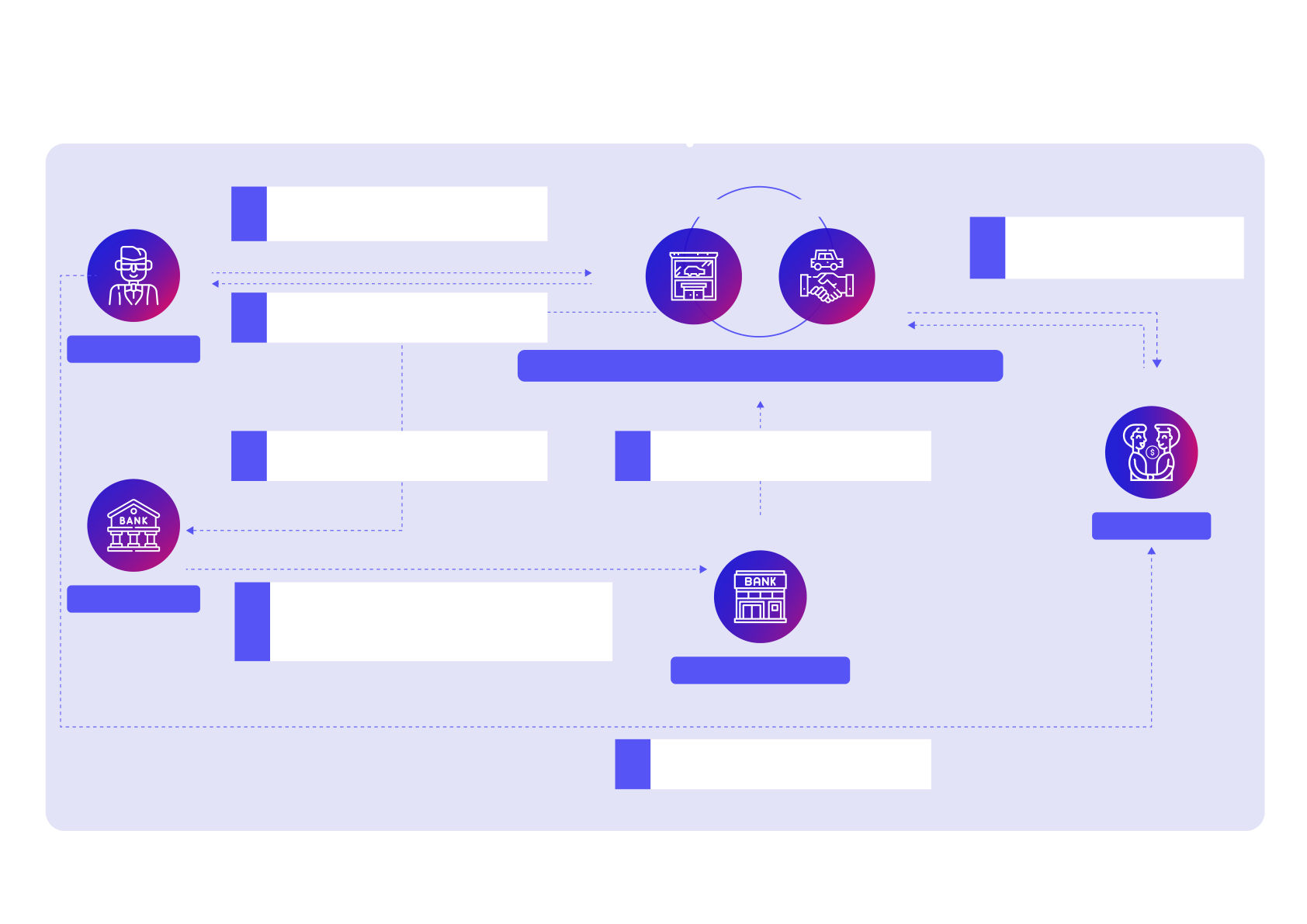
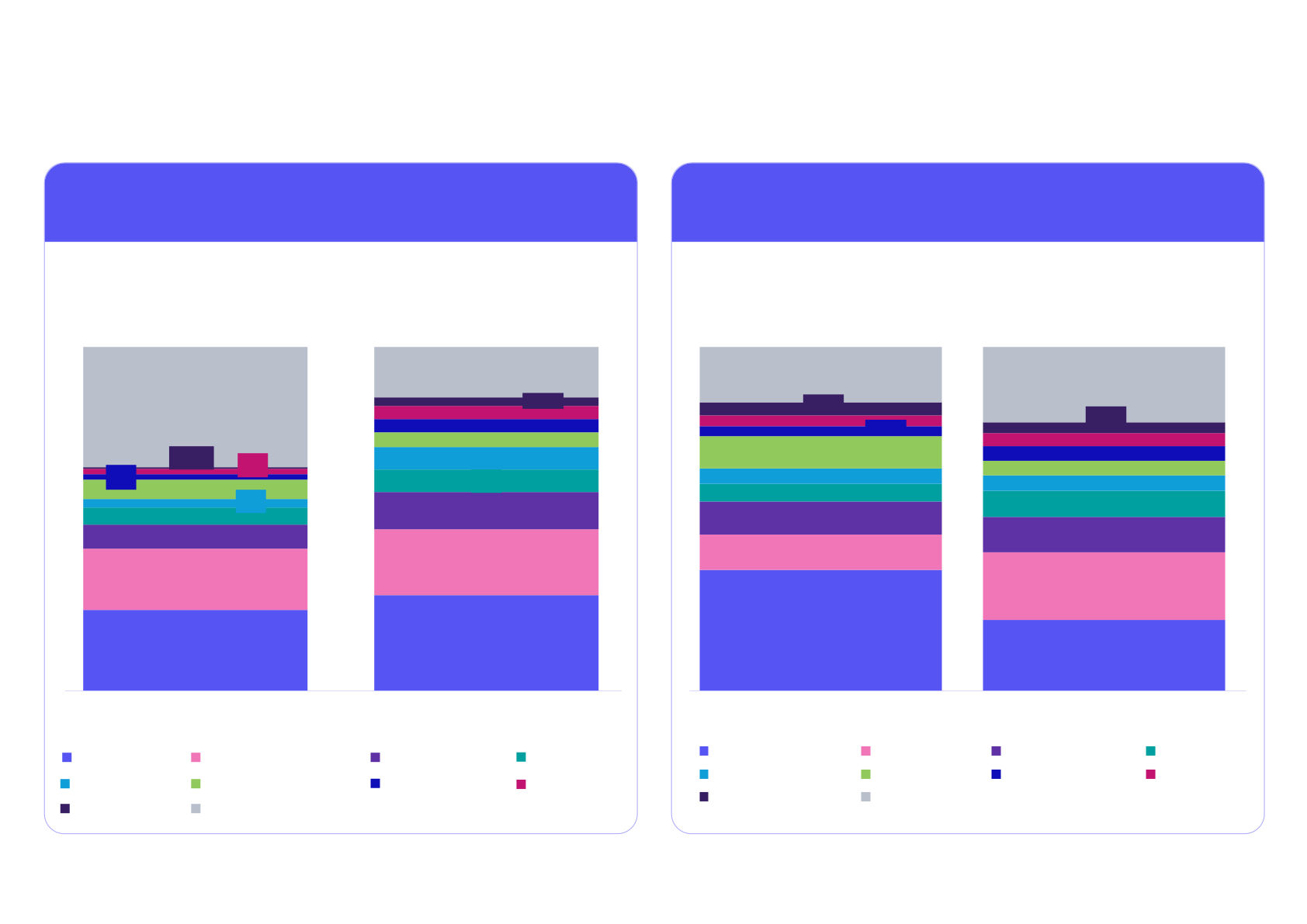
Foreword Remittances form an integral part of continued trust and commitment of India’s economic and social the Indian diaspora. Recent tariff landscape. They represent a steady changes and global uncertainties may flow of resources from the Indian have had some impact on the diaspora that not only strengthens remittances; they however continue to household finances but also reinforce their role as a dependable reinforces India’s position as the source of support for households and largest global recipient. The scale stability for the broader economy. and consistency of these inflows As India accelerates toward its reflect both the commitment of long-term growth ambitions, overseas Indians and the confidence Amar Choudhary Abhilasha Jaju remittances will continue to play a they place in India’s financial CEO Director, Banking, Financial vital role in sustaining stability while systems, particularly in banking and Services, and Insurance, 1Lattice enabling opportunity. Their impact digital channels that have steadily 1Lattice extends beyond numbers: they improved accessibility and trust. represent a unique bridge between At the micro level, remittances global mobility and domestic enhance household resilience: they development, ensuring that progress support education, healthcare, is inclusive and widely shared. This housing, and in many cases, small report seeks to capture both the scale business investments that create and the evolving dynamics of local employment. They also act as a remittances in India, offering insights reliable safety net during times of into their future trajectory and the personal or regional hardship. At the policy environment that supports macro level, they contribute them, with all analyses and significantly to foreign exchange perspectives reflecting the landscape reserves, improve the balance of as of Sep’25. payments, and provide stability during global economic fluctuations. Remittances have remained steady and resilient, backed by the Product in Spotlight: 1Insights This report has been curated using 1Insights, 1Lattice’s proprietary intelligence engine that integrates leading indicators, operational metrics, and real-time sentiment analysis to decode the remittance landscape. Leveraging 1Insights, our experts uncover the structural and behavioral shifts shaping India’s remittance ecosystem from the surge in digital-first transfer channels and fintech-enabled accessibility to the resilience of inflows amid global slowdowns. With a data-driven and forward-looking approach, the report equips banks, policymakers, fintechs, and investors with actionable intelligence to navigate the future of remittances in India and beyond. Executive summary • for Indian workers across construction, healthcare, and service Remittance landscape in India sectors has supported a steady rise in remittances from the • Remittance can be classified into two categories: Inward (received from a GCC region foreign country) and Outward (Sent to a foreign country). The global Outward Remittance remittance market is segmented based on remittance channel, • US topped the list in 2023 with ~US$ 93B sent overseas while India’s application, and region. Outward remittances stood at ~US$ 33B in 2023. • India’s remittance receipts in 2024 were ~US$ 119B while Outward • In India, a significant rise in outward remittance towards investments remittance were ~US$ 30B in FY25 in debt/equity is observed with ~38% CAGR from FY21-FY25. The increase in investment in foreign stocks is attributed to the rise in Inward Remittance various foreign equity/debt investment platforms. The marketing • India remained the top recipient country, contributing to ~15% of total strategy of spreading financial literacy towards foreign investment global remittance received essentially for family maintenance and as has helped with their growing popularity amongst Indians deposits in banks, investment in immovable property, equity and debt etc • The share of remittances from the GCC (Gulf Cooperation Council) region in India's inward remittances has increased by more than ~20% since 2021 Future Outlook to Remittance in 2024 • With ongoing modernization of cross-border payment rails, India’s • Despite evolving labor regulations and cost pressures , sustained demand remittance ecosystem is evolving toward greater speed, transparency, and cost efficiency. Recent regulatory proposals aim to crack down on misuse of remittance channels such as offshore fixed deposits, refocusing the framework on genuine cross-border flows • The expansion of UPI-PayNow (cross-border linkages) and NPCI’s push toward payment interoperability are lowering barriers for small remittance corridors and introducing new corridors with higher convenience • Revised Tax Collected at Source (TCS) rules for LRS remittances (effective Apr’25) provide more clarity on cost implications, helping institutions factor in pricing and competitiveness • The India–US corridor remains India’s largest remittance channel, supported by a strong professional base and digital infrastructure. However, ongoing trade scenarios and policy uncertainty could moderate its pace of growth in the near term Source(s): 1Lattice Analysis © 1Lattice | 04 Agenda Inwards remittance Outwards remittance Future outlook Remittance Process Remittance journey followed from host country to recipient country Sender submits application to send Host Country Host Country Recipient Country 01 remittance along with receiver’s information AD pays the remittance to the 07 beneficiary upon presenting the draft/pay code Authorized dealer (AD) draws draft/ 02 pay code Sender Authorised Dealers (AD) /Money Transfer Operators MTOs Recipient Country AD initiates transaction as per the Correspondent bank transfers 03 06 Host Country application funds to AD in beneficiary country Beneficiary Recipient Country Sender’s bank issues remittance instructions Sender’s Bank through SWIFT, web-enabled instructions, 04 telegraphic transfer to the correspondent bank in the beneficiary country Correspondent Bank Sender shares the draft/pay code 05 with the beneficiary Source(s): RBI Bulletin, IMF, 1Lattice Analysis © 1Lattice | © 1Lattice 06 Inwards remittance Rapidly rising remittance inflows highlight India and Mexico as key beneficiaries, while uneven transfer costs reveal opportunities for cheaper digital channels Top five countries by remittances inflows Cost of Receiving Remittances (US$ B, 2022-2024) (% per US$ 200) 111.2 61.5 For every US$ 200 sent to 7.1 2022 51.0 Mexico, 4.7% of US$ 200 is 6.5 paid as transaction cost 38.0 6.0 5.8 33.4 5.1 4.8 4.7 119.5 4.6 66.2 4.0 3.9 49.5 2023 39.1 36.9 118.7 68.2 48.0 2024 40.2 37.3 China France India Mexico Phillippines India Mexico China Philippines France 2023 Q3'2024 • In Q3’ 2024, Remittance costs to China climb above 7% amid tighter • India consistently leads with the highest remittance inflows , rising from cross-border rules, while France benefits from digital competition driving US$ 111.2B in 2022 to US$ 118.7B in 2024 costs down to 6.0% • Mexico holds the second spot, increasing from US$ 61.5B in 2022 to US$ • India, Mexico, and the Philippines show stable remittance costs as high 68.2B in 2024 , maintaining a steady upward trend. transaction volumes and digital adoption keep charges near 5% or lower Source(s): Reserve Bank of India (RBI), World Bank, 1Lattice Analysis © 1Lattice | 07 Origin of Inward Remittance India’s remittance base is widening across global corridors, but domestic receipts are centering on southern states Maharashtra’s share declined as Kerala and Tamil India’s remittances rose to US$ 118.7B in 2024, Nadu grew, making southern states emerging engines which was led by a stronger US share and of remittance growth more diversified sources Inward Remittances from different countries (to India) State-wise share of remittance receipts (%, 2021-2024) (%, 2021-2024) US$ (B) 89.1 118.7 US$ (B) 89.1 118.7 16.1 14.7 21.9 2.5 3.7 34.9 3.8 3.0 3.2 3.9 3.0 3.9 4.1 9.3 4.2 0.6 6.6 1.6 4.3 4.4 1.5 6.7 4.4 5.7 5.2 2.4 7.7 10.8 5.1 9.7 10.4 6.8 10.2 19.2 18.0 19.7 35.2 27.7 23.4 20.5 2021 2024 2021 2024 Maharashtra Kerala Tamil Nadu Karnataka Saudi Arabia United States United Arab Emirates United Kingdom Andhra Pradesh Delhi NCT Punjab Gujarat Kuwait Singapore Qatar Canada Uttar Pradesh Others Oman Others Note: Other countries include Australia, Germany, Italy, Philippines, Japan & 13 more countries © 1Lattice | 08 Source(s): RBI Remittance Survey, 1Lattice Analysis Inward Remittances - Guidelines RDA allows banks to facilitate unrestricted private inward remittances, while the MTSS permits only limited personal remittances with regulated caps and conditions Rupee Drawing Money Transfer Service Arrangement (RDA) Scheme (MTSS) Rupee Drawing Arrangement (RDA) is a Money Transfer Service Scheme (MTSS) procedure to receive trans-border is a way to receive inward personal remittances from foreign countries. remittances in India from overseas Premises Under this method, banks partner with jurisdiction. It only allows towards the non-resident exchange houses to family maintenance & remittances for open and manage their account in India foreign tourists in India RBI does not permit cross-border Indian agents need authorization from the outward remittances from India under RBI to function under the MTSS framework. RDA. The inward remittances into Moreover, the Overseas Principal also Process India are received in a private needs to obtain permission from RBI account and requires relevant under the provisions of the Payment & permissions from RBI. Settlement Systems Act (PSS Act), 2007 RBI has restricted cash disbursement Any amount >INR 50K shall be credited Permission of remittances under RDA. The directly to the beneficiary's bank to disburse remittances must be credited to the account or paid through account payee bank account of the beneficiary cheque/ DD etc. cash There is no restriction on the A cap limit of US$ 2.5K is laid on remittance amount as well as on the individual remittances under the Upper number of remittances. However, an scheme. Furthermore, thirty remittances cap on upper limit of INR 15L is laid on trade can be received by an individual under remittance related transactions the scheme during a calendar year. Sources: RBI, Ministry of finance, 1Lattice Analysis © 1Lattice | 09 Agenda Inwards remittance Outwards remittance Future outlook Remittance Outflows US leads with ~US$ 93.0B remittance outflows in 2023, UAE follows at ~US$ 38.5B, while Germany, Switzerland, and Saudi Arabia remain stable at ~US$ 30–40B Remittance Outflows (US$ B, 2019-2023) • United States remains the largest source of remittance 93.0 outflows , rising from 87.0 US$ 71.6B (2019) to US$ 93.0B (2023) • Saudi Arabia ranks second , though its 73.6 71.6 outflows dropped from US$ 52.9B 66.1 (2019) to ~US$ 38.5B (2023) • Germany, 52.9 Switzerland, and UAE maintain stable mid-range outflows, 39.7 42.1 38.4 averaging around 40.7 40.2 39.3 38.5 US$ 30–40B during 37.0 34.6 33.3 2019–2023 32.6 31.2 32.3 29.6 • India has doubled 28.4 outward remittances 25.1 23.0 22.2 19.4 21.3 from US$ 17.7B in 2019 19.4 to US$ 32.6B in 2023, 17.7 17.7 showing rising global 13.5 mobility and stronger purchasing power • Overall trend shows the US strengthening 2019 2020 2021 2022 2023 dominance, while others maintain moderate outflows India Germany Switzerland Saudi Arabia United Arab Emirates United States Source(s): RBI data, 1Lattice Analysis © 1Lattice | 11 Outward Remittances Travel, family maintenance, education & gifts are key drivers for outward remittances in FY25; Investment in debt/equity has escalated significantly in FY25 Overseas travel and leisure (57%) has the highest Significant rise in outward remittance towards investments share in the outward remittance from India in debt/ equity is observed with ~37% CAGR from FY21-FY25 Outward Remittance Investment in Debt and Equity (US$ M, FY21-25) (%, FY21-25) US$ (B) 12.6 19.6 27.1 31.7 29.6 1,699 5% 4% 6% 6% 6% CAGR 1,511 10% ~ 38% 11% 11% 12% 13% 6% 5% 1,256 5% 4% 4% 10% 11% 13% 26% 13% 30% 15% 15% 746 17% 472 21% 57% 54% 50% 35% 26% FY21 FY22 FY23 FY24 FY25 FY21 FY22 FY23 FY24 FY25 The strong rise in investments is driven by increased individual investor Travel Family Maintenance Education activity in global equities, growing popularity of fractional share digital platforms, and easier access to overseas securities via fintech services Gift Others Investment in Equity/Debt Source(s): RBI data, 1Lattice Analysis © 1Lattice | 12 Guidelines for Outward Remittance Under the Liberalized Remittance Scheme, all resident individuals are allowed to remit up to US$ 250K per financial year • Outward Remittances are governed under Liberalised Remittance Scheme (LRS) of FEMA (Foreign Exchange Management Act’1999) • Under the Liberalized Remittance Scheme, any resident individuals, are allowed to remit up to US$ 250K per financial year for any permissible current or capital account transactions • AD* will be directed by the category of transaction as stated by the remitter in LRS (Form A2) and will certify that the remittance is in accordance with the instructions issued by the RBI • However, the remitter is entirely responsible to ensure due compliance of FEMA regulations • The remittances can be made in any freely convertible foreign currency & it is mandatory for the resident individual to provide PAN for all transactions under LRS • An individual will have to assign a branch of an authorized dealer through which all the capital account remittances will be made. • The applicants should have maintained the bank account with the bank for a minimum period of one year prior to the remittance • For remittances pertaining to permissible capital account transactions, if the applicant seeks to make the remittance and is a new customer of the bank, Authorized Dealers should carry out due diligence on the opening, operation and maintenance of the account Note(s): AD – Authorised dealer © 1Lattice | 13 Source: RBI, FEMA’1999, 1Lattice Analysis Agenda Inwards remittance Outwards remittance Future outlook Catalyst to growth Rapid adoption of digital channels coupled with action from industry stakeholders helped in building long term resilience for remittances Quick adoption of digital channels Industry stakeholder actions Regulatory responses Mobile money-enabled The pandemic forced a The United Nations launched remittances provided change in operation process dedicated campaigns to immediate access to inflow of of many RSPs. Those with OTC dictate remittance, namely, money when and where or in person business models “building resilience in times of traditional over-the-counter (i.e. cash-based) had to adapt crisis” and “recovery and cash remittances are not to digital models resilience through digital and accessible financial inclusion” Existing digital remittance Many RSPs announced Various security norms were service users and those awareness and marketing introduced by the International equipped with a transaction campaigns to promote the use Institutions in order toreduce account reinforced their of digital channels, including the impact of cyber attacks on preference for online sending step-by-step guides on social the digital RSPs operations to methods media secure the trust of remitters Digital channels became a Other RSPs offered incentives, In mid-2025, IFAD and the EU natural choice for users including free healthcare launched ResilientRemit, a already accustomed with insurance for remittance global initiative supporting that method while appealing recipients, sign-up rewards rural families through incentives, social networks and free airtime for receiving remittances by improving and intrinsic convenience digital remittances. Such access to financial services. convinced non-digital users actions enabled continuous GPFI/IFAD reports (2023–24) to overcome their reluctance flow of remittance highlight regulatory and to change digital innovations reducing remittance costs Note(s): RSP – Remittance service provider, OTC – Over the coumnter, IFAD - International Fund for Agricultural Development, GPFI - Global Partnership for Financial Inclusion © 1Lattice | 15 Source(s): KNOMAD, World Bank, RBI Remittance Survey, IFAD (ResilientRemit, 2025), 1Lattice Analysis Resilence in remittances Development of digital payment channels, policy & regulatory responses from International bodies paved way towards resilience in remittances Commitment of the migrant Foreign currency exchange • The commitment and resourcefulness of migrant • Indian migrants continue to benefit from the depreciating workers to support their families back home ensured that INR against the US$, which has supported strong growth in the flow of remittances remained stable inward remittances through 2025 • With disruption in traditional sources of income, migrants • The value of INR vis-à-vis US$ has moved from around INR took alternate jobs and reduced consumption to fund 76 per US$ in late 2021 to nearly INR 88 per US$ by their crucial remittances to family mid-2025 • This resilience has helped safeguard low and • Remittances have acted as a currency-stabilizing buffer, middle-income households, including rural, women-led, ensuring steady dollar inflows that support India’s and their families, from financial stress and income shocks external resilience amid global forex swings Digital channels Policy & regulations • There was an unprecedented switch to authorized and • International bodies & national governments facilitated digital channels for remittances as consumer behaviour continuous flow of remittance by initiating efforts towards and business models were affected due to pandemic digitalizing KYC, improving cyber security, enabling RSP & bank partnerships etc. • Under pandemic conditions, digital channels of remittances became apparent and gained popular • Industrial stakeholders took diverse measures to create a attraction due to their convenience, cost and security more enabling environment in order to keep remittances flowing & to promote the digital channels • Countries with well-developed payment system infrastructures and policies saw a relatively easy shift from • As an immediate step, many governments declared cash to digital payments. Globally, consumer preference remittance services as essential service and used their for contactless payments rose and so did demand for authority to congregate industry stakeholders to boost to digital-only payment methods existing remittance goals © 1Lattice | 16 Source(s): KNOMAD, World Bank. RBI Remittance Survey, RBI Exchange Rate Data (2021–2025) 1Lattice Analysis We are here for you Let us know how we can meet your business requirement? Amar Choudhary Abhilasha Jaju CEO, 1Lattice Director, Banking, Financial Services, and Insurance, 1Lattice E: amar@1lattice.com E: abhilasha.jaju@1lattice.com For media queries, Corporate Communications communications@1lattice.com please contact www.1lattice.com Disclaimer: This material has been prepared by 1Lattice, which is the trade name of Lattice Technologies Private Limited (“1Lattice”, “we” or “our”) with the intent to showcase our capability and disseminate learnings to potential partners/clients. This material can be referred to by the readers on the internet but should be referenced to 1Lattice, if reused or adapted in any form, or medium and on any forum. The frameworks, approaches, tools, analysis and opinions are solely 1Lattice’s intellectual property and are a combination of the collection of the best data we could find publicly, and the 1Lattice team’s own experiences and observations. Any information provided herein is only for informational purposes and you are advised to perform an independent analysis of the same before making any decision based on such information. The information does not constitute any business advice or guidance and is to be construed as a general summary based upon the publicly available information and our interpretation of the same using our resources. For this material, we may have relied upon different sources of information which may be primary sources, publicly available information, and relevant information available with us. We make no representation or warranty, expressed or implied, that such information is accurate or complete, and nothing contained here can be construed as definitive predictions or forecasts. Before reading further, the Recipient expressly agrees that this might not address any and all risks and challenges facing the Recipient, its business, and the markets within which it operates, nor all possible market conditions. Any use of the information provided herein by the viewer shall be at the sole risk of the viewer and 1Lattice or its business partners, affiliates, agents, officers or employees shall not be liable for any unintended or adverse effect or outcome from the use of such information by the reader. 1Lattice does not have any duty to update or supplement any information in this document. 1Lattice shall not be responsible for any business or commercial loss sustained by any person who relies on any information provided herein. Any and all logos of companies used in the information provided herein have been published for information purposes only and 1Lattice does not hold any liability in connection therewith. WHAT WE DO 4 200+ Making organizations effective through Offices in India Annual data-driven insights, innovative Vision engagements products solutions and proven expertise to enable better decisions To provide technology led solutions 130+ 50+ that unlock that power of trustable Mission Team members Inhouse data, actionable research, and deep research team network of experts 1,000+ 2M+ On-ground staff B2C Panel Data + Accumulated People/ Professionals/ knowledge Service providers 300K+ 100K+ B2B Panel Experts & professionals 20% 100% Cost savings Controlled output & timeline Research +91 976 925 3702 abhilasha.jaju@1lattice.com Delhi NCR | Mumbai | Bengaluru | UAE | KSA | Singapore