
Jewelry’s next growth engine is frequency, not ticket size
Jewelry brands can keep growing as gold prices rise by giving consumers more reasons to buy, more often, without weakening the trust the category runs on. Spending on jewelry in India is holding up, but the volume of gold being bought is falling. That makes purchase frequency, new occasions, and accessible designs the levers that matter most now, alongside the confidence that turns interest into a sale.
Key takeaways
- India’s gold jewelry demand fell 15% year on year to 75.1 tonnes in Q2 2026, even as its value rose 34% to ₹1.13 lakh crore.
- Consumers are adapting rather than leaving: lightweight pieces, lower-carat options, studded designs and old-gold exchange help them keep buying.
- Design attracts buyers, but trust converts them. Growth will come from balancing transaction value with repeat purchases.
Why is gold jewelry such a unique purchase in India?
Gold jewelry in India does two jobs at once. It’s an emotional purchase that marks weddings and family milestones, and it’s a store of value that doubles as savings. More and more, it also reflects personal style.
Rising gold prices are testing that relationship. Consumers are rethinking how much they buy, what they choose, and when they buy it. For brands, the challenge is no longer just to protect spending per transaction. It’s to keep consumers engaged with the category, create new reasons to buy, and build offers that work across different budgets.
Is jewelry demand in India falling or rising?
Both, depending on how you measure it. India’s gold jewelry demand fell 15% year on year to 75.1 tonnes in Q2 2026, down from 88.8 tonnes a year earlier. Over the same period, the value of jewelry demand rose 34% to ₹1.13 lakh crore.
The gap comes down to affordability. With gold prices elevated, consumers may still set aside substantial amounts for jewelry, but buy fewer grams or adjust what they choose to fit their budget. The May 2026 increase in gold import duty from 6% to 15% added further pressure, alongside high prices and seasonal factors.
That’s why revenue growth alone can mislead. Higher ticket values can lift reported growth even as physical volumes shrink. The sharper questions are whether brands are winning new buyers, holding on to purchase frequency and widening the occasions on which people choose to buy.
How are consumers adapting to high gold prices?
Rather than walking away from the category, consumers are reshaping their basket. Lightweight pieces, lower-carat options, studded designs, and old-gold exchange all help manage the upfront cost while keeping them in the market.
Old-gold exchange is a striking example. The World Gold Council reported that it accounted for up to 70% of sales at some retailers in Q2 2026. That’s a retailer-specific observation, not an industry-wide share, but it shows how gold already sitting in households can help fund new purchases.
Each adaptation plays a different role:
- Lightweight collections offer an accessible way in.
- Studded designs widen the range of styles at different price points.
- Exchange programs reduce the cash needed for a new purchase.
All of them still have to deliver on design, purity, quality, and perceived value.
What new occasions can drive jewelry purchases?
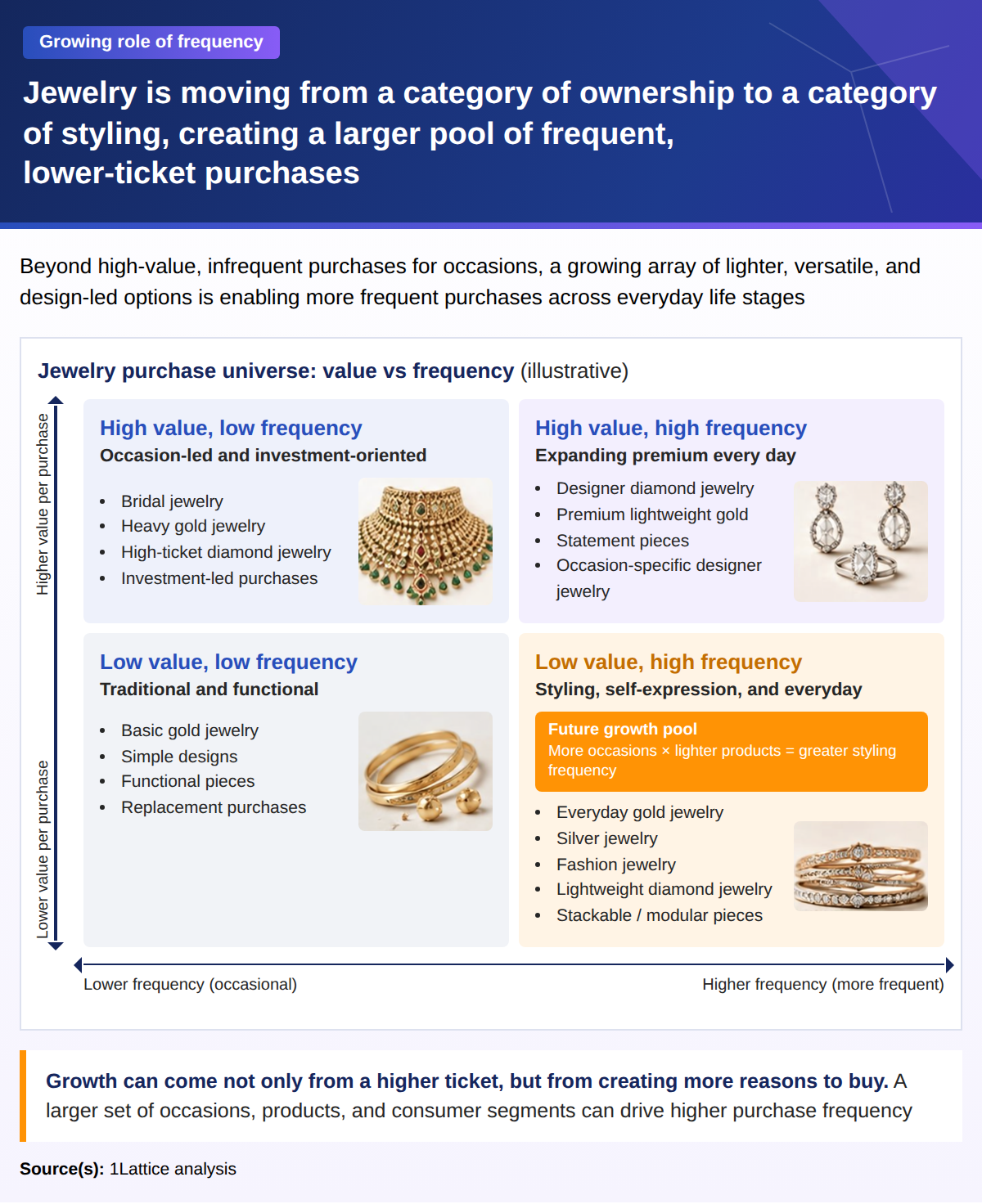
Weddings and festivals remain at the heart of jewelry demand. But there’s room to make the category relevant to everyday life too. Workwear, personal styling, gifting, travel and smaller milestones can all create reasons to buy outside the wedding and festive calendar.
Lightweight gold, stackable designs, silver and contemporary jewelry are natural fits for these moments. They offer design variety without the spend that heavier gold pieces demand.
The commercial question is which consumer segments and occasions offer the most potential for incremental demand. It’s risky to assume a single lightweight or design-led range will appeal equally across the market.
Why does trust matter more as jewelry becomes more accessible?
As consumers explore more accessible, design-led products, trust becomes more important, not less. Buyers need confidence that what they’re buying delivers the quality, purity, and value they expect.
In 1Lattice consumer primary research conducted in 2023:
- About 72% of respondents cited design as a key purchase factor.
- 52% cited brand or reputation.
- 46% cited quality.
- 43% cited purity or karat.
The takeaway is that appeal and reassurance have to work together. Contemporary designs spark interest, while transparent pricing, credible quality cues, and a consistent purchase experience help turn that interest into a sale. Digital channels support discovery and comparison. Store visits, hands-on evaluation, and trusted recommendations add confidence before purchase.
Seldom does the trip follow a straight path. A consumer might spot a design online, compare options, visit a store to see it in person, use old-gold exchange to pay for it, and come back later for another occasion. Where confidence breaks, brands risk losing not just the sale but the chance to build a repeat relationship.
Determining which barriers are important for each consumer demographic, occasion, and price point is a top task for brands. The 2023 findings offer useful directional evidence on purchase factors, but they shouldn’t be read as a current measure of all jewelry consumers without further validation.
The 1Lattice perspective: Is frequency the future of jewelry growth?
Sustainable growth in jewelry will depend on balancing value per transaction with how often consumers buy.
The evidence shows that higher gold prices are pressuring physical demand, while consumer adaptations are keeping people in the category. The opportunity to create more everyday occasions is compelling, but it’s still a proposition to test, not a proven market-wide shift.
Brands need to understand:
- Which consumers are changing their product preferences
- Which occasions remain underserved
- What encourages repeat purchase
They also need to separate genuine category growth from spending that is simply shifting between products, and check whether accessible designs can bring in new buyers without diluting trust.
How 1Lattice can help
1Sense usage and behavior studies and brand diagnostic studies help businesses assess purchase drivers, consumer trade-offs, brand choice, journey friction, and unmet needs across customer segments. Where the question extends to market opportunity and the positioning of new propositions, 1Insight supports category and competitive assessment.
As Asia’s leading market intelligence platform, 1Lattice helps brands combine the trust of traditional jewelry buying with contemporary designs, accessible offers, and everyday occasions. The next phase of growth may come not only from how much consumers spend when they buy, but from how well brands give them reasons to come back.