
Overview
The next NARTD winner may not own a category. It may own an occasion.
India’s non-alcoholic beverage market has competed for years on a single need: refreshment. The consumer has moved on. A beverage is now expected to deliver energy, function, indulgence, convenience, or social participation. The portfolio on the shelf has not kept pace with the occasions being created.
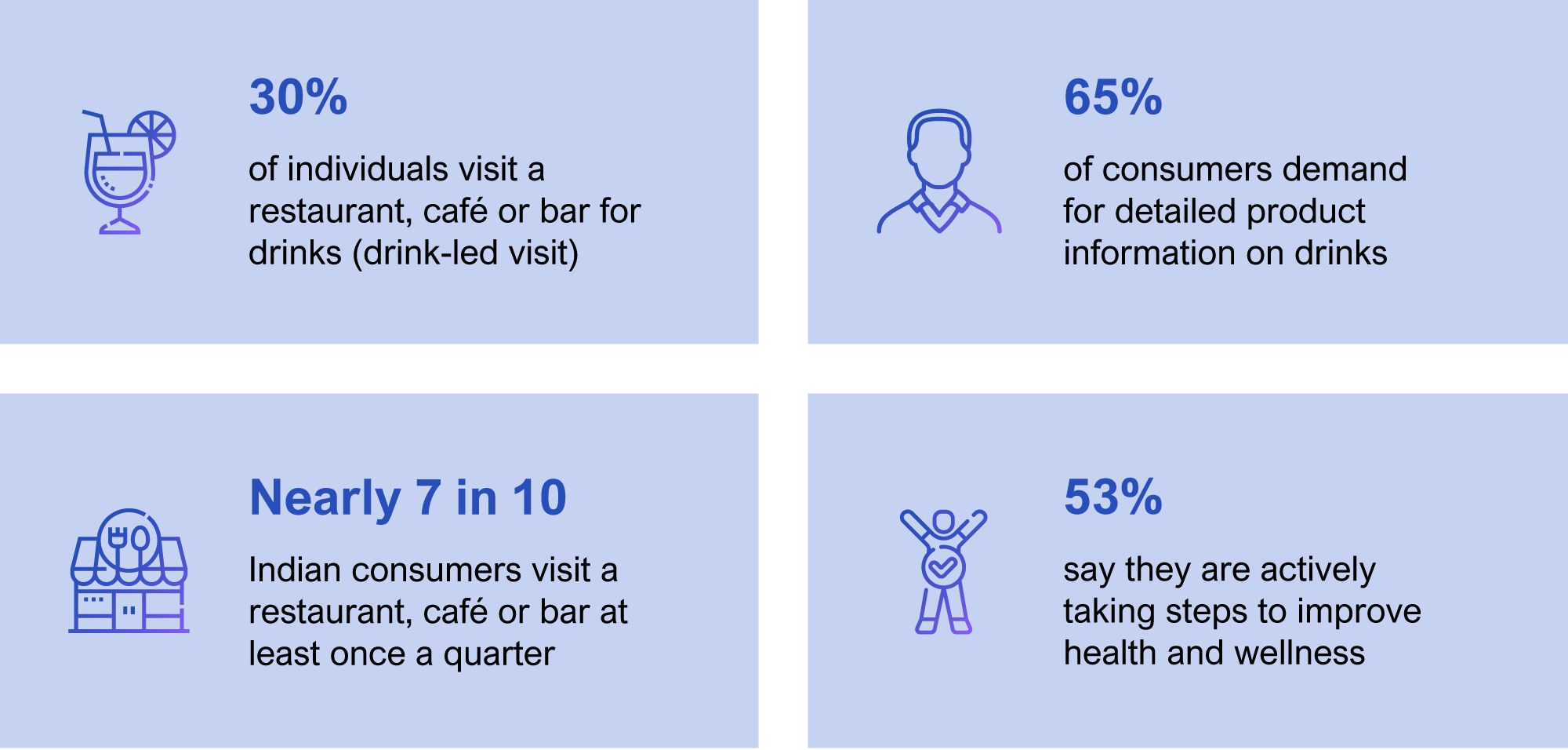
The mixed table is the fastest-growing setting
Drinking is expanding at the top of the market, sharply so among urban Gen Z. But most of the country still joins those same occasions without alcohol. The growth is not just in the drinker; it is in the table that now contains both.
Does the non-drinker have a beverage choice that feels as intentional as the drinker’s? Today, usually not.
Substitution is the wrong starting question
The conventional approach maps one shelf onto another, from beer to non-alcoholic beer and cocktail to zero-proof, and begins by asking which alcoholic product to replace. The better question is which beverage should own the occasion when alcohol is not the choice. A consumer at a wedding or a client dinner is not looking for a replica. They want something that tastes good, feels appropriate and is worth paying for.
That is an inclusion proposition, not a substitution one, and it reaches a far larger pool because it requires no reference point in alcohol at all.
Health creates demand. It does not create scale.
Just over half of Indian consumers are actively taking steps to improve their health, and the constraint sits directly behind that intent: the same consumers say healthier alternatives cost too much and are hard to find. Demand is not the bottleneck, and neither is intent. Price, availability and credibility are. An INR 200 beverage with a long list of claims will find early adopters and stop there.
Benefit + Taste + Accessibility + Trust
The on-premise teaches the occasion
Nearly 7 in 10 Indian consumers visit a restaurant, café or bar at least once a quarter. The channel matters less for its volume than for what it establishes: what belongs on a menu, what a premium serve looks like, and what a consumer will pay for it.
Consider the table where one person orders a beer, another a cocktail, and a third wants something without alcohol. The third defaults to a soft drink not by preference, but because nothing better has been designed for that seat.
The whitespace map for India’s NARTD beverage market
The opening is not another standalone category. It is the intersection of need-state and occasion.
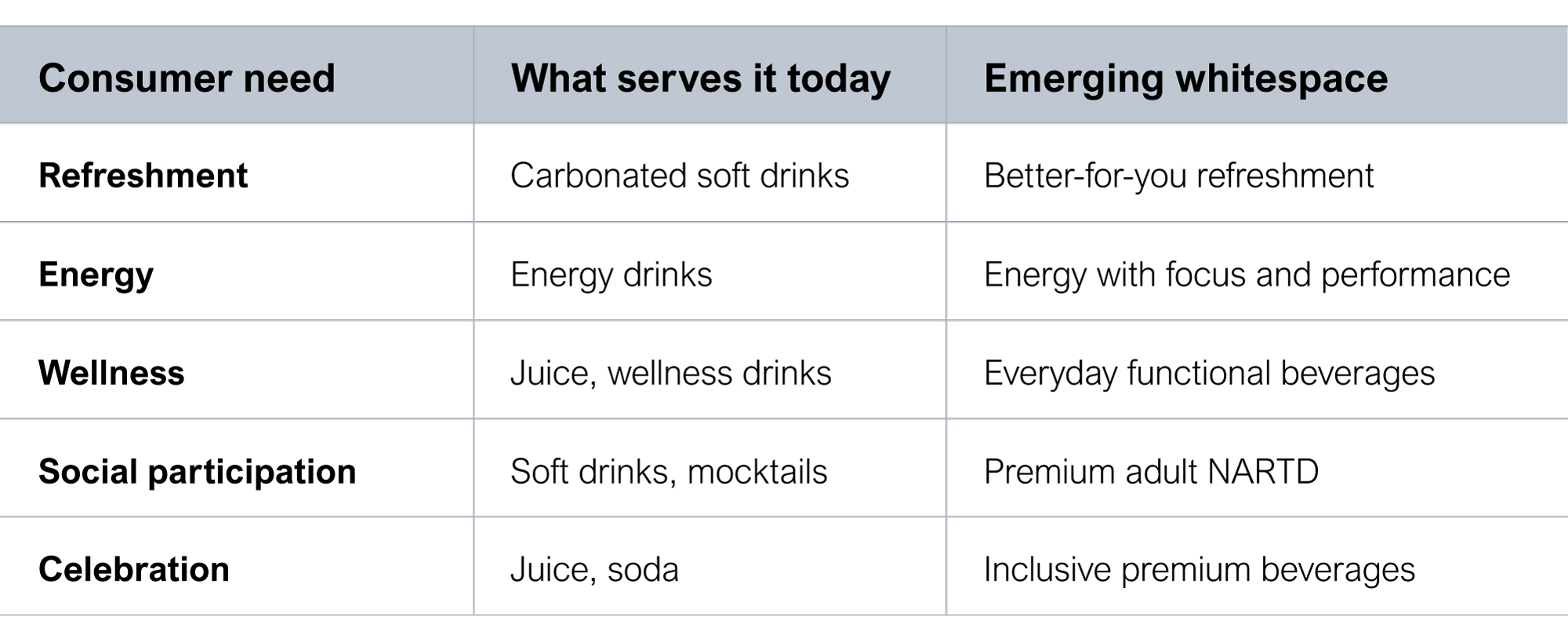
The question is not which category is growing fastest. It is that the consumer need is growing faster than the solutions available to serve it.
Three spaces where the market could open
- Functional everyday beverages: Energy, hydration, focus, gut health, and recovery moved from specialist propositions to daily habits.
- Premium but accessible: Not mass to luxury, but mass to meaningfully better: better ingredients, taste or format without an extreme price premium.
- Social NARTD: Built for restaurants, weddings, corporate events and nightlife. The proposition is not “non-alcoholic.” It is participation.
What could stall this?
The occasion thesis is sound. The execution record so far is not.
51% Availability is the near-term constraint, not demand
The same share that finds healthier options too expensive also cannot find them. Distribution and placement will decide this category well before positioning does.
4–8x Premium NARTD has no natural shelf
An adult non-alcoholic serves lands at INR 150–200 against a soft-drink reference of INR 20–40. In the beverage aisle, it looks mispriced; it is rarely permitted in the alcohol aisle. Placement remains the category’s largest unsolved problem.
The 1Lattice view
The next phase of NARTD runs on need-state × occasion × relevance, not drink → refresh → repeat. The opportunity is not to push either the drinker or the non-drinker into a category. It is to make more beverage choices feel relevant to more people.
Three questions to replace
• Not "Is this a new beverage?” but "Does this create incremental consumption?”
• Not "Which category does it belong to?” but "Which occasion does it own?”
• Not "Can consumers afford it?” but "Is the benefit compelling enough to justify the price?”
The next NARTD winner may not own a category. It may own an occasion.
At 1Lattice, we help businesses translate emerging consumer needs into actionable growth opportunities.
Through 1Insights, our market intelligence platform, we bring together market landscaping, category assessment, competitive intelligence, and go-to-market studies to identify where demand is shifting, where whitespace is emerging, and what it takes to win.
For NARTD and adjacent consumer categories, this means going beyond what is growing to understand which consumer needs and occasions are under-served, where the opportunity sits, and how businesses can build a pathway to capture it.
From identifying whitespace to sizing the opportunity, defining the right proposition and building the route to market, 1Lattice helps turn market signals into growth decisions.