
Software as a service (SaaS) is a new trend in banking and finance. It involves the use of Application Programming Interfaces (APIs) and cloud-based infrastructure to enable businesses to develop, set up, and maintain their financial services. This frees enterprises from legacy technology applications.
This form of partnership brings about a lot of convenience, especially when it comes to lending. Several fintech services providers are also emerging with innovative solutions for banks and other financial institutions.
Showcasing a quick snapshot of the growth of SaaS-based solutions in lending.
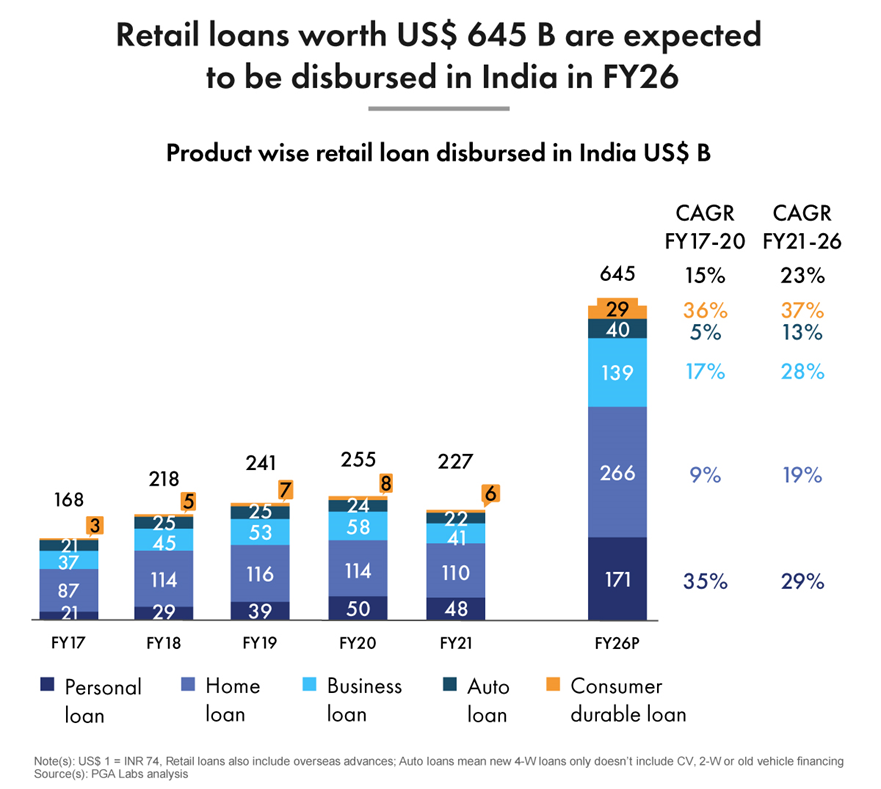
The loans disbursed by financial institutions have been growing steadily over the past few years. FY21 saw a dip mainly due to the aftereffects of COVID. Despite this, a total of US$ 645B worth of loans are expected to be disbursed in FY26. The total loan outstanding has been growing at a CAGR of 8% and is expected to grow at 14% to US$ 1.4T by FY26.
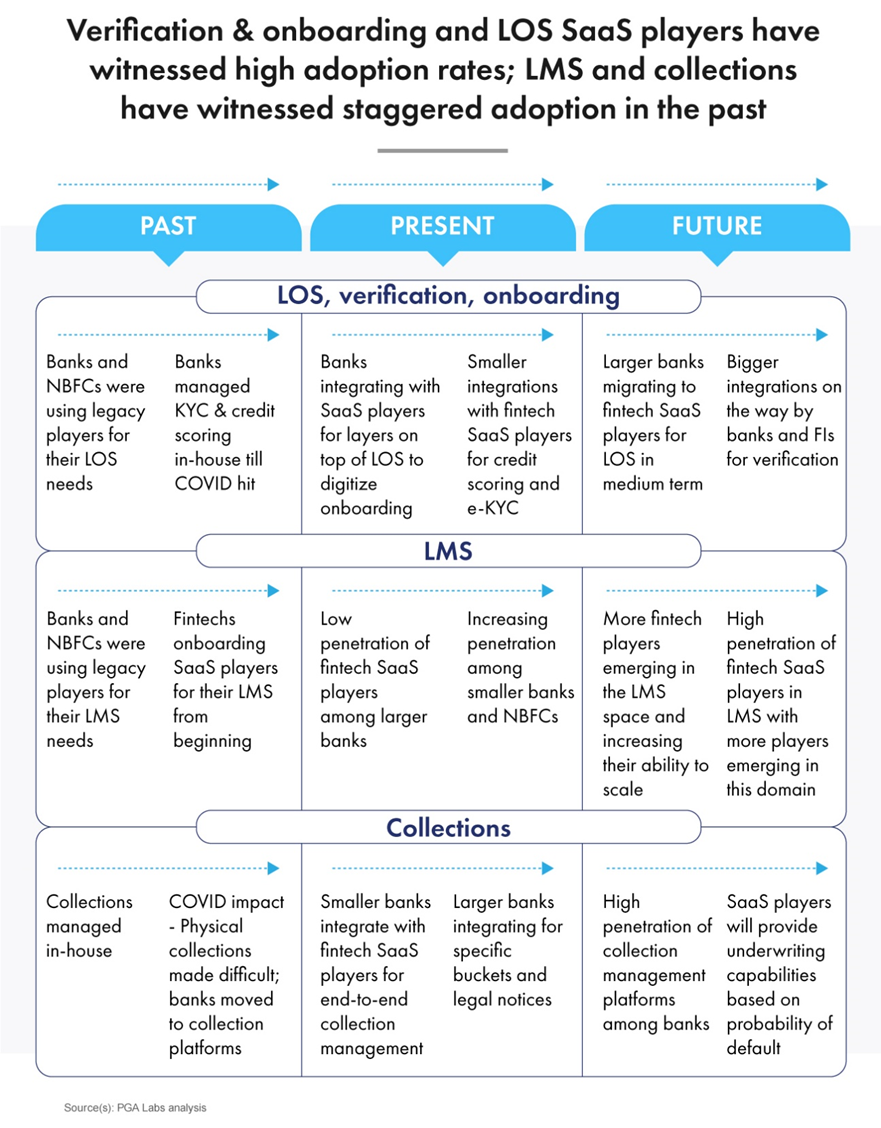
The increased appetite for credit, especially small ticket personal loans, along with increased competition, has put the spotlight on customer experience and better systems to manage the growing loan book. Financial institutions relying on legacy systems are starting to feel the need for new tech solutions to better oversee sourcing, management, and collection. A major chunk of the inhouse process involved in loans is being digitized via SaaS providers
SaaS-based solutions are helping FIs provide a better and more seamless customer experience, in sync with modern times. It has also helped them reduce the launch time for new products to a couple of months. SaaS-based solutions help FIs transition to an OPEX model as compared to the heavy CAPEX involved in IT infra investments.
As
customers become more tech-savvy and increase their credit consumption, they
will need a seamless and friction-free experience. Traditional financial
institutions will partner with SaaS providers to stay relevant and ensure they
don’t lose their piece of the credit pie.