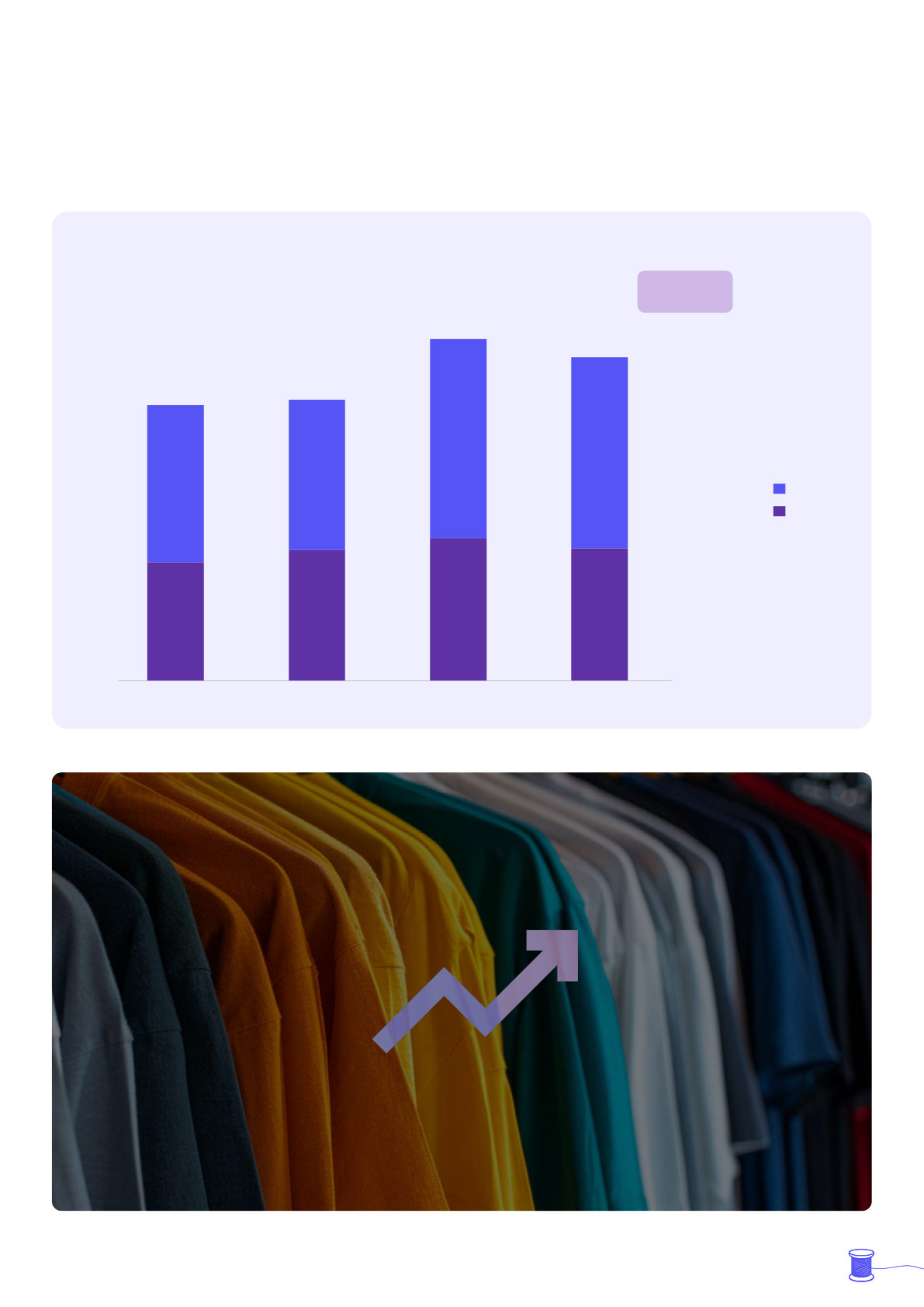
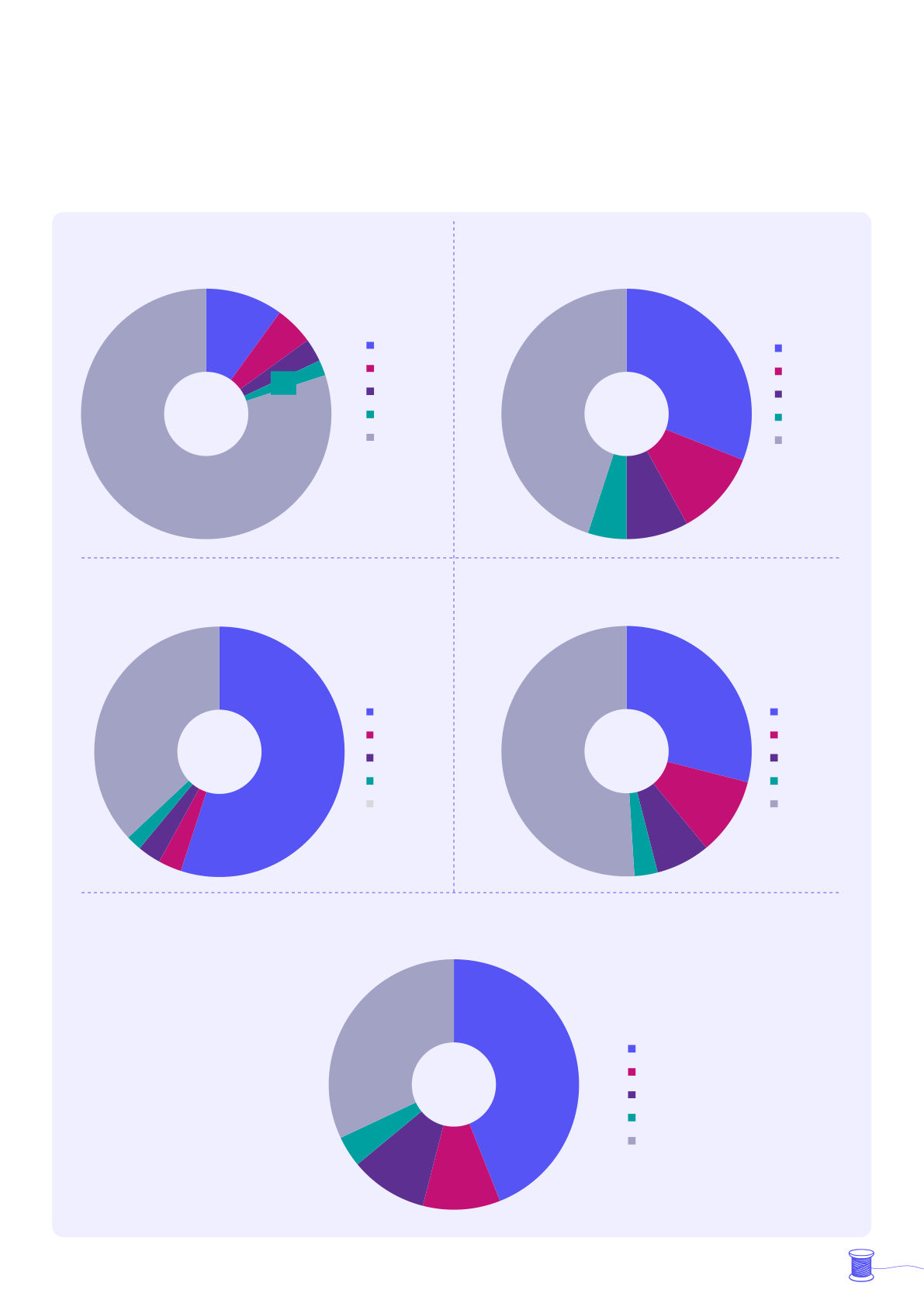
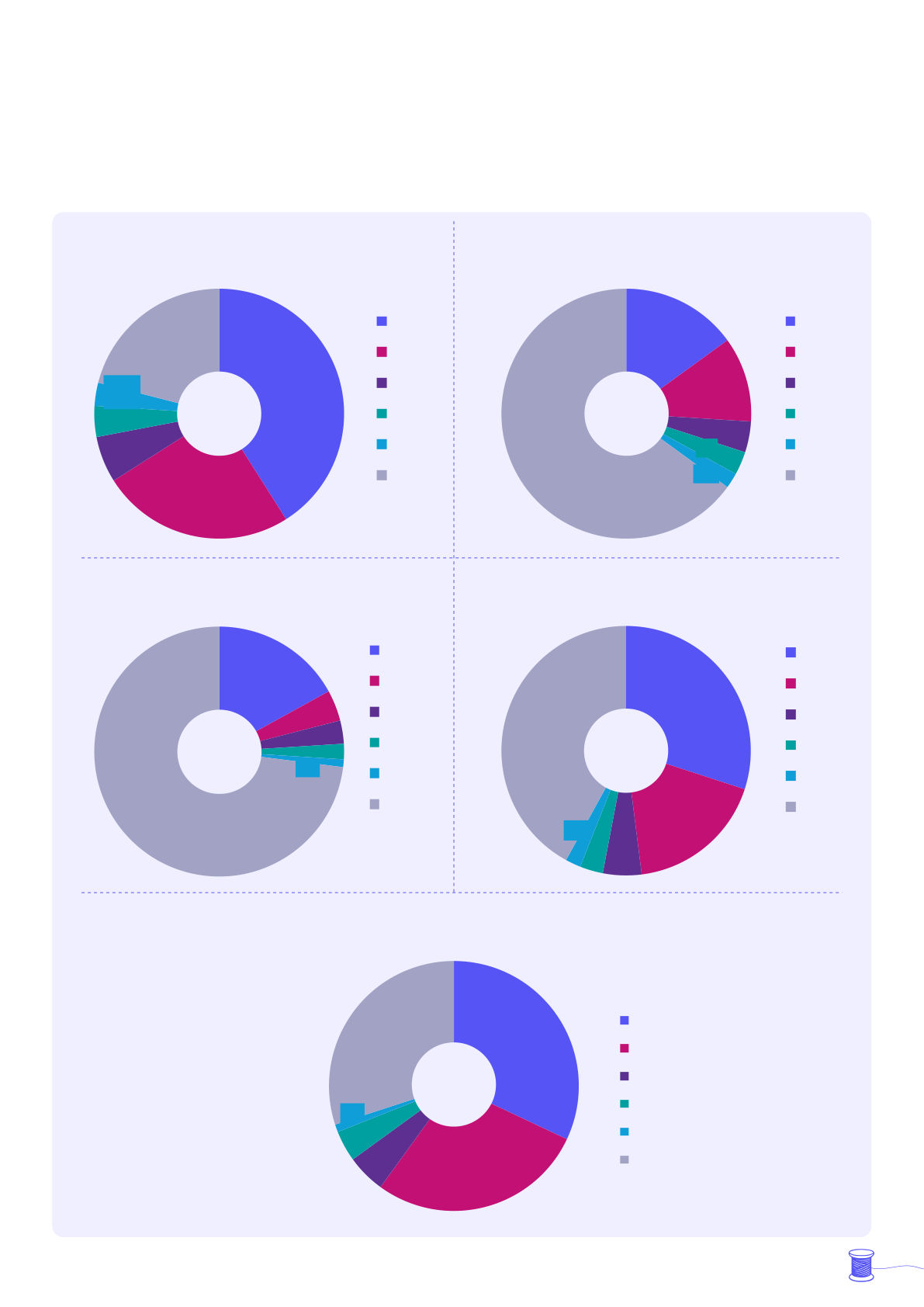
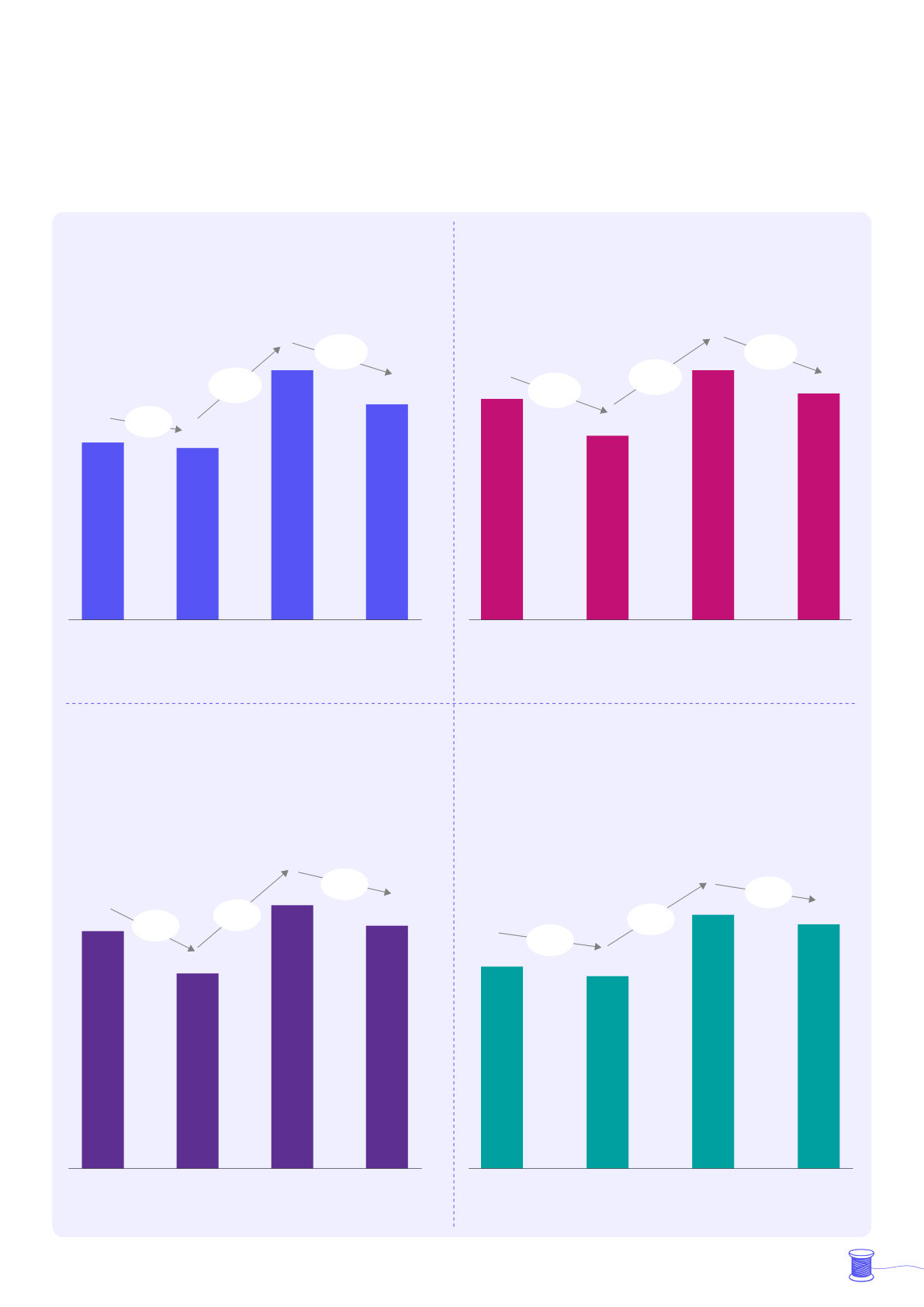
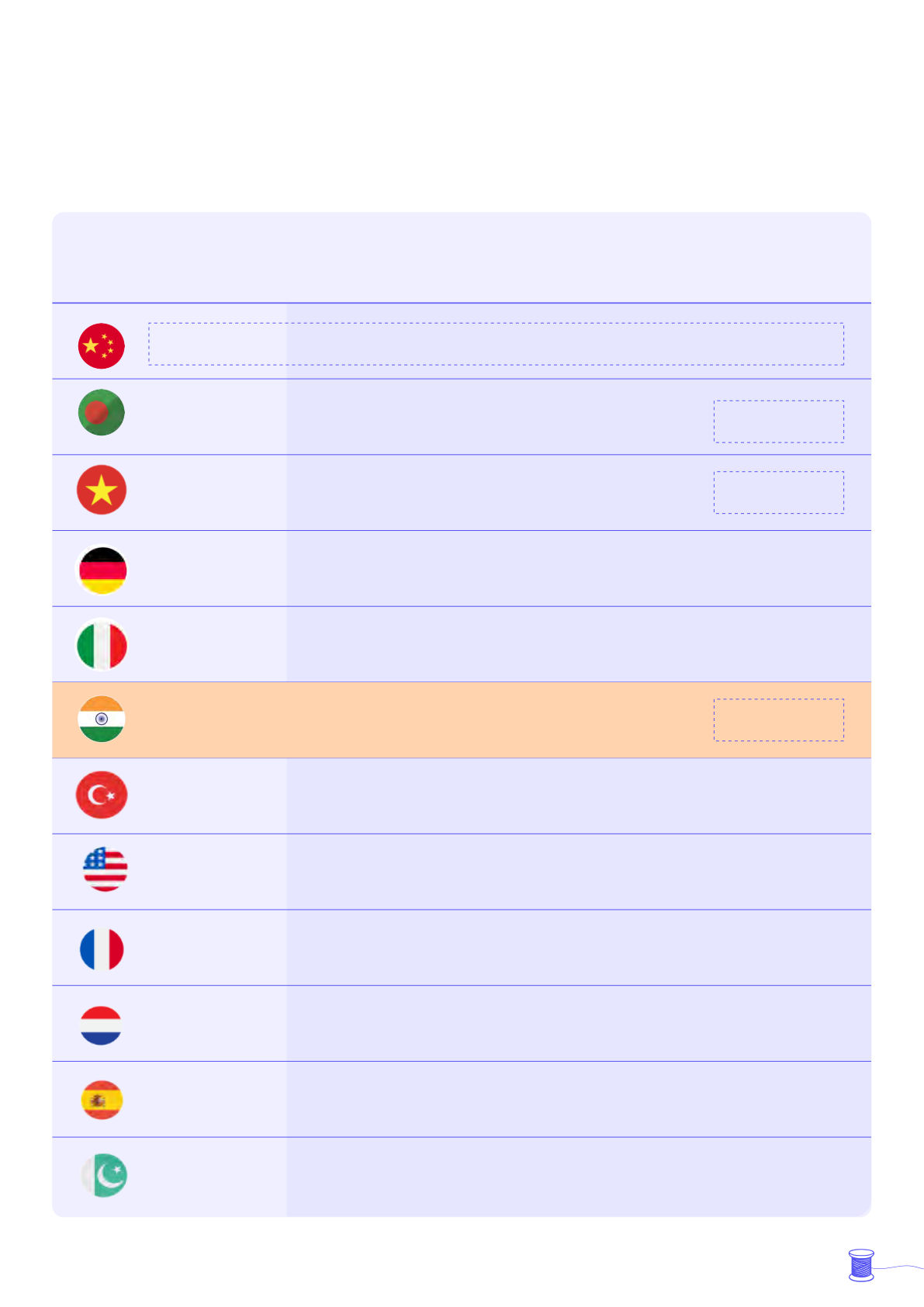
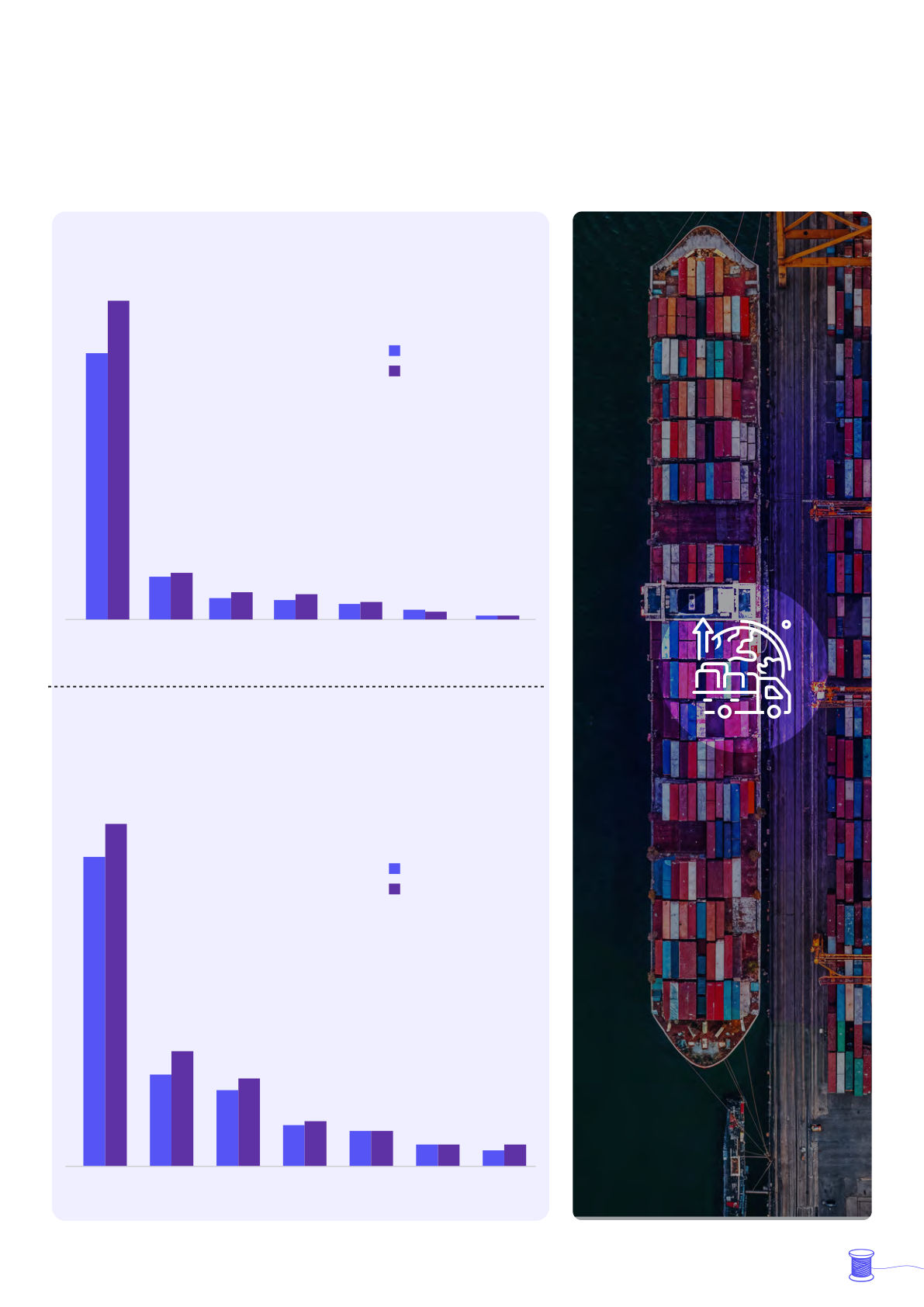
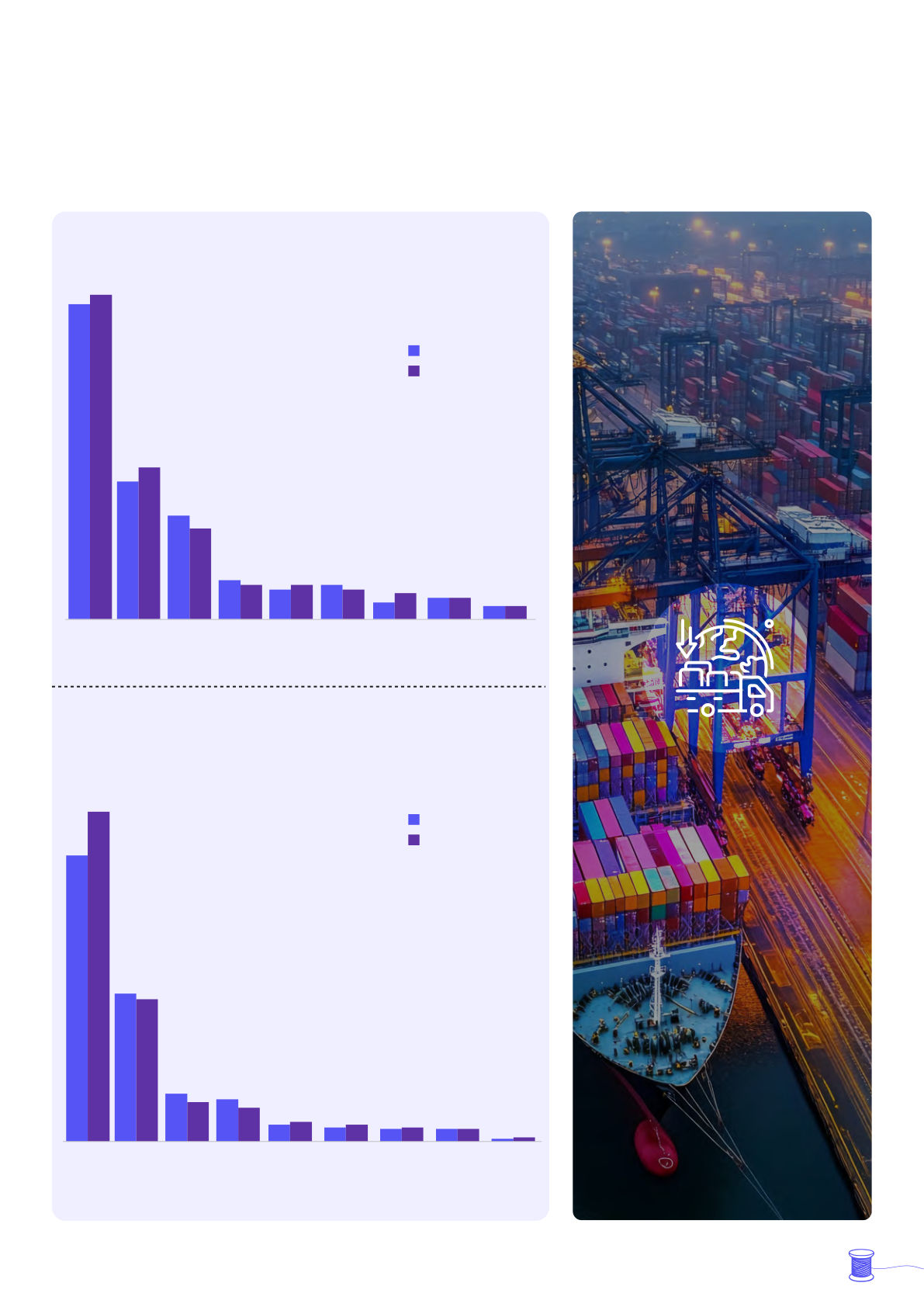
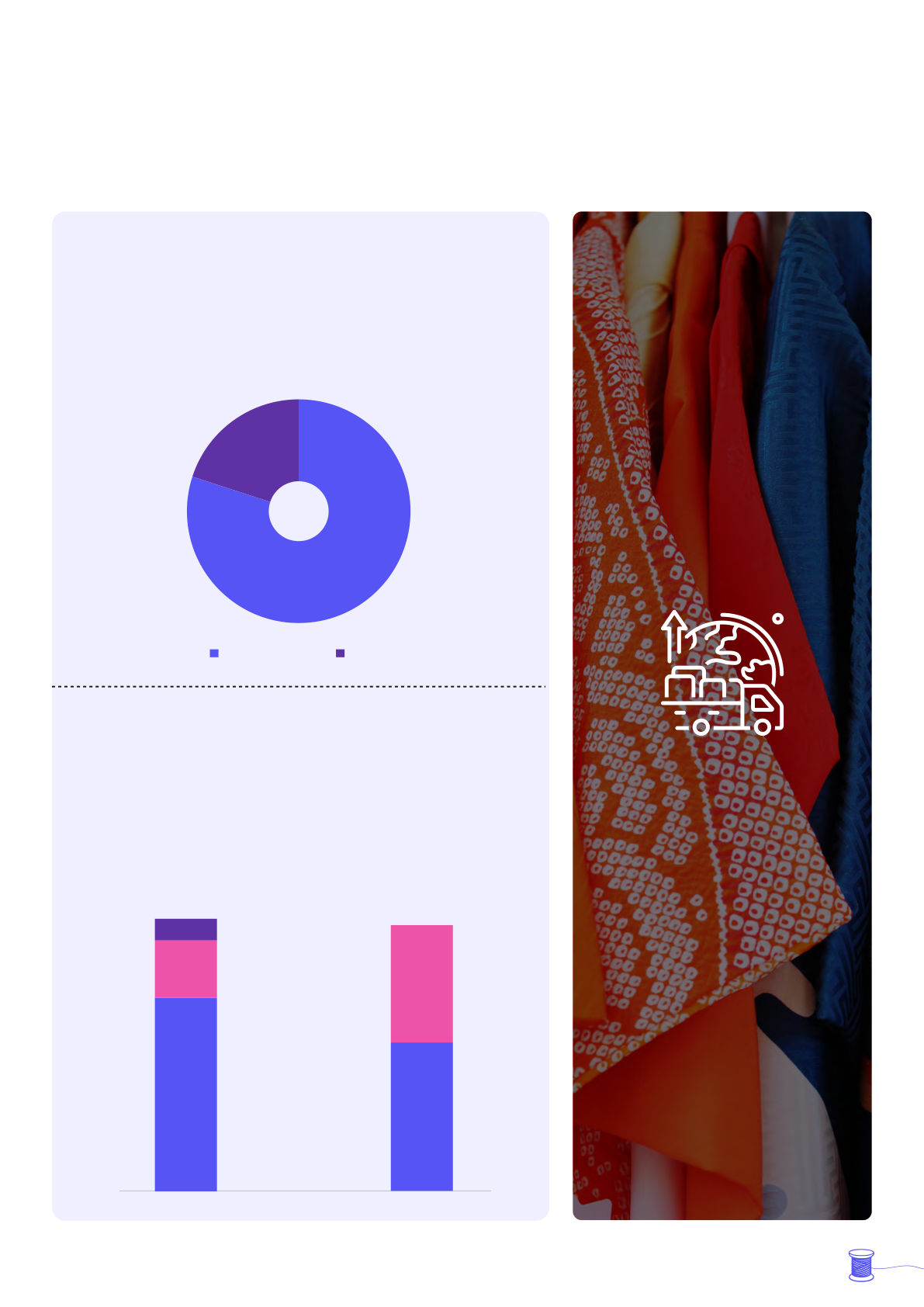
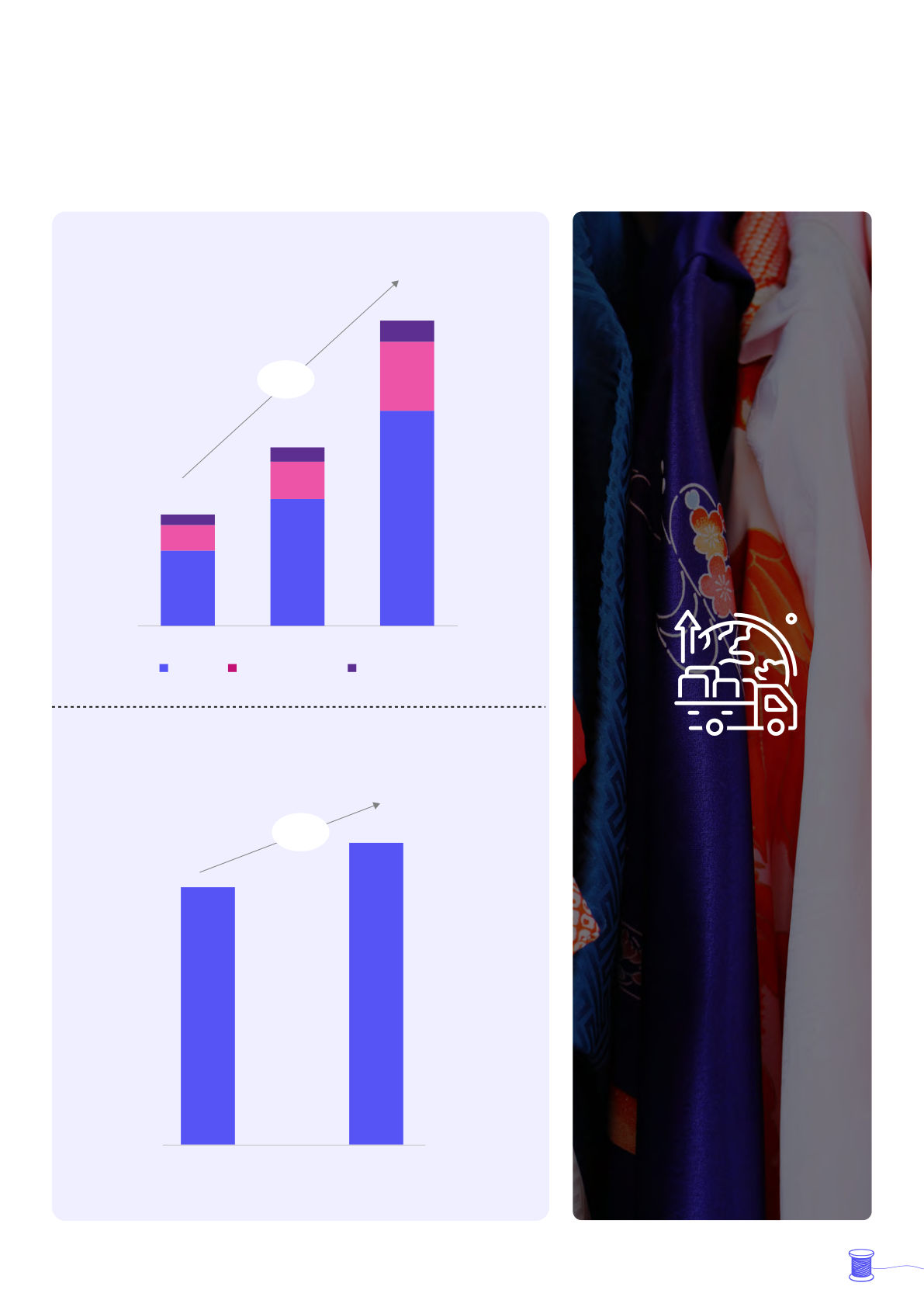
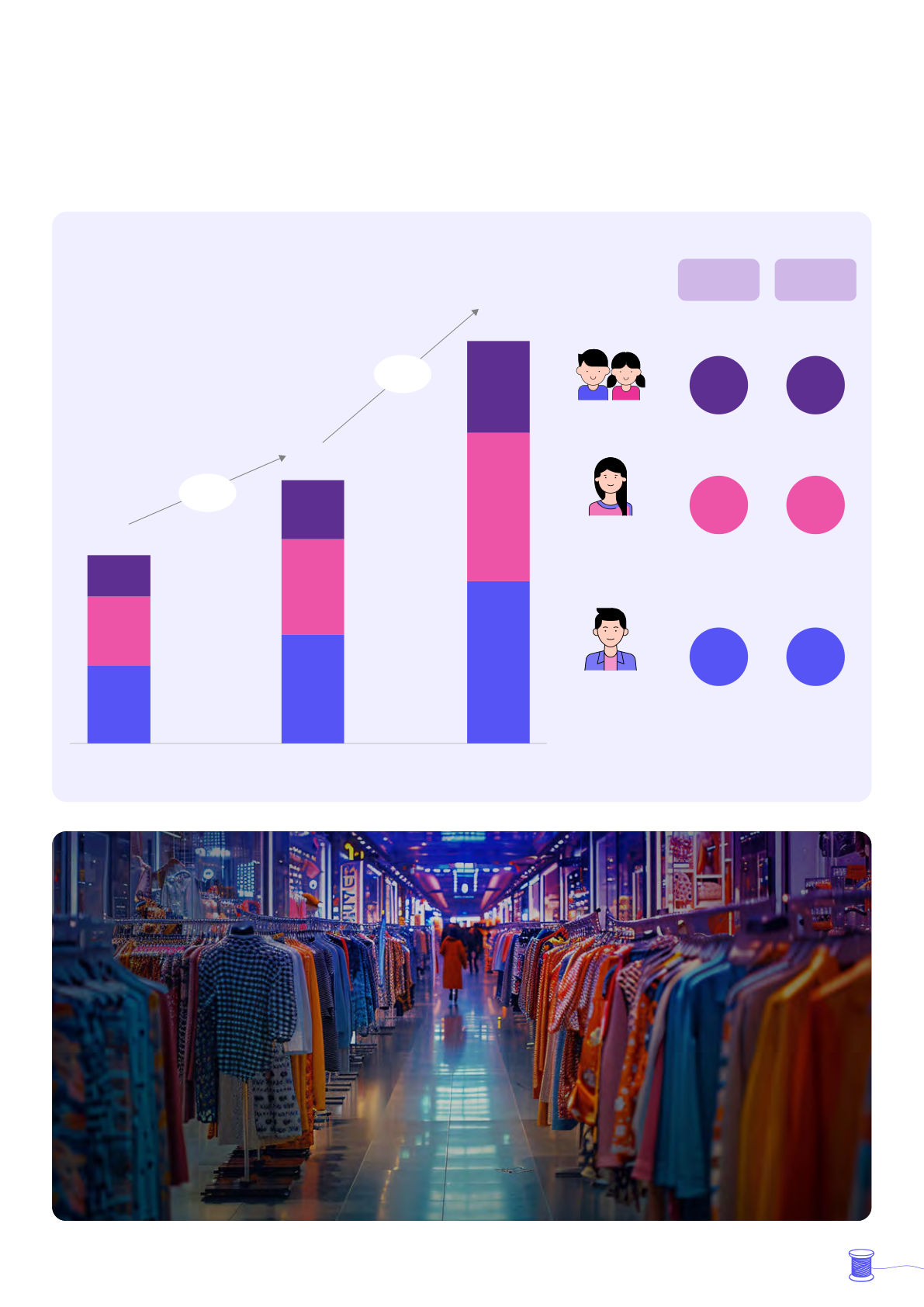
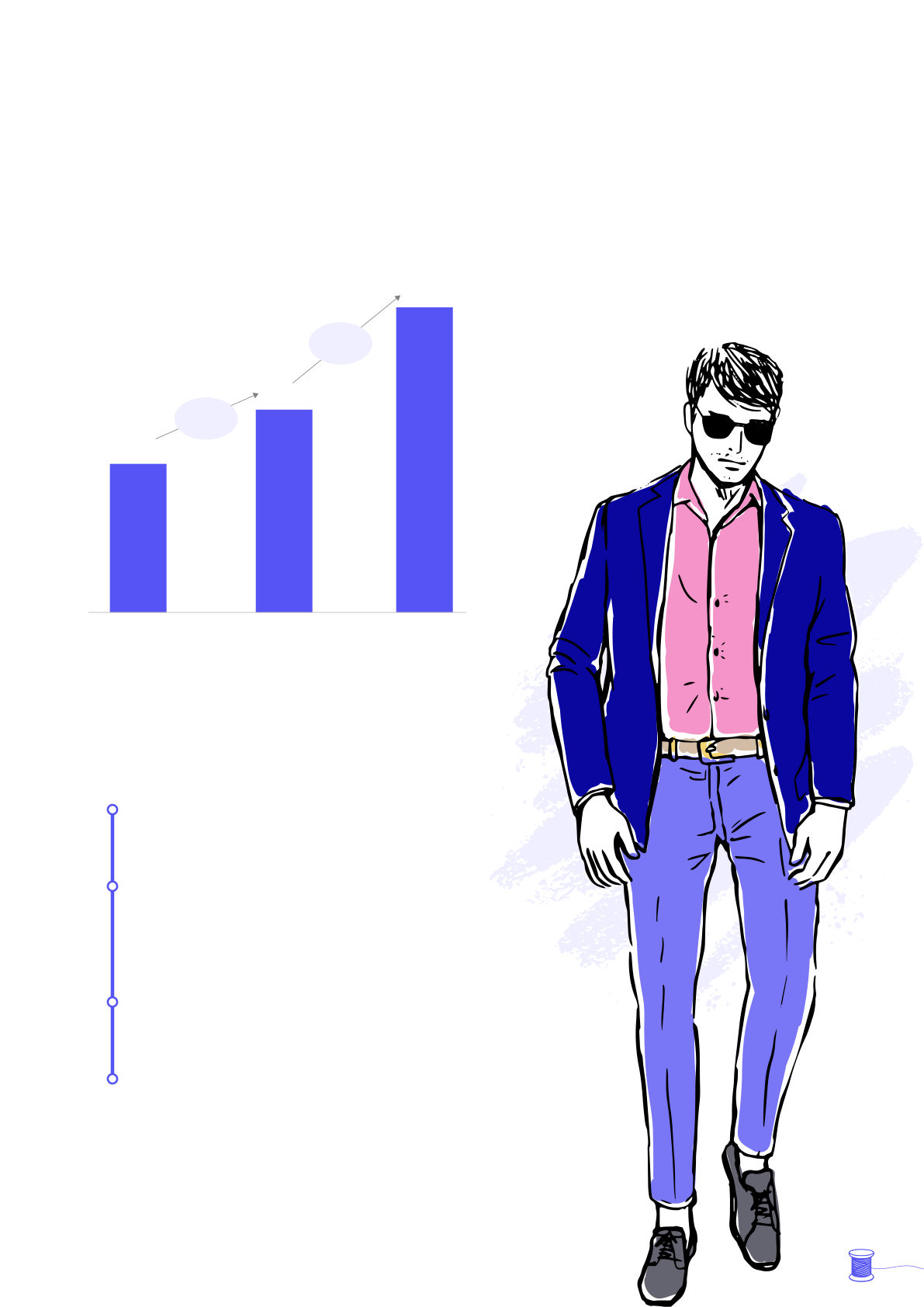
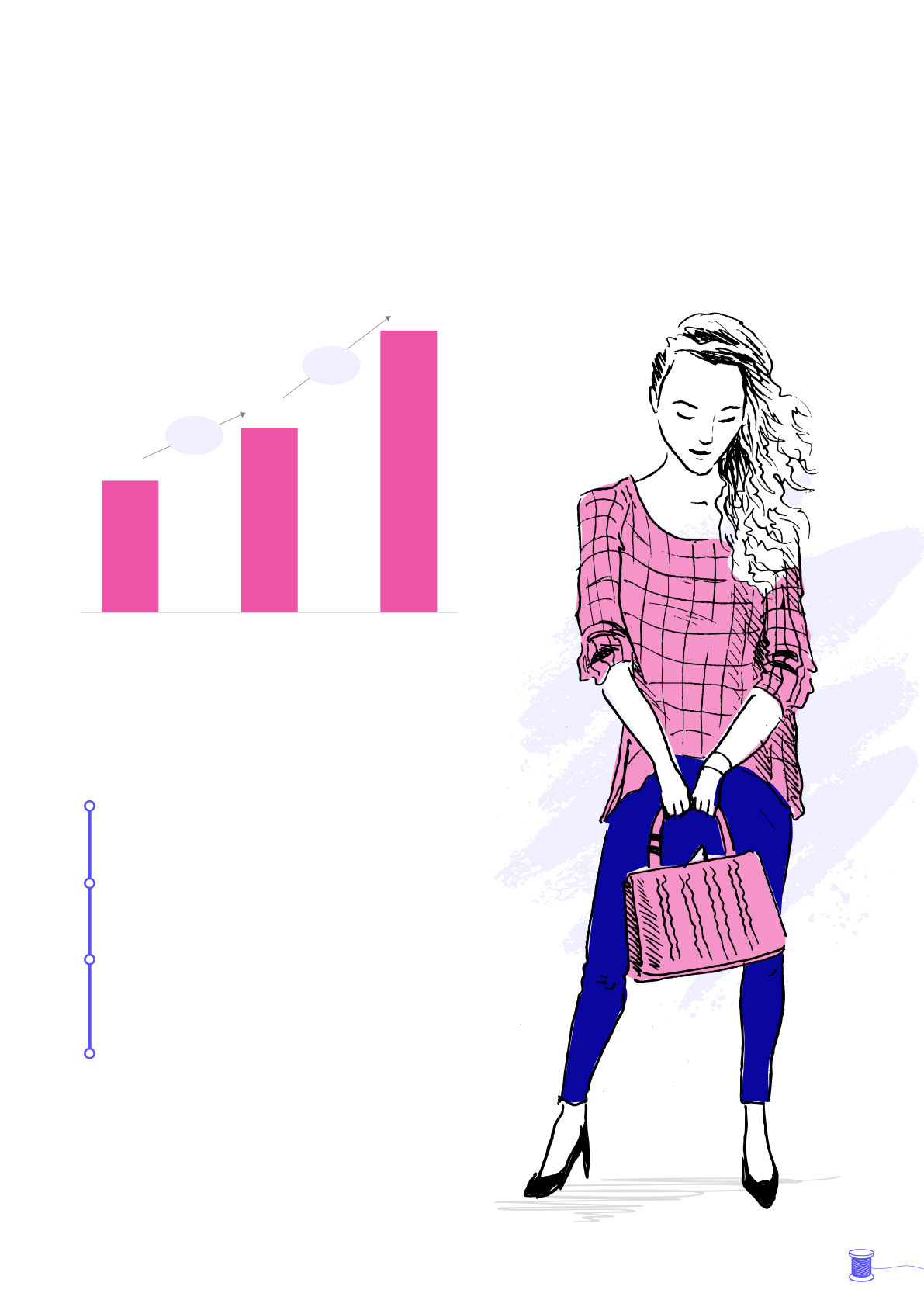
Foreword India’s textile industry has always been more than a story of trade. It has been a story of continuity, where tradition and technology have learned to coexist. The sector today feels both familiar and new, familiar in its craftsmanship and reliability, new in its growing focus on design, innovation, and sustainability. For decades, India was seen as a dependable supplier to the world, often second only to larger exporting nations. But the conversation is shifting. With global trade losing momentum, attention is turning to India’s complete ecosystem, one that runs from fibre to finished apparel and increasingly blends manufacturing strength with digital design capabilities. What makes this period particularly interesting is the way India’s domestic and export markets are now feeding into each other. The country’s strong consumer base, rising fashion consciousness, and expanding retail formats are creating steady local demand, while its export presence continues to adapt to new global preferences. Trade flows are diversifying, Ashish Dhir new product categories are gaining traction, and buyers are looking at India with renewed confidence Senior Director for its consistency, flexibility, and value orientation. Consumer and Retail Sustainability and ethical sourcing naturally follow as part of this evolution, becoming quiet enablers rather than distant goals. At 1Lattice, we have had the opportunity to study this transformation closely through extensive market research assignments across textiles and apparel. From trade mapping and policy-linked studies to deep category assessments, each engagement has offered a front-row view of an industry that is expanding its relevance while staying rooted in its strengths. This PoV brings together those insights and perspectives, capturing the story of an ecosystem that continues to grow with balance, intent, and quiet resilience. Executive summary India’s textile market at US$ 174B grows with sustainability, innovation, exports, and strong domestic demand • Domestic consumption growth is fueled by Global textile and apparel industry urbanization, e-commerce , and rising incomes • Global textile & apparel export market stood at • Technical textiles are expanding rapidly, with US$ 896B in CY24, growing at 3.6% CAGR since CY20 Packtech accounting for 44% of the segment • China remains the largest exporter , while • India’s integrated supply chain from Bangladesh , Vietnam , and India are steadily farm-to-fashion ensures cost efficiency and increasing their global share supports global competitiveness • In CY24 global trade stands at US$ 39B in fibre, US$ 49B in yarn, US$ 140B in fabric, and US$ 530B in apparel Drivers, trends and government • Apparel trade is expanding at 2% CAGR , led by knit initiatives apparel growing at 3% CAGR • Europe and the USA account for over 55% of global • Smart textiles are expected to capture 35-45% apparel imports , making them key markets for share by 2025, alongside growth in sustainable exporters materials • Sustainability trends are reshaping global trade , • Secondhand retail market is projected to reach with recycled fibres and circular fashion gaining US$ 138.9B by 2035 , driven by affordability & significant adoption sustainability • Government initiatives like PLI, PM-MITRA, and NTTM are strengthening India’s integrated supply Indian textile and apparel industry chain and exports • Rising R&D investment of over US$ 240M in synthetic • India’s textile & apparel market reached ~ US$ 174B and sustainable fibres is boosting innovation in FY25, with ~US$ 137B domestic consumption and US$ 37B exports • Growing demand for man-made fibres (4MT to 6.7MT by 2025) highlights India’s shift to synthetics • Market composition (FY25): Apparel (~US$ 98B), Technical Textiles (~US$ 28B), Home Textiles (~US$ 11B) • India’s apparel market is set to grow from ~US$ 96B in CY24 to ~US$ 147B by CY29 , with menswear at ~US$ 40B, womenswear at ~US$ 35B, and kidswear at ~US$ 21B in CY24 Product in Spotlight: 1Insights This report has been curated using 1Insights, 1Lattice’s proprietary market intelligence platform that powers data-backed analysis across sectors. Leveraging 1Insights’ deep research ecosystem, the report offers a holistic view of India’s textile and apparel landscape covering global trade shifts, domestic market dynamics, category-wise growth trends, government initiatives, and emerging themes such as sustainability, value retail expansion, and technical textiles. It also highlights evolving consumer preferences, supply-chain transformations, and competitive positioning of key exporting nations, providing stakeholders with a forward-looking perspective on opportunities, risks, and strategic priorities shaping the sector’s next phase of growth. 01 GLOBAL TEXTILE AND APPAREL TRADE Global textile and apparel exports Product-wise share of global exports and imports Textile value chain & trade growth Share of top 12 exporting countries Overview of textile and apparel exporting nations Overview of textile and apparel importing nations Emerging trends & growth drivers Global textile and apparel exports [1/3] Global textile and apparel exports grew from US$ 764B in CY15 to a peak of US$ 946B in CY22, before slightly dipping to US$ 896B in CY24 Global Textile and Apparel Exports (US$ B, CY15-24) CAGR (CY20-24) 946 896 3.6% 779 764 550 530 6.3% 418 436 Apparel Textile 396 361 366 328 0.3% CY15 CY20 CY22 CY24 Source(s): ITC Trademap, 1Lattice analysis © 1Lattice 06 Product-wise share of global textile and apparel exports China leads in all textile categories in CY24 with the highest shares in fibre (10%), yarn (31%), fabric (55%), apparel (29%) and made-ups (44%) Fibre Exports Yarn Exports (CY24, %) (CY24, %) 10% 5% China China 3% India India 2% 31% Indonesia Vietnam 45% Turkey Turkey Others Others 11% 80% 8% 5% Fabric Exports Apparel Exports (CY24, %) (CY24, %) 29% China China 37% India Bangladesh Turkey Vietnam 51% 55% Vietnam Turkey 10% Others Others 7% 3% 2% 3% 3% Made-ups Exports (CY24, %) 32% China 44% India Pakistan Turkey 4% Others 10% 10% Source(s): ITC Trademap, 1Lattice analysis © 1Lattice 07 Product-wise share of global textile and apparel imports EU27 dominates textile and apparel imports in CY24 across categories, especially in fibre (41%), made-ups (32%), and apparel (30%) segments Fibre Exports Yarn Exports (CY24, %) (CY24, %) EU27 EU27 15% 21% China China USA India 41% 11% 3% UK USA 4% 4% India Japan 65% 3% 6% 2% Others Others 25% Fabric Exports Apparel Exports (CY24, %) (CY24, %) EU27 EU27 17% India India 4% China 30% Japan 42% 3% USA UK 2% 1% UK China 73% Others Others 18% 2% 5% 3% Made-ups Exports (CY24, %) EU27 30% 32% India UK Japan 1% China 4% 5% 28% Others Source(s): ITC Trademap, 1Lattice analysis © 1Lattice 08 Textile value chain Textile journey starts with the raw fibre and ends on the retail shelves with products we wear, use, and sell daily Raw Components Final Marketing Materials (Textile) Products & Sales Yarn & Logistics & Retail & Fibre Fabric Apparel Thread Sales Distribution Mass Natural Staple Fibre Woven Hosiery Merchants Man-Made Filament Narrow Cut & Sew E-commerce (MMF) Inorganic Thread Nonwoven Accessories B2B Home Coated Furnishings Carpets & Rugs Curtains Sheets & Linens Source(s): Secondary research, 1Lattice analysis 09 Trade growth across value chain Global trade in CY24 hit US$ 39B fibre, US$ 49B yarn, US$ 140B fabric, and US$ 530B apparel, reflecting mixed growth trends Global Fibre Trade Global Yarn Trade (US$ B, CY15-24) (US$ B, CY15-24) CAGR CAGR 45 -7% 54 -5% CAGR CAGR 49 CAGR 16% 48 39 20% -4% CAGR 40 -1% 32 31 CY15 CY20 CY22 CY24 CY15 CY20 CY22 CY24 Global Fabric Trade Global Apparel Trade (US$ B, CY15-24) (US$ B, CY15-24) CAGR CAGR -4% 152 550 -2% CAGR 140 CAGR 530 137 CAGR 16% 15% -4% CAGR -1% 436 418 113 CY15 CY20 CY22 CY24 CY15 CY20 CY22 CY24 Source(s): ITC Trademap, 1Lattice analysis © 1Lattice 10 Share of top 12 textile and apparel exporting countries China’s share declines from 35.8% to 33.1%, while Bangladesh (8.2%), Vietnam (7.8%), and India (5.5%) strengthen their global export share between CY20-24 Growth (20-24) 2020 2022 2024 China 35.8% 33.5% 33.1% 1.6% Bangladesh 4.9% 6.4% 5.9% 8.2% Vietnam 4.7% 4.8% 5.6% 7.8% Germany 4.7% 4.4% 4.7% 3.6% Italy 3.9% 4.2% 4.4% 6.7% India 3.8% 4.0% 4.1% 5.5% 3.5% 3.7% 3.5% 4.1% Turkey USA 2.9% 3.2% 2.7% 2.0% France 1.9% 2.0% 2.3% 8.9% Netherlands 2.1% 2.2% 3.8% 2.2% Spain 2.0% 2.2% 2.0% 4.0% Pakistan 1.7% 2.0% 1.9% 7.5% Note(s): The growth percentage has been calculated based on the absolute values of exports in the respective years © 1Lattice Source(s): ITC Trademap, 1Lattice analysis 11 Overview of textile and apparel exporting nations China is the major exporting nation, followed by Bangladesh, Vietnam, and India; China’s export is approximately seven times that of India’s export Major Textile Exporting nations (US$ B, CY19-24) 146 122 Exports in CY19 Exports in CY24 21 19 12 10 11 9 7 8 4 3 2 2 China India Turkey Vietnam Pakistan Indonesia Bangladesh Major Apparel Exporting nations (US$ B, CY19-24) 153 138 Exports in CY19 Exports in CY24 51 41 39 34 20 18 16 16 10 10 10 7 China Bangladesh Vietnam Turkey India Indonesia Pakistan Source(s): ITC Trademap, 1Lattice analysis © 1Lattice 12 Overview of textile and apparel importing nations EU 27 remains the largest textile and apparel importer at US$ 75B and US$ 194B in CY24 respectively Major Textile Importing nations (US$ B, CY19-24) 75 73 Exports in CY19 Exports in CY24 35 32 24 21 9 8 8 8 7 7 6 5 5 4 3 3 EU 27 USA China Japan India UK Russian Canada Australia Major Apparel Importing nations (US$ B, CY19-24) 194 Exports in CY19 Exports in CY24 169 87 84 28 25 23 20 11 10 10 8 7 8 7 7 2 1 EU 27 USA Japan UK Canada China Australia Russian India Source(s): ITC Trademap, 1Lattice analysis © 1Lattice 13 Emerging trends in the global textile and apparel industry Global textile and apparel industry is evolving with smart fabrics, sustainability, personalization, and booming secondhand retail markets Trends in Global T&A Sector Smart Textiles and Customization and Functional Fabrics Personalization • Integration of electronic components • Growth of D2C brands and into fabrics is unlocking new advancements in digital printing. possibilities in areas like health Consumers can now tailor fabrics , monitoring , athletic wear , and defense styles , and sizes to suit their individual preferences • Largest share of about 35-45% in 2024-2025 , driven by biometric • Especially in luxury and online monitoring and performance tracking fashion like Spoonflower and Printful “China + 1” and near- Fast Fashion vs. shoring are shifting textile Slow Fashion orders to South Asia • Fast fashion still leads but faces growing scrutiny as consumers • Countries like Vietnam , Pakistan , are shifting to quality ethics , and Indonesia , Bangladesh , and Turkey are sustainability expected to collectively account for 47% of global cotton imports by 2030 • Resale, rental, and circular models • Turkey’s cotton import share is expected are gaining popularity and brands are being pushed to slow to expand in Egypt, leveraging lower labor production and adopt cleaner costs and duty-free US market access practices through trade deals Sustainability and Circular Fashion • Industry is increasingly turning to organic cotton , biodegradable dyes , recycled polyester , and technologies that reduce water usage • Patagonia is a pioneering sustainable and circular fashion practices in the global apparel industry Second Hand Retail • Digital resale platforms make second-hand shopping easy, accessible, and stylish • ThredUp (USA) specializes in affordable second-hand women’s and kids’ clothing • Global secondhand apparel market is projected to expand from US$ 48.3B in 2025 to US$ 138.9B by 2035 , growing at a CAGR of 11.1% Source(s): Secondary research, 1Lattice analysis © 1Lattice 14 Growth Drivers: Global textile and apparel market Global textile and apparel market is set for strong growth driven by a 23% rise in e-commerce share, rising incomes up to US$ 14,450B by 2025, and youth-led fashion Globalization and Cross-Border Trade • Global e-commerce is expected to nearly double its share of retail rising from just 18% in 2017 to around 41% by 2027 • Expanding global trade and supportive international agreements have widened market access for textile businesses Rise of Direct-to-Consumer (D2C) Brands • D2C brands are gaining traction by targeting niche segments (athleisure, ethnic, unisex) and offering bespoke experiences and faster delivery • Many are now expanding from online-only to physical stores , blending digital and offline channels Rising Per Capita Income • Global per capita GDP rose from around US$ 12,975B in 2022 to approximately US$ 13,400B in 2023 , with further growth to US$ 14,450B expected by 2025 • As individual incomes increase , so does the demand for goods like clothing and textiles , fueling industry growth Economic Recovery in Key Markets • European Union , a major textile export destination , is expected to recover economically with GDP growth moving from 0.4% in 2023 to 1.2% in 2025 • As inflation eases and household spending rises , this recovery is projected to boost textile exports from producing nations Evolving Consumer Preferences • Young consumers are driving shifts in fashion demand with trends such as fast fashion , custom-made apparel , and limited-edition collections • There's also a surge in demand for Growth drivers of outdoor and "gorpcore" styles where outdoor gear is repurposed as everyday Global textile and wear contributing to higher apparel apparel market consumption Targeting New Demographics • Brands are increasingly focusing on the "silver generation" (over-50s), recognizing their growing share of fashion spending and unique style preferences Source(s): Secondary research, 1Lattice analysis © 1Lattice 15 02 OVERVIEW OF INDIA’S TEXTILE AND APPAREL MARKET Indian textile and apparel market: Domestic and exports Apparel market definition Category-wise market size Growth drivers of India’s apparel market Growth drivers of India’s home textile market Growth drivers of India’s technical textiles market Government initiatives & policies in Indian textile and apparel market Key highlights in the Indian textile and apparel market Overview of India’s Textile and Apparel Market India’s textile & apparel market reached US$ 158B in FY24, with ~78% from the domestic market and ~22% from exports Domestic demand dominates India’s textile & apparel market, contributing 78% (US$ 124B), while exports account for the remaining 22% (US$ 34B) Indian textile and apparel market (US$ B, %, FY24) 34, 22% 124, 78% Domestic market Exports Apparel dominates India’s textile and apparel market with US$ 102B in domestic sales and US$ 15B in exports, followed by home textiles (US$ 26B) and technical textiles (US$ 10B) Textile and apparel Textile and domestic market apparel export (US$ B, FY24) (US$ B, FY24) Home textile 10 26 Technical textile Apparel 15 88 Apparel Textile 19 Source(s): ITC Trademap, 1Lattice analysis © 1Lattice 17 Indian textile and apparel market: Domestic and Exports India’s textile & apparel domestic market is projected to grow at a CAGR of 12%, while exports have grown from US$ 29B in FY21 to US$ 34B in FY24 Indian textile and apparel domestic market (US$ B, FY21-30P*) 213 15 CAGR 48 12% 124 10 26 77 150 7 18 88 52 52 FY21 FY24 FY30P* Apparel Technical Textile Home Textile Indian Textile and Apparel Exports (US$ B, FY21-30P*) CAGR 5% 29 34 FY21 FY24 Note(s): P*: Projected Source(s): Industry publications & articles, Secondary research, 1Lattice analysis © 1Lattice 1 8 Apparel Market Definition Segmentation of Indian Apparel Market Indian Apparel Market (B2C sales) By Demographics & Product sub-categories Men Kids Women Shirt Shirt T-shirt T-shirt Saree Salwar Kameez Trousers Trousers Tops/shirts Jeans Jeans T-Shirts Shorts Shorts Denim Dhoti/Lungi Dresses/ Frocks Activewear Activewear Skirts Formal Jackets Sleepwear Kurta-Pyjama set Pyjama Trousers Formal suits/ Kids Ethnic jackets/ blazers Skirts School Winterwear Innerwear Uniforms Blouse/petticoat Others (Socks) Innerwear Lehenga Winterwear Leggings Others (Socks) Kurti Winterwear Others (Socks) Source(s): Secondary research, 1Lattice analysis © 1Lattice 19 Category-wise market size Indian apparel market is set to grow from US$ 95.7B in CY24 to US$ 146.2B by CY29, growing at a 9.0% CAGR Indian apparel market size: By user type CAGR CAGR (US$ B, %, CY19-29P*) (2019-24) (2024-29) 146.4 CAGR 8.9% 7.1% 9.4% 22.7% Kidswear 95.7 CAGR 6.9% 7.0% 9.2% 37.1% 22.2% Womenswear 68.5 22.0% 36.6% 36.5% 6.8% 8.3% 40.3% Menswear 41.3% 41.5% CY19 CY24 CY29P* Note(s): P*: Projected Source(s): 1Lattice analysis © 1Lattice 20 Indian apparel market: Menswear Indian menswear market is accelerating, with projected growth from US$ 28.5B in CY19 to US$ 58.9B in CY29, driven by rising demand for casual wear & ethnic wear Indian menswear market size (US$ B, CY19-29P*) 58.9 CAGR 8.3% 39.5 CAGR 6.8% 28.5 CY19 CY24 CY29P* Growth drivers & trends Men are increasingly opting for comfortable clothing that fits multiple occasions, driving the rapid growth of casual wear Ethnic wear is experiencing strong growth, driven by India’s booming wedding market , which sees 9.5 to 10 million weddings annually, increasing demand for sherwanis, bandhgalas, and Indo-Western outfits Demand for tailored clothing is on the rise, with premium and luxury consumers prioritizing perfectly fitted shirts and trousers Increasing focus on fitness and casual wear has made athleisure a key segment, increasing demand for quick-dry t-shirts , stretchable joggers, and moisture-wicking polos Note(s): P*: Projected Source(s): 1Lattice analysis © 1Lattice 21 Indian apparel market: Womenswear Indian womenswear market is set to reach US$ 54.2B by CY29, driven by increased workforce participation, rising demand for athleisure & Indo-Western wear Indian womenswear market size (US$ B, CY19-29P*) 54.2 CAGR 9.2% 35.0 CAGR 7.0% 25.0 CY19 CY24 CY29P* Growth drivers & trends Rise in working women & urbanization has boosted demand for athleisure that transitions from work to workouts Indo-Western wear is booming, with demand of kurta sets styled with blazers, sarees with crop tops, and dhoti pants paired with shirts, etc Growing demand for formal wear among Indian women is driven by a shift towards power dressing reflecting professionalism, and modern style in corporate and social settings Consumers are increasingly prioritizing eco-friendly and ethical fashion choices, leading to a surge in demand for sustainable apparel Note(s): P*: Projected Source(s): 1Lattice analysis © 1Lattice 22 Indian apparel market: Kidswear Indian kidswear market is projected to grow from US$ 21.2B in CY24 to US$ 33.2B by CY29, driven by rising demand for sportswear and ethnic wear Indian kidswear market size (US$ B, CY19-29P*) 33.2 CAGR 9.4% CAGR 21.2 7.1% 15.1 CY19 CY24 CY29P* Growth drivers & trends Health-conscious parents are fueling the demand for kids' sportswear , leading brands like one8 and Puma to introduce functional, activity-specific outfits tailored for young athlete Festivals and cultural celebrations are driving the demand for ethnic kidswear , with brands incorporating traditional designs and modern styles to cater to contemporary parents Casual wear’s demand is driven by comfort and functionality, with breathable fabrics and easy-to-wear styles Brands are increasingly collaborating with entertainment franchises to create themed clothing patterns that captivate young consumers Note(s): P*: Projected Source(s): Secondary research, 1Lattice analysis © 1Lattice 23 Growth drivers of Indian apparel market Population growth, higher consumer spending, new categories, and shift to branded apparel drive the Indian apparel market Population growth • India’s expanding population , driven by a large youth segment , is fuelling as teadily growing consumer base • Coupled with rapid urbanization , more people are entering higher-income brackets , leading to greater purchasing power and increased demand for diverse , branded , and higher-quality apparel across urban and semi-urban markets Rising incomes and branded apparel demand • Higher disposable incomes and improved living standards are prompting consumers to allocate more towards fashion, boosting overall apparel sales • Together with rising incomes, consumers are shifting more towards premium and branded apparel, with lifestyle aspirations and fashion consciousness driving demand for higher-quality products across segments Emergence of new apparel categories • Expansion into activewear, maternity wear, plus-size fashion, sustainable apparel, and fusion wear is helping brands tap into emerging markets • Broader category offerings are driving repeat purchases and strengthening brand loyalty through greater consumer choice, enabling brands to cater to evolving tastes, seasonal trends, and diverse lifestyle needs Apparel penetration in smaller cities • Growing retail presence, coupled with improved mobile internet connectivity, is enabling greater access to fashion content, online shopping platforms, and brand promotions, thereby increasing exposure to diverse and evolving apparel trends in Tier 3 and Tier 4 cities • Affordable product lines and localized marketing campaigns are driving faster adoption of branded clothing Expansion of organized retail • Expansion of malls, department stores, and multi-brand outlets improves product accessibility and shopping experiences, providing consumers with greater convenience, variety, and opportunities to engage with brands in a more immersive and enjoyable retail environment • Modern retail formats drive higher spending through appealing visual merchandising and promotional events E-commerce reach and social media-driven purchases • E-commerce platforms have broadened market access , bringing a variety of domestic and global apparel brands to consumers nationwide, enabling them to shop conveniently from anywhere, compare options effortlessly, and enjoy a wider range of styles, price points, and exclusive collections • Social media platforms influence purchase decisions through targeted advertising, influencer endorsements, and shoppable content, fostering stronger brand-consumer connections, driving impulse purchases, and enabling brands to engage audiences with interactive campaigns and personalized recommendations Expansion of D2C brands • Digital-first brands engage directly with customers, enabling faster trend adoption and deeper personalization • Eliminating intermediaries supports competitive pricing, wider reach, and stronger brand loyalty Source(s): Secondary research, 1Lattice analysis © 1Lattice 24 Growth drivers of India’s Home Textile Market Rapid digital retail expansion, rising home renovation activity, and willingness to pay for premium quality are redefining India’s home textiles landscape Growth drivers of India’s Home Textile Market Strong Domestic Demand • India’s domestic demand is rebounding post-Covid, driven by rising consumer confidence , a growing middle class , urbanization , and improved rural incomes • By 2030 , PFCE is expected to remain a primary driver of India’s GDP , but most forecasts see it stabilizing in the 61-65% rangeof GDP Booming E-commerce & Retail Expansion • I ndia’s e-commerce is now US$ 147B with an 18.7% CAGR , and 60% of GMV is from Tier 2/3 cities • Organized retail and online platforms enable greater variety , competitive pricing , and market entry for niche brands like The Loom , which focuses on handcrafted, artisanal, and sustainable home textiles Rise of Branded & Designer Home Furnishings • Consumers are willing to pay 20-30% more for branded or designer home textiles due to perceived quality and exclusivity • This has led to rapid growth of both domestic and international premium brands in the market Surge in Residential Real Estate & Renovation Market • >50% of urban buyers now consider sustainability when buying home textiles • Growing preference for premium eco-fabrics (organic cotton, bamboo) complements rising demand for comfort and conscious luxury Sustainability & Premiumization • Rapid growth in India’s residential, real estate and home renovation market is boosting demand for furnishings like curtains, cushions, and linens • Home renovation market alone is projected to reach US$ 14.3B by 2027 , fueling steady growth in the home textile segment Source(s): Secondary research, 1Lattice analysis © 1Lattice 25 Growth Drivers of India’s technical textiles market Industrial adoption, expanding export opportunities, and rising employment contribution position technical textiles as a pillar of India’s manufacturing growth Growth Drivers Expanding End-User Export Potential Sectors • India’s man-made fibre textile exports are projected to grow to • Demand for technical textiles is US$ 11.4B by 2030 rising, driven by growth in • Exports were US$ 5.78B in automotive, healthcare, FY 2022-23, reflecting both growth construction, and agriculture potential and current challenges • Packtech leads with 44% market share , while mobiltech, meditech, and agrotech expand rapidly Demand From Other Applications and 5F Vision • Synthetic textiles are widely used in technical and medical • India’s integrated supply chain from applications for their strength farm to exports boosts efficiency, and durability scalability, and global competitiveness • In industries, they serve in filtration systems, conveyor • The sector contributes 2.3% to GDP, belts, and protective clothing 13% to industrial output, and due to chemical resistance employs 45M people Changing Consumer Preferences • India is shifting towards synthetic textiles due to affordability, durability, and low maintenance needs • Polyester demand is 4 MT and projected to reach 6.7 MT by 2025 , showing strong growth Technological Advancements • Advances in synthetic fibretechnology have improved material performance and sustainability • In 2022, India’s textile industry invested over US$ 240M in R&D , largely for eco-friendly synthetic fibres Source(s): Secondary research, 1Lattice analysis © 1Lattice 26 Government Initiatives & Policies in Indian textile and apparel market Government schemes like PLI, PM-MITRA & NTTM are driving textile growth with major investments, jobs, and export support Production Linked Incentive Scheme • INR 10,683Cr allocated over 5 years (2021-2026) to support MMF fabrics, garments, and technical textiles • 64 companies approved, projected to invest INR 19,798Cr, generate ~INR 1.94L Cr revenue , and create ~245,362 jobs PM-MITRA Mega Textile Parks • INR 4,445Cr investment to establish 7 integrated textile parks, expected to attract INR 70,000Cr-INR 95,000Cr investment and create 2-2.25M jobs by 2029 National Technical Textiles Mission • INR 1,480Cr funding for R&D, skilling, market development, and export promotion • 126 projects approved ~INR 371Cr , 73 technical items mandated for public use, and export events like Bharat Tex 2025 expanded reach Tech & Skill Boost (ATUFS & SAMARTH) • INR 10,218Cr industry investments under ATUFS with INR 621Cr disbursed in subsidies • 73,919 workers trained under SAMARTH , with 38,823 placements, improving workforce readiness Export Incentives (MEIS & RoDTEP) • Continuation of schemes like MEIS and RoDTEP delivered duty-remission on inputs, making Indian exports globally competitive • Export push supported by PLI and trade negotiations (e.g., FTAs with EU, UK) to reduce raw material tariffs Energy & Sustainability Incentives • Policies under "Future Forward Factory" promote renewable energy adoption (solar rooftops, biomass boilers), aiming for near-net-zero facilities Source(s): Secondary analysis, 1Lattice analysis © 1Lattice 27 Key highlights in the Indian textile and apparel market India’s textile and apparel market is being reshaped by a surge in activewear and sportswear, policy shifts, innovation, value retail, and sustainability Vertical integration Surge in activewear & sportswear • Companies moved toward backward integration (e.g., in-house fabric • Growing health consciousness and the production) to reduce dependency on blending of fitness with daily fashion led to external suppliers and manage costs more increased demand for athleisure and effectively performance-oriented apparel • Forward integration into • Both global and domestic companies direct-to-consumer (D2C) sales and scaled local production capabilities and adoption of advanced manufacturing product innovation to capitalise on this technologies helped firms improvemargins booming segment, positioning themselves and build stronger customer relationships to capture higher margin growth from premium activewear Sustainability initiatives Policy shifts • New sustainability mandates and heightened consumer awareness • The reduction in GST rates for pushed brands to adopt circular textiles and footwear practices and transparent supply signalled the government’s chains intent to bolster domestic • Leading players increasingly manufacturing and ease embraced eco-friendly materials, compliance burdens waste reduction initiatives, and • US tariff hikes reshaped green certifications as part of their export strategies, pushing core business strategies. Indian companies to explore alternative markets and strengthen FTA partnerships to maintain competitiveness Value retail expansion • Value retail formats gained momentum by making affordable, trendy apparel accessible to mass markets, especially in Tier 2 and 3cities, widening their customer base and deepening penetration beyond metros • Integration of online and offline channels by major retailers enhanced convenience and reach, catering to evolving consumer shopping behaviours Source(s): Secondary analysis, 1Lattice analysis © 1Lattice 28 We are here for you Let us know how we can meet your business requirement? Amar Choudhary CEO, 1Lattice E: amar@1lattice.com Ashish Dhir Senior Director, Consumer & Retail E: ashish.dhir@1lattice.com For media queries, Corporate Communications communications@1lattice.com please contact www.1lattice.com Disclaimer: This material has been prepared by 1Lattice, which is the trade name of Lattice Technologies Private Limited (“1Lattice”, “we” or “our”) with the intent to showcase our capability and disseminate learnings to potential partners/clients. This material can be referred to by the readers on the internet but should be referenced to 1Lattice, if reused or adapted in any form, or medium and on any forum. The frameworks, approaches, tools, analysis and opinions are solely 1Lattice’s intellectual property and are a combination of the collection of the best data we could find publicly, and the 1Lattice team’s own experiences and observations. Any information provided herein is only for informational purposes and you are advised to perform an independent analysis of the same before making any decision based on such information. The information does not constitute any business advice or guidance and is to be construed as a general summary based upon the publicly available information and our interpretation of the same using our resources. For this material, we may have relied upon different sources of information which may be primary sources, publicly available information, and relevant information available with us. We make no representation or warranty, expressed or implied, that such information is accurate or complete, and nothing contained here can be construed as definitive predictions or forecasts. Before reading further, the Recipient expressly agrees that this might not address any and all risks and challenges facing the Recipient, its business, and the markets within which it operates, nor all possible market conditions. Any use of the information provided herein by the viewer shall be at the sole risk of the viewer and 1Lattice or its business partners, affiliates, agents, officers or employees shall not be liable for any unintended or adverse effect or outcome from the use of such information by the reader. 1Lattice does not have any duty to update or supplement any information in this document. 1Lattice shall not be responsible for any business or commercial loss sustained by any person who relies on any information provided herein. Any and all logos of companies used in the information provided herein have been published for information purposes only and 1Lattice does not hold any liability in connection therewith. 4 200+ Offices in India Annual engagements 130+ 50+ Team members Inhouse research team 1,000+ 2M+ On-ground staff B2C Panel 300K+ 100K+ B2B Panel Experts & professionals 20% 100% Cost savings Controlled output & timeline What We Do Making organizations effective through data-driven insights, Vision innovative products solutions and proven expertise to enable better decisions To provide technology led solutions that unlock that power of trustable data, actionable research, and deep network Mission of experts Technology Data + People/ Accumulated Professionals/ knowledge Service providers Research +91 987 165 4747 ashish.dhir@1lattice.com Delhi NCR | Mumbai | Bengaluru | UAE | KSA | Singapore