
Laminate is a synthetic finishing material comprising multiple layers of materials like melamine resin and fiber board, manufactured to appear like wood. Decorative laminates are produced artificially from paper and plastic resins. Laminate sheets are thin sheets glued to a base of substrate material, commonly plywood, to provide strength.
Laminates are a popular surface-finishing material for home interiors, including furniture, floors, and walls. A versatile material, laminate is preferred over other finishing materials owing to its classy appearance, quality, and affordability. Laminate finds its application in corporate, residential, and other commercial spaces.
Sharing a snapshot below:
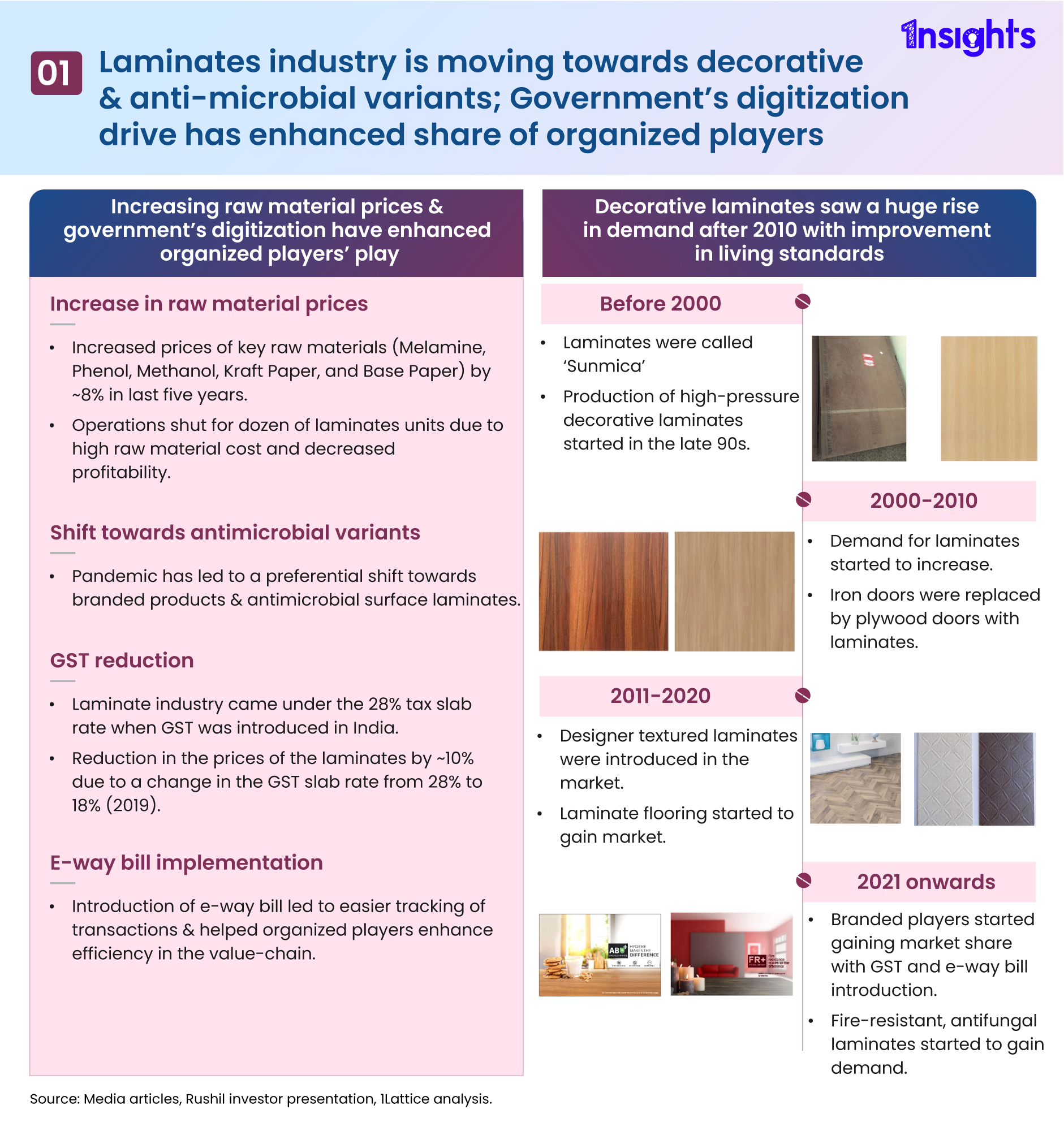 The
laminate industry has been around since the 1900s, and its customers are
indirectly involved in the purchasing process. The industry experienced a
significant increase in demand after 2010 due to an improvement in living
standards. However, the industry is facing challenges due to an 8% increase in
the prices of raw materials such as melamine, phenol, methanol, kraft paper,
and base paper, which is leading to a decrease in profitability and shutting
down of operations of certain laminate units. The Covid-19 pandemic has
resulted in a shift towards antimicrobial surface laminates. When GST was
introduced in India, the laminate industry came under the 28% slab rate.
However, during the year 2019, due to a change in the slab rate, it reduced
from 28% to 18%. The implementation of E-way billing has made it easier to
track transactions, helping organized players enhance efficiency in the value
chain.
The
laminate industry has been around since the 1900s, and its customers are
indirectly involved in the purchasing process. The industry experienced a
significant increase in demand after 2010 due to an improvement in living
standards. However, the industry is facing challenges due to an 8% increase in
the prices of raw materials such as melamine, phenol, methanol, kraft paper,
and base paper, which is leading to a decrease in profitability and shutting
down of operations of certain laminate units. The Covid-19 pandemic has
resulted in a shift towards antimicrobial surface laminates. When GST was
introduced in India, the laminate industry came under the 28% slab rate.
However, during the year 2019, due to a change in the slab rate, it reduced
from 28% to 18%. The implementation of E-way billing has made it easier to
track transactions, helping organized players enhance efficiency in the value
chain.
Before the 2000s the laminates were called ‘Sunmica’ Production of decorative laminates started in the 90’s. During the early 2000s replacement of iron doors by plywood doors with laminates came into existence. 2010-2020 the laminate market saw the introduction of designer textured laminates. After the pandemic branded players have started gaining market share.
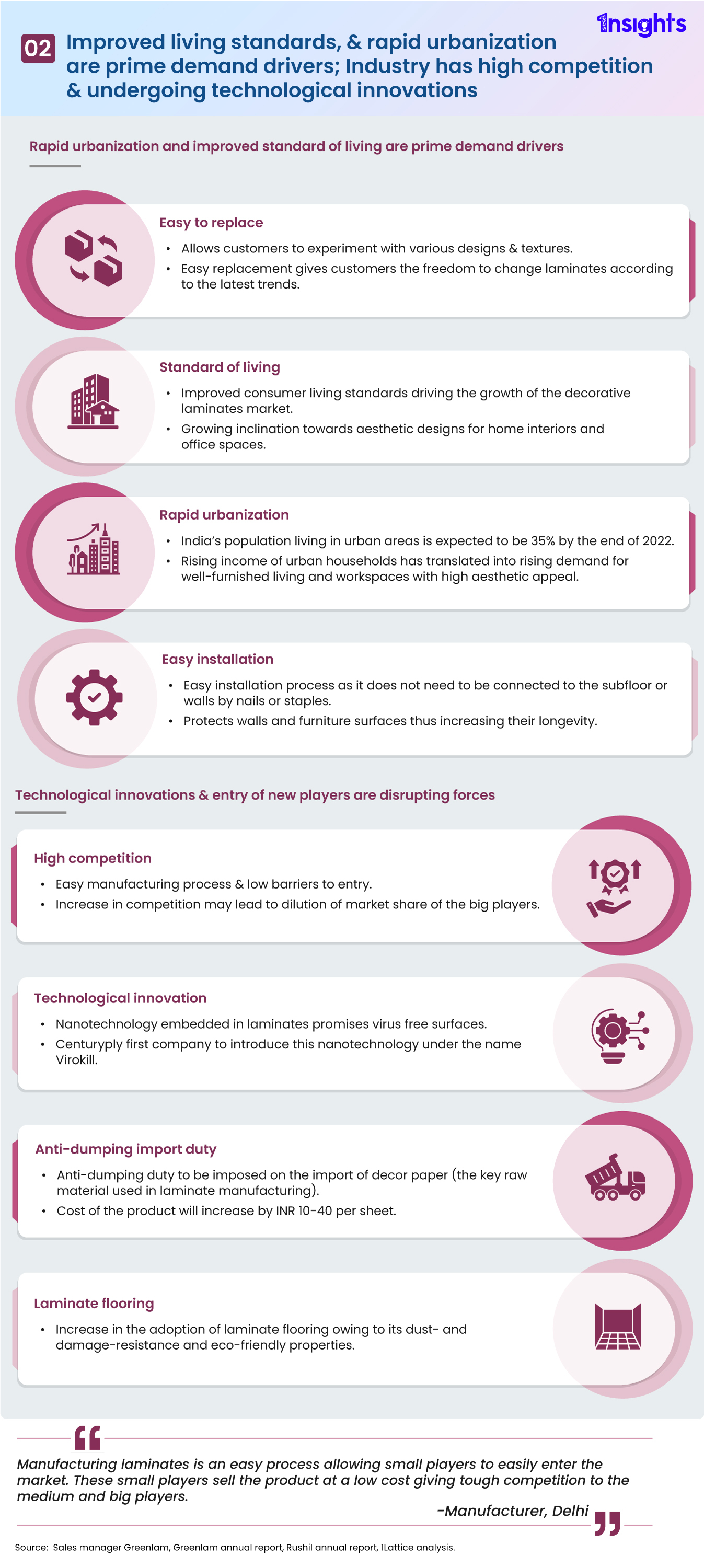 The
laminate market is changing due to rapid urbanization which is expected to be
35% by the end of 2022. The Rising income of urban households has led to rising
demand for laminate as there is a need for well-furnished living and workspaces
with high aesthetic appeal. Easy replacement, standard of living, and easy
installation have acted as some of the major growth drivers for rising demand.
The
laminate market is changing due to rapid urbanization which is expected to be
35% by the end of 2022. The Rising income of urban households has led to rising
demand for laminate as there is a need for well-furnished living and workspaces
with high aesthetic appeal. Easy replacement, standard of living, and easy
installation have acted as some of the major growth drivers for rising demand.
On the other hand, easy manufacturing, and low barriers to entry with increasing competition have led to the dilution of the market share of the big players in the industry. Anti-dumping import duty on the décor paper which is used for laminate manufacturing has been imposed hence, the cost of the product will increase from INR 10-40 per sheet which might result in the demand reduction.
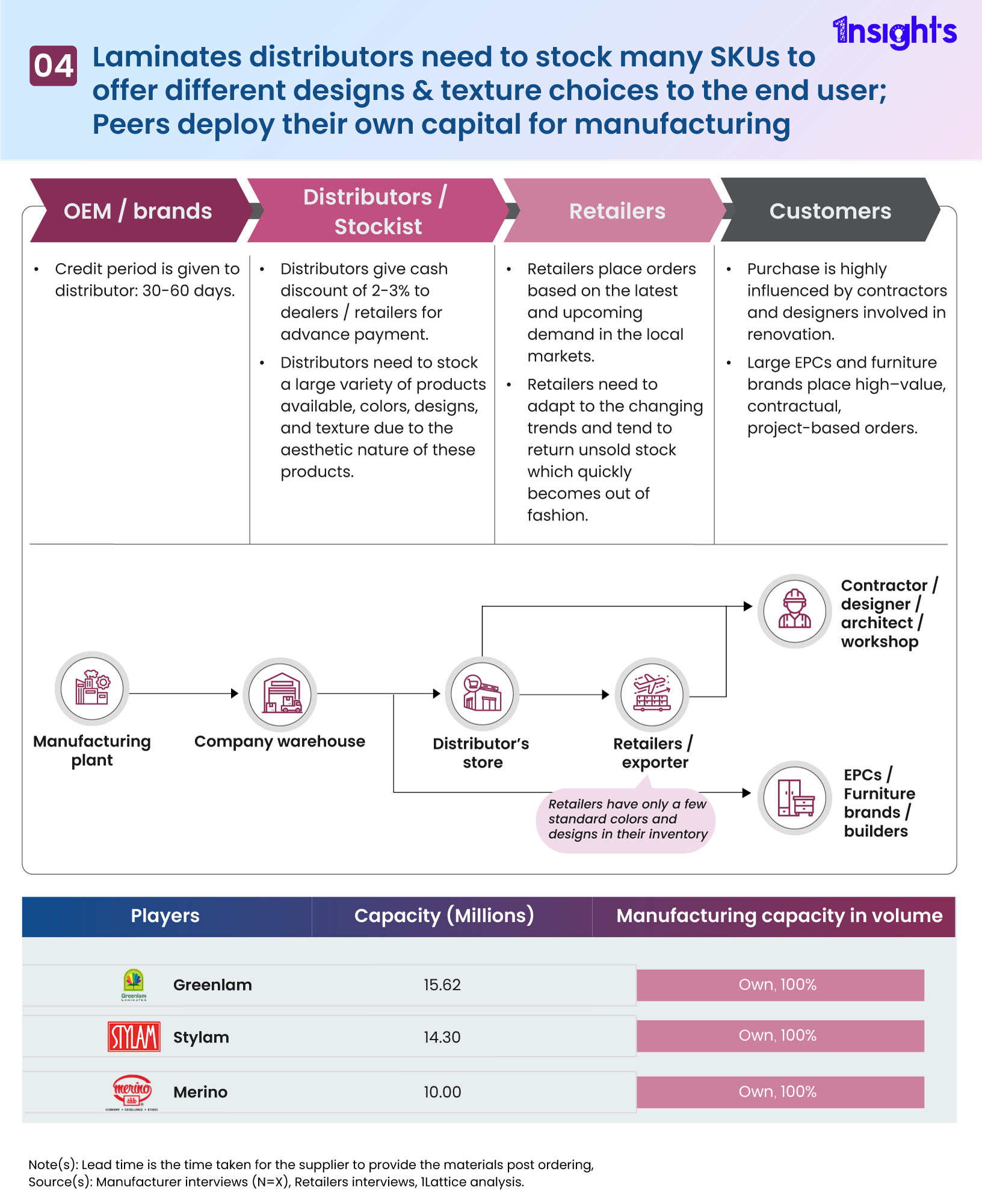 The
Laminate industry follows a traditional value chain involving manufacturers,
distributors, retailers, and customers.
The
Laminate industry follows a traditional value chain involving manufacturers,
distributors, retailers, and customers.