
India’s animal feed market plays a critical role in supporting the broader livestock and food ecosystem. As demand for dairy, poultry, and meat products rises, the efficiency and quality of the feed supply chain become central to value creation. The industry is increasingly focusing on structured sourcing, quality assurance, and streamlined distribution to enhance productivity and ensure consistent nutritional output.
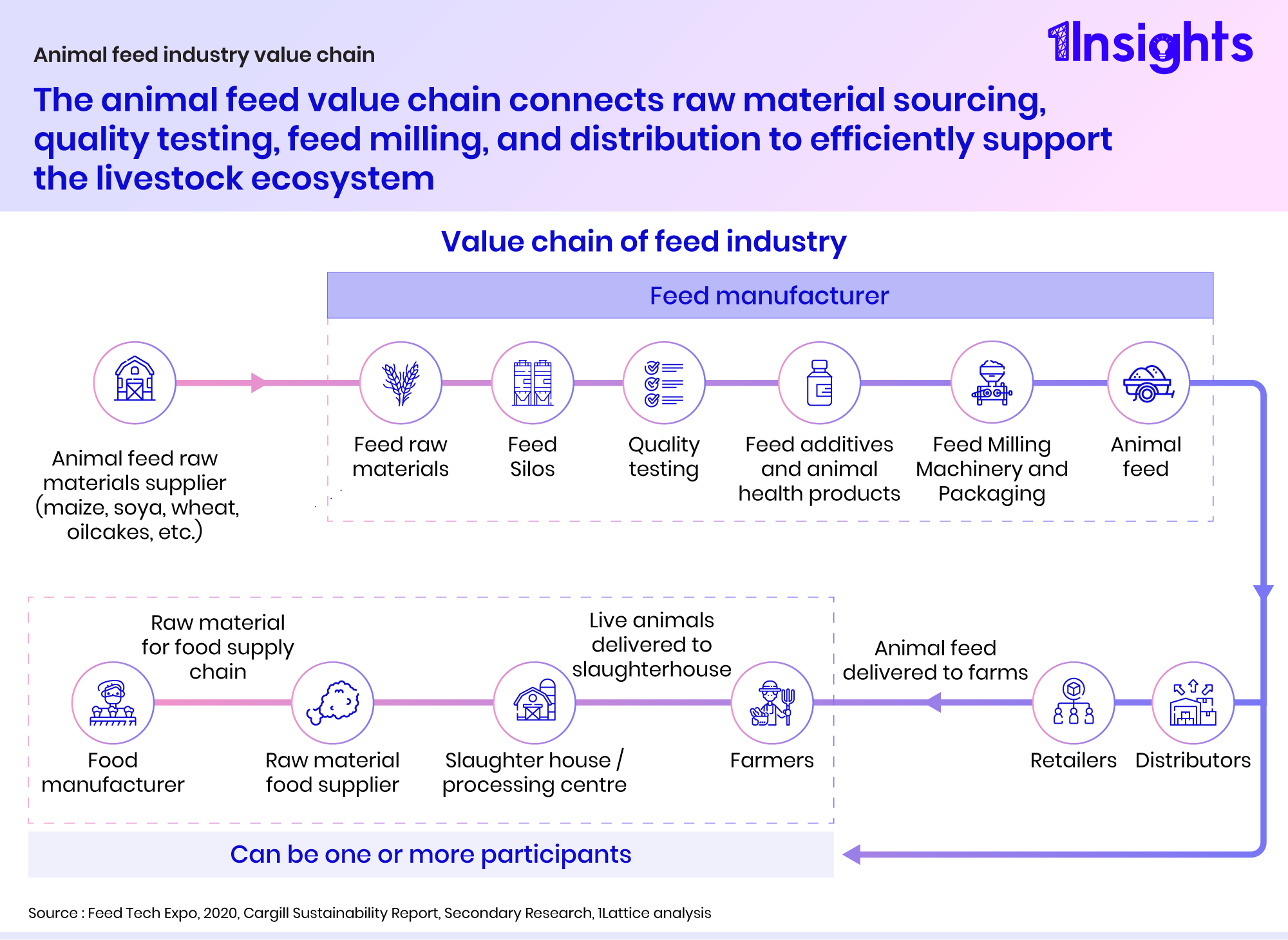
The animal feed supply chain begins with raw material suppliers providing key inputs such as maize, soybean, wheat, and oilcakes. These materials move to feed manufacturers, where they are stored in silos, undergo quality testing, and are blended with feed additives and animal health products. The process continues through feed milling, machinery operations, and packaging before the final feed is distributed. Once delivered to farms, feed supports livestock rearing, which then connects to slaughterhouses, food processors, retailers, and distributors, forming an integrated farm-to-food value chain.
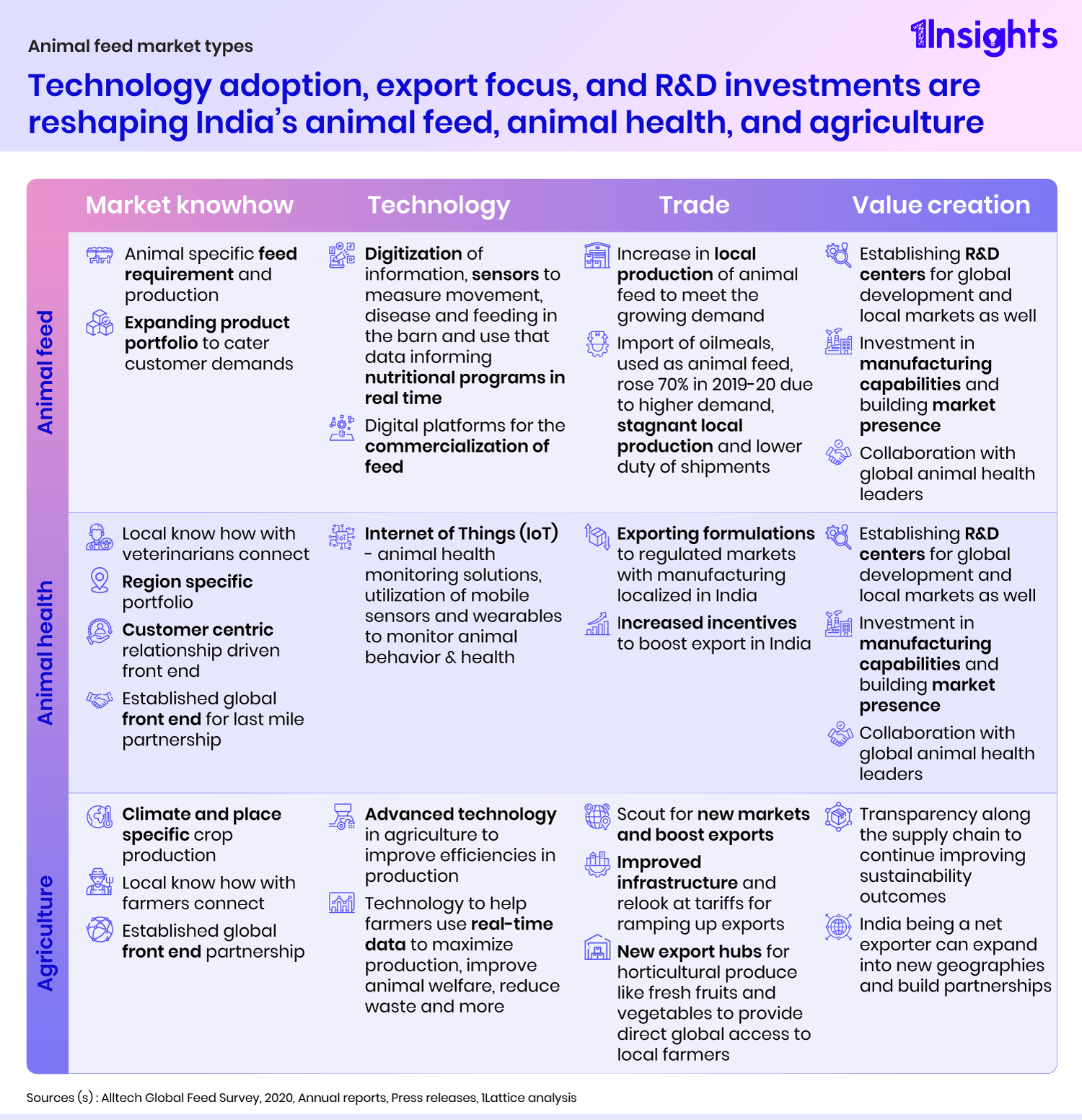
Going forward, value creation will depend on improving traceability, strengthening quality control, modernizing feed milling infrastructure, and enhancing coordination among participants. With better technology adoption, efficient logistics, and stronger partnerships across the chain, India’s animal feed sector can boost productivity, reduce wastage, and support sustainable growth in the livestock economy.