
Overview

Climate tech encompasses technologies designed to mitigate climate change by reducing greenhouse gas emissions, promoting renewable energy, enhancing energy efficiency, and supporting environmental sustainability and adaptation strategies.
Sharing a snapshot below.
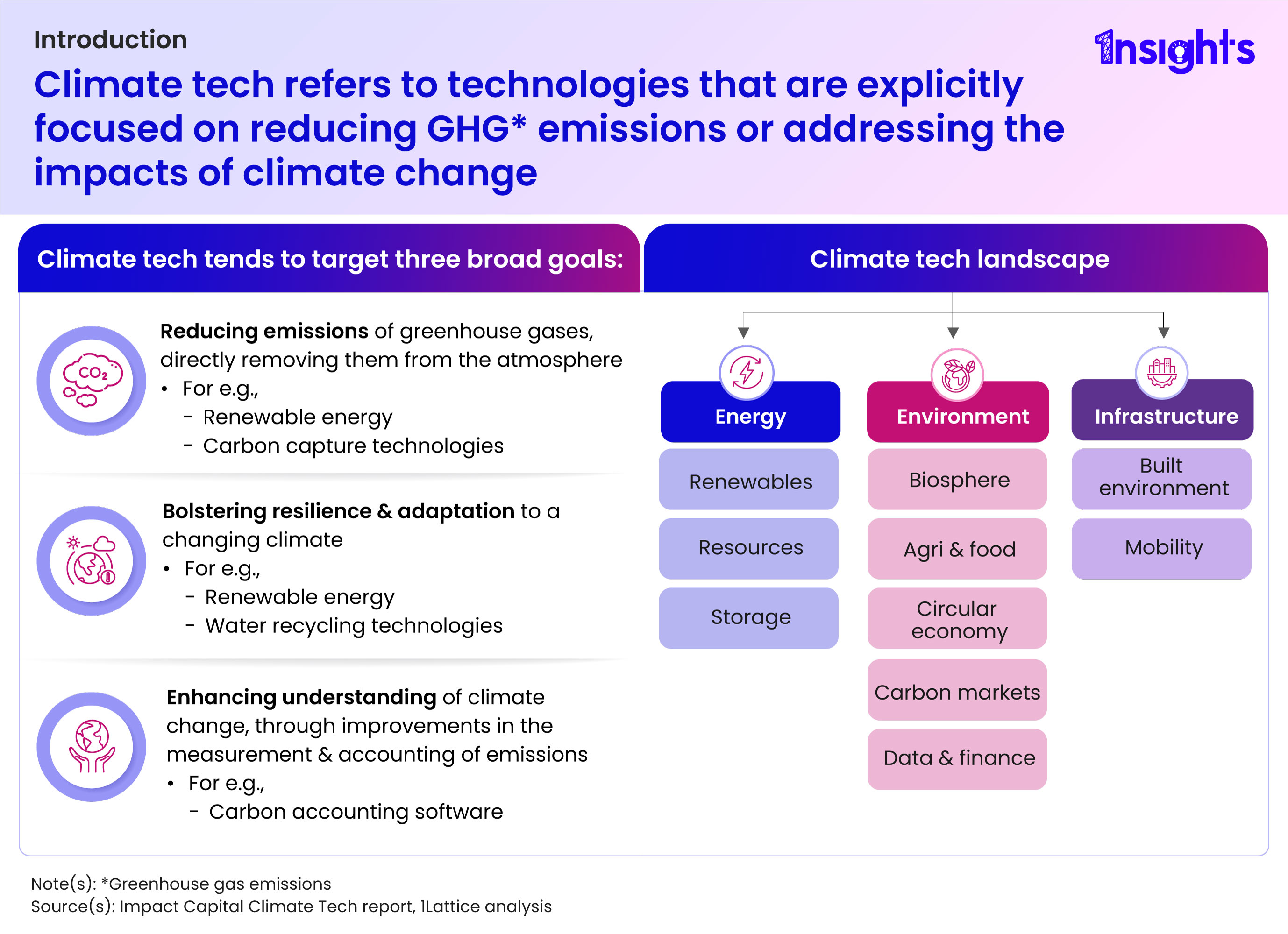
Climate tech comprises a range of technologies aimed at combating climate change by focusing on three primary objectives:
- Reducing and directly removing greenhouse gases (GHGs) from the atmosphere through solutions like renewable energy and carbon capture technologies
- Enhancing resilience and adaptation to climate impacts with innovations such as water recycling systems
- Improving the understanding of climate change through advanced tools like carbon accounting software.
These technologies are essential for tackling the multifaceted challenges posed by climate change, aiming for a sustainable and resilient future.
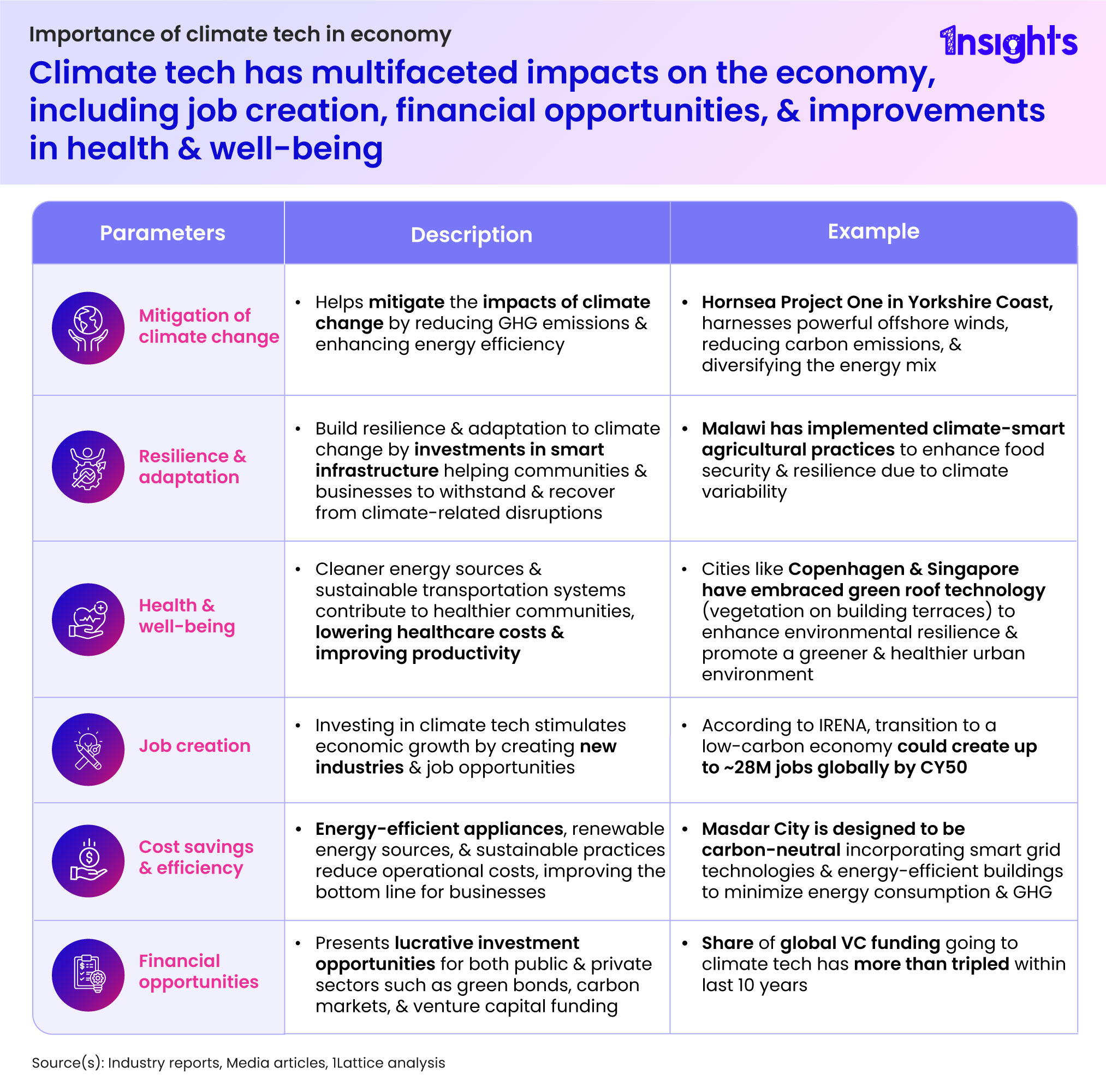
Climate tech significantly impacts the economy, environment, and society by addressing various key areas:
- Mitigation of Climate Change:
- Example: Hornsea Project One reduces carbon emissions by harnessing offshore winds.
- Resilience and Adaptation:
- Example: Malawi enhances food security through climate-smart agricultural practices.
- Health and Well-being:
- Example: Cities like Copenhagen and Singapore promote healthier environments with green roof technology.
- Job Creation:
- Example: According to IRENA, transitioning to a low-carbon economy could create up to 28 million jobs globally by 2050.
- Cost Savings and Efficiency:
- Example: Masdar City reduces energy consumption with smart grid technologies and efficient buildings.
- Financial Opportunities:
- Example: Global venture capital funding for climate tech has more than tripled in the last decade.
- Example: Hornsea Project One reduces carbon emissions by harnessing offshore winds.
- Example: Malawi enhances food security through climate-smart agricultural practices.
- Example: Cities like Copenhagen and Singapore promote healthier environments with green roof technology.
- Example: According to IRENA, transitioning to a low-carbon economy could create up to 28 million jobs globally by 2050.
- Example: Masdar City reduces energy consumption with smart grid technologies and efficient buildings.
- Example: Global venture capital funding for climate tech has more than tripled in the last decade.