
India’s
auto component industry accounts for 7.1% of the national GDP and contributes
49% to the manufacturing GDP of India. Indian auto components market is gearing
towards greater localization and players are looking to increase their presence
in used cars, aftermarket, and export segments. Recent policy-level initiatives
like Make in India, NEMMP 2020 & PLI have presented an opportunity to the
ACM segment entities for growth and movement up the value chain. New offerings
like automatic transmission systems are witnessing growing demand and EVs are
expected to disrupt the market for engine components. Strategies mainly
focusing on technology upgrades, standardization, and integration across the
automotive value chain will help suppliers grow in the current market
Presenting
a quick snapshot below!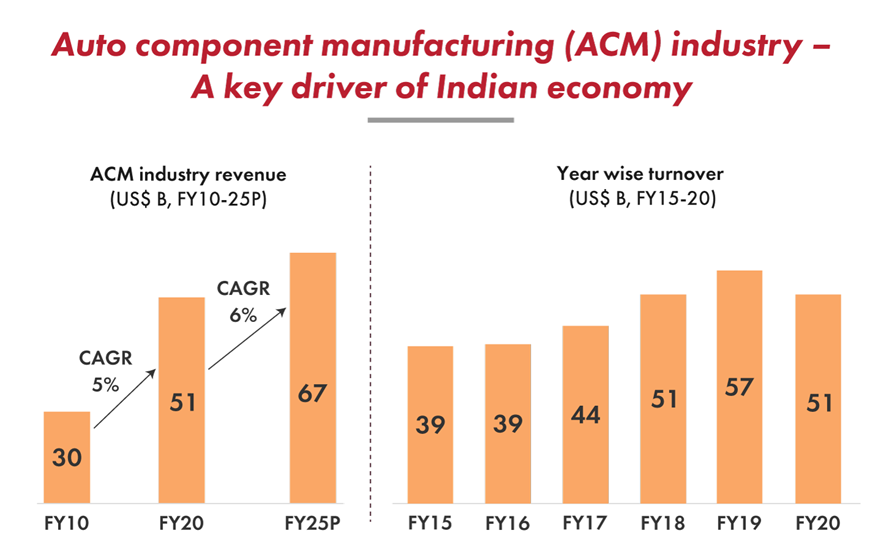
The
ACM industry in India is poised for long term growth with the industry revenue
expected to reach US$ 67B by FY25, growing at a CAGR of 6%. India’s ACM
industry has always been cost competitive and renowned for frugal engineering.
Factors such as increasing automobile penetration, India becoming global
sourcing hub, policy support from government, improved product development and
EV adoption will drive the market for auto components in India. The four major
customer segments which make up the ACM industry are OEM segment, exports,
imports, and domestic aftermarket.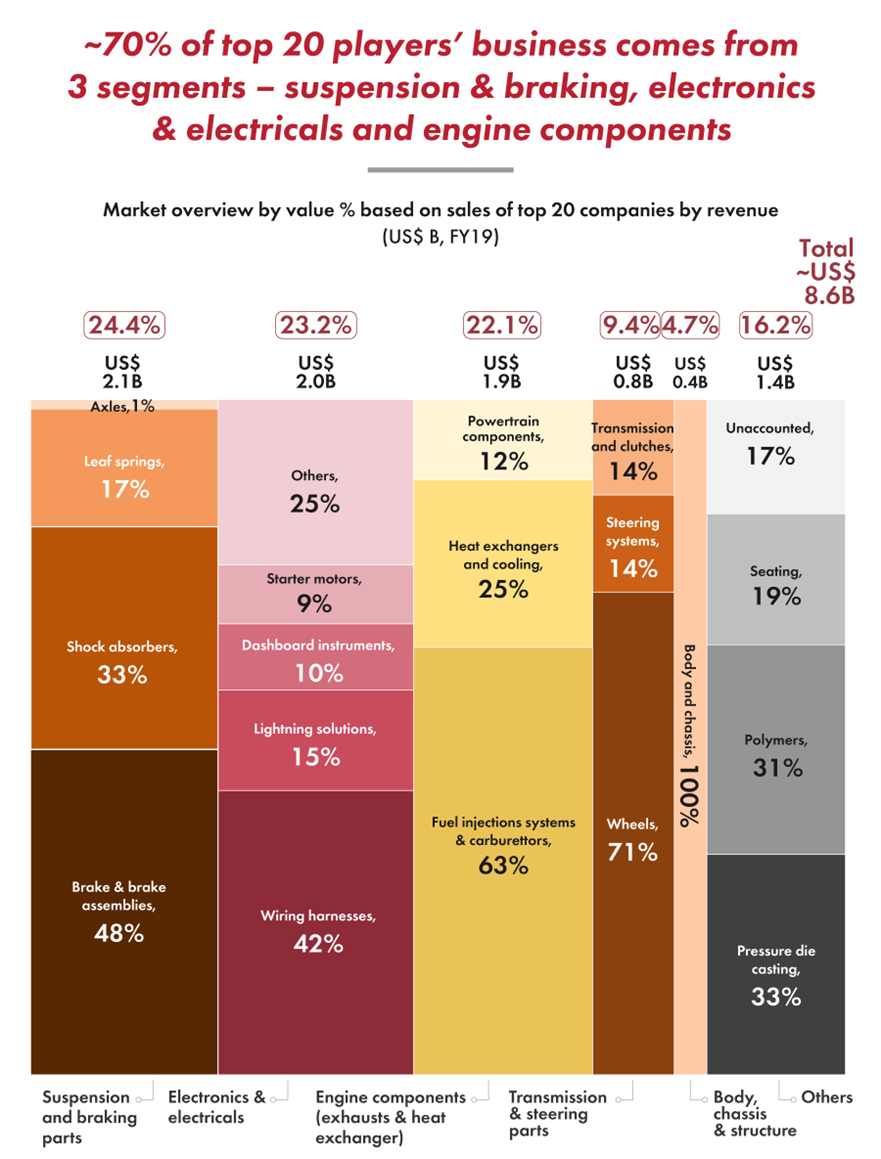
Suspension & braking, electronics & electricals and engine
components contributed to 70% of the revenue for top 20 players. Suspension and
braking parts is the overall highest contributing category with a percentage
share of 24.4% accounting to US$ 2.1B in revenue. Transmission & steering
parts contributes ~10% to the overall revenue of auto component manufacturers
in India accounting to US$ 0.8B in revenue.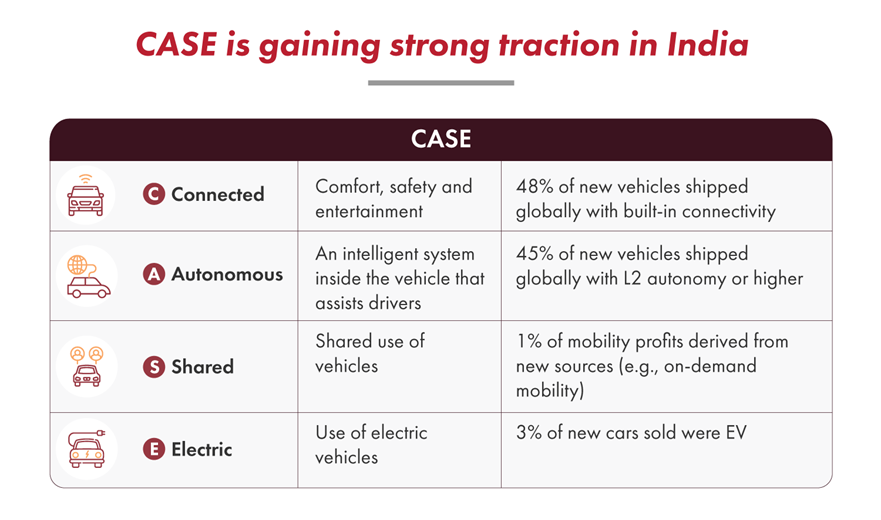
The
automotive industry is undergoing massive digital transformation with cars
expected to become more connected, autonomous, shared and electric (CASE).
Developing a dynamic mobility experience cannot be achieved without the CASE
building blocks. CASE vehicles represent a safer, more sustainable future of
transportation and mobility. CASE play a crucial role in driving mobility
innovation and making future solutions safe, efficient, and convenient. Based
on this, CASE mobility represents one of the largest opportunities for auto
component manufacturers going forward. Every mobility player, traditional or
new, is taking CASE into consideration at the moment.
Overview