This edition of the newsletter highlights the need for AI chatbots in healthcare. The global AI chatbot market in healthcare stands at 0.33B and is expected to grow at a CAGR of 21.7%, reaching 1.09B USD. AI doctor chatbots have emerged as key players in transforming patient information, including detailed medical histories, to be collected and managed.
Applications of using AI chatbots in healthcare:
Appointment Management and Patient Onboarding
Finding Nearby Providers
Prescription Management
Pre-procedure and Post post-procedure guidance
Improved diagnostics and trailing 6. 24*7 healthcare access
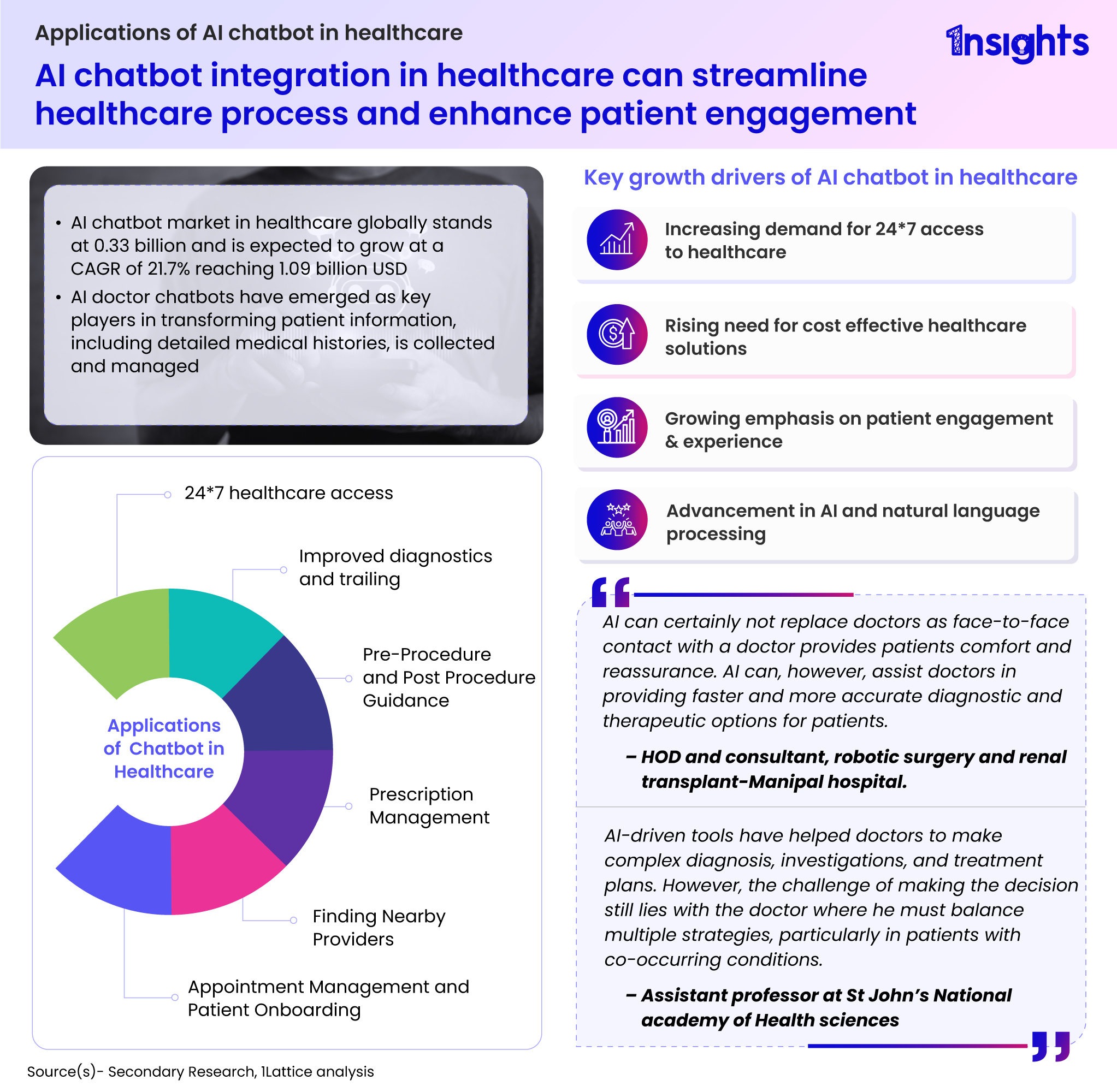
The key growth drivers of AI chatbots in healthcare are as follows:
Increasing Demand for 24/7 Access to Healthcare- Healthcare chatbots provide round-the-clock availability and accessibility to healthcare information and services.
Rising Need for Cost-Effective Healthcare Solutions- Healthcare chatbots can help reduce healthcare costs by automating routine tasks such as appointment scheduling, billing inquiries, and basic symptom assessment.
Growing Emphasis on Patient Engagement and Experience- Chatbots provide a user-friendly and interactive interface for patients to seek information, receive health tips, and engage in proactive health management.
Advancements in Artificial Intelligence and Natural Language Processing- AI algorithms enable chatbots to understand and interpret complex medical queries, respond accurately, and learn from user interactions, leading to more intelligent and effective conversations.
There are challenges in the adoption of AI chatbot-like platforms that need consolidated data to train the AI system which can be solved by creating transparent algorithms through data management. Other challenges include the lack of technical expertise and knowledge around the technology as only 35% of the total hospitals have digital EMR. Also, many healthcare professionals have misconceptions that patients might receive misinformation using AI.
This challenge can only be tackled if there is knowledge sharing around it. Another and most important challenge is the concern of lack of privacy which can be addressed if there are compliance and regulations around data security.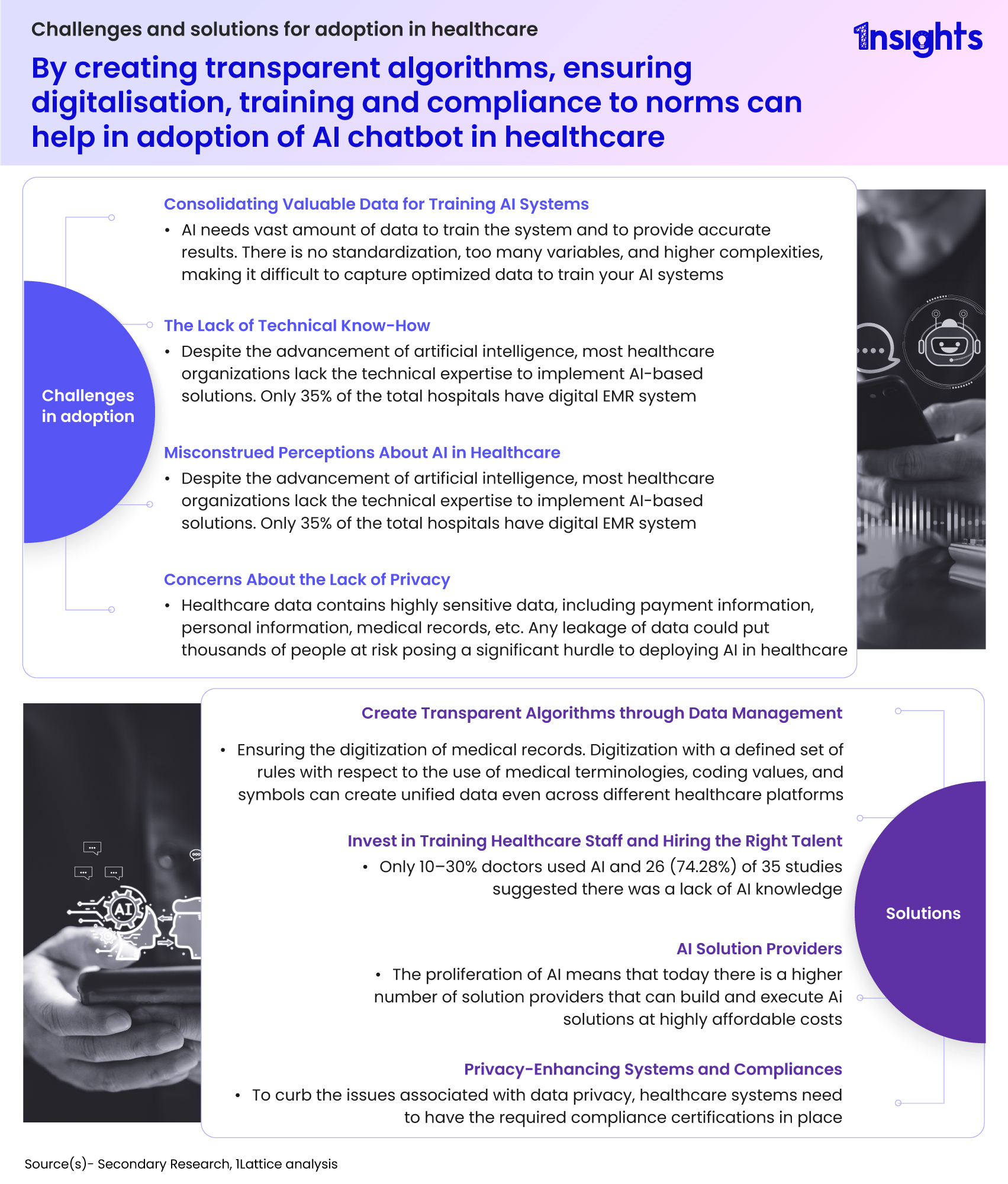
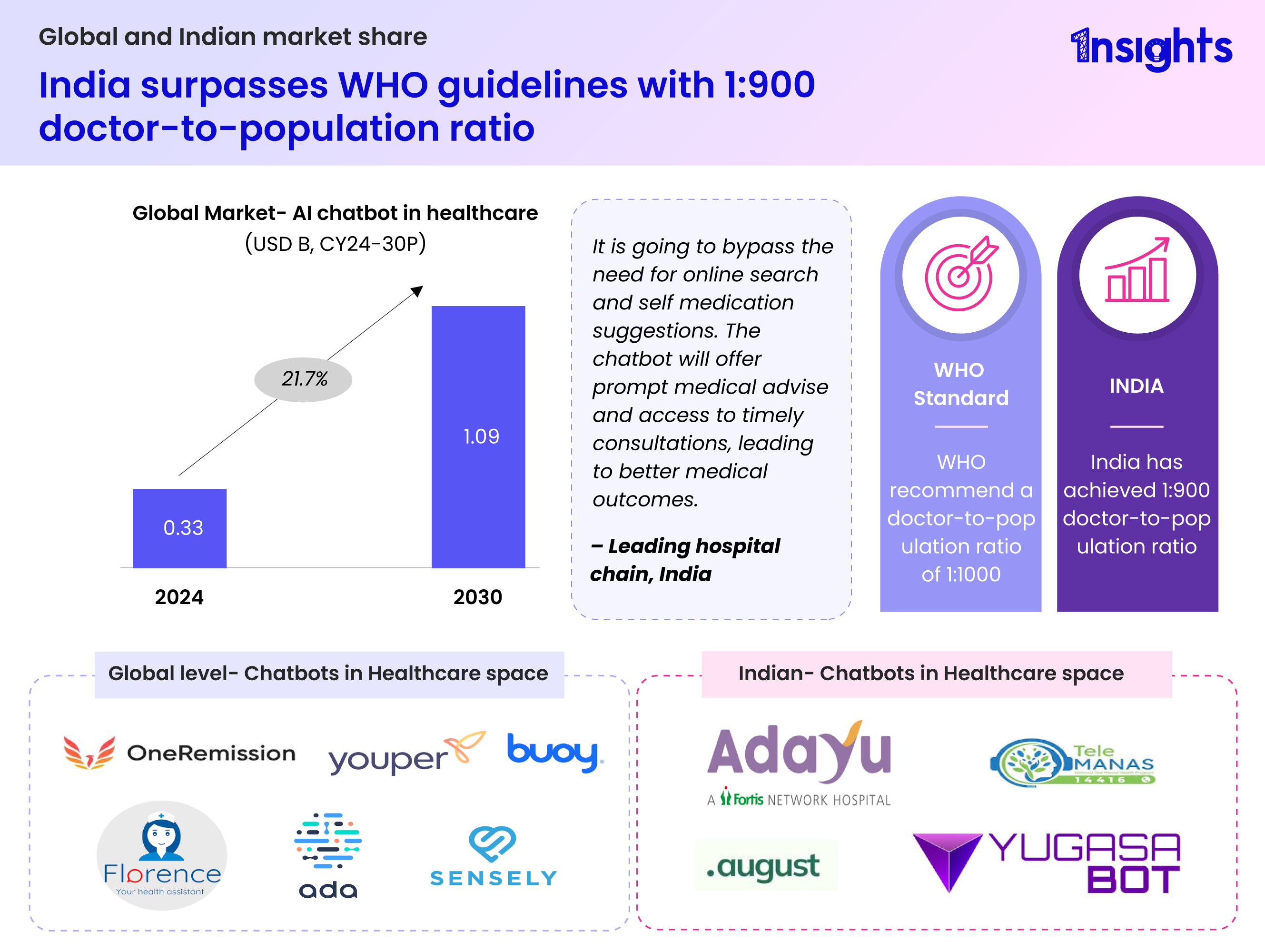
The global market for AI chatbots in healthcare is projected to reach US$ 1.09B by 2030, growing at a CAGR of 21.70% from USD 0.33 billion in 2024. Indian market is expected to boom in the AI chatbot market complementing online research and secondary research platforms. As per WHO guidelines, the doctor: population ratio stands at 1:900, signifying a higher demand for healthcare. This gap can be filled by AI chatbots for populations with medical doubts/queries
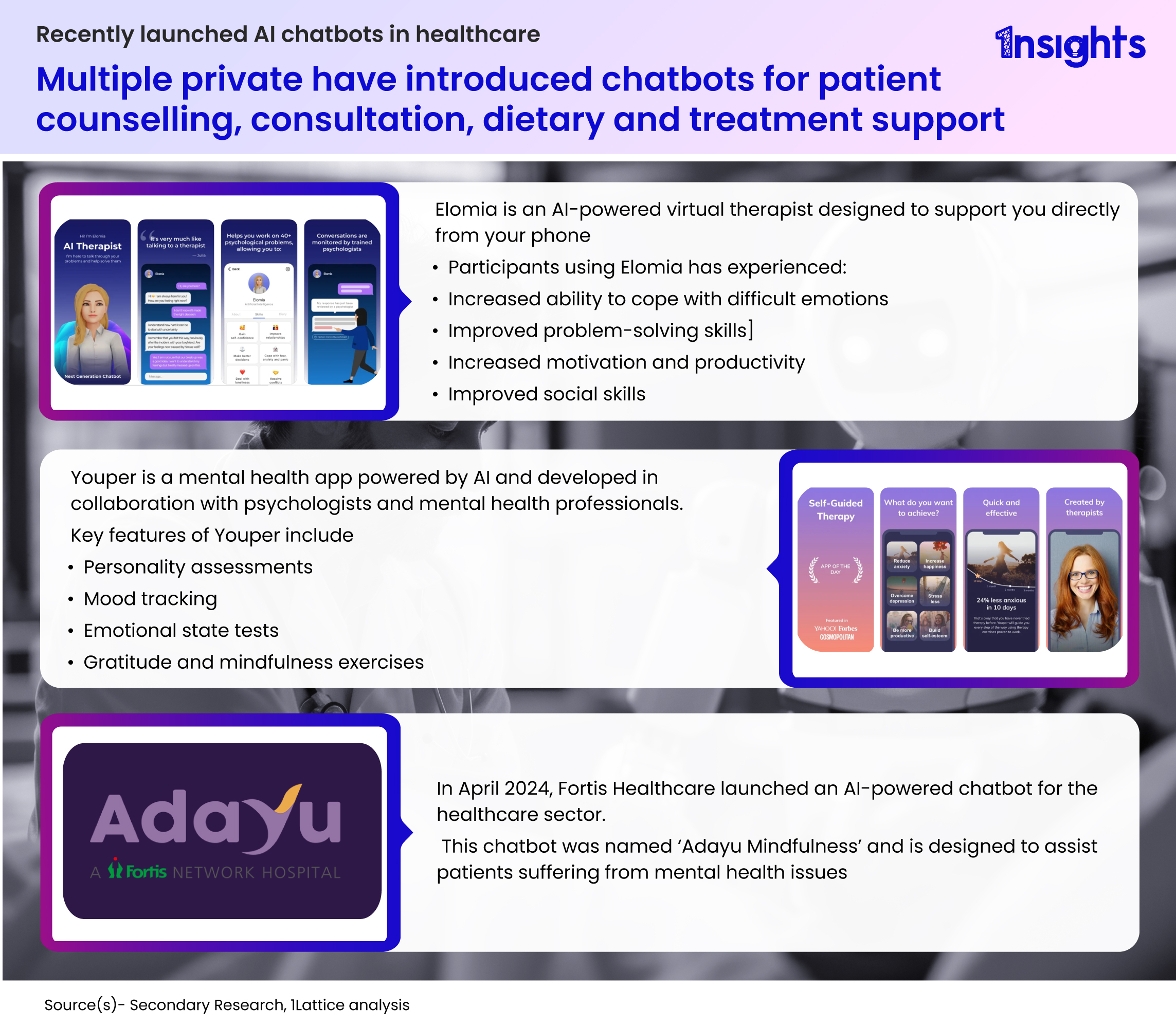
Multiple players have introduced chatbots for patient counseling, consultation, dietary and treatment support. Elomia is an AI-powered virtual therapist designed to support you directly from your phone. Participants using Elomia have experienced, an increased ability to cope with difficult emotions, improved problem-solving skills, increased motivation and productivity, and improved social skills. Another chatbot, Youper is a mental health app powered by AI and developed in collaboration with psychologists and mental health professionals. It has features like Personality assessments, Mood tracking, Emotional state tests, and Exercises for practicing gratitude and mindfulness. Fortis Healthcare also launched an AI-powered chatbot for the healthcare sector in April 2024. This chatbot was named ‘Adayu Mindfulness’ and is designed to assist patients suffering from mental health issues.