
- India’s D2C journey is becoming more fragmented, with consumers moving across social, marketplaces, quick commerce, and offline channels.
- Discovery, convenience, trial, and loyalty are reshaping consumer behavior, with trust, relevance, and experience increasingly influencing repeat purchases.
- The opportunity for D2C brands is shifting from acquisition to ownership, with a deeper understanding of the consumer journey becoming critical to growth.
The Indian consumer is no longer following the path brands designed for them
A consumer can discover a brand on Instagram, validate it through reviews, buy it on a marketplace, replenish it through quick commerce, and experience it offline all within the same relationship with the brand. The journey is becoming less linear, more fragmented, and increasingly driven by context.
What has changed is not simply where consumers buy. It is how they decide what is worth buying in the first place. Familiarity is competing with discovery, planned purchases with convenience, and inherited loyalty with relevance earned at every interaction.
For D2C brands, this creates a fundamental shift: the advantage moves from simply acquiring consumers to understanding and influencing more of their journey.
Four shifts are driving this change.
1. Discovery is replacing familiarity
Consumers are increasingly encountering brands before they actively enter a category decision. 43% of Indian shoppers report being influenced by influencer posts, while reviews, recommendations, and social proof increasingly shape consideration.
This has made discovery more fragmented but also more open. New brands can enter the consideration set without decades of heritage, while established brands can no longer rely on familiarity alone.
The battle is shifting from winning preference to winning attention and getting on the consumer’s shortlist early.
2. Trial is easier. Loyalty is harder.
Digital commerce has dramatically reduced the friction of trying something new. Consumers can compare products, read reviews, and switch brands with very little effort. But trial does not equal loyalty.
The first purchase may be driven by curiosity, a creator, a promotion, or convenience. The second purchase depends on whether the product delivers and whether the brand gives the consumer a reason to return.
This is shifting the D2C equation from:
CAC → LTV | Acquisition → Retention | First purchase → Repeat behavior
The strongest retention triggers increasingly center around habit, trust, identity, community, and relevance.
Loyalty is no longer inherited. It is continuously earned.
3. Convenience is becoming a consumer expectation
41% of Indian consumers shop online 2–3 times a week, reflecting the growing role of digital commerce in everyday consumption.
Quick commerce is pushing this further by making speed and availability an increasingly important part of the experience. For high-frequency categories such as beauty, personal care, snacks, wellness, baby care, and pet care, being available at the moment of need can directly influence brand choice.
But quick commerce has a limitation: it can put a product into the basket without necessarily putting the brand into the consumer’s mind.
Q-commerce is strongest as a discovery, trial, and replenishment engine, while owned channels, communities, and offline experiences remain important for building deeper relationships.
4. Omnichannel is becoming consumer-led, not brand-led
Consumers are not loyal to channels. They move between them based on what they need at each stage of the journey.
Socials and creators drive discovery, reviews and communities help validate choices, marketplaces enable comparison, offline builds experience and trust, while quick commerce delivers immediacy and replenishment. Owned channels then become important for building an ongoing relationship.
Offline increasingly plays a role beyond distribution, helping consumers discover, experience, and trust a brand, while marketplaces and quick commerce provide reach and convenience.
The winning model is therefore not about being everywhere. It is about being relevant wherever the consumer needs you.
The new consumer equation
The four shifts come together in a simple equation: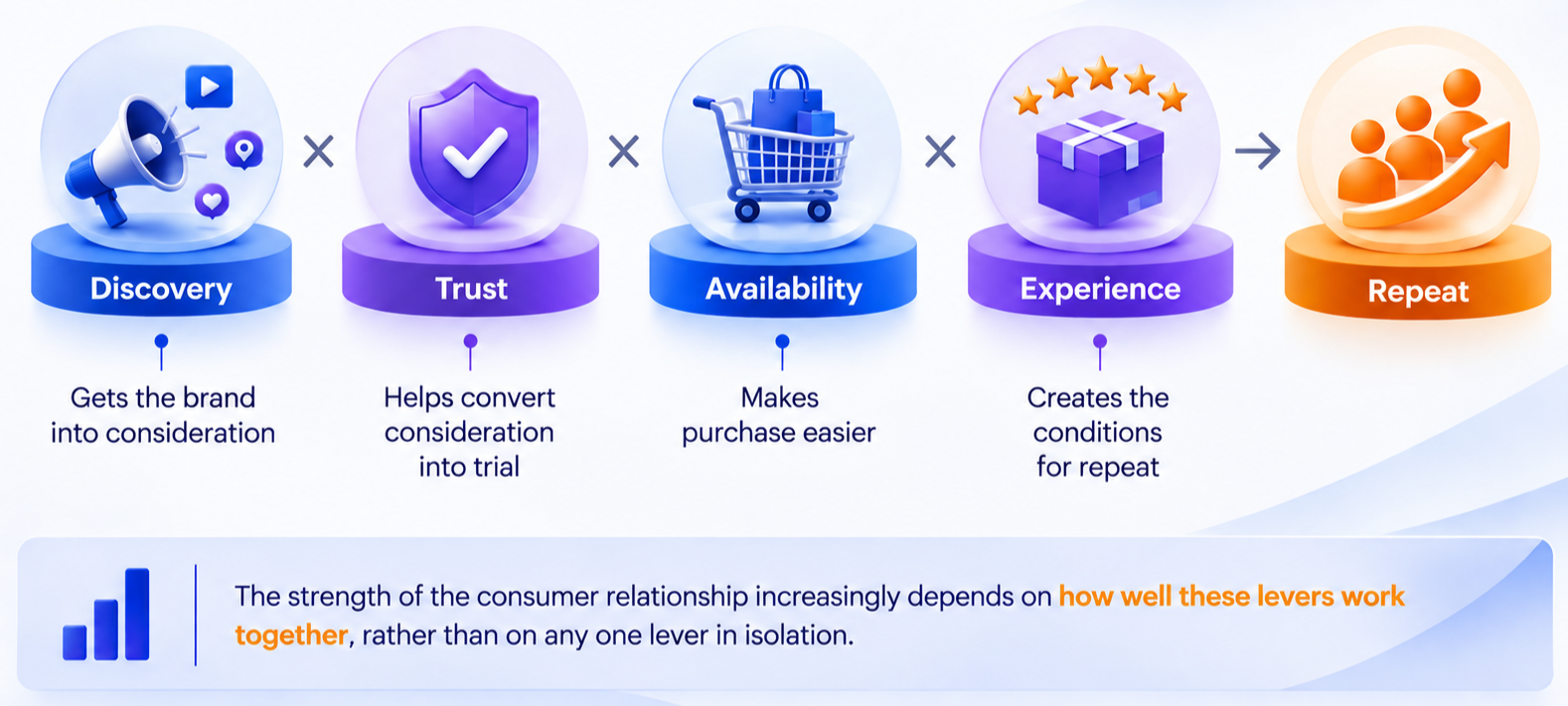
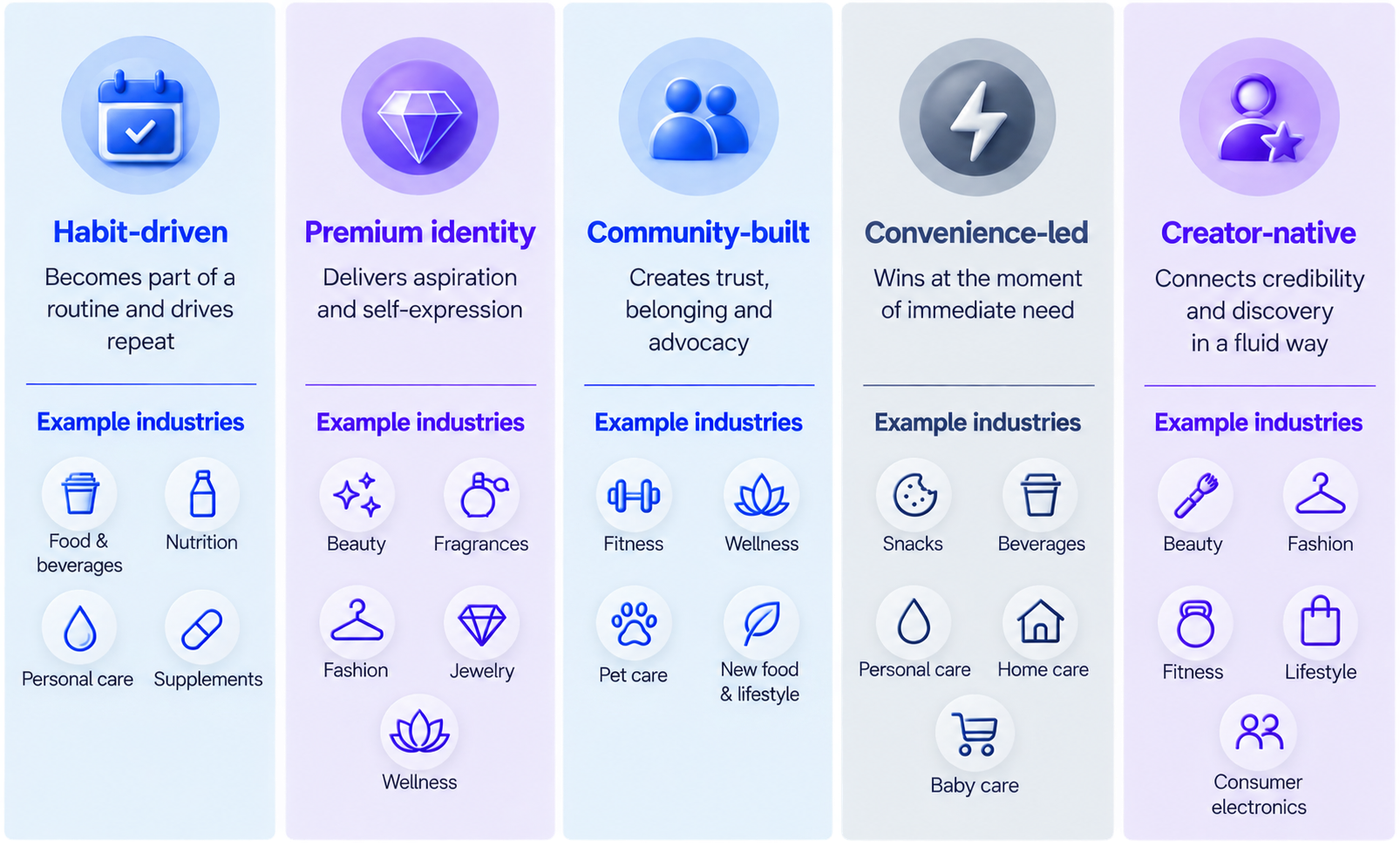
What kind of D2C brands are best positioned?
There is no single D2C playbook. Winning brands tend to anchor themselves around a clear consumer trigger, with different categories naturally lending themselves to different models
1Lattice view
The Indian D2C consumer has not become harder to reach. They have become harder to hold.
With more brands, channels, and information at their disposal, consumers are increasingly choosing based on relevance, trust, and experience. The next phase of D2C will therefore shift from customer acquisition to customer ownership.
The sharper question for brands and investors is no longer “How quickly can we acquire customers?” but “How much of the consumer journey do we influence?”
The buy button is no longer the destination. It is the start of the relationship.
How 1Lattice can help
Understanding the changing consumer journey requires more than tracking what consumers buy. It requires understanding why they choose, switch, and return.
Through 1Sense – Usage & Behaviour Studies, 1Lattice helps brands decode consumer journeys, identify purchase and switching triggers, understand channel preferences, and uncover the factors shaping repeat behavior.
From understanding consumer behavior to identifying where growth can be unlocked, 1Lattice enables better decisions.