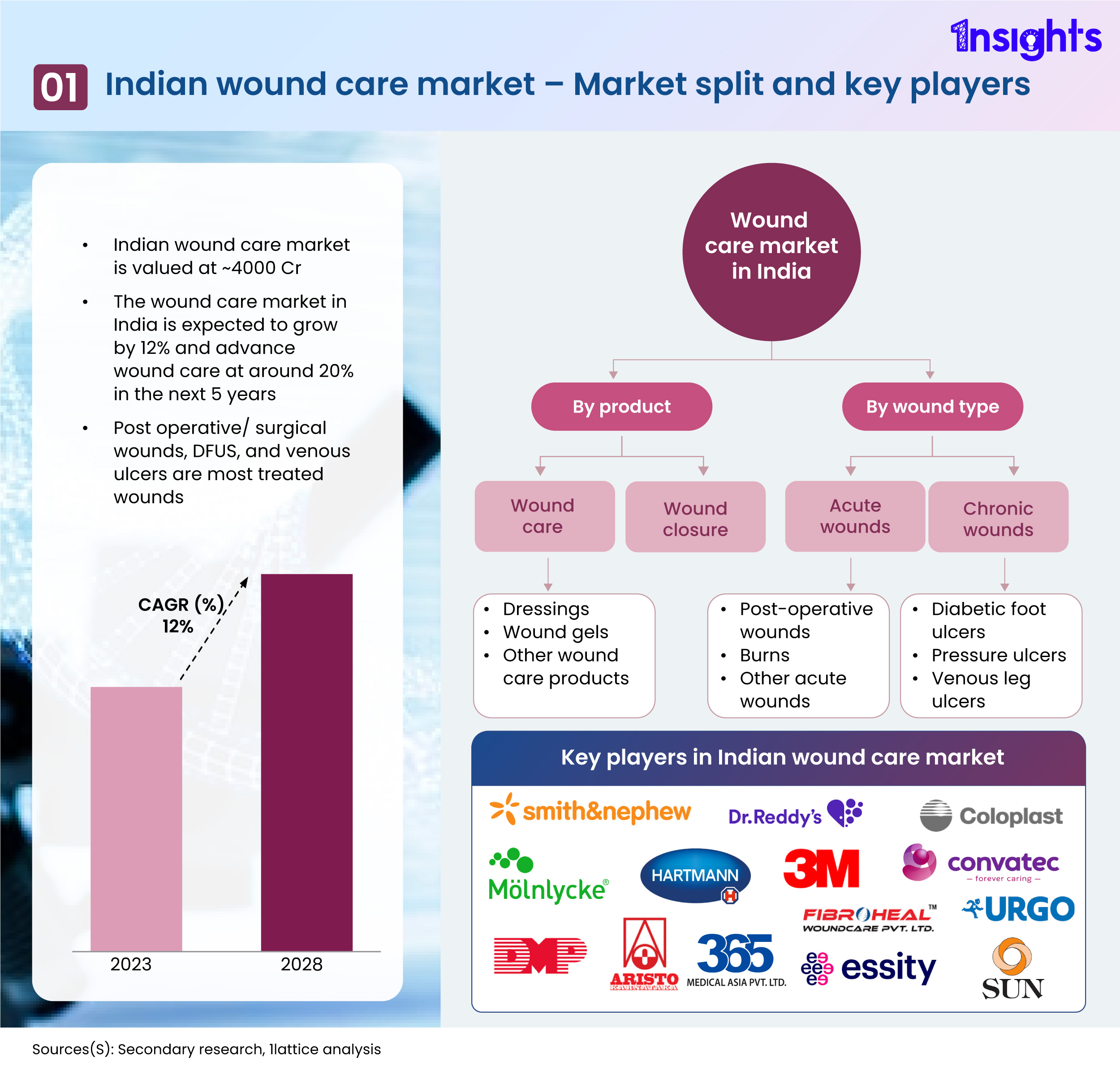
India’s wound care market has grown
manifold in recent years due to the high incidence of both acute and chronic
wound conditions. Rising incidence of diabetes, venous leg ulcers, as well as
other chronic conditions, add majorly to the burden of chronic wounds
significantly. The growing middle class with higher awareness and disposable
income, the increasing geriatric population, and the number of surgeries are
the major growth drivers. Therefore, the need for effective wound management
solutions is gaining more acceptance with each passing day. The wound care
market in India is highly attractive in terms of its sheer size and volumes,
thus several multinationals & Indian players are competing to gain
market share. In this newsletter, we shall assess the overall wound care
market, major segments, and adaptation of advanced wound products.
The CAGR of 12% of the total wound care market
makes it an attractive playing field for the MNCs & Indian players.
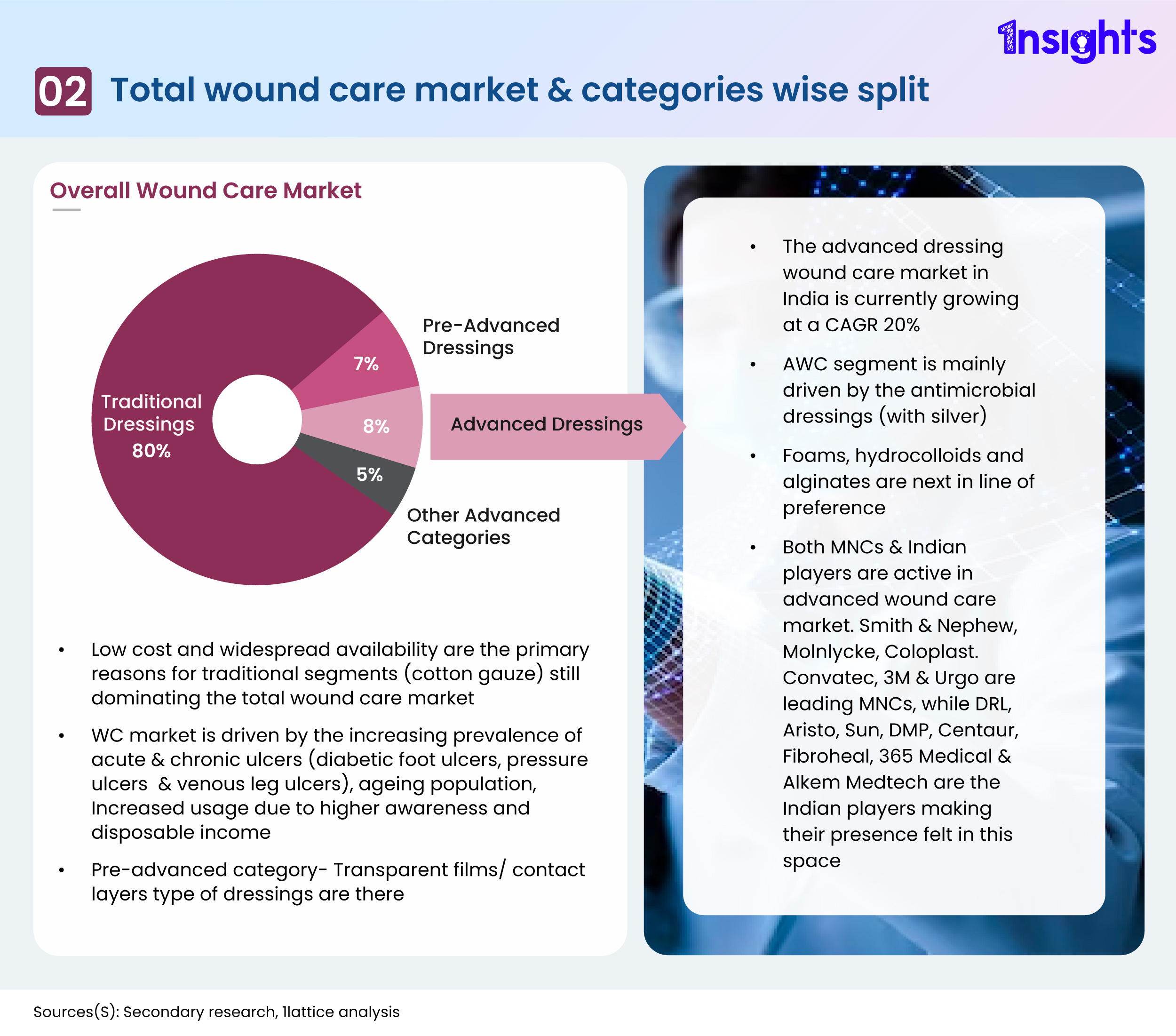
 The traditional methods to manage the
wounds such as cotton gauzes & pads are still the most popular due to their
low cost and widespread availability. Advanced wound dressings have been
gaining traction due to clinical evidence-based products with reduced wound
healing time and shorter hospital stays. However, their penetration is still
low due to higher cost and availability being limited to Metros/Tier-1 cities.
The traditional methods to manage the
wounds such as cotton gauzes & pads are still the most popular due to their
low cost and widespread availability. Advanced wound dressings have been
gaining traction due to clinical evidence-based products with reduced wound
healing time and shorter hospital stays. However, their penetration is still
low due to higher cost and availability being limited to Metros/Tier-1 cities.
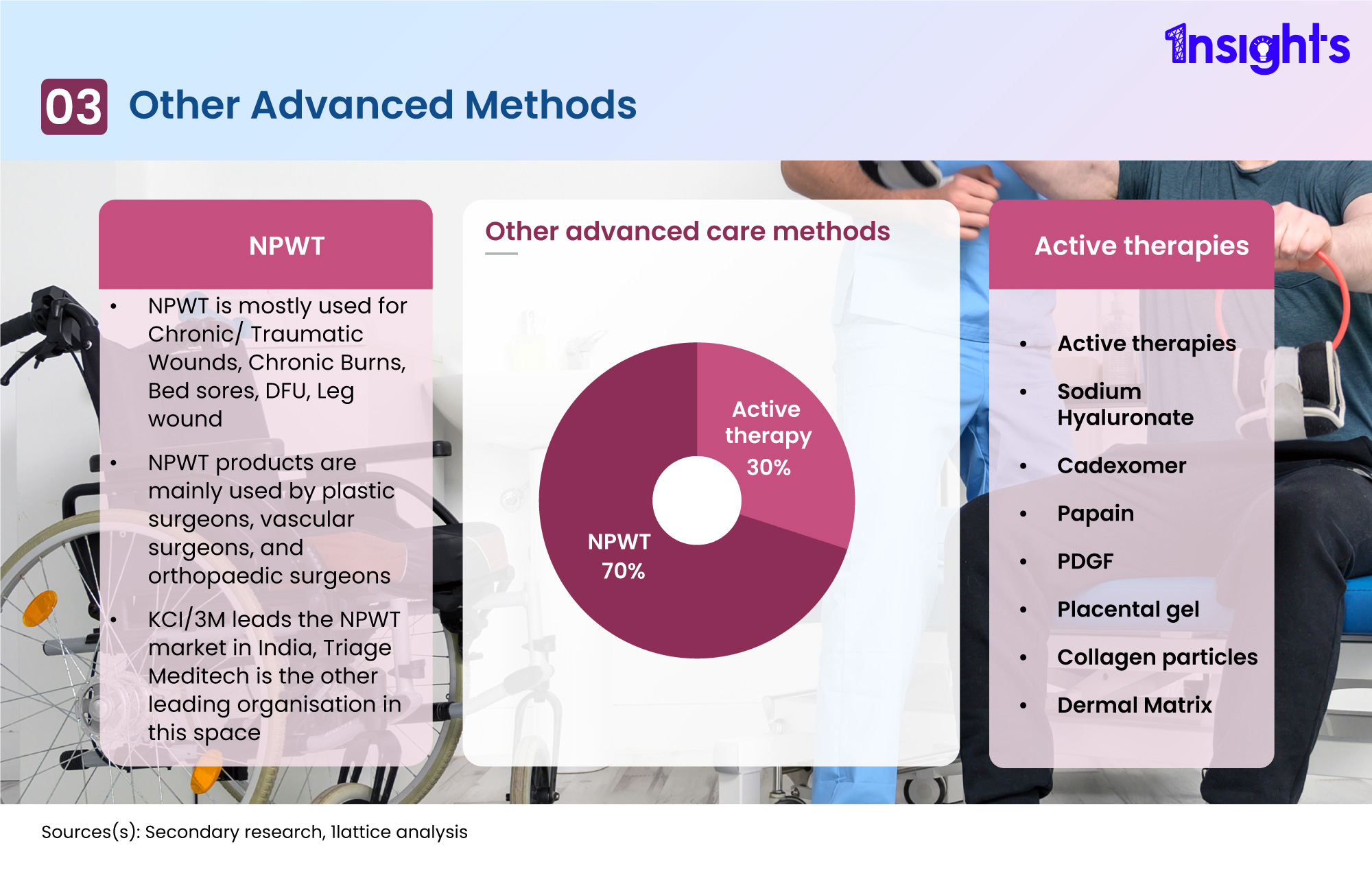
 Negative pressure wound therapies (NPWT)
and active therapies such as Platelet-derived factors and dermal matrix etc,
are also very effective in chronic wound management. The adoption of these
technologically advanced solutions has increased a lot in specialized wound
clinics and tertiary care hospitals including key Government centres.
Negative pressure wound therapies (NPWT)
and active therapies such as Platelet-derived factors and dermal matrix etc,
are also very effective in chronic wound management. The adoption of these
technologically advanced solutions has increased a lot in specialized wound
clinics and tertiary care hospitals including key Government centres.
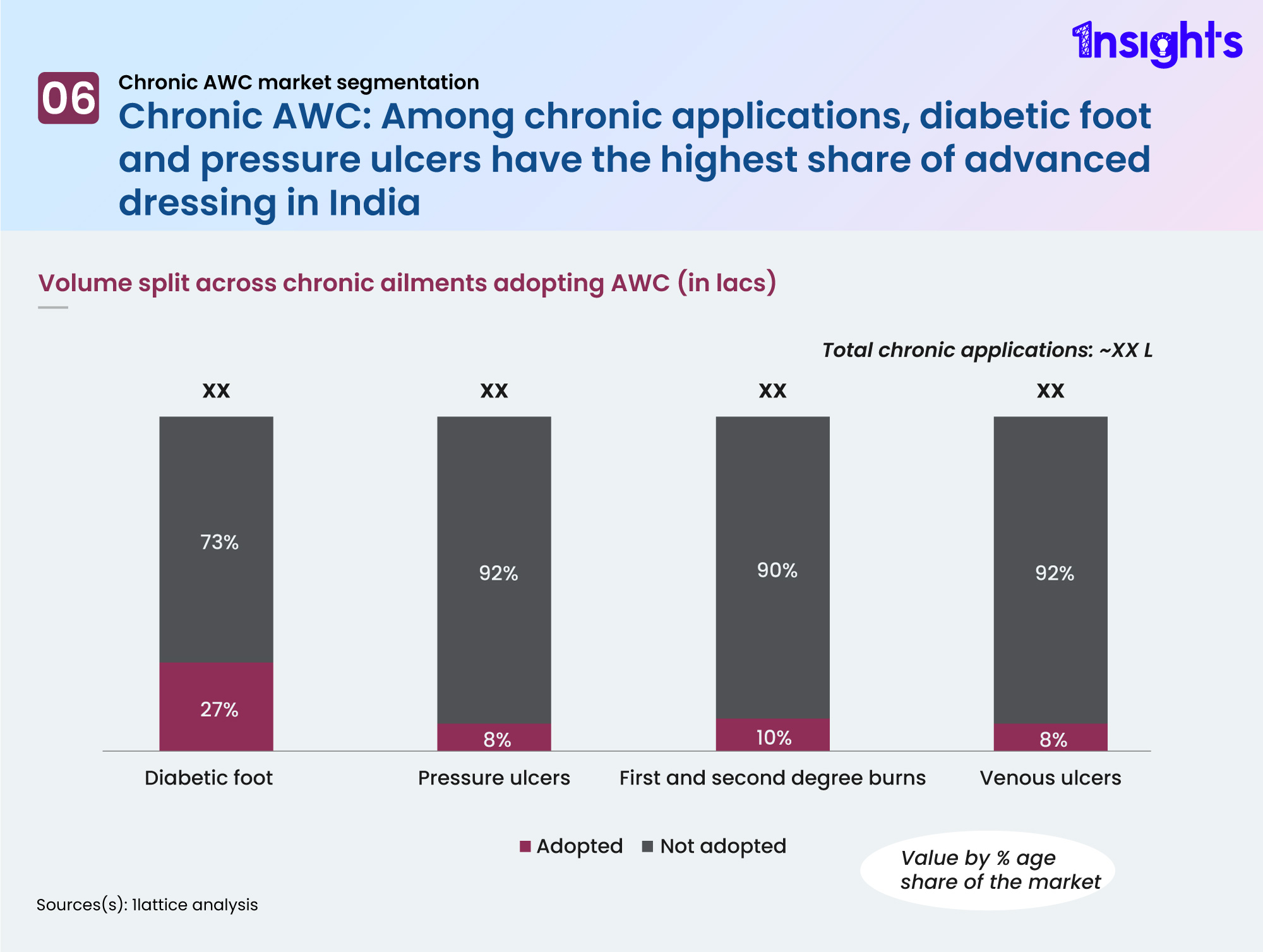
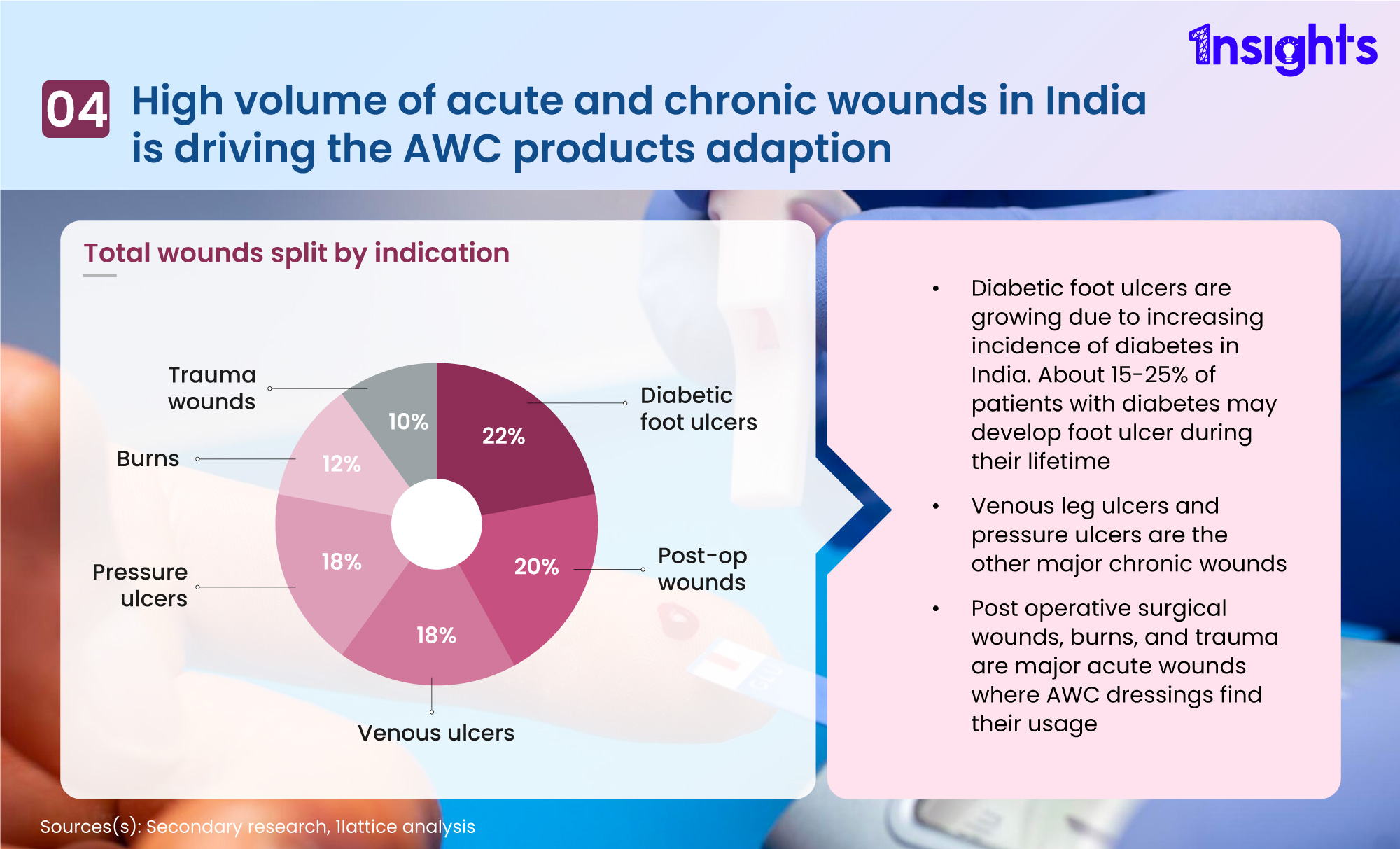
The high volume of both acute and chronic wounds in India is driving the adoption level of advanced wound care methods significantly.
 With 1Lattice comprehensive 1Insight
market assessment and sizing, we can provide data-driven actionable insights to
the healthcare organizations active in this segment. We can provide city
tier-wise market attractiveness and therapy adaption rates.
With 1Lattice comprehensive 1Insight
market assessment and sizing, we can provide data-driven actionable insights to
the healthcare organizations active in this segment. We can provide city
tier-wise market attractiveness and therapy adaption rates.
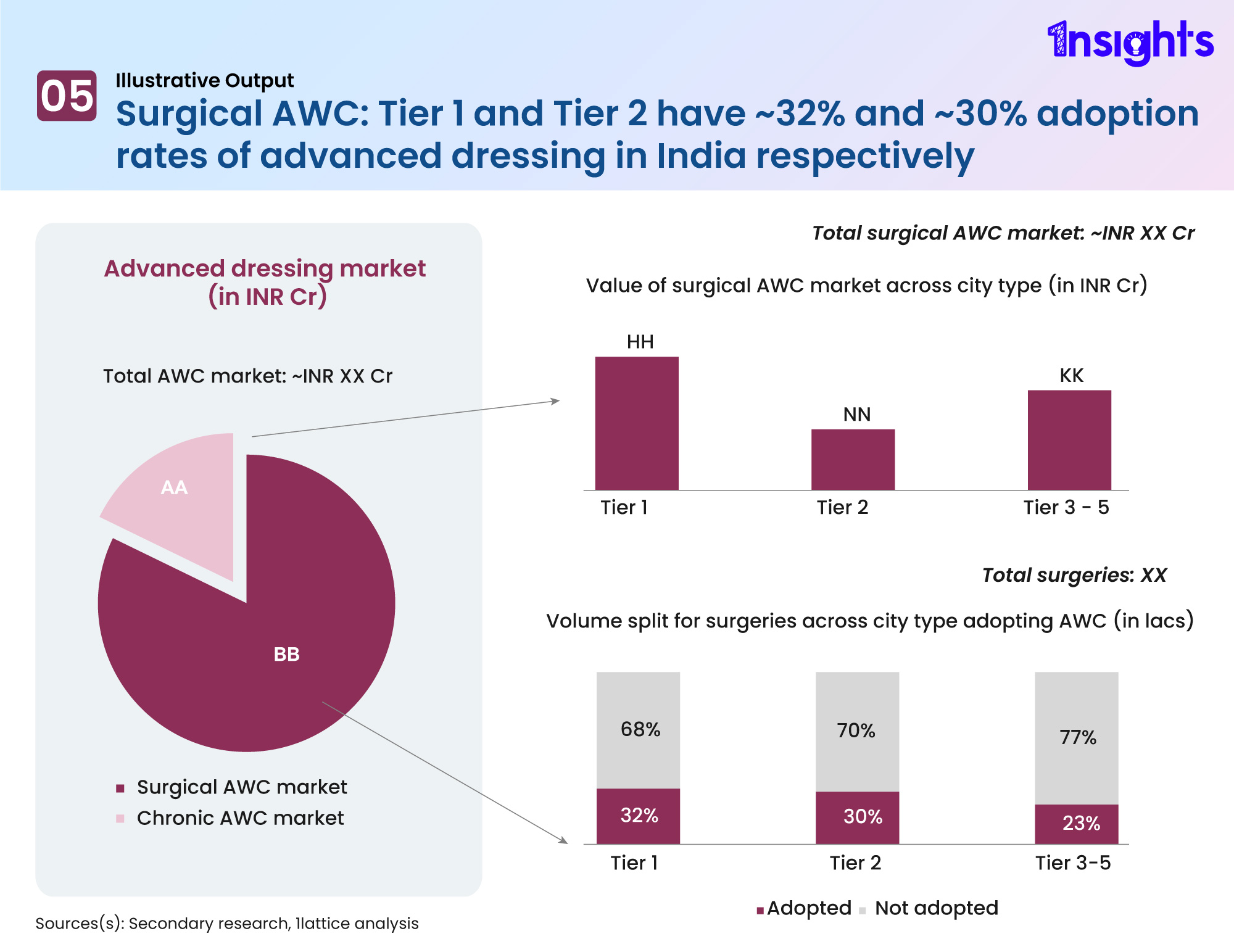
Further granularity such as therapy-wise
AWC adaption rates and much more is possible through our robust methodology and
advanced analytical tools.