
The next big audience for Indian brands isn’t in Mumbai or Delhi. It’s in the cities most media plans used to skip.
For years, advertising in India followed a simple rule: win the metros, and the rest of the country will follow. That rule is breaking down. In Tier 2 and Tier 3 cities, brands are swapping broad, one-size-fits-all campaigns for local stories, told in regional languages, through local creators, on screens and streets consumers see every day.
So what’s changed, and why should marketers care now? The short answer: smaller cities have become central to growth, and the way to reach them looks very different from the way brands reach metro audiences. Let’s look at what’s driving the shift, what’s working, and what it means for your next campaign.
Key takeaways
- Consumers in Tier 2 and 3 cities are increasingly influential, and their aspirations match those of metro audiences, if not exceed them.
- Cheap smartphones, affordable data, and regional OTT platforms have brought brands closer to these consumers than ever before.
- The brands that win here will lead with local language, local creators, and stories rooted in regional pride.
Why are brands turning their attention to Tier 2 and Tier 3 cities?
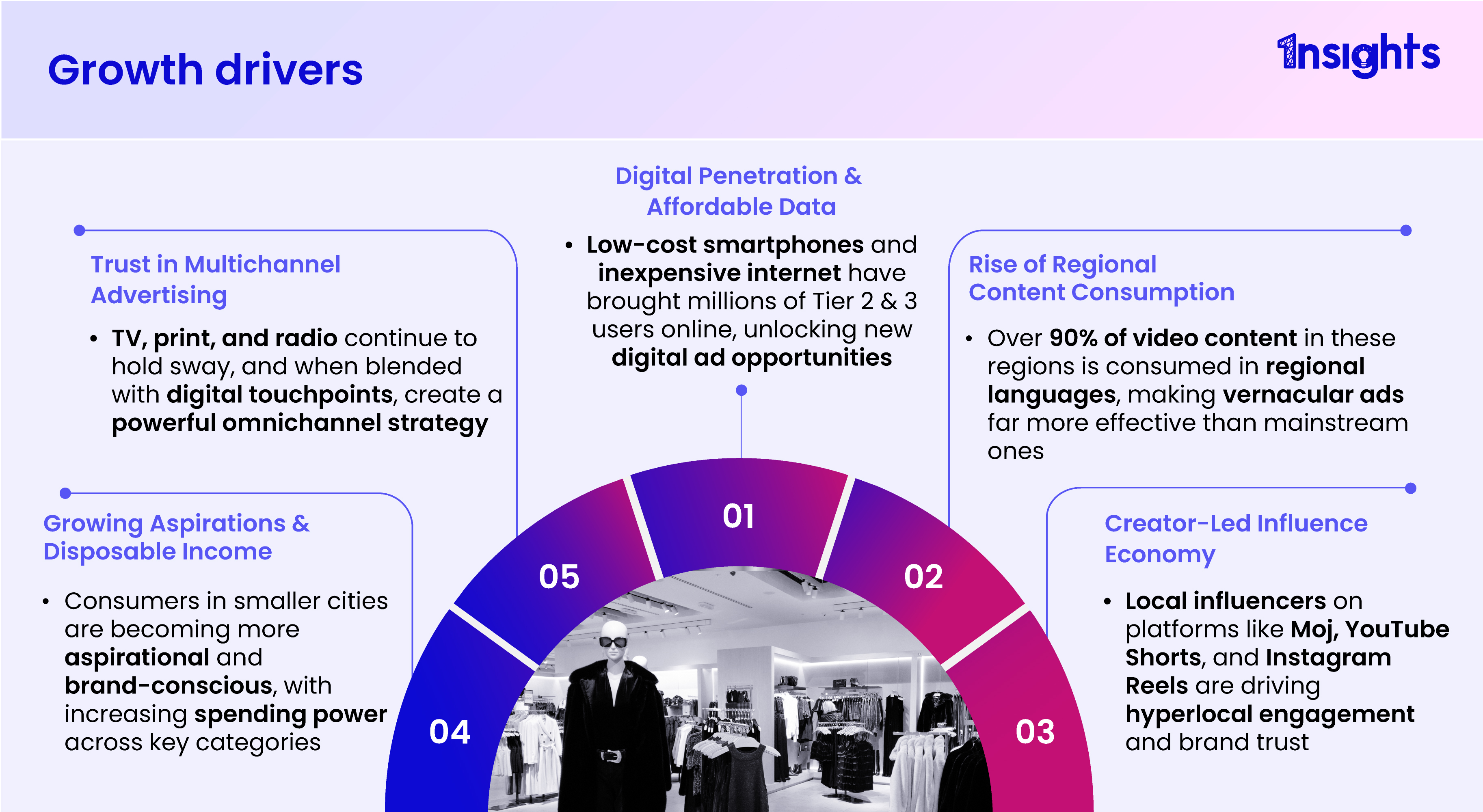
Start with the audience itself. India’s Tier 2 and 3 cities are home to over 500 million consumers, and for many of them, the internet is a first-generation experience. That alone makes them one of the largest pools of new demand in the country.
What makes them even more important is their mindset. They may not spend like metro consumers yet, but they want just as much, and in many cases more. And they’re no longer just following trends set elsewhere. Their choices increasingly shape what brands build and how they speak.
That’s why advertising in these cities has moved from an afterthought on the media plan to a strategic priority. Which raises the next question: how did brands suddenly get so close to this audience?
What’s bringing brands closer to consumers beyond the metros?
The change didn’t come from one big event. It came from three everyday shifts that added up:
- Low-cost smartphones put a screen in millions of new hands.
- Affordable mobile data made watching, scrolling, and searching part of daily life.
- Regional OTT platforms gave consumers content in their own language and gave brands a place to show up alongside it.
Together, these shifts have turned advertising into a real force in how people in smaller cities decide what to buy. The effect stretches across categories, from fashion and FMCG to electronics and financial services.
Of course, more reach doesn’t automatically mean more impact. How brands use that reach is where the real change is happening.
What advertising trends are shaping Tier 2 and Tier 3 India?
If you look at the campaigns that connect in these cities, a few patterns stand out. Each one reflects a simple idea: meet consumers where they are, in the way they speak.
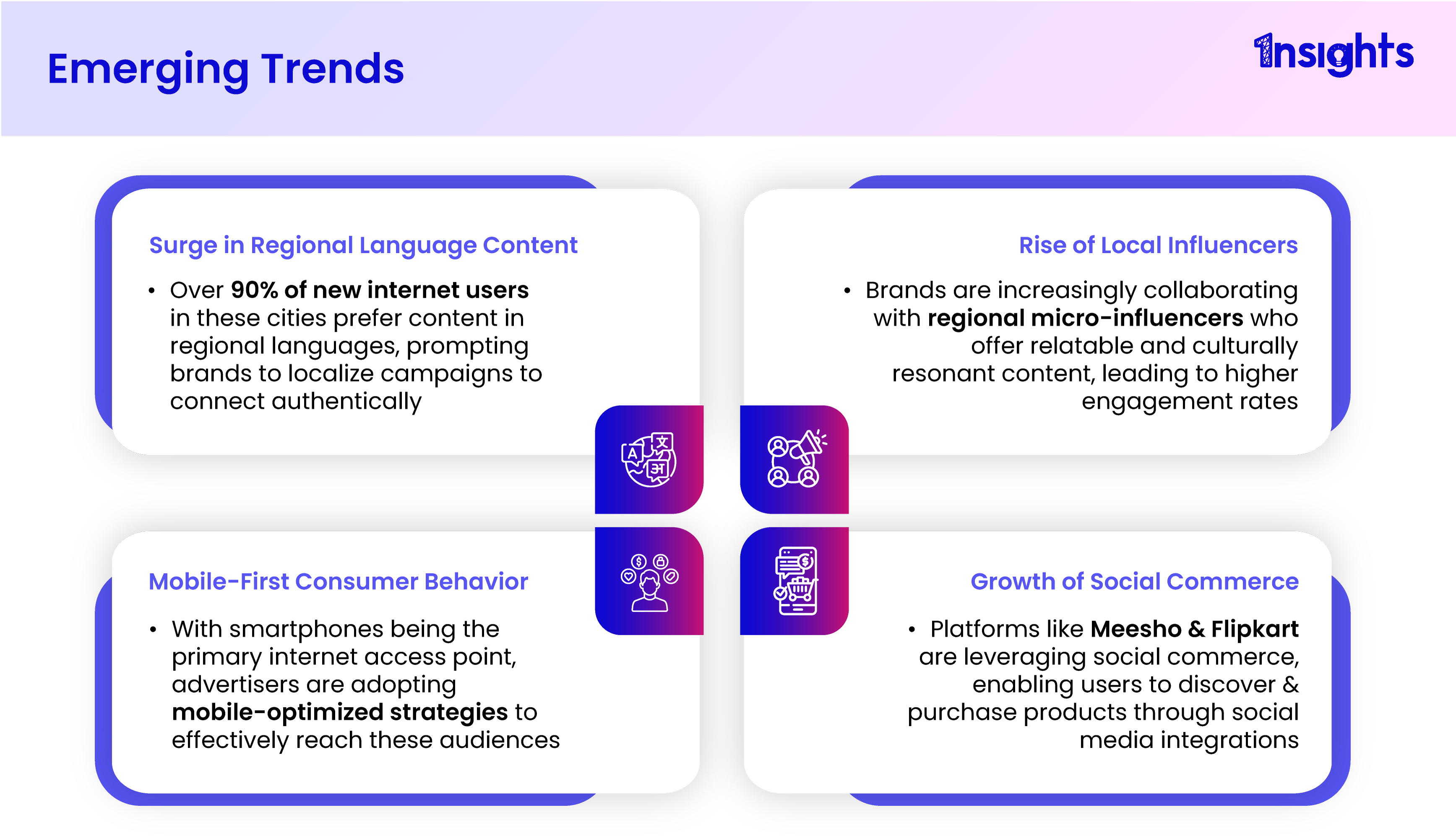
- Regional languages and vernacular content: campaigns created in the language consumers think and shop in, not translated as an afterthought
- Local influencers: creators from the community stepping into the spotlight as trusted brand storytellers
- Multi-platform reach: YouTube, television, and roadside billboards working together rather than in silos
- Nuanced storytelling: messages that move away from broad slogans toward stories that reflect real aspirations
None of these trends works alone. The strongest campaigns combine them: a local creator, speaking the local language, showing up across the screens and streets the audience already uses.
How is advertising in Tier 2 and 3 cities different from metro advertising?
This is one of the most common questions marketers ask, and it’s worth answering directly. The difference isn’t only in budget or media mix. It’s in tone, voice, and trust.
- The message: Metro campaigns tend to speak in broad, national terms. In Tier 2 and 3 cities, the messages that land are local and story-led, built around situations people recognize from their own lives.
- The language: Metro advertising usually runs in national languages. In smaller cities, regional and vernacular content does the heavy lifting, because people respond to brands that speak the way they do.
- The voice: National celebrities and big-ticket campaigns often front metro advertising. Beyond the metros, local creators and familiar faces carry more weight, because the audience sees them as one of their own.
- The channels: Metro media plans lean heavily on digital. In Tier 2 and 3 cities, YouTube, television, regional OTT, and outdoor media work best together.
What it reflects: Metro campaigns often sell a lifestyle. The campaigns that connect in smaller cities reflect everyday ambition and regional pride.
Put simply, metro campaigns often speak to consumers. The campaigns that work in smaller cities speak like them.
What should brands do differently in Tier 2 and Tier 3 cities?
Understanding the shift is one thing. Acting on it is another. From an expert perspective, a few principles follow naturally from what we see:
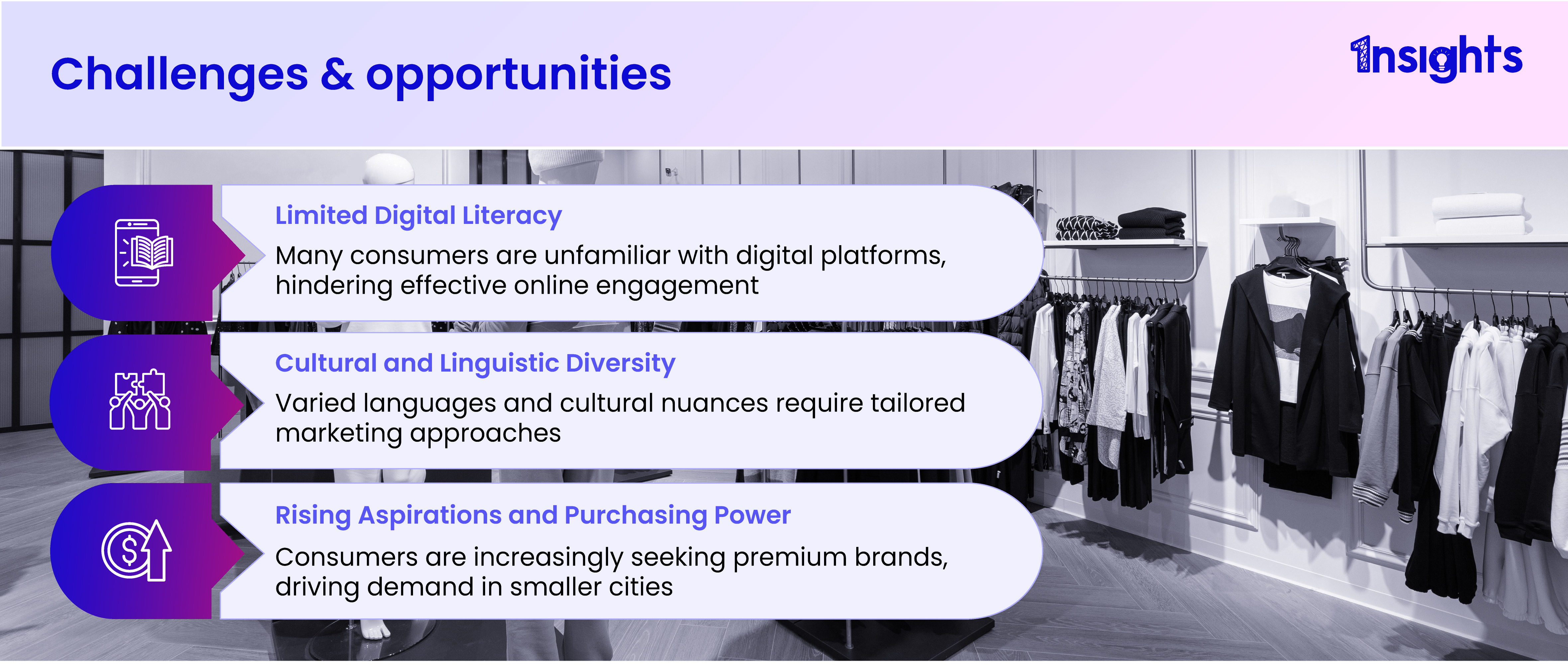
- Plan in the local language from day one. Translating a metro campaign rarely carries the same meaning.
- Choose creators the audience already trusts. Local voices often carry more weight than national ones.
- Don’t rely on a single screen. Consumers move between YouTube, TV, OTT, and the street, and campaigns should too.
- Measure what each city responds to. Tier 2 and 3 India is not one market, and what works in one city may not work in the next.
That last point matters most. Without clear evidence of how campaigns land, even well-made local advertising can miss.
What is the future of advertising in Bharat?
Looking ahead, the direction is clear. As digital access spreads and local voices get louder, brands have a real chance to build long-term relationships beyond the metros.
Expect three things to define the next phase: sharper localization, creator-led storytelling, and campaigns that celebrate regional pride and everyday ambition. Bharat’s growing cities will shape the next chapter of Indian advertising as much as its metros do, and the brands that start listening now will be better placed when that chapter arrives.
How 1Lattice helps brands reach Tier 2 and 3 India
Reaching Bharat is one challenge. Knowing whether your campaign actually worked there is another. 1Sense market intelligence helps brands understand how consumers in Tier 2 and 3 cities respond to campaigns through campaign effectiveness and brand and perception research.
As Asia’s leading market intelligence platform, 1Lattice helps brands see where India’s next wave of growth is coming from, and plan for it with confidence.