
India’s retail and e-commerce ecosystem is witnessing rapid digital transformation, creating strong demand for SaaS solutions that streamline operations and enhance scalability. As online commerce expands across marketplaces, D2C brands, and omnichannel retailers, businesses are increasingly adopting SaaS platforms to manage customer engagement, transactions, inventory, and logistics efficiently. These cloud-based tools help retailers reduce operational complexity, enable real-time decision-making, and improve customer experiences, making SaaS a critical enabler for the next phase of growth in India’s retail and e-commerce market.
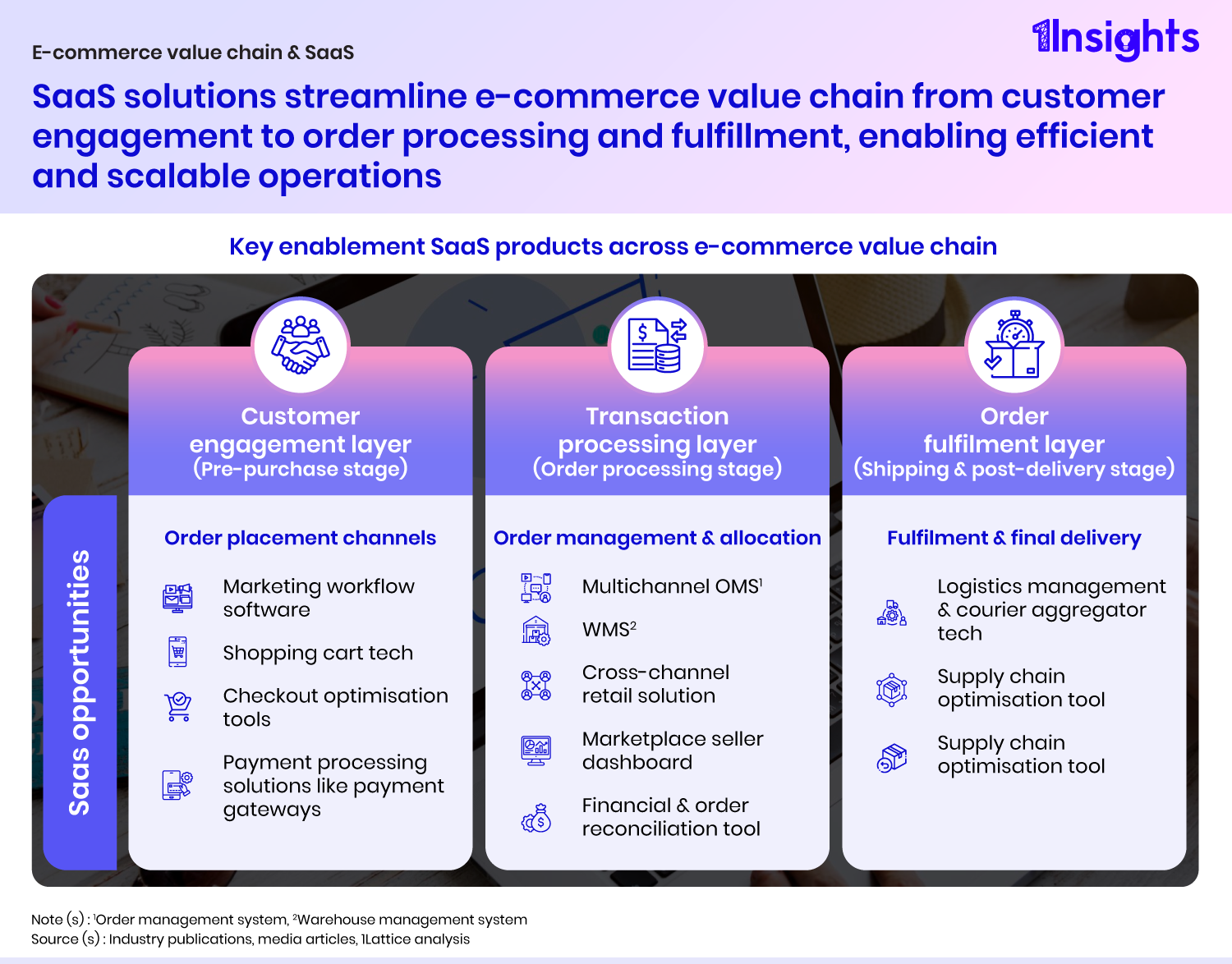
Across the e-commerce value chain, SaaS solutions support multiple operational layers ranging from customer engagement to order processing and fulfillment. In the pre-purchase stage, marketing workflow software, shopping cart technologies, checkout optimization tools, and payment gateway solutions help brands attract customers and facilitate seamless transactions. During order processing, solutions such as multichannel OMS, WMS cross-channel retail platforms, marketplace seller dashboards, and financial reconciliation tools enable businesses to manage orders and inventory across multiple sales channels. In the fulfillment stage, logistics management platforms, courier aggregation technologies, supply chain optimization tools, and returns management systems help ensure efficient shipping, delivery, and post-purchase service.
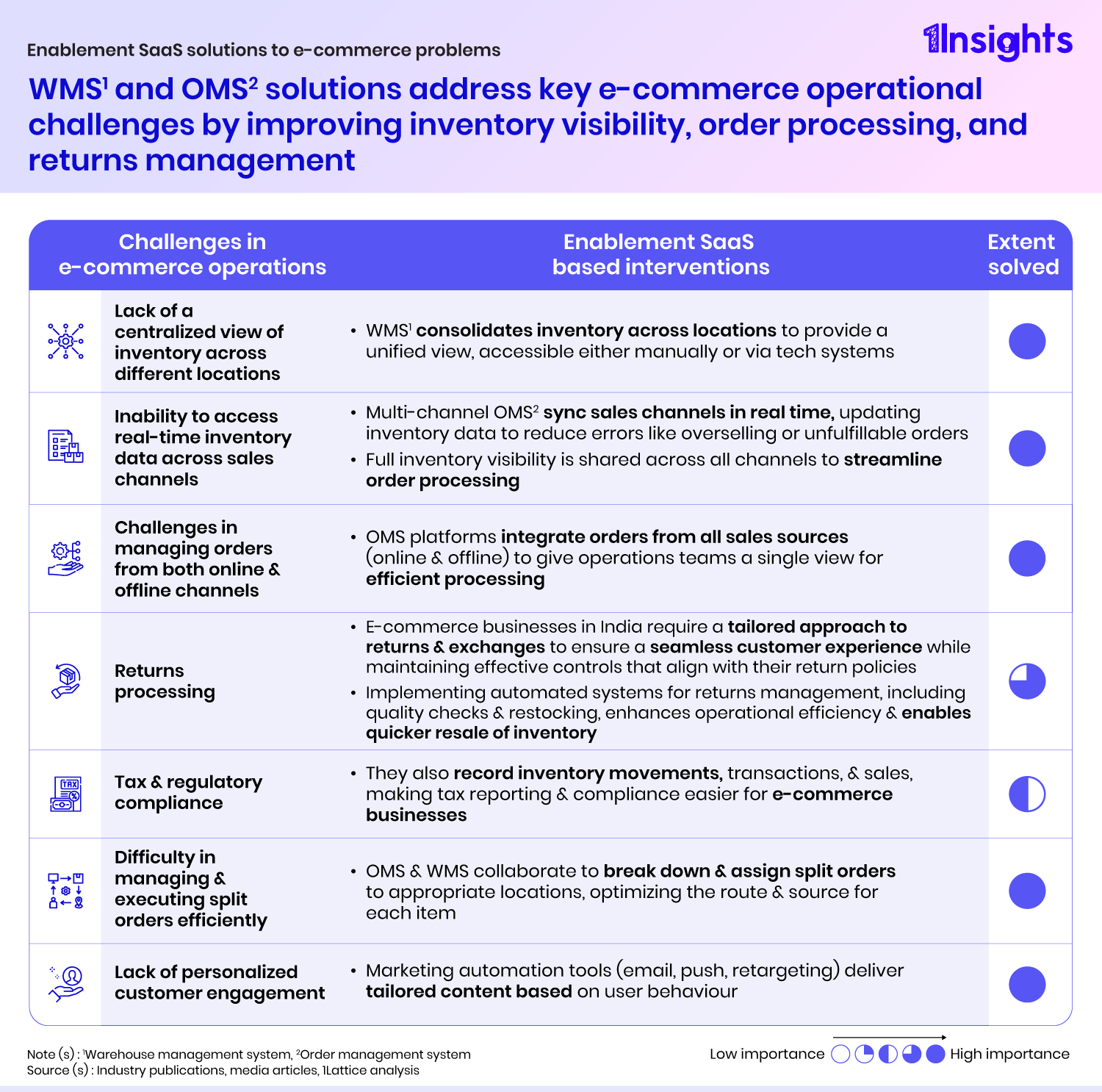 SaaS-based platforms also address key operational challenges faced by e-commerce businesses in India. WMS solutions consolidate inventory across locations to provide a unified view of stock, while multichannel OMS platforms synchronize sales channels in real time to minimize overselling and improve order accuracy. These systems integrate orders from both online and offline channels, enabling efficient order allocation and processing. Additionally, automated returns management solutions streamline exchanges, quality checks, and restocking, while integrated systems help track inventory movements and transactions, simplifying tax reporting and regulatory compliance. Together, OMS, WMS, and marketing automation tools enable retailers to improve inventory visibility, enhance operational efficiency, and deliver personalized customer engagement.