
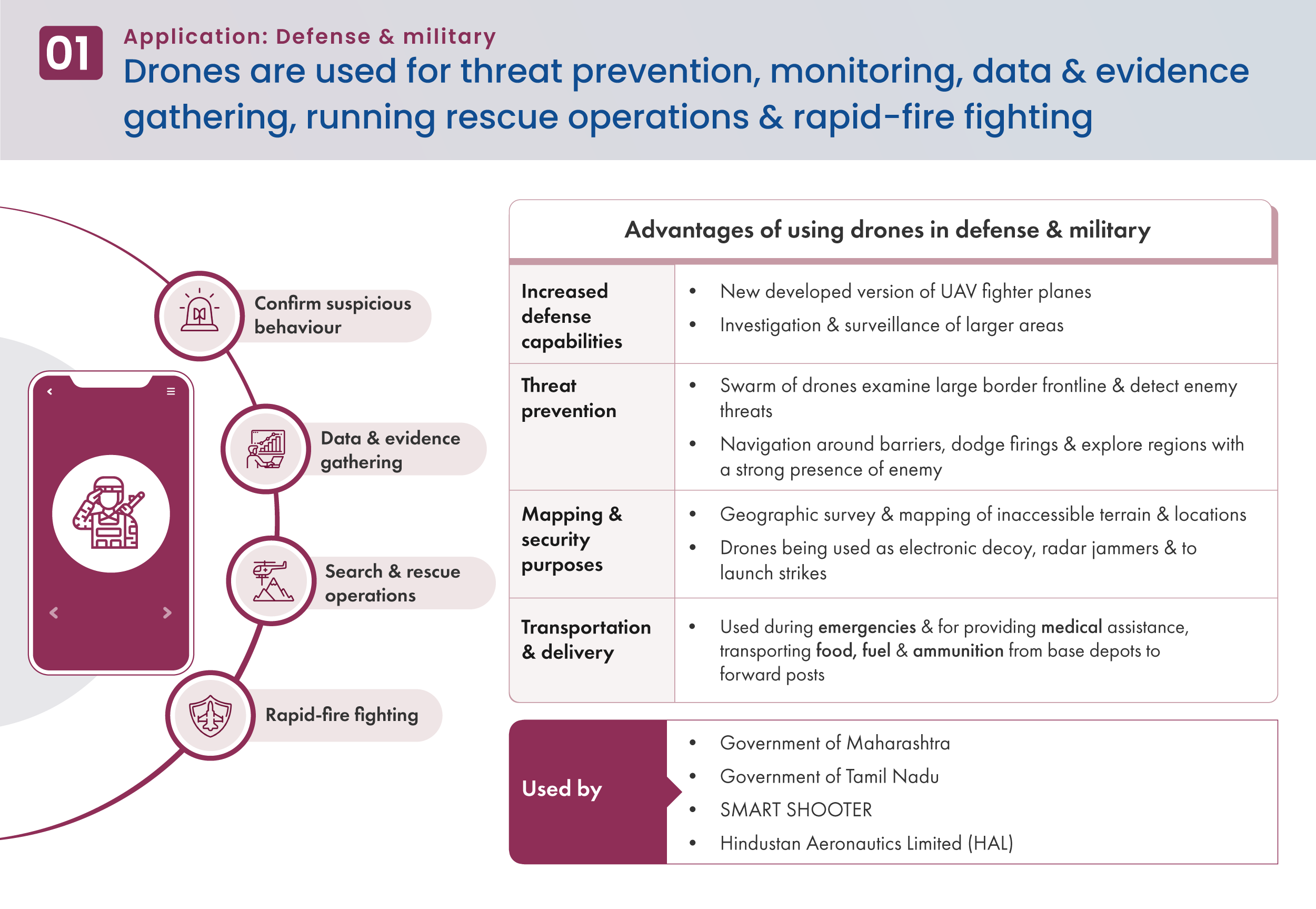
Drones, sometimes referred to as Unmanned Aerial Vehicles (UAVs), have rapidly evolved into crucial assets in a variety of sectors, from the military and aerospace to filmmaking, agriculture, and transportation. They rely on a combination of hardware and software components to achieve a variety of tasks. They are equipped with rotors, sensors, wings, navigation systems, and gyroscopes. These robotic-looking aircraft are capable of carrying out tasks with more safety and efficiency. Drones these days are equipped with features, such as cameras for data collection and propellers for flight stabilization, and can operate either under remote piloting or sophisticated autonomy with sensing and LiDAR technologies. Their adaptability may be seen in the many levels of autonomy they possess, which enable them to perform a range of activities, from simple deliveries to intelligence gathering and meteorological research at distances up to 400 miles and heights of 3,000 feet. Drones have proven they can tackle some of the most difficult tasks in the world, from hurricane disaster relief to emergency monitoring, and scientific investigations. They have also developed into a crucial tool for photographers and a fun hobby for enthusiasts, demonstrating their amazing adaptability to a variety of demands.
Sharing a quick snapshot below
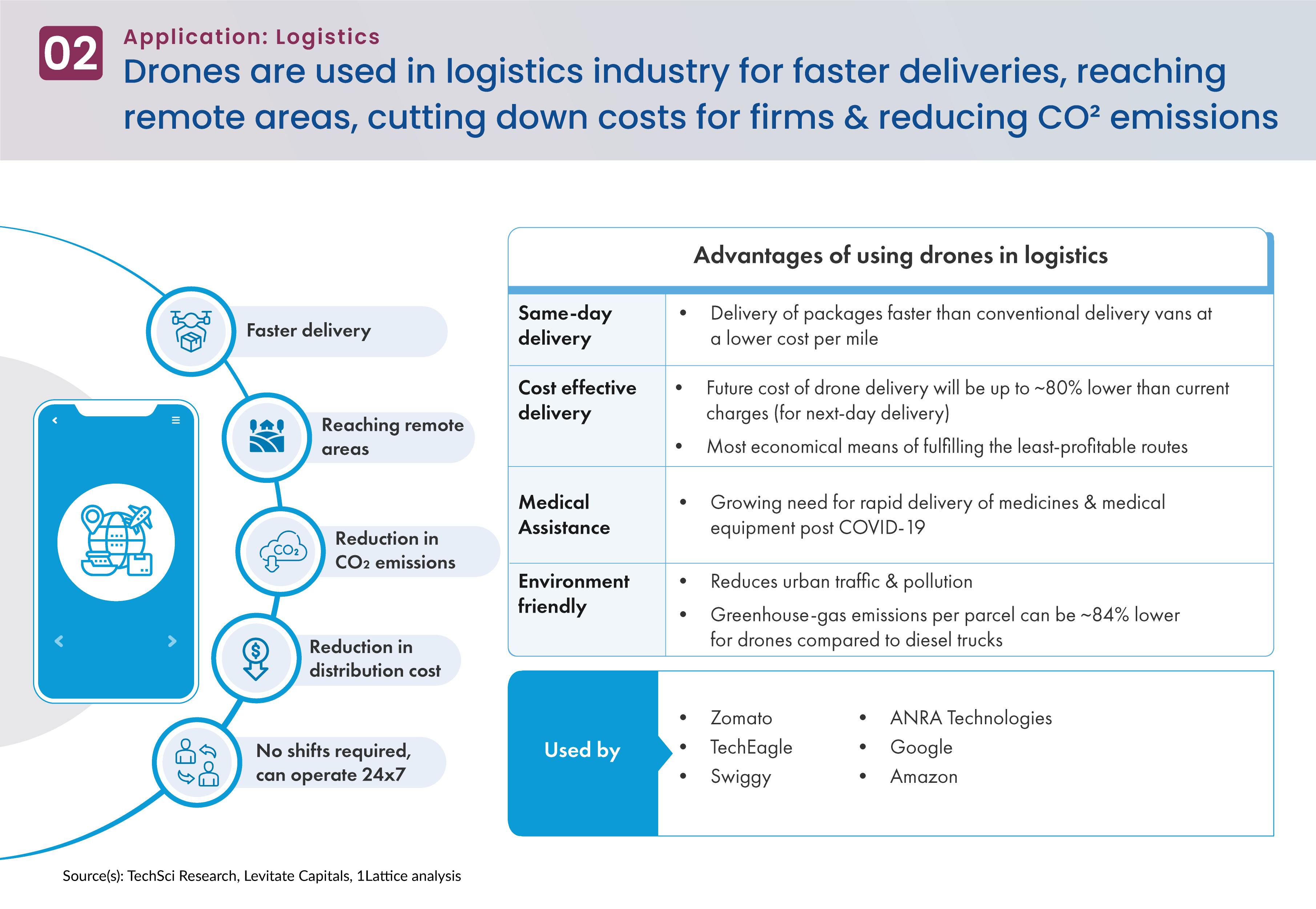
Drones have emerged as a transformative force within the
logistics industry, offering a spectrum of advantages that redefine the
delivery landscape. They provide unparalleled speed and enable swift deliveries
to even remote and inaccessible areas, revolutionizing last-mile logistics.
They significantly reduce costs for companies and even help in curbing carbon
emissions. Drones introduce a sustainable and efficient approach to parcel
transportation.
Notably, drone deliveries not only prove to be faster but also economically advantageous, it is projected that drones will lower the cost of delivery by more than 80% of the current delivery standards.
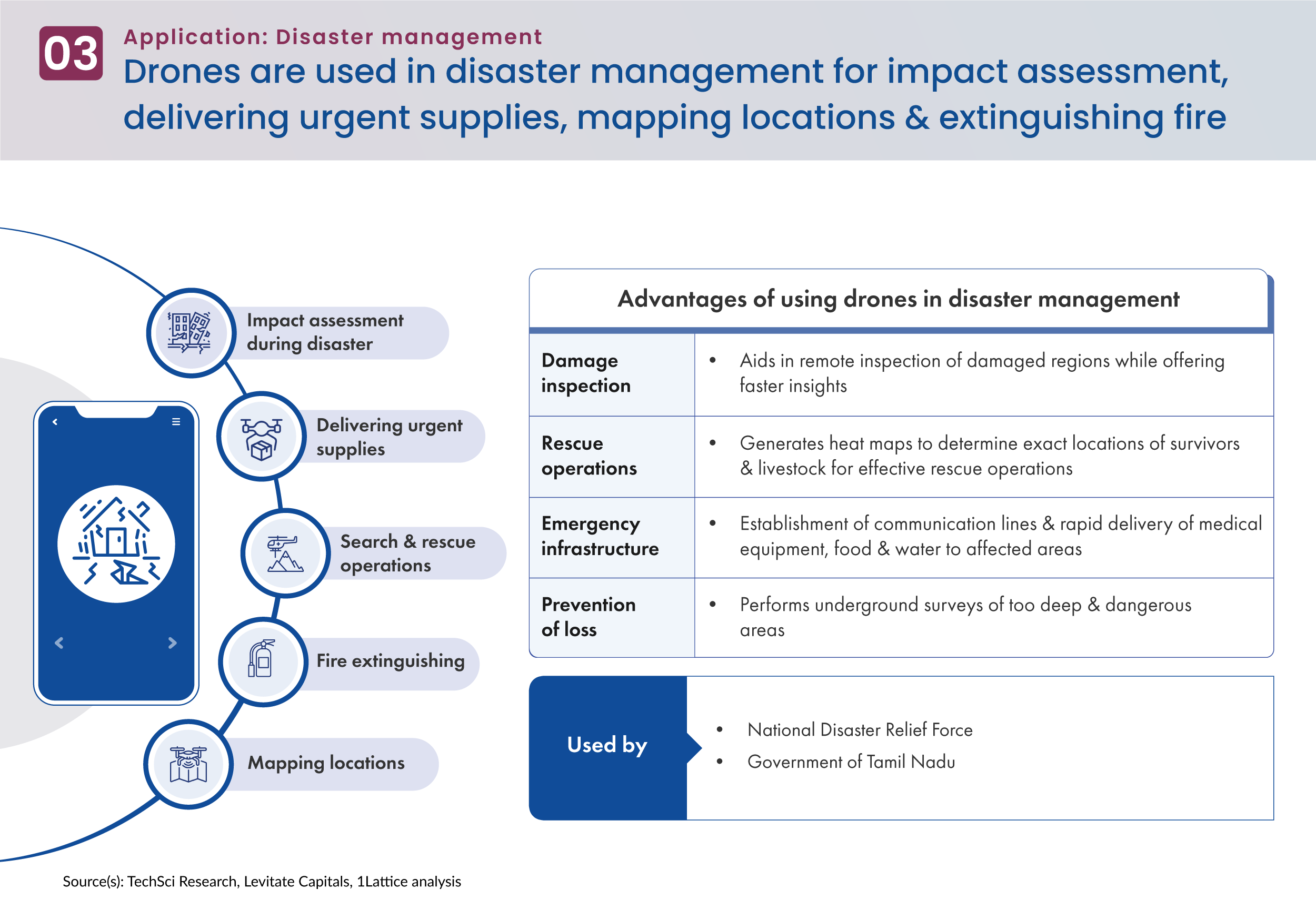
Drones these days are being used as disaster management tools as well, revolutionizing the way we respond to crises. Their multifaceted applications encompass a wide variety of critical tasks like swiftly surveying disaster-stricken areas to provide critical and crucial insights and help us in forming effective response strategies. They generate heatmaps that help disaster relief agencies in pinpointing the exact locations of survivors and livestock, making rescue operations easier and at a higher chance of being successful.
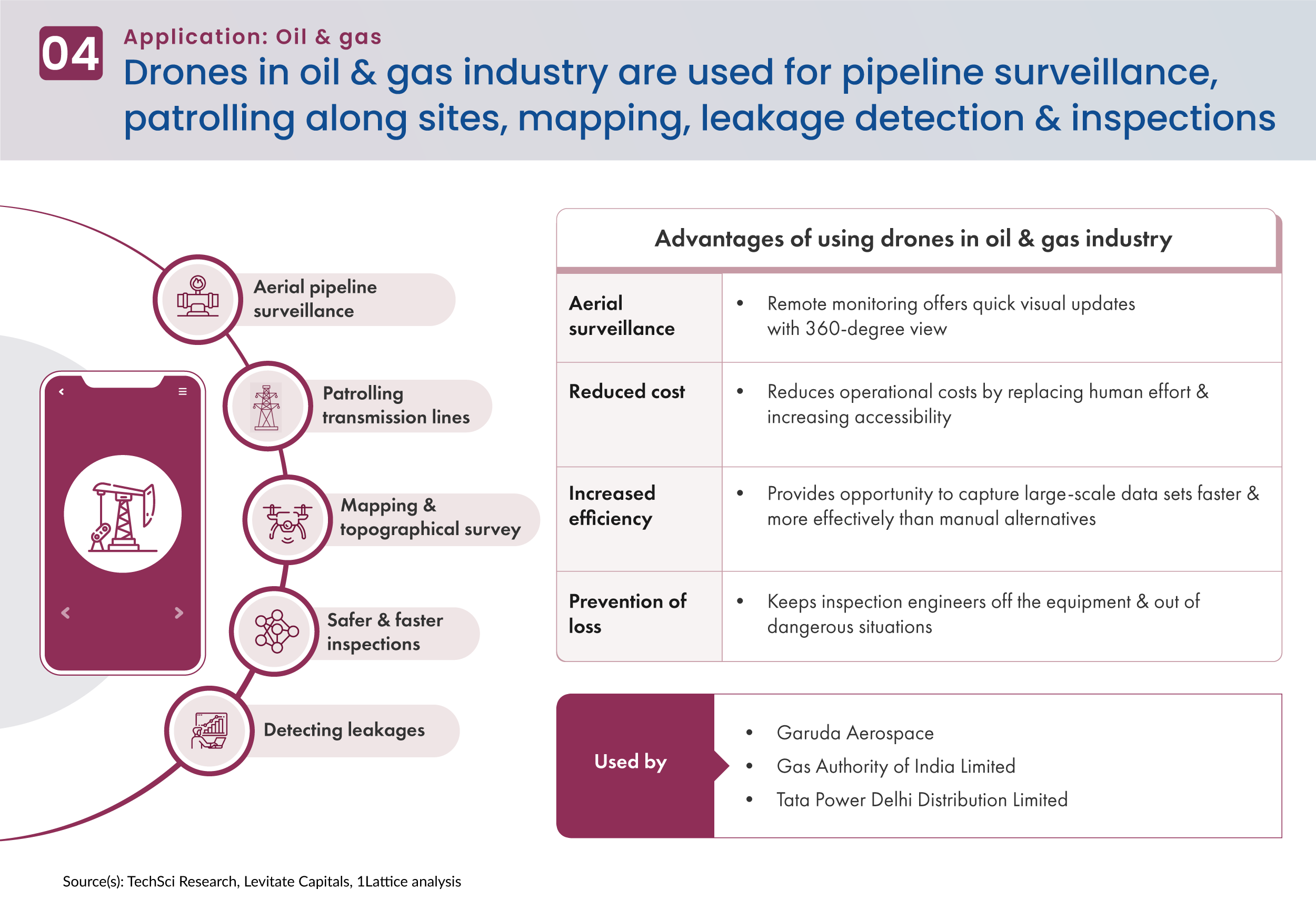
Drones are being used extensively in oil and gas for a
multitude of purposes, their applications range from aerial surveillance to
increased efficiency and prevention of unnecessary losses. They are used for
pipeline surveillance, leakage detection, and inspections. Remote monitoring
due to the availability of drones has led to minimal human effort and increased
safety. Drones offer real-time visual updates with a comprehensive 360-degree
view, enhancing situational awareness. The integration of drones into the oil
and gas industry is transforming the way companies operate, ensuring
cost-efficiency, human safety, and improved data collection, thereby optimizing
overall productivity in this critical sector.