
India's tech revolution is reshaping the
country's entrepreneurial landscape, with Tier 2 and Tier 3 cities taking
centre stage. Also, in the past decade, these emerging startup hubs beyond Tier
1 cities have witnessed remarkable growth, adding approximately 14,000 startups
to their ranks. Notably, the year 2020 saw the highest number of registered
startups, totaling around 2,000, underlining the accelerating pace of
innovation in these regions.
The driving force behind this transformation is
the rapid digitization of India. Increasing smartphone penetration and improved
access to digital platforms have empowered young entrepreneurs in Tier 2 and 3
cities to leverage technology for innovative solutions. Success stories like
Razorpay, Shopkirana, and DeHaat, all originating from these cities, exemplify
the immense potential that lies within these emerging startup ecosystems.
The top ten emerging hubs beyond Tier 1 cities
include Bhubaneswar, Chandigarh, Coimbatore, Indore, Jaipur, Kochi, Lucknow,
Surat, Thiruvananthapuram, and Vadodara. Among these, the IT services sector
leads the way, accounting for approximately 12.6% of startups recognized by the
Department for Promotion of Industry and Internal Trade. Moreover, this sector
also contributes significantly to job creation, with an estimated 14% share in
employment generation. Healthcare and life sciences sectors also play a crucial
role in this growing entrepreneurial landscape.
In this newsletter, we will understand the crucial
part that the Indian government is playing in helping startups thrive,
innovate, and contribute to economic growth.
Sharing a snapshot below.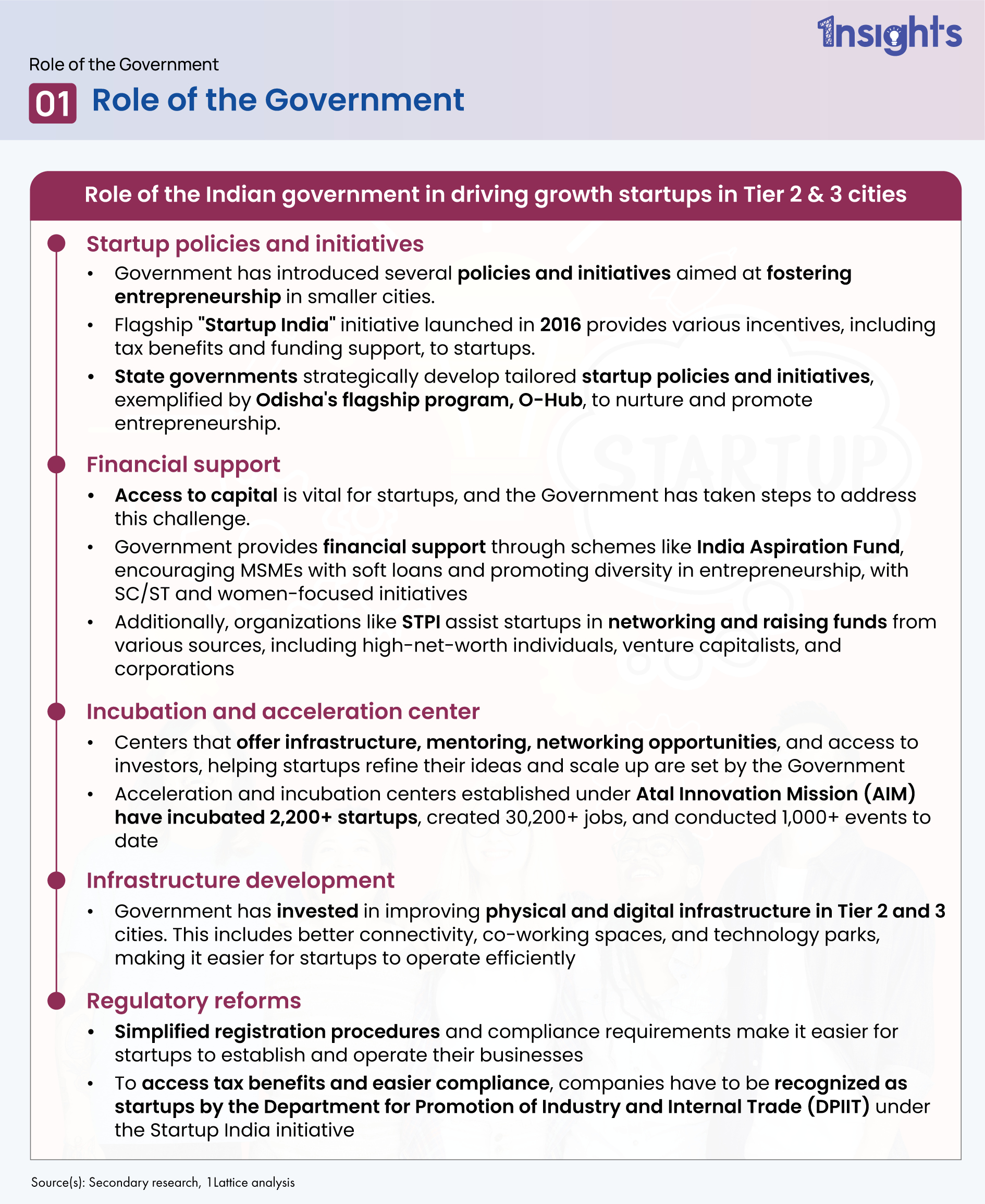
Sharing a snapshot of the opportunities.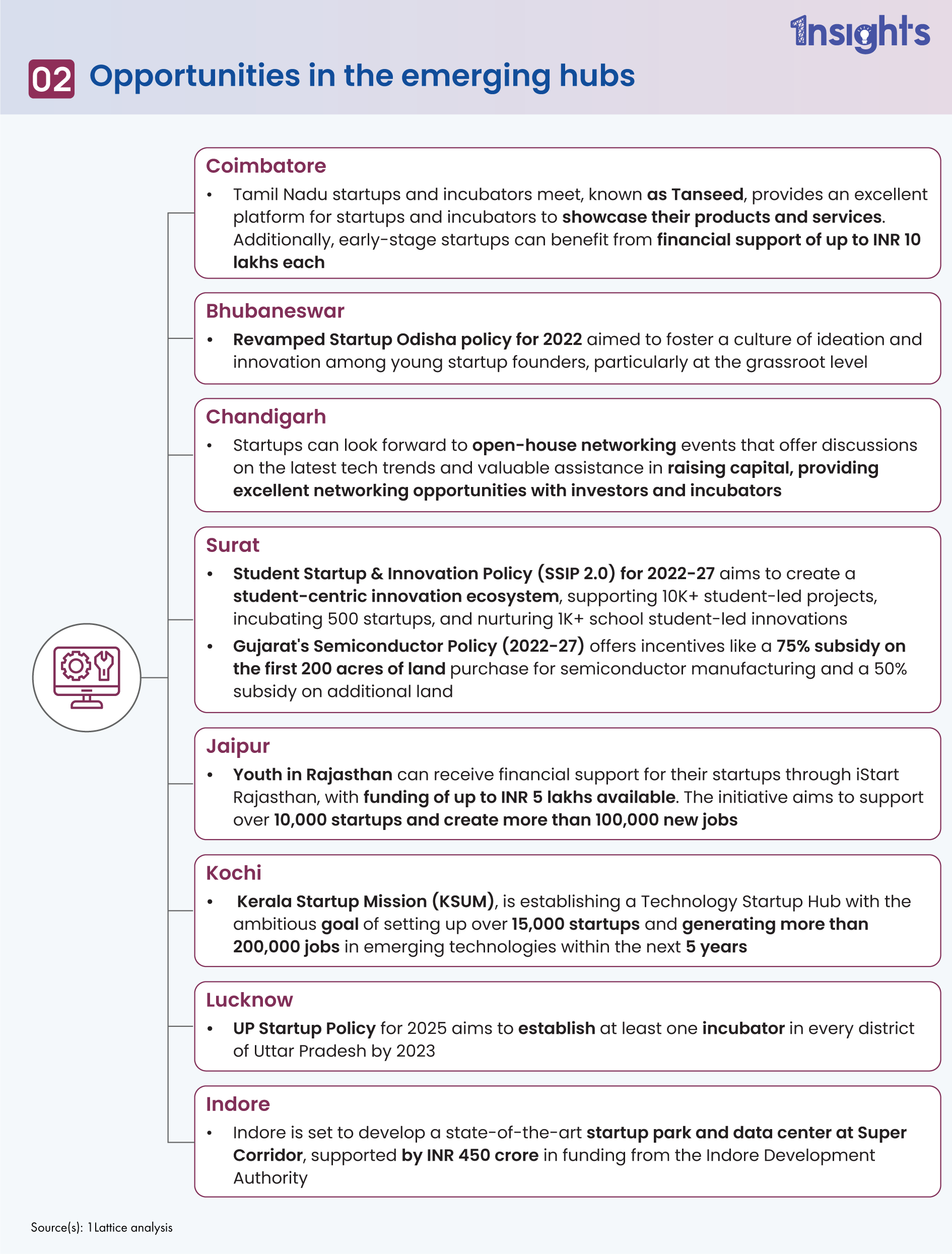
Emerging possibilities in Tier 2 and Tier 3 cities in India encompass vibrant startup ecosystems, AgriTech, EdTech, healthcare services, e-commerce, renewable energy, manufacturing, tourism, smart cities, consumer goods, financial inclusion, social impact initiatives, and localized content and media. These regions offer diverse opportunities for startups, driven by improved infrastructure, digitization, and government support, creating pathways for innovation and economic growth.
Sharing a snapshot below.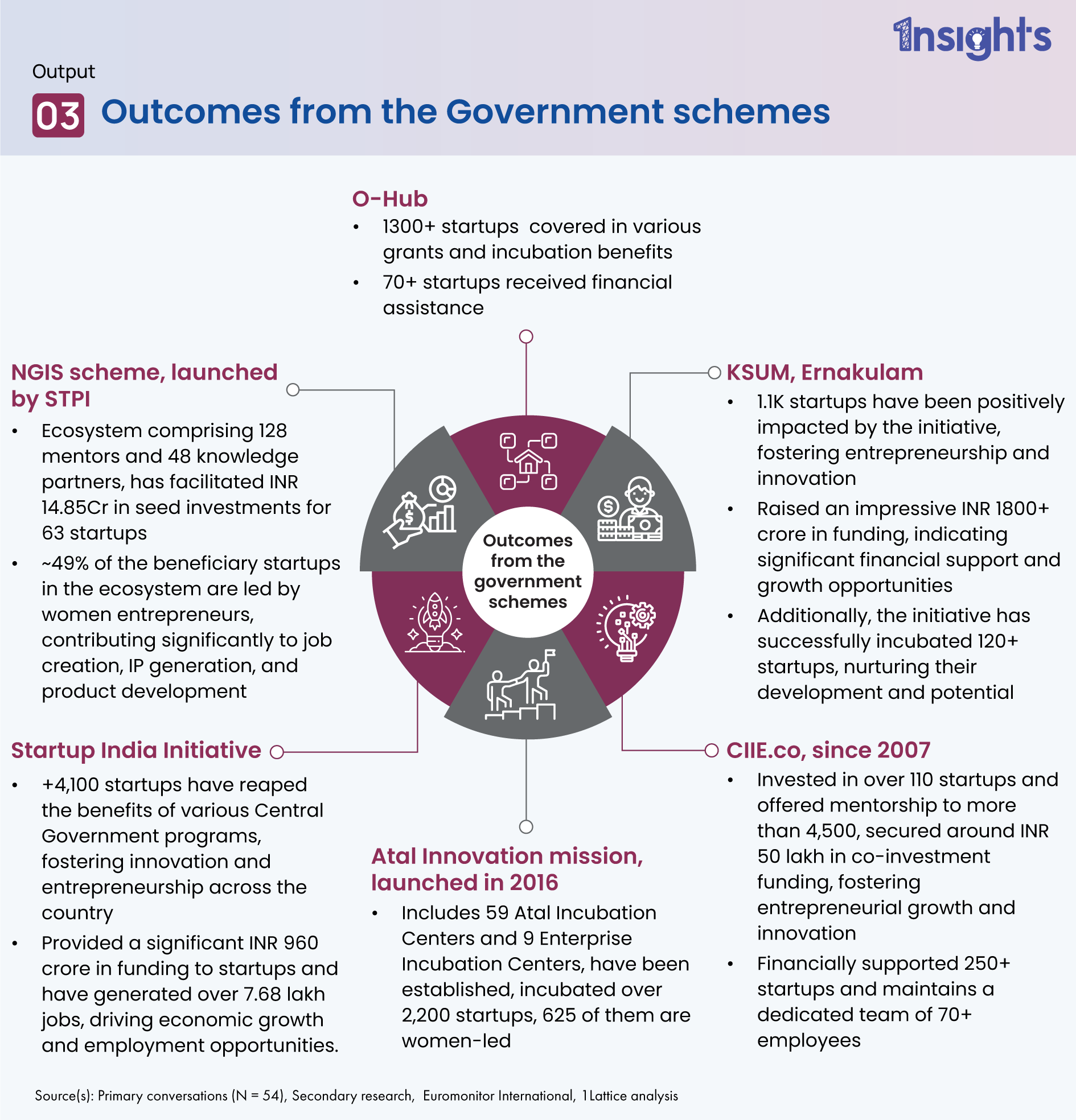
Government initiatives have a profound impact on startups. They offer crucial access to funding, mentorship, and resources, easing regulatory burdens and simplifying operations. These programs often provide a platform for startups to gain visibility and enter new markets. Additionally, they contribute to job creation and foster innovation ecosystems, promoting diversity and inclusion. In essence, government support can be a significant catalyst for startup success, driving economic growth and innovation.
The future of emerging startups in Tier 2 and 3 cities is promising, driven by innovation, entrepreneurship, and digital transformation. These startups will contribute to local economies, benefit from government support and investor interest, and create positive social impact while leveraging improved infrastructure and fostering diversity in entrepreneurship.