
Most brands don't lose customers overnight. The decline usually starts much earlier, often in ways that traditional business metrics fail to capture. Awareness remains stable. Sales appear healthy. Marketing campaigns continue to deliver reach. Yet beneath the surface, consumer perceptions begin to shift, trust starts to weaken, and purchase intent gradually declines.
By the time these changes become visible in revenue or market share figures, the opportunity to intervene may already have passed.
This is why leading organizations increasingly view Brand Tracking not as a reporting exercise, but as a strategic decision-making tool.
The Challenge: What Gets Measured Isn't Always What Matters
Many organizations rely heavily on campaign metrics, sales performance, or periodic customer feedback to understand brand performance. While valuable, these measures often provide an incomplete picture.
In our experience, the earliest indicators of brand risk rarely appear in sales data first. They emerge in changing perceptions, declining consideration, weakening emotional associations, or reduced willingness to recommend. These shifts can occur months before commercial impact becomes visible.
The brands that respond fastest are those that continuously monitor the health of their relationship with consumers.
Why does brand health tracking matter?
Effective brand tracking helps organizations to:
- Maintain a clear understanding of evolving consumer expectations
- Support marketing and brand decisions with robust, evidence-based insights
- Build continuity through regular, structured measurement over time
- Identify emerging risks before they become material challenges
- Recognize growth opportunities at an early stage
- Strengthen internal confidence through independent, third-party measurement
Taken together, brand tracking supports disciplined, forward-looking brand management, enabling organizations to navigate change with greater clarity and assurance.
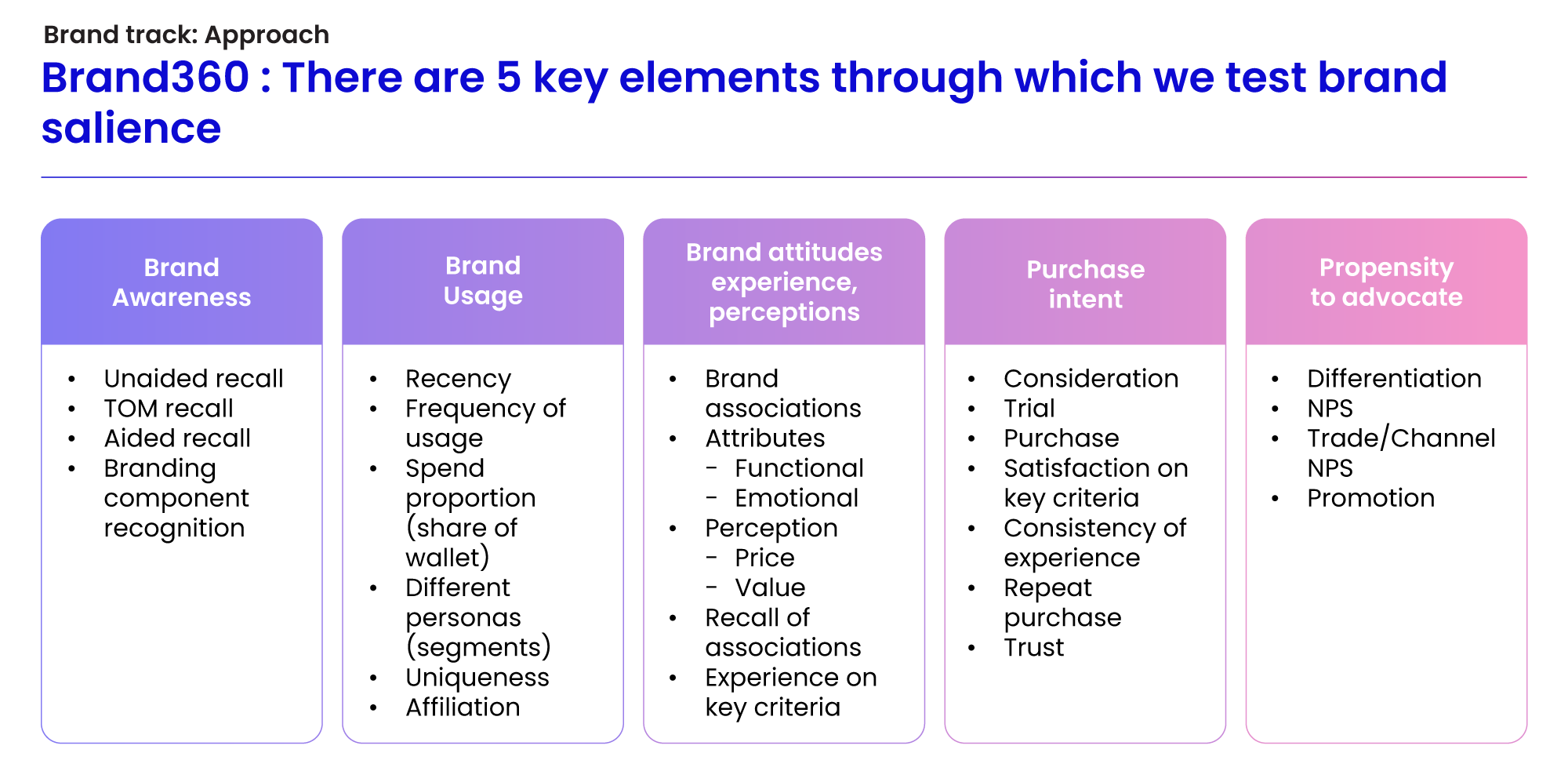
Key Brand Health Metrics We Measure
Brand track reflects the strength of a brand’s relationship with consumers across the decision journey. Our Brand Health Track evaluates key dimensions that collectively provide a comprehensive view of brand performance and consumer connection.
These include:
-
- Awareness: the extent to which the brand is recognized and recalled
- Usage: how frequently and in what contexts the brand is engaged with
- Perceptions: the beliefs, associations, and feelings consumers hold about the brand
- Purchase intent: the likelihood of choosing the brand in future purchase decisions
- Advocacy: willingness to recommend the brand to others
These insights provide a holistic view of your brand’s performance and consumer connection.
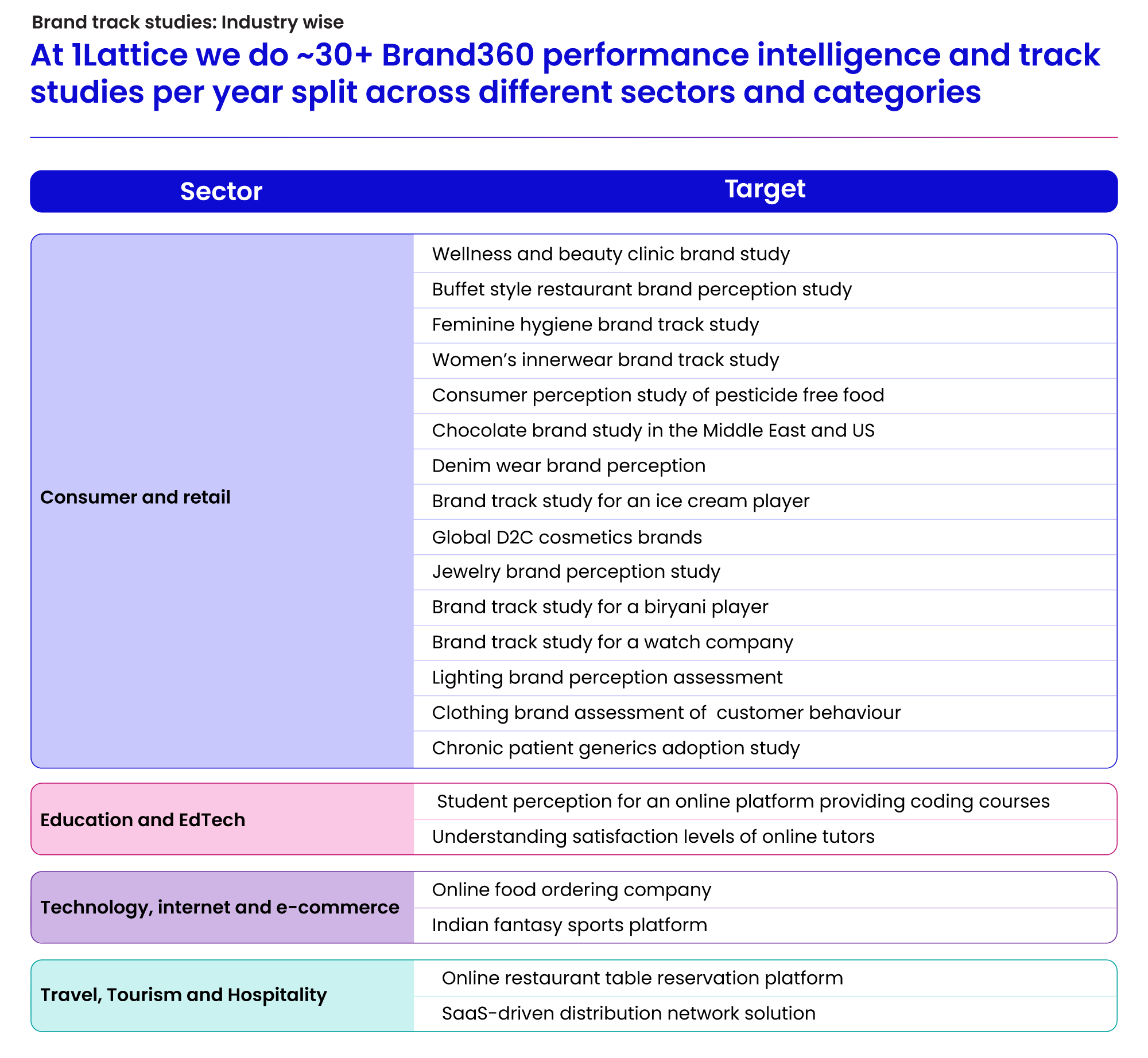
What We Have Learned from 30+ Brand Tracking Studies
Across more than 30 annual brand tracking engagements spanning education, fintech, healthcare, agriculture, fashion, retail, and consumer services, several themes consistently emerge:
-
Consumer perceptions often change before purchasing behaviour changes.
-
Strong awareness alone does not guarantee preference or loyalty.
-
Trust and consistency of experience are among the most powerful drivers of advocacy.
-
Early warning signals are often visible months before business performance is affected.
These findings reinforce a simple but important reality: brands grow not only by acquiring attention, but by sustaining relevance and strengthening consumer relationships over time.
Our Experience
Brand health is not static. It evolves continuously as consumer expectations, competitive pressures, and market conditions change. The organizations best positioned for long-term growth are those that invest in understanding these shifts before they become business challenges.
At 1Lattice, we partner with brands across sectors to build tracking programmes that deliver meaningful insights, support strategic decision-making, and create a clearer understanding of what drives brand success over time.
Interested in evaluating your brand's health beyond traditional metrics? Contact the 1Lattice team to learn how Brand360 can help uncover the signals that matter most.