
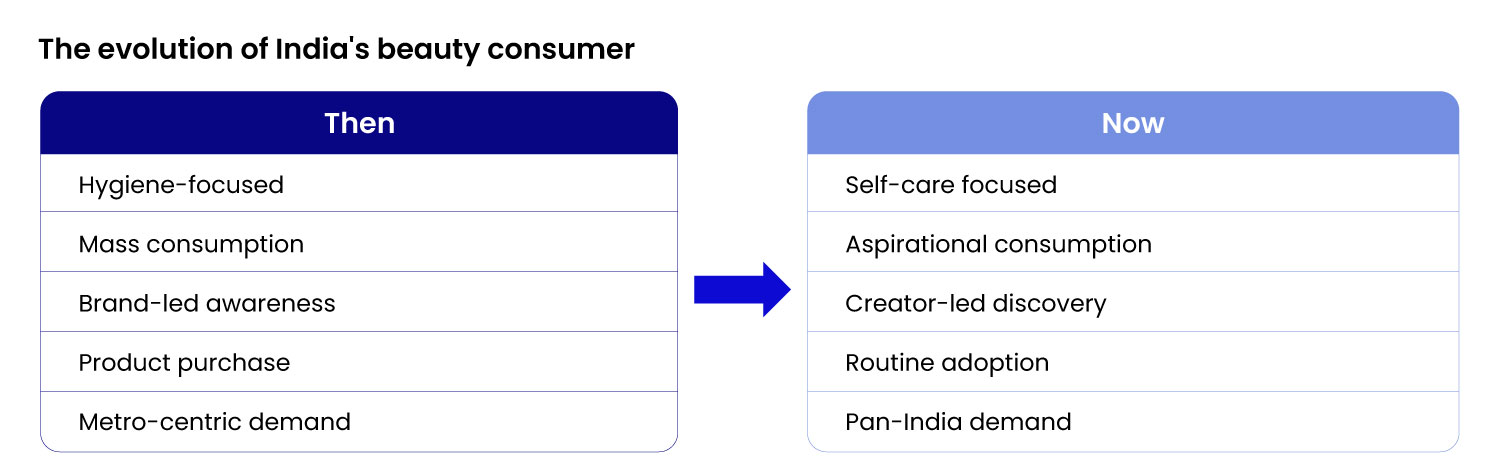
For years, India's beauty and personal care market was driven by accessibility, affordability, and functionality. Consumers purchased products to address basic grooming and hygiene needs, while brands competed primarily on distribution, pricing, and awareness.
Today, the rules of the category are changing.
Beauty is increasingly becoming a reflection of identity, aspiration, and self-care. Consumers are seeking products that align with their lifestyles, values, and personal goals. As a result, categories are expanding, purchase journeys are becoming more complex, and premium products are finding acceptance across a broader consumer base.
This shift is creating new opportunities for brands while simultaneously challenging long-held assumptions about consumer behavior.
Beauty Beyond Basics
The modern beauty consumer is looking beyond functional benefits. Across skincare, haircare, fragrances, and men's grooming, consumers are increasingly prioritizing self-expression, confidence, wellness, and personalization. Product selection is no longer based solely on price or familiarity. Ingredients, efficacy, routines, and brand relevance are becoming equally important considerations. What was once an occasional purchase is increasingly becoming part of a broader self-care journey.
The Rise of Aspirational Consumption
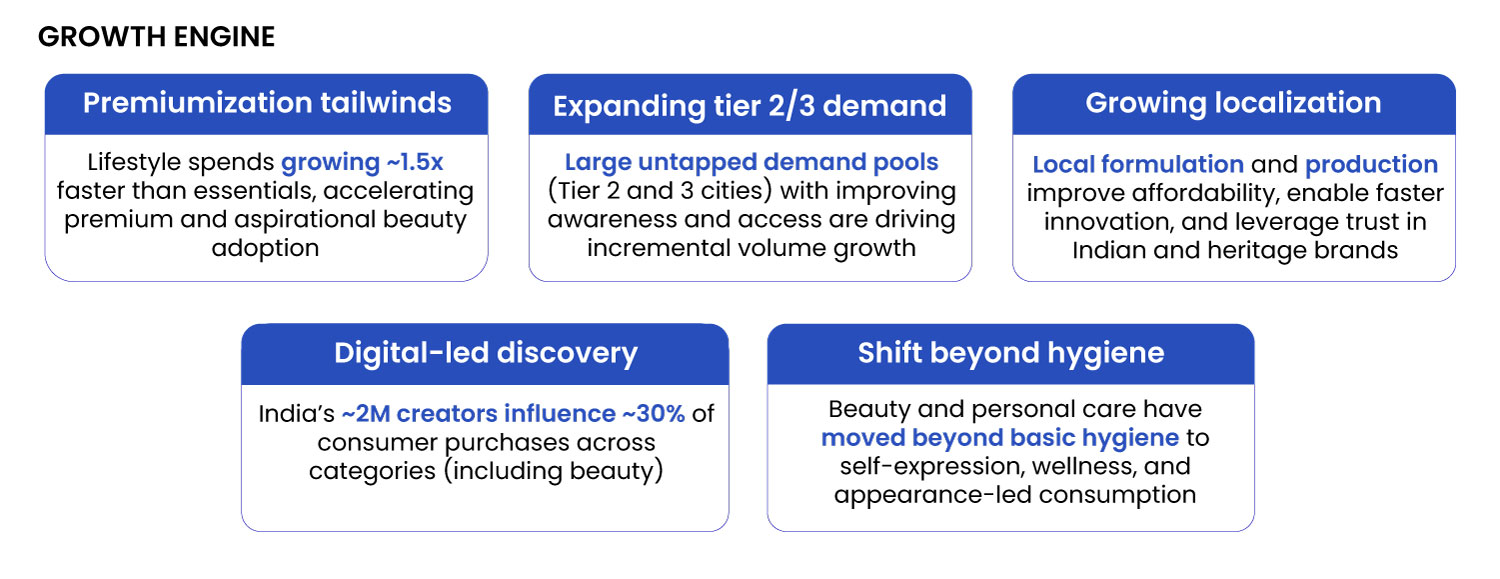
As beauty becomes more personal, consumers are becoming more willing to invest in products that promise superior outcomes, enhanced experiences, or specialized benefits. The rise of ingredient-led formulations, targeted skincare, premium haircare, and niche fragrance offerings highlights a broader shift toward value-driven consumption. Consumers are increasingly evaluating products based on efficacy, credibility, and perceived quality rather than simply affordability. Importantly, this trend is no longer restricted to affluent metropolitan consumers. Growing awareness and digital access are enabling aspirational consumption across a wider set of consumer cohorts.
Key Takeaway: Premiumization is not simply a pricing trend. It is a reflection of changing consumer expectations.
Discovery Is Going Digital
Consumer discovery pathways have changed dramatically over the past decade. Today, recommendations come not only from brands but also from creators, communities, reviews, tutorials, and social platforms. Consumers are spending more time researching products, comparing alternatives, and validating claims before making purchase decisions. This shift has lowered barriers for emerging brands while simultaneously raising consumer expectations around transparency and authenticity. The result is a more informed consumer who is willing to experiment but also quicker to switch if expectations are not met.
Key Takeaway: Consumer influence is increasingly distributed across digital ecosystems rather than controlled by brands alone.
Growth Beyond the Metros
The next chapter of growth is likely to come from consumers outside traditional urban centers. Improving digital connectivity, greater product accessibility, and rising aspirations are driving category expansion across Tier 2 and Tier 3 markets. At the same time, local brands are finding success by combining affordability with cultural relevance and localized product innovation. For brands, the opportunity extends beyond geographic expansion. It requires understanding how motivations, purchase drivers, and category perceptions differ across consumer segments.
Key Takeaway: Future growth will depend as much on understanding consumers as on reaching them.
Looking Ahead
India's beauty market is entering a new phase of evolution. As consumers become more informed, expressive, and selective, the factors driving purchase decisions are becoming increasingly nuanced.
The brands best positioned for growth will be those that move beyond category-level trends and develop a deeper understanding of evolving consumer motivations, emerging routines, and changing pathways to purchase.