
The Indian beauty market is witnessing a rapid rise in global skincare trends, with Japanese (J-beauty) and Korean (K-beauty) products carving their own distinct spaces. Both categories have gained popularity for their unique philosophies, ingredient choices, and cultural associations. While K-beauty has been more visible through pop culture influence and aggressive marketing, J-beauty is emerging gradually with a focus on minimalism, tradition, and science-backed efficacy. Together, they reflect India’s growing demand for clean-label, effective, and innovative skincare solutions, but also face challenges in awareness, distribution, and consumer trust.
Key Trends in J-Beauty in India
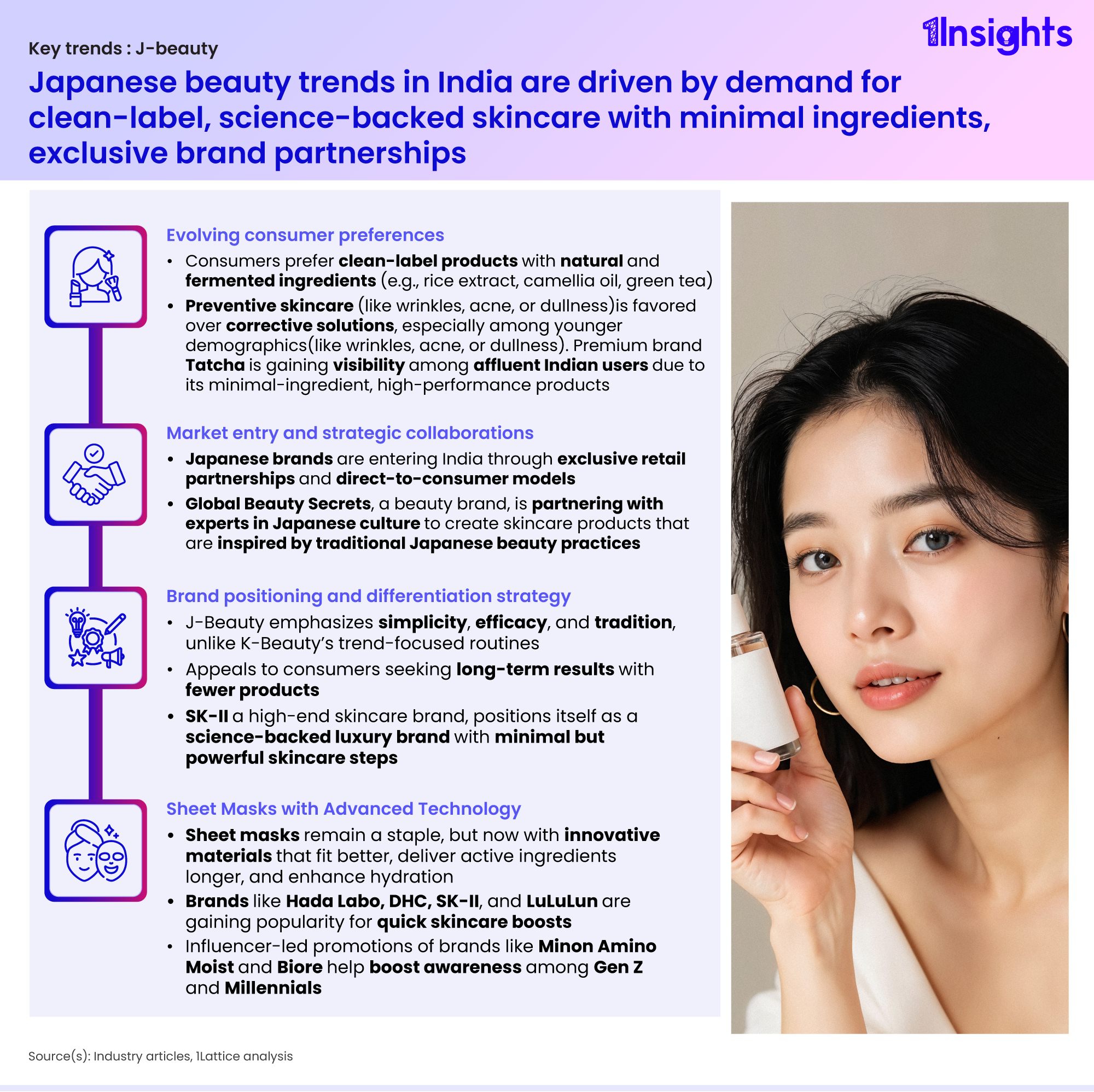
Japanese beauty trends in India are driven by consumer demand for clean-label, science-backed skincare with minimal yet effective ingredients. Consumers increasingly prefer natural and fermented extracts such as rice extract, camellia oil, and green tea, with a growing focus on preventive skincare rather than corrective solutions. Premium brands like Tatcha are gaining visibility among affluent Indian users due to their high-performance, minimal-ingredient positioning. Japanese brands are also entering India through exclusive retail partnerships and direct-to-consumer models, with collaborations like Global Beauty Secrets bringing Japanese cultural expertise into localised products. Brand positioning emphasises simplicity, efficacy, and long-term results with fewer products, as seen in SK-II’s science-backed luxury positioning. Additionally, sheet masks remain a staple, now enhanced with advanced materials and promoted heavily by influencer-driven campaigns targeting Gen Z and Millennials.
Key Trends in K-Beauty in India
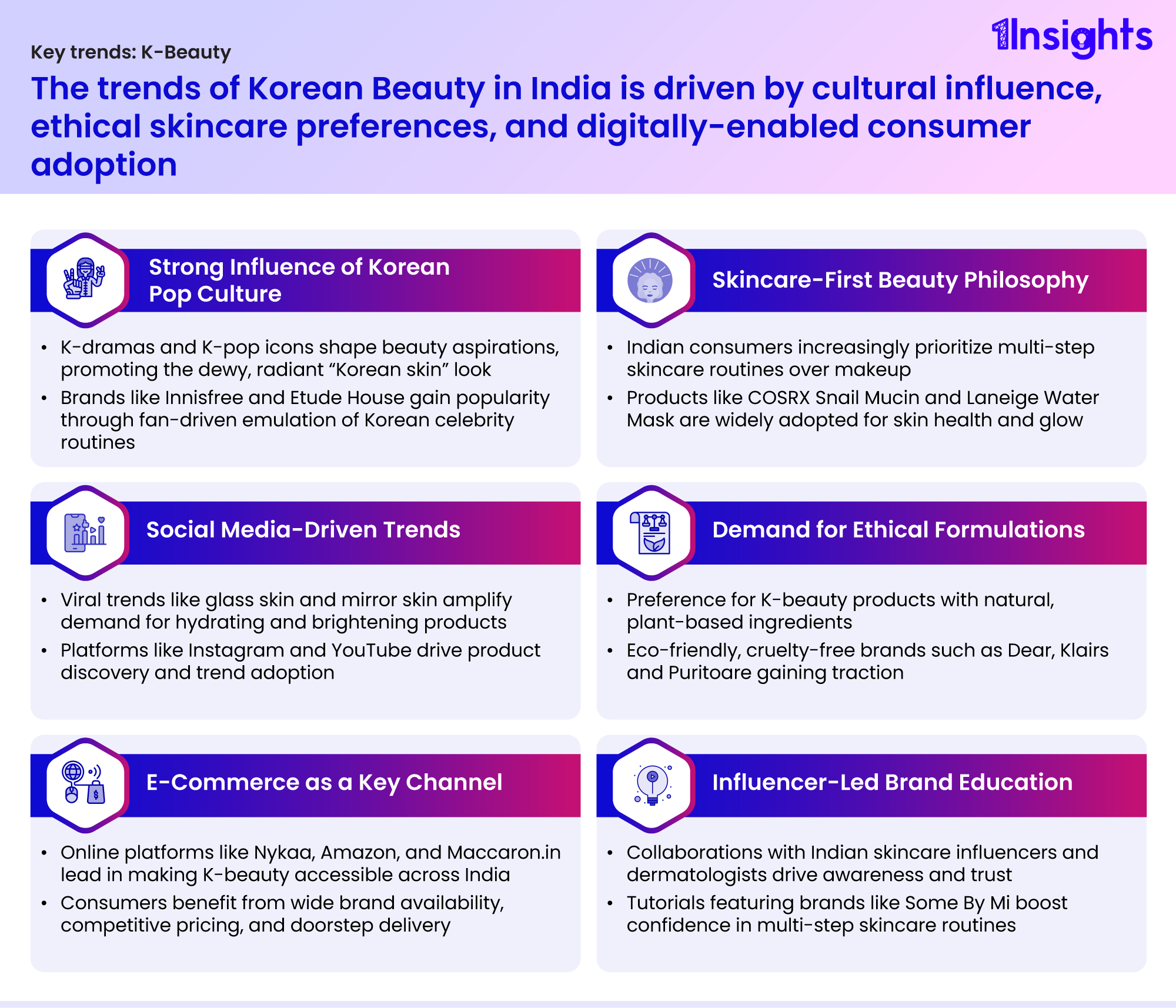
Korean beauty, on the other hand, has established stronger traction in India by leveraging cultural influence, digital adoption, and multi-step skincare philosophies. The popularity of K-dramas and K-pop icons has fueled aspirations for the radiant “Korean skin” look, boosting demand for brands like Innisfree and Etude House. Social media platforms such as Instagram and YouTube amplify trends like “glass skin” and “mirror skin,” driving awareness and adoption. E-commerce platforms, including Nykaa, Amazon, and Maccaron, have played a key role in making K-beauty accessible across India with competitive pricing and doorstep delivery. The skincare-first philosophy prioritises routines over makeup, with products like COSRX Snail Mucin and Laneige Water Mask becoming highly popular. Ethical formulations are another growth driver, as Indian consumers increasingly seek eco-friendly, plant-based, and cruelty-free options from brands like Klairs and Purito. Influencer-led brand education and dermatologist collaborations further reinforce trust and adoption of K-beauty.
Conclusion
In summary, J-beauty and K-beauty represent two distinct yet complementary forces shaping India’s evolving skincare market. Japanese brands bring minimalism, science-backed efficacy, and advanced product innovation, while Korean brands excel at trend-driven marketing, accessibility, and multi-step beauty rituals. With the right strategies, both have the potential to scale in India, catering to the growing demand for premium, ethical, and effective skincare solutions.