Overview
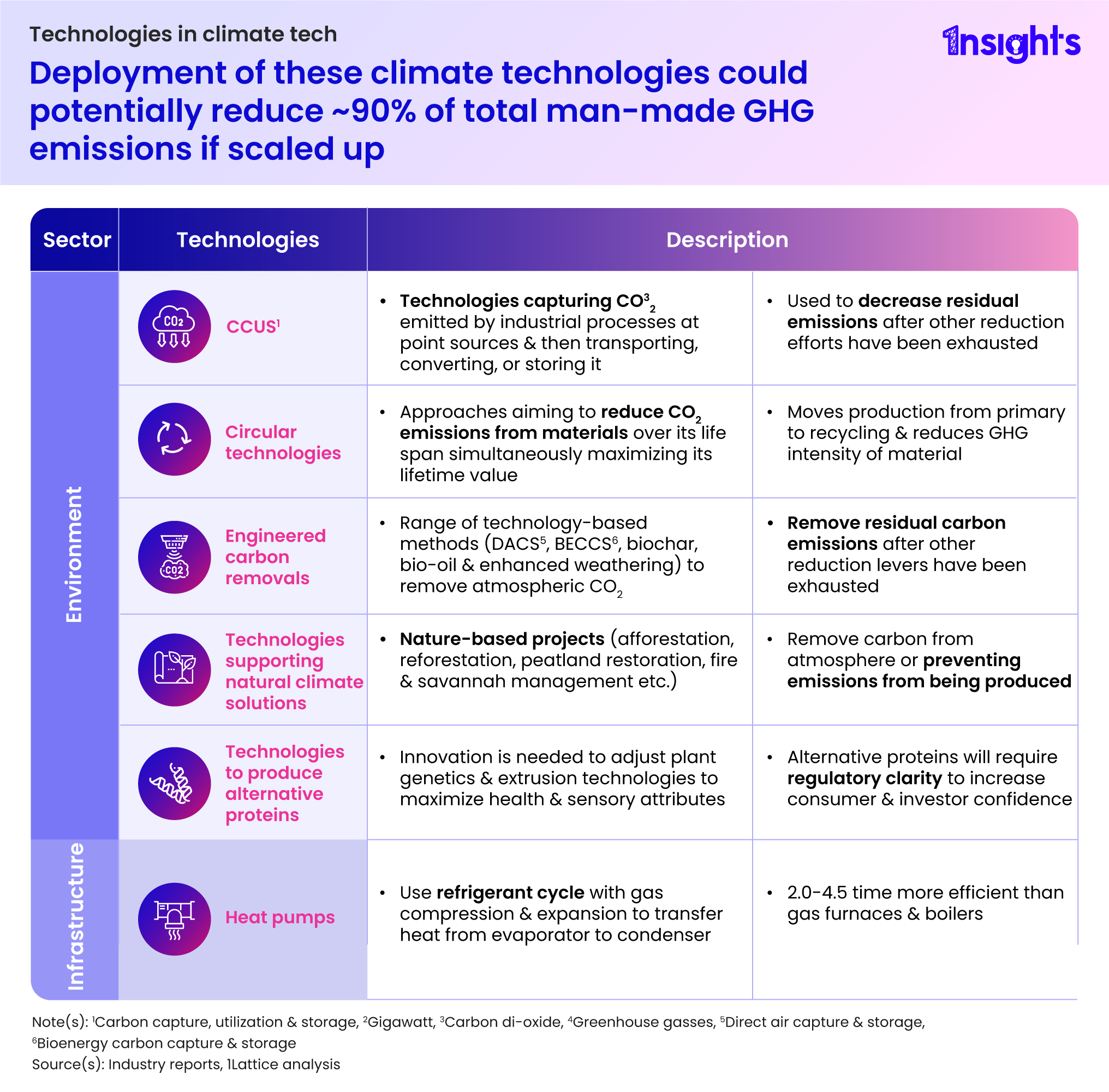
Climate tech encompasses a range of technologies designed to combat climate change by reducing greenhouse gas emissions, advancing renewable energy, and enhancing energy efficiency. These technologies play a critical role in promoting environmental sustainability and implementing adaptation strategies to address the impacts of climate change.
Sharing a snapshot below.
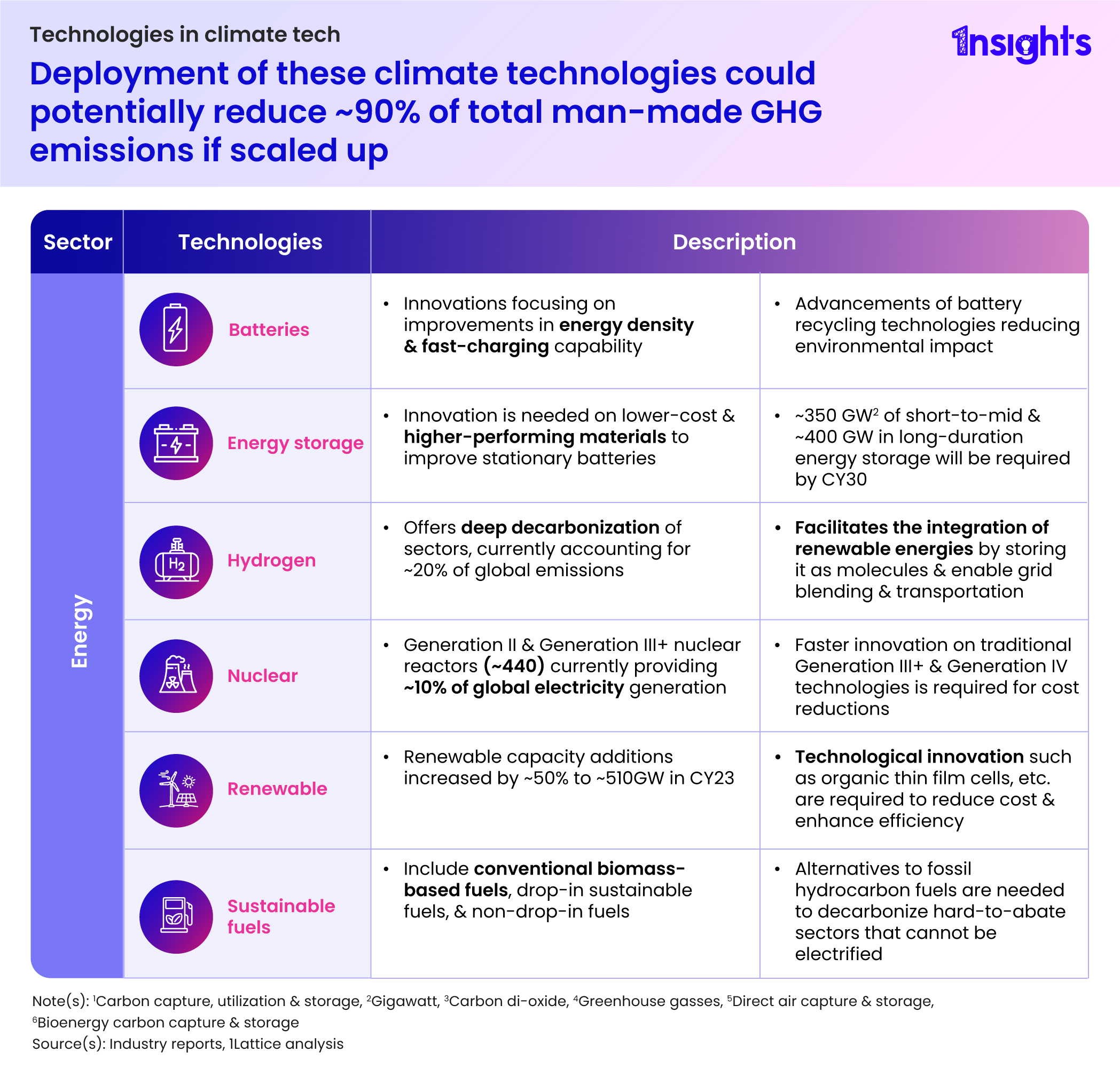
The following are the innovations in climate tech technologies in different sectors:
Energy Sector:
Batteries:
- Innovations prioritize enhancing battery energy density and fast-charging capabilities, while advances in battery recycling technologies aim to reduce environmental impact.
Energy Storage:
- Innovation in high-performance materials is essential for advancing stationary batteries, with anticipated demand reaching 350 GW for short-to-mid-term and 400 GW for long-duration energy storage by CY30.
Hydrogen:
- Provides deep decarbonization of sectors responsible for approximately 20% of global emissions, enables renewable energy integration by storing it as molecules, enabling grid blending and transportation efficiency.
Nuclear:
- Generation II and Generation III+ nuclear reactors, totaling ~440 units and currently supplying ~10% of global electricity generation, require accelerated innovation in traditional Generation III+ and Generation IV technologies to achieve cost reductions
Renewable Energy:
- Renewable capacity additions increased by ~50% to ~510 GW in CY23, highlighting the need for technological innovation such as organic thin film cells to reduce costs and enhance efficiency.
Sustainable Fuels:
- Alternatives to fossil hydrocarbon fuels, such as conventional biomass-based fuels, drop-in sustainable fuels, and non-drop-in fuels, are essential to decarbonize hard-to-abate areas that cannot be electrified.