
Overview

Navigating Growth Drivers and Challenges in Climate Tech
Climate tech includes technologies aimed at mitigating climate change through greenhouse gas reduction, renewable energy promotion, and improved energy efficiency. It supports environmental sustainability and adaptation strategies, addressing the challenges of climate change.
Sharing a snapshot below.
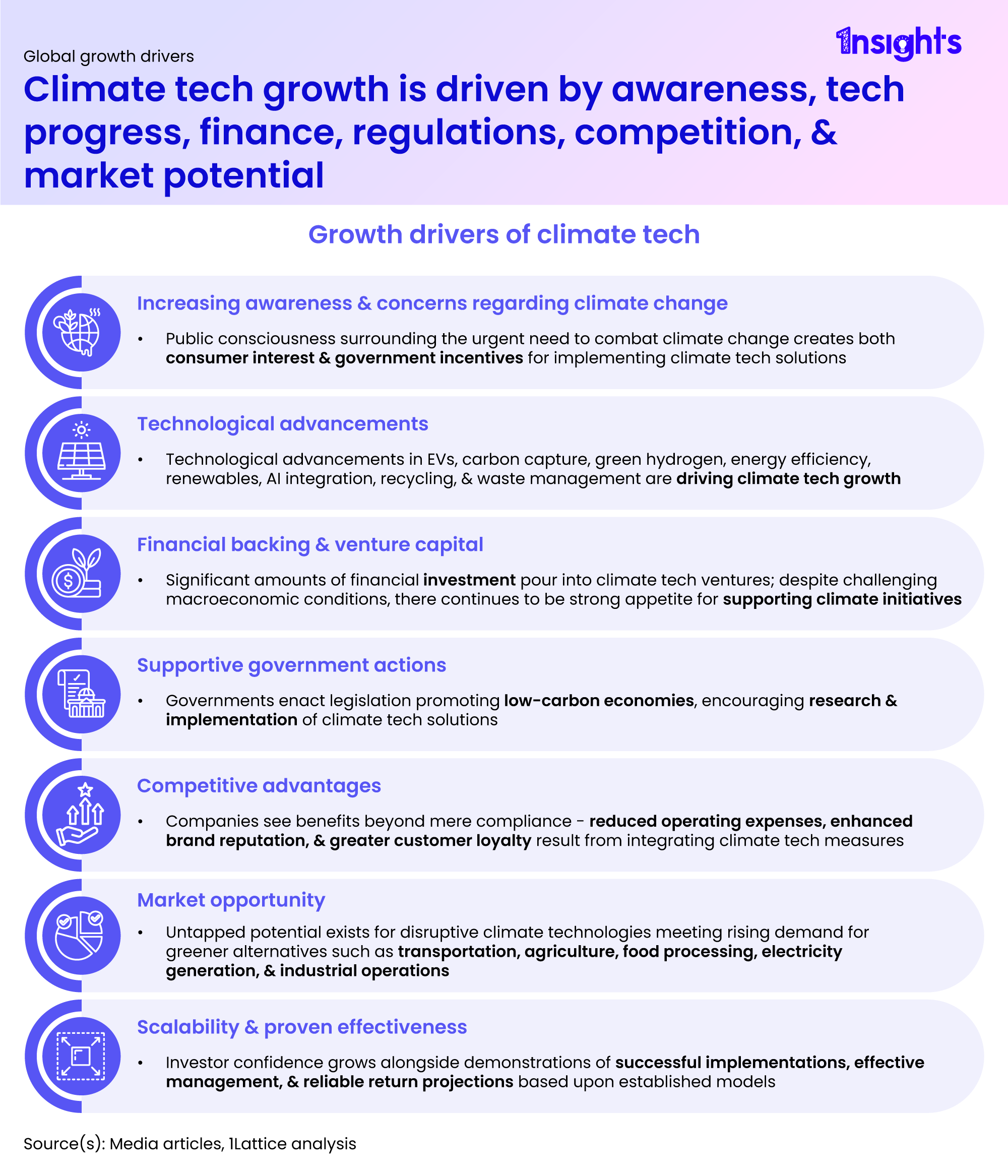
Climate technology is experiencing remarkable growth driven by key factors, here are the pivotal growth drivers fuelling this expansion:
- Climate change awareness boosts consumer and government support for climate tech, highlighting the urgency of tackling environmental issues.
- Advancements in technologies such as EVs, carbon capture, renewables, and AI drive climate tech growth, revolutionizing sustainability efforts.
- Strong financial backing, including venture capital, sustains climate tech ventures despite economic hurdles, indicating enduring investor confidence.
- Supportive government actions drive legislation favoring low-carbon economies, fostering research and implementation of climate tech solutions.
- Companies gain competitive advantages beyond compliance through climate tech integration, leading to reduced expenses, improved brand reputation, and increased customer loyalty.
- Untapped market opportunities await disruptive climate technologies addressing the rising demand for greener alternatives in multiple sectors.
- Investor confidence rises with demonstrated scalability, effectiveness, and reliable returns in climate tech.
These growth drivers hold promise for addressing environmental challenges and fostering sustainable growth for climate tech.
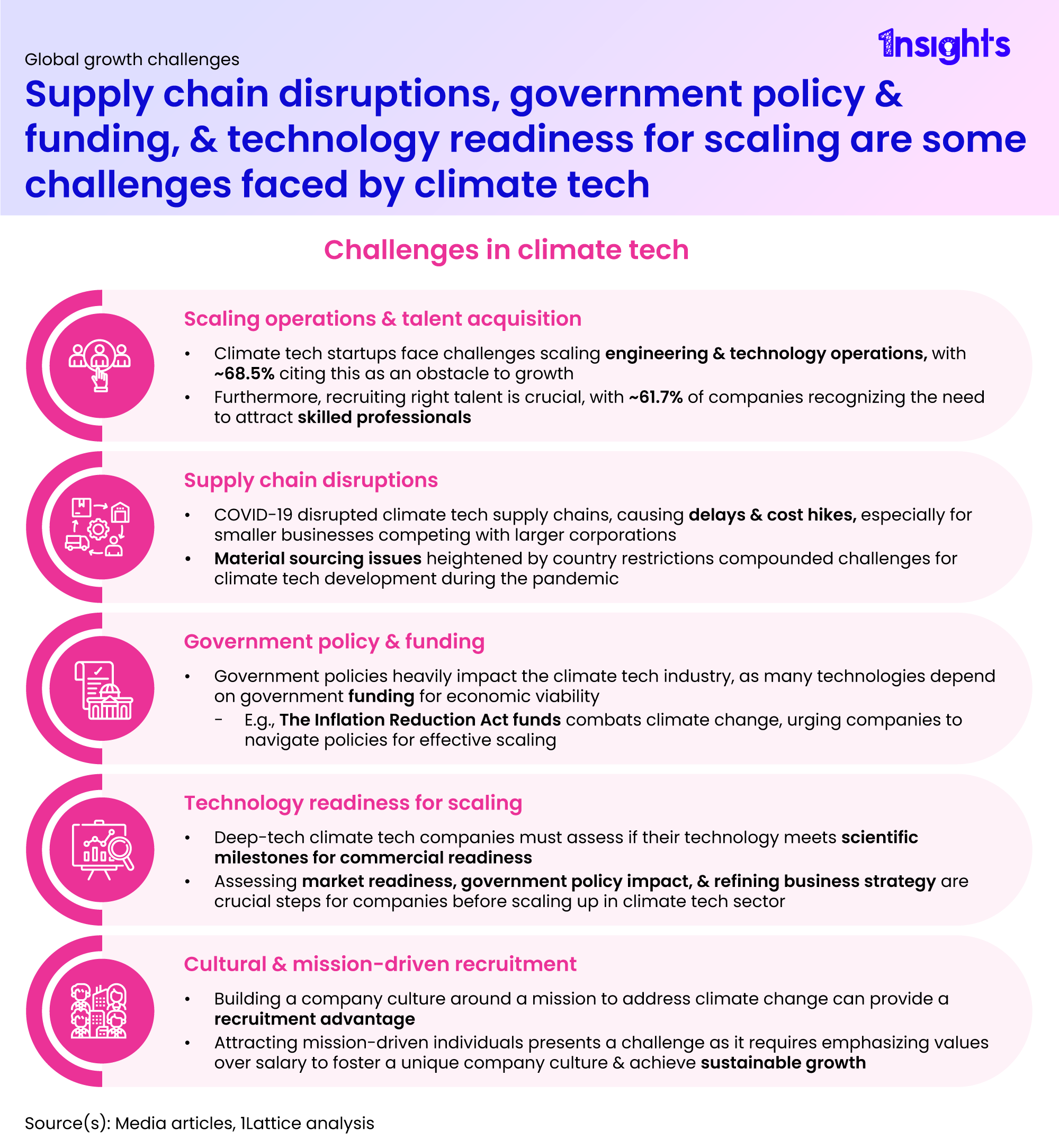
Climate tech significantly impacts the economy, environment, and society by addressing various key areas:
- Scaling operations & talent acquisition: Climate tech startups face challenges in scaling operations, with 68.5% encountering growth obstacles, while 61.7% prioritize recruiting skilled talent.
- Supply chain disruptions: COVID-19 disrupts climate tech supply chains, causing delays and cost increases, especially for smaller businesses, compounded by material sourcing challenges due to country restrictions.
- Government policy & funding: The climate tech industry heavily relies on government policies and funding for economic viability, with initiatives like The Inflation Reduction Act providing essential support for combating climate change.
- Technology readiness for scaling: Deep-tech climate tech companies assess technology readiness for commercial scaling, considering market readiness, government policies, and refining business strategies.
- Cultural & mission-driven recruitment: Companies focusing on climate change mission attract talent by emphasizing values over salary, fostering unique company cultures for sustainable growth.
Overcoming these challenges is crucial for climate tech startups to achieve sustainable growth and effectively combat climate change.