India’s lighting market is undergoing a structural transformation, driven by rising urbanisation, higher disposable incomes, and a growing focus on energy efficiency. Once dominated by low-cost, conventional products, the market is now steadily shifting toward premium, technology-enabled lighting solutions. Consumers across residential, commercial, and institutional segments are increasingly valuing design, durability, and smart features, while government-led energy efficiency initiatives continue to accelerate the transition.
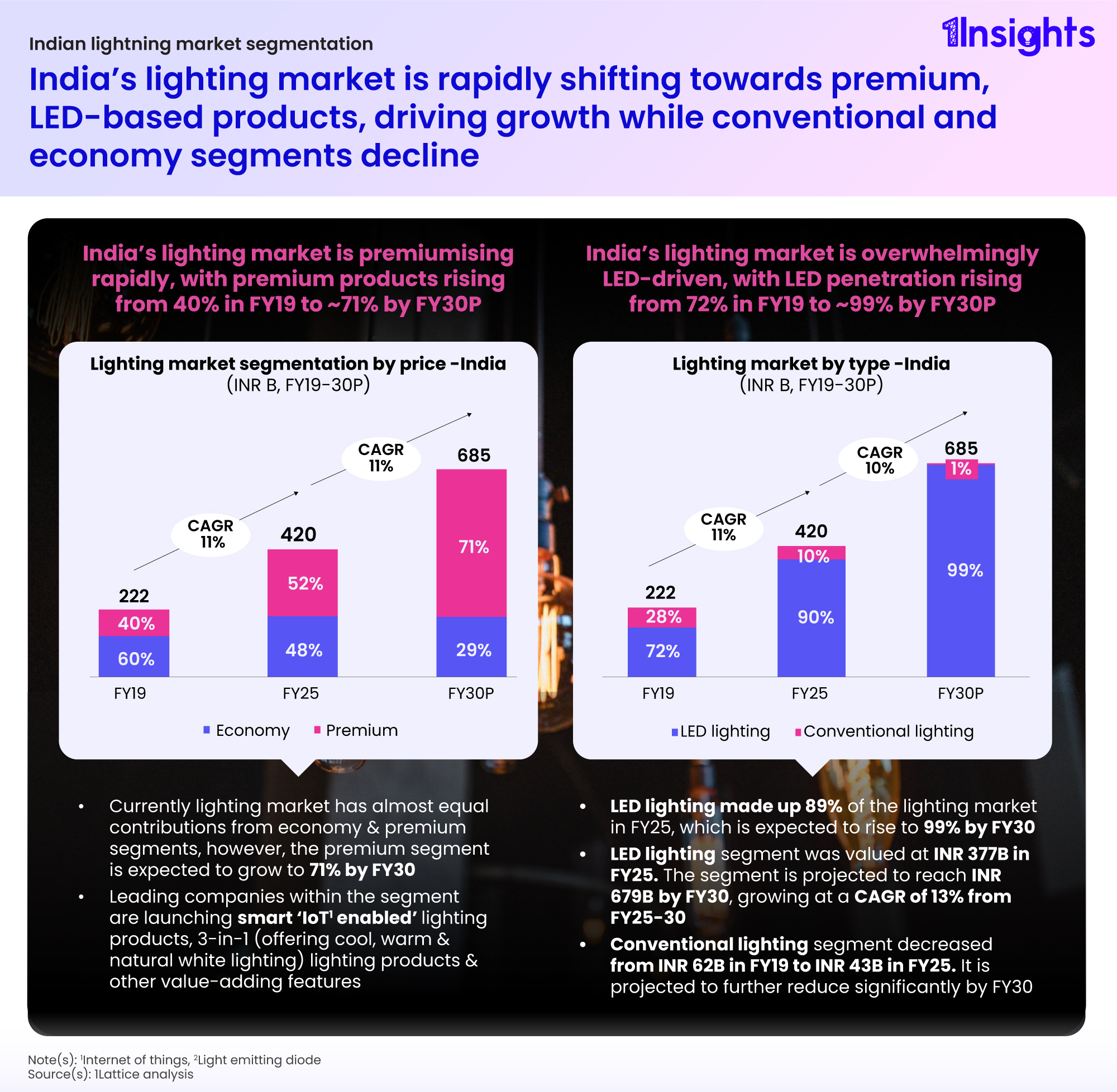
From a market segmentation perspective, India’s lighting industry is clearly premiumising and becoming overwhelmingly LED-driven. Premium lighting is projected to account for ~71% of the market by FY30, up from ~40% in FY19, driven by rising demand for smart, IoT-enabled, and multi-tone lighting solutions. In parallel, LED penetration is expected to reach ~99% by FY30, making LED the dominant lighting technology across applications. While the LED segment continues to expand in value, conventional lighting is expected to shrink to a marginal share by FY30, reflecting its rapid loss of relevance in an increasingly efficiency- and design-focused market.
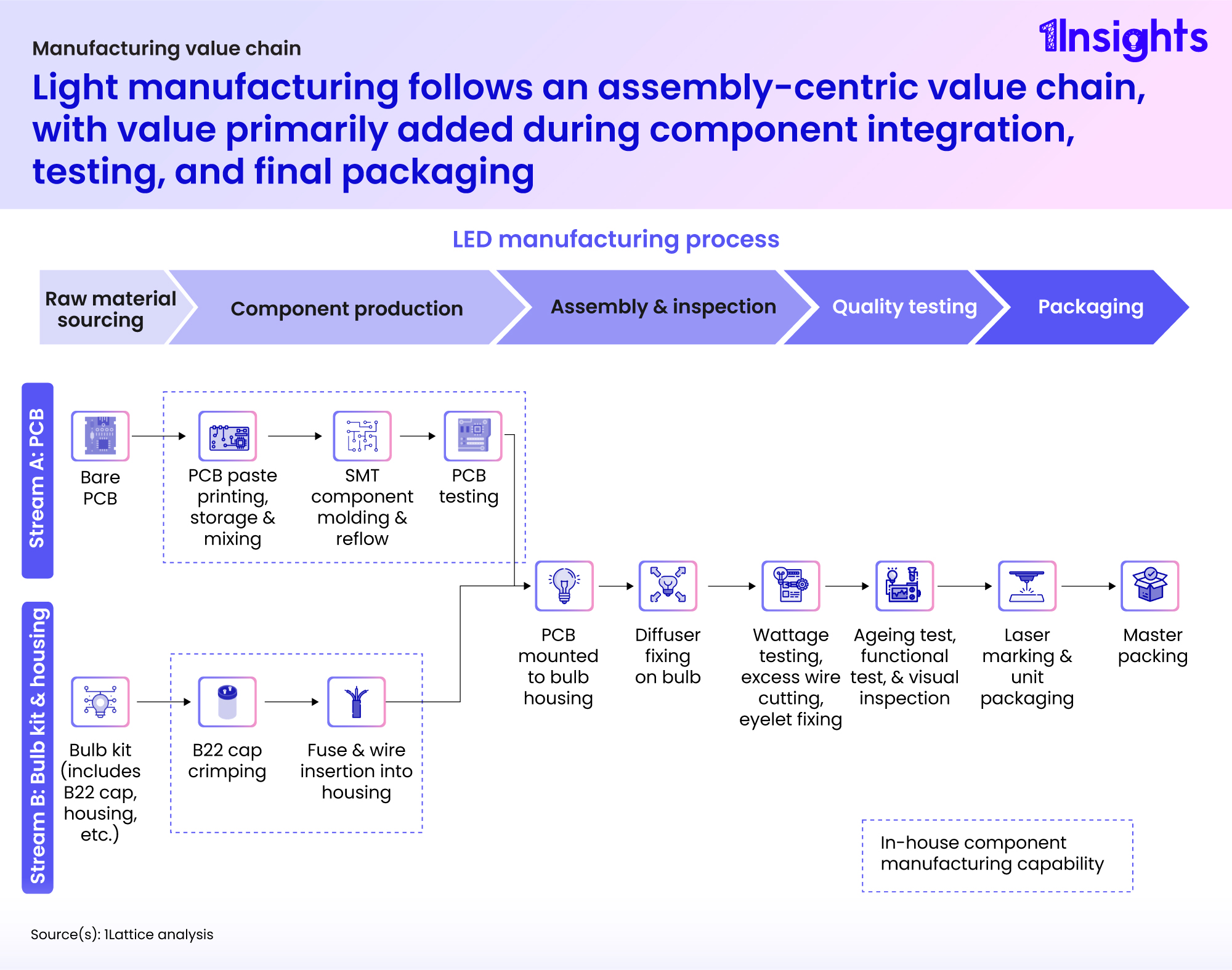
The manufacturing process typically spans PCB assembly, bulb housing integration, diffuser fixing, and rigorous quality and ageing tests before packaging. While certain component manufacturing capabilities exist in-house, much of the ecosystem remains focused on efficient assembly, testing, and packaging rather than deep component fabrication. This structure underscores opportunities for cost optimisation, localisation of critical components, and backward integration as the market scales and premium LED products gain prominence.