Overview
Wires consist of a single conductor whereas, cables involve one or more conductors to transmit electricity, data, or signals. With prospects in power & energy distribution & transmission, automotive, fast-moving electrical goods (FMEG), and communication, the future of the Indian wires & cables market is bright. Although wires & cables have been developed to support various tasks like communication or electricity distribution, they have opened avenues for inventors and infra-developers to push boundaries for human development and convenience.
Happy reading!
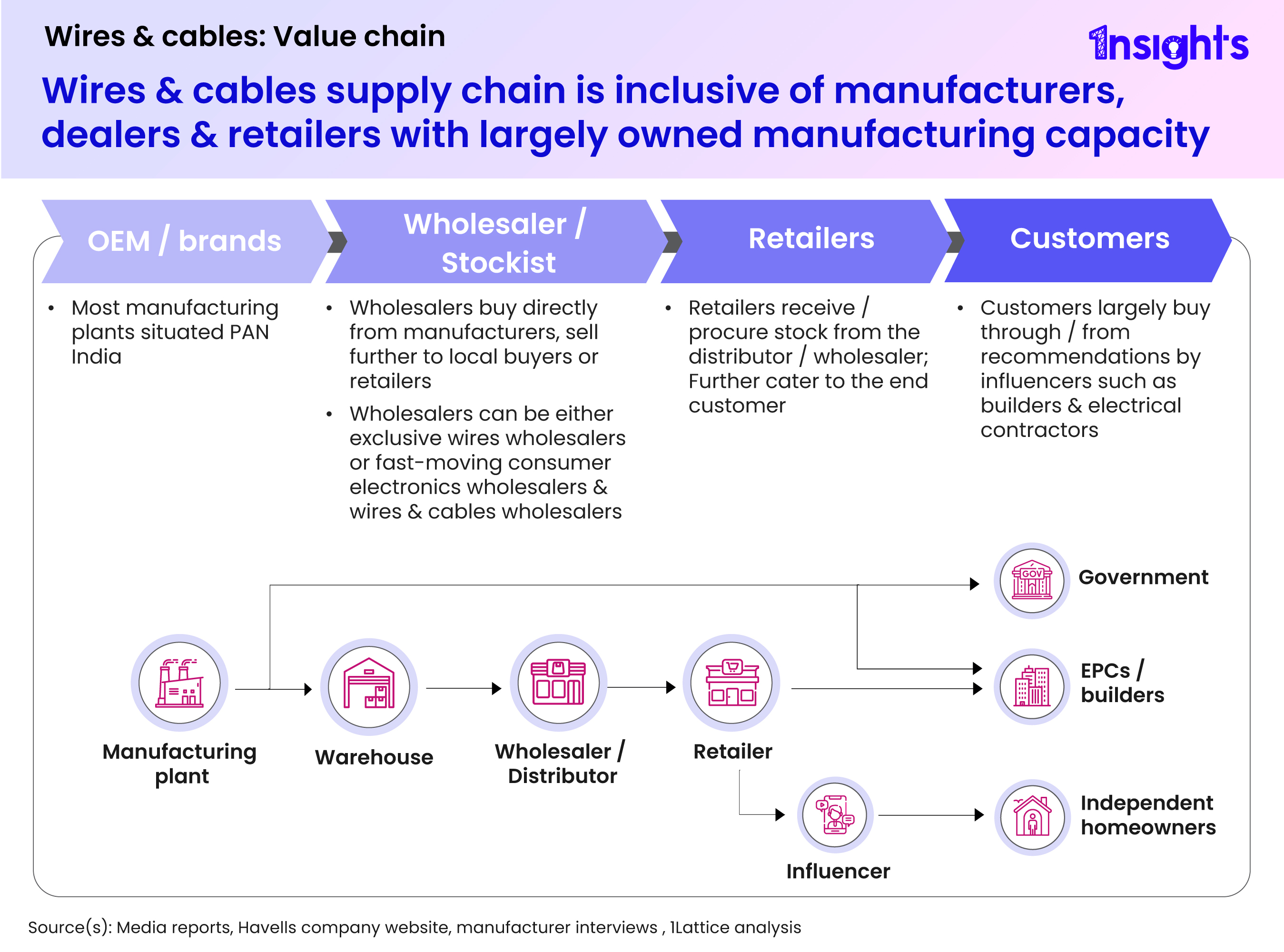
OEM / brands, wholesalers/stockists, retailers & customers are the major stakeholders across the wires & cables value chain. The product journey starts with manufacturers followed by wholesalers/stockists. Wholesalers can be either exclusive to a brand or multi-brand wholesalers covering other categories of fast-moving electrical goods. Electrical contractors & builders play a crucial part in generating demand for products due to low awareness among customers. Government, EPCs / builders & independent homeowners are the major end-user categories for wires & cables.
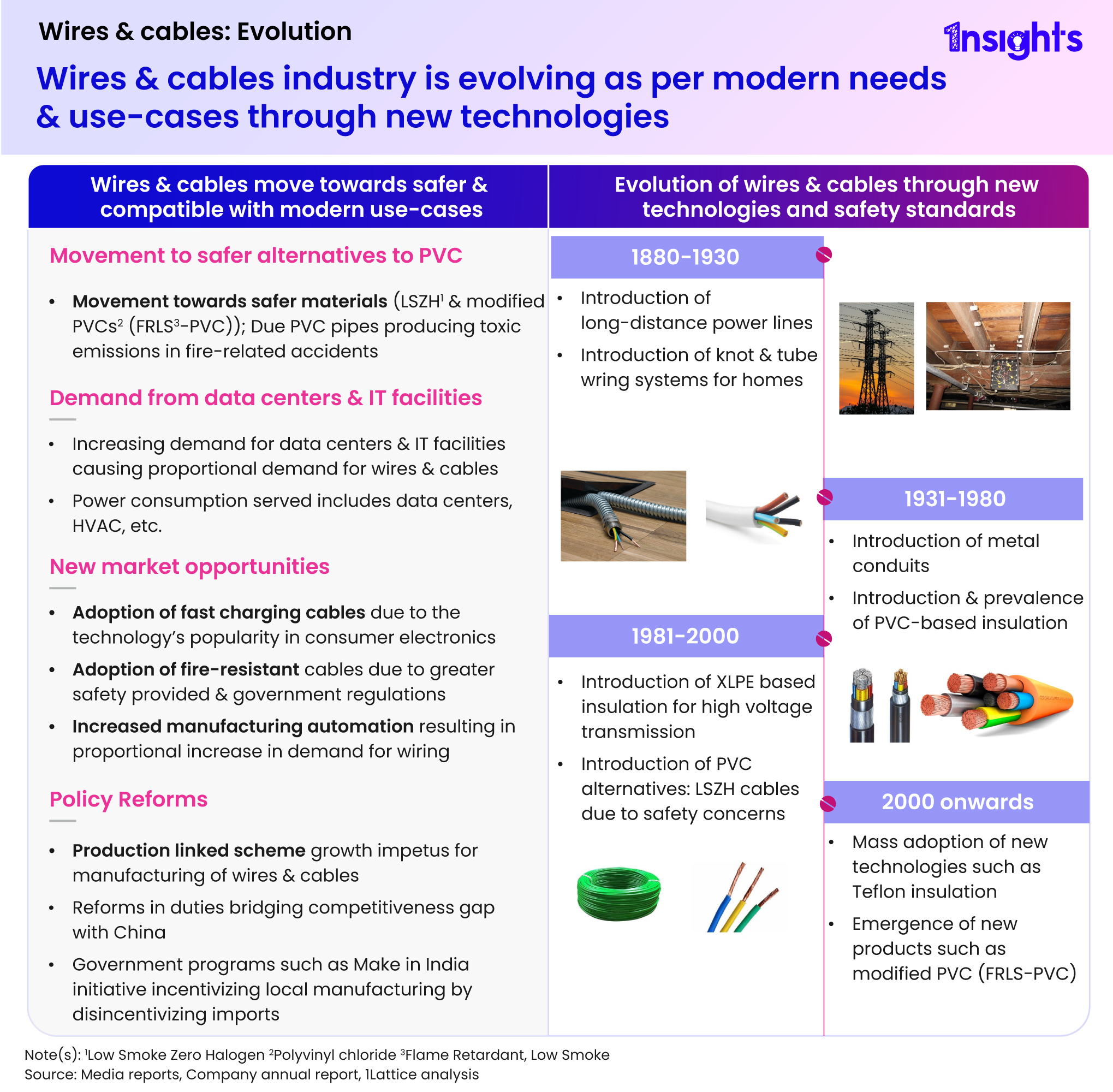
Wires & cables have played an important role in developing the infrastructure for human convenience as we see it today. Wires & cables have not only made electricity transmission and distribution possible through long-distance power lines but have also been instrumental in setting up communication systems. PVC-insulated cables slowly started replacing rubber cables & tube wiring systems for homes in many areas particularly in domestic wiring.
A significant stride in wires & cable manufacturing came with the introduction of XLPE-based insulation for high-voltage transmission in the 1980s. Mass adoption of new technologies such as Teflon insulation and the emergence of new products such as modified PVC (FRLS-PVC) are the major highlights & developments of the wire & cables industry post-2000.
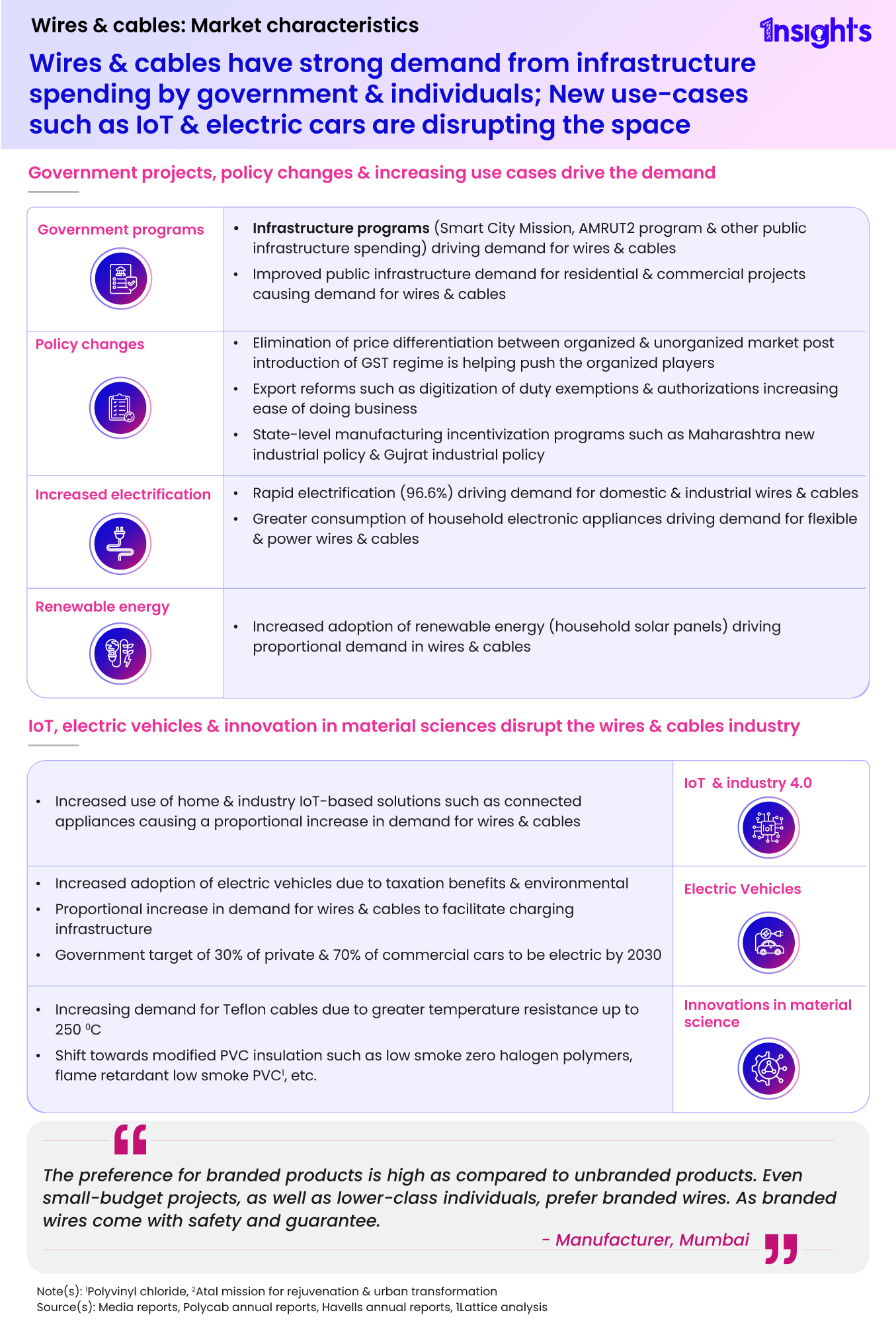
Wires & cables have become an indispensable part of our everyday lives. Government infrastructure programs such as Smart City Mission & AMRUT program, central government-led PLI schemes, the boom in the telecom sector, increased electrification, and increased adoption of renewable energy will drive the demand for wires & cables in India. IoT along with Industry 4.0, increased adoption of electric vehicles due to taxation benefits & environmental concerns, and innovations in material science are going to be the major disruptors in the PVC pipes & fittings industry.