
Overview
Dry waste management refers to the collection, segregation, & disposal of dry waste materials such as plastic, paper, glass, metal, & other recyclable items. Effective dry waste management is essential for reducing the burden on landfills, conserving natural resources, & promoting a circular economy.
Sharing a snapshot below.
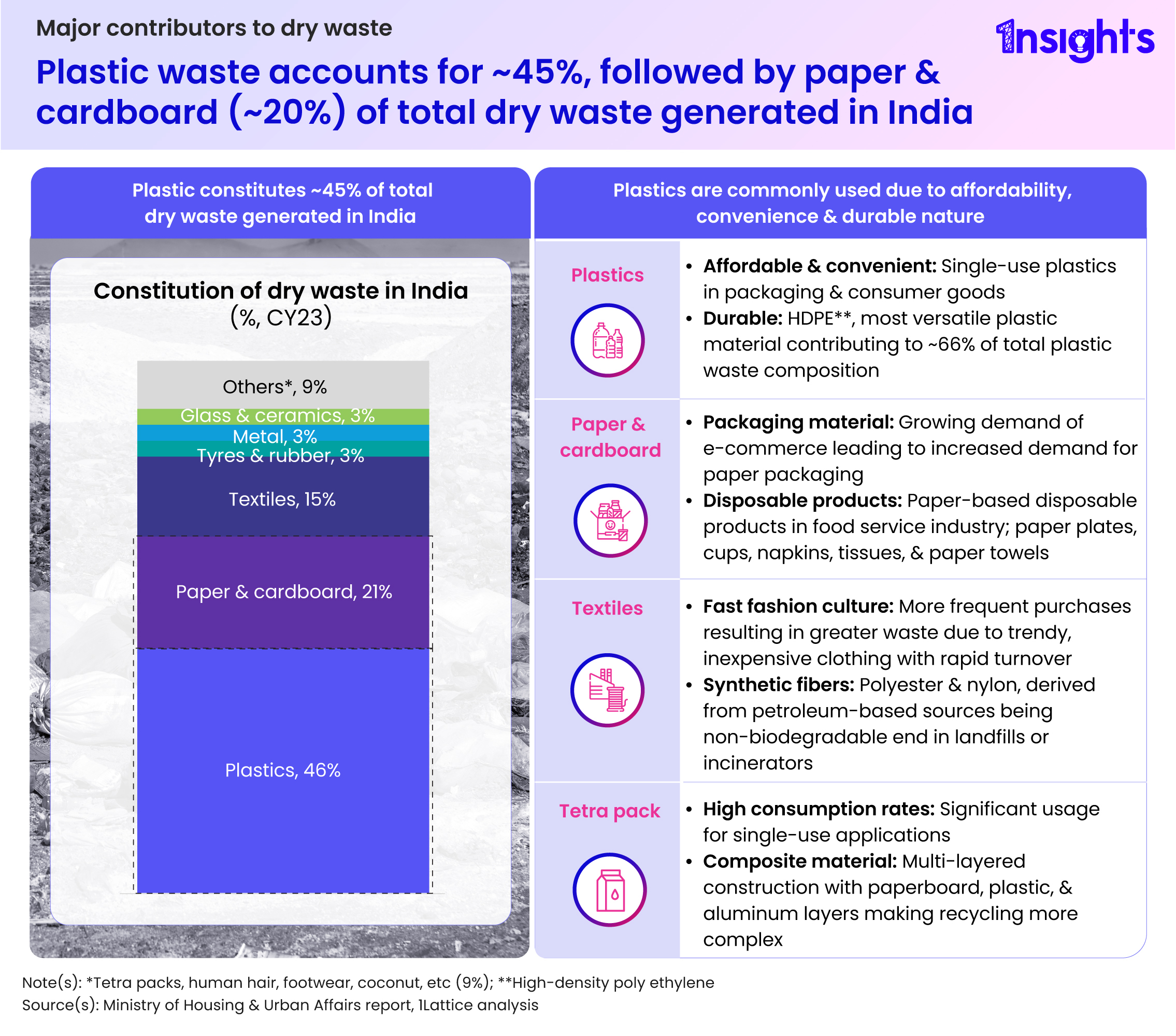
Dry waste generated from households, commercial businesses, & public spaces & events broadly comprises:- Plastics: With ~46% share, plastics serve as the largest contributor to dry waste due to their affordability, convenience & durable nature
- Paper & cardboard: The rise in paper packaging & disposable products owing to the growing e-commerce industry leads to paper & cardboard contributing ~21% to the total dry waste in India
- Textiles: The volume of textile waste has increased significantly in recent years due to the rise of fast fashion & the trend of disposing of clothing rather than donating or recycling it
- Others: Other contributors to dry waste include glass & ceramics, metal, rubber, tetra packs, human hair, footwear, coconut, etc.
Initiatives to promote awareness and education about dry waste recycling are crucial for reducing waste and conserving natural resources.
Sharing a snapshot below.
Opportunities in dry waste management
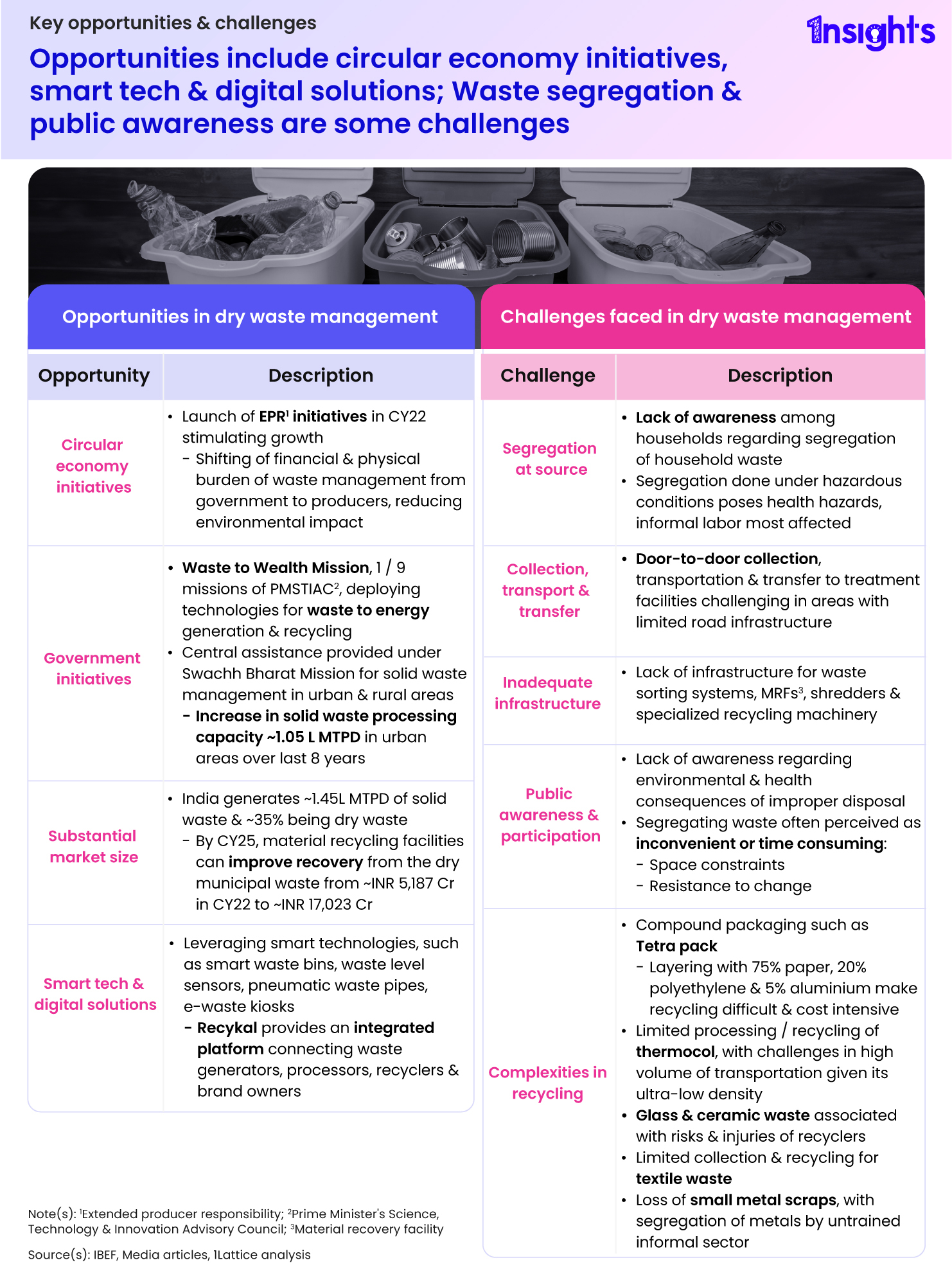
Dry waste management possesses various opportunities including circular economy initiatives, digital solutions, government initiatives & recovery facilities owing to substantial market size.
- Government initiatives such as the Waste to Wealth Mission are deploying advanced technologies for waste-to-energy generation & recycling.
- With smart technologies like smart waste bins, e-waste kiosks, & waste level sensors, companies can integrate waste generators, processors, recyclers & brand owners.
Challenges in dry waste management
Dry waste management also faces challenges relating to inadequate infrastructure, lack of public awareness & participation, recycling challenges & more.
- Segregation at source becomes very necessary for the efficient management of dry waste but is often not followed due to a lack of awareness.
- India still faces challenges in door-to-door collection, transportation & transfer in areas with limited road infrastructure.
- Lack of public participation due to space constraints & resistance to change serves as a barrier to waste segregation & management.