
Chemically recycled PET has emerged as a promising alternative to traditional recycling methods, offering the ability to fully restore plastic waste to its original, high-quality state. Unlike mechanical recycling, which often leads to gradual degradation of the polymer chains and a loss in material quality, chemical recycling utilizes advanced processes to break down PET at a molecular level. Through this approach, waste PET is transformed back into its fundamental building blocks, allowing it to be repurposed for the creation of new, virgin-equivalent plastics
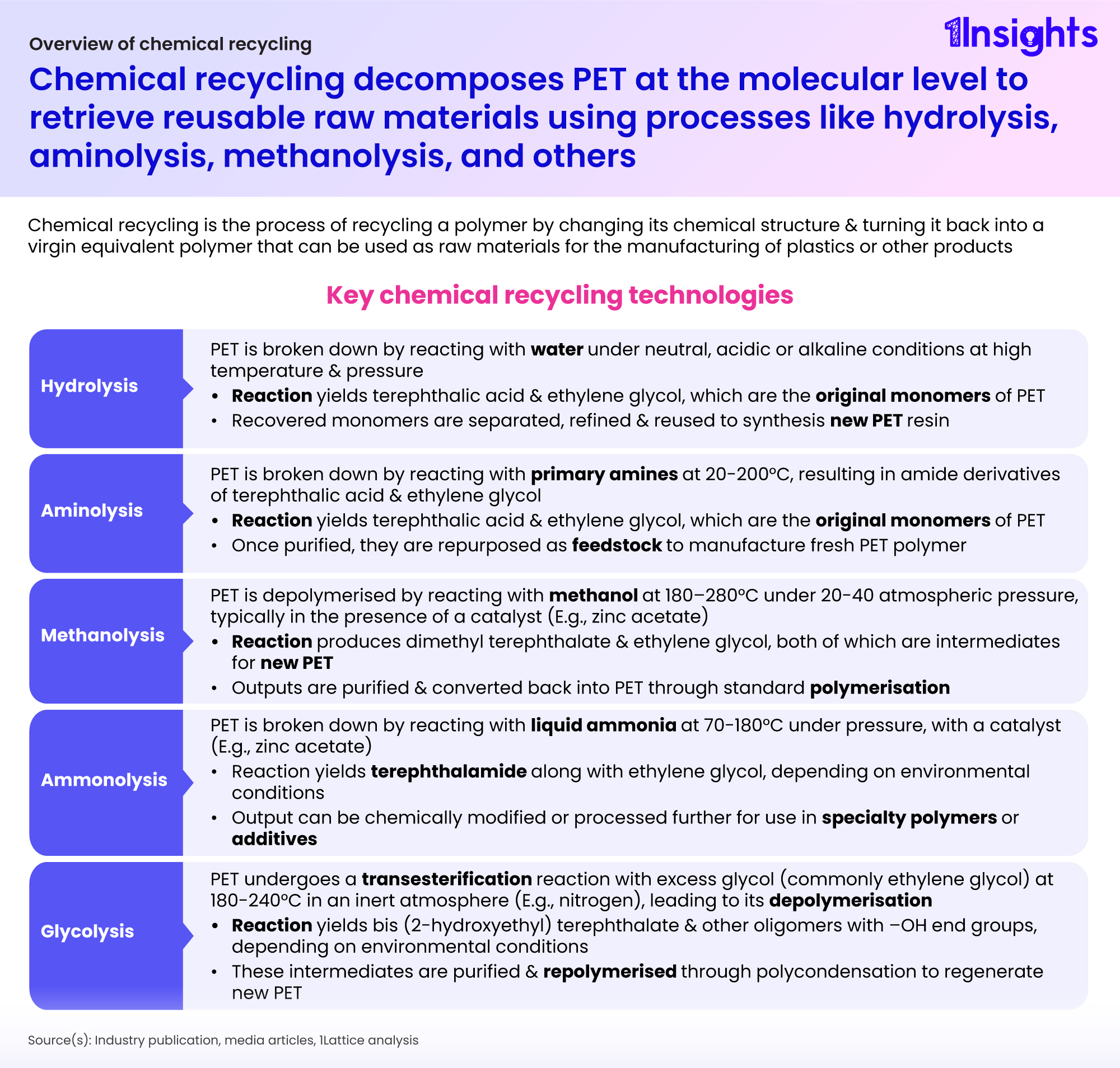
Chemical recycling of PET primarily employs technologies such as hydrolysis, aminolysis, methanolysis, ammonolysis, and glycolysis. Each of these methods involves reacting PET with specific chemicals, water, primary amines, methanol, liquid ammonia, or excess glycol under controlled conditions of temperature and pressure. The reactions typically yield terephthalic acid, ethylene glycol, and other oligomers, which are then purified and repolymerized to form new PET. This process ensures the recovery of high-purity monomers, making it possible to produce PET with properties virtually identical to the original resin
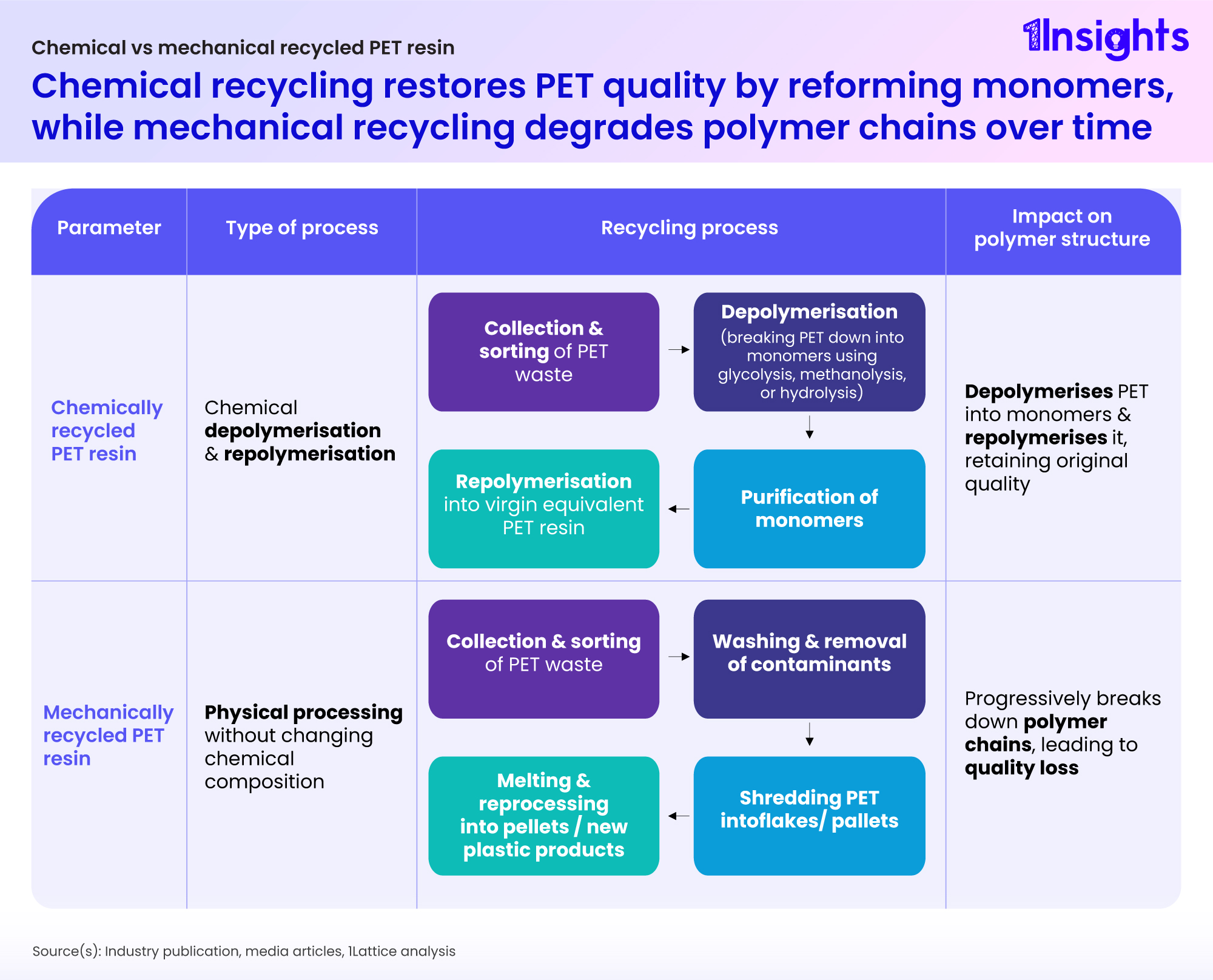
Chemically recycled PET undergoes depolymerization to monomers and subsequent repolymerization, preserving its inherent quality throughout multiple recycling cycles. The process starts with the collection and sorting of PET waste, followed by chemical breakdown, purification of monomers, and finally, repolymerization into fresh PET resin. In contrast, mechanical recycling is a physical process involving washing, shredding, and melting PET waste. Over time, this leads to shorter polymer chains and diminished quality in the final product. Thus, chemical recycling presents a pathway toward true circularity for PET plastics by maintaining material performance without quality loss