
Industry 5.0 represents the latest evolution in global manufacturing, characterised by the convergence of advanced technologies such as AI, IoT, robotics, and 3D printing with a renewed focus on human-centricity and sustainability. Unlike its predecessor, which emphasised automation and efficiency, Industry 5.0 balances rapid automation with human creativity to build adaptable and resilient manufacturing systems. This paradigm not only enhances productivity and customisation but also enables resource optimisation, real-time insights, and sustainable industrial ecosystems, setting the foundation for the next wave of smart, personalised, and environmentally responsible production worldwide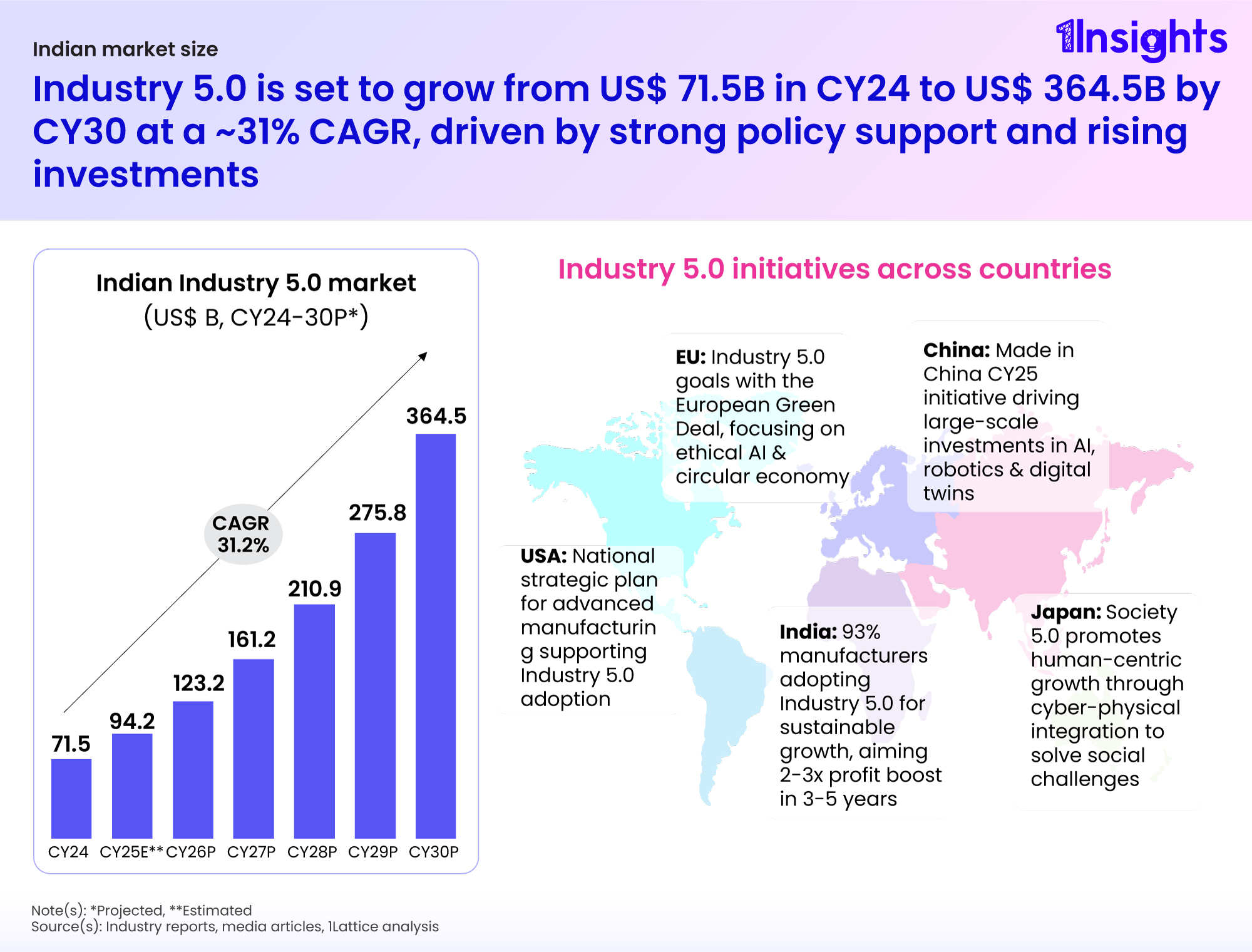 Globally, the Industry 5.0 market is poised for remarkable growth, rising from US$ 71.5B in CY24 to approximately US$ 364.5B by CY30, supported by a robust compound annual growth rate of around 31%. Governments and industries worldwide are adopting diverse strategies to accelerate this transition: the European Union is prioritising ethical artificial intelligence and circular-economy principles through its Industry 5.0 objectives, while the USA is advancing through strategic manufacturing initiatives. China is making substantial investments in AI, robotics, and digital twins under its Made in China CY25 programme. India stands out, with 93% of manufacturers adopting Industry 5.0 solutions to achieve significant profit gains over the next three to five years. Japan’s Society 5.0 initiative, meanwhile, emphasises human-centric, cyber-physical integration to address a wide range of social challenges.
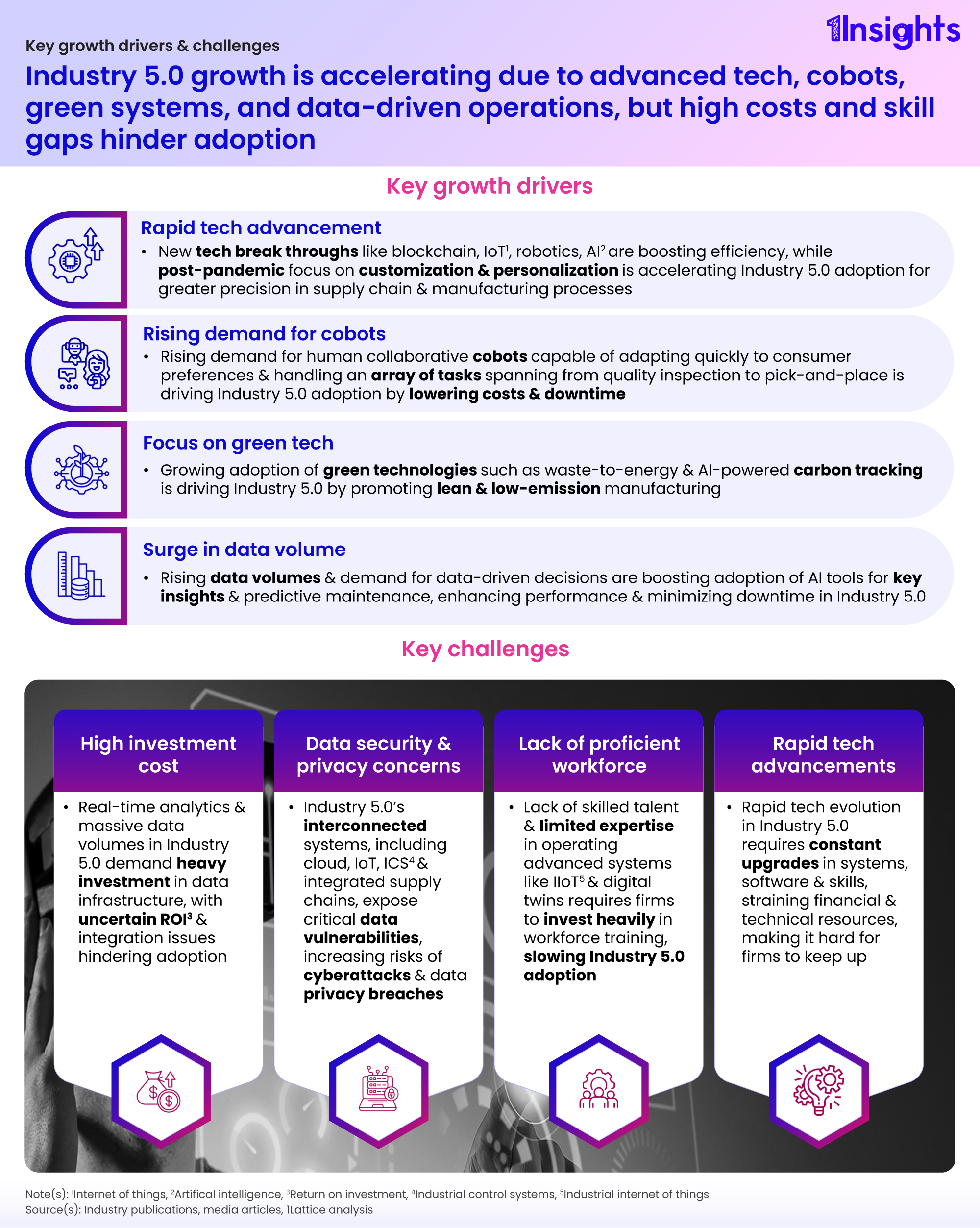 Growth in Industry 5.0 is being driven by rapid technological breakthroughs such as blockchain, IoT, and AI; rising demand for cobots that reduce costs and downtime; and a strong shift towards green, lean manufacturing systems. However, the sector faces significant challenges, including high investment costs and uncertain ROI, as well as data security and privacy concerns stemming from highly interconnected systems. Skill gaps continue to hamper workforce readiness, while constant technological upgrades place sustained financial and technical pressure on organisations. As a result, companies must invest heavily in training and infrastructure to maintain adoption momentum and fully realise the benefits of predictive maintenance and data-driven insights.
Overview