India is rapidly transforming into a global hub for affordable, high-quality healthcare, attracting millions of international patients seeking advanced treatments, wellness therapies, and holistic care solutions. As demand for medical tourism in India continues to accelerate, the country is strengthening its position as a preferred destination for cost-effective and world-class healthcare services across the globe.
This edition of the newsletter highlights the rapid expansion of the medical tourism in India sector, which continues to gain global prominence driven by strong cost advantages, clinical excellence, and supportive government policies, with the India market projected to grow from ~US$ 18.2B in FY26 to ~US $32.5B by FY31P. We cover the key demand drivers underpinning this growth, including affordability, increasing international patient inflows, improved visa access, and rising adoption of holistic and AYUSH-led care, alongside the growing role of digital health in enhancing patient experience.
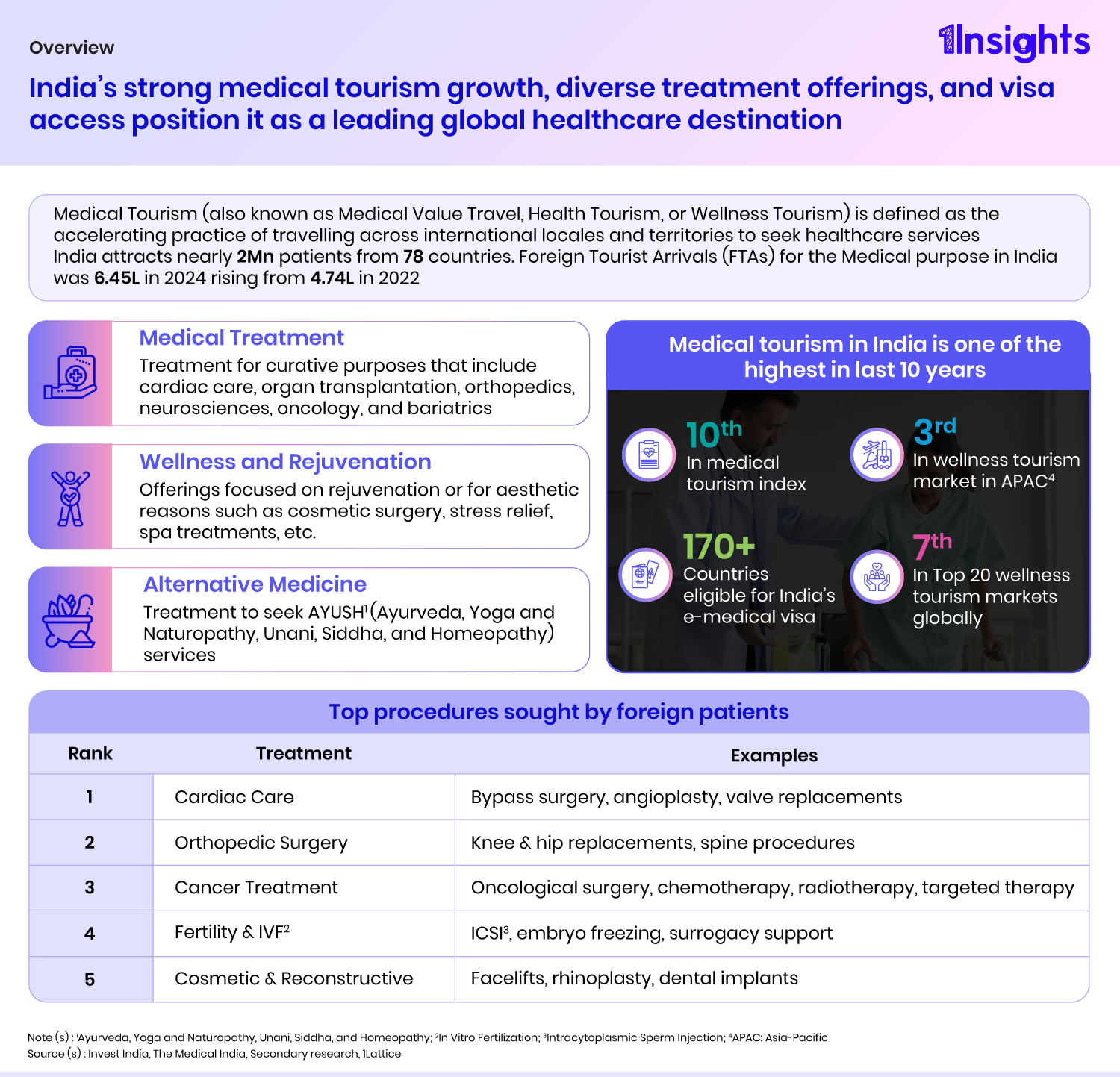
India is emerging as a leading global healthcare destination, driven by strong growth in medical tourism, diverse treatment offerings, and easier visa access, attracting 2Mn patients from 78 countries, with medical Foreign Tourist Arrivals (FTAs) rising significantly. The ecosystem spans curative treatments (cardiac, orthopaedic, oncology, transplants), wellness and rejuvenation (cosmetic and spa services), and alternative medicine (AYUSH). Key procedures sought by international patients include cardiac care, orthopaedic surgeries, cancer treatments, fertility services, and cosmetic procedures. India ranks among the top globally - 10th in the medical tourism index, 7th in wellness tourism, and 3rd in APAC, supported by eligibility for e-medical visas across 170+ countries, reinforcing the growth of health and medical tourism in India.
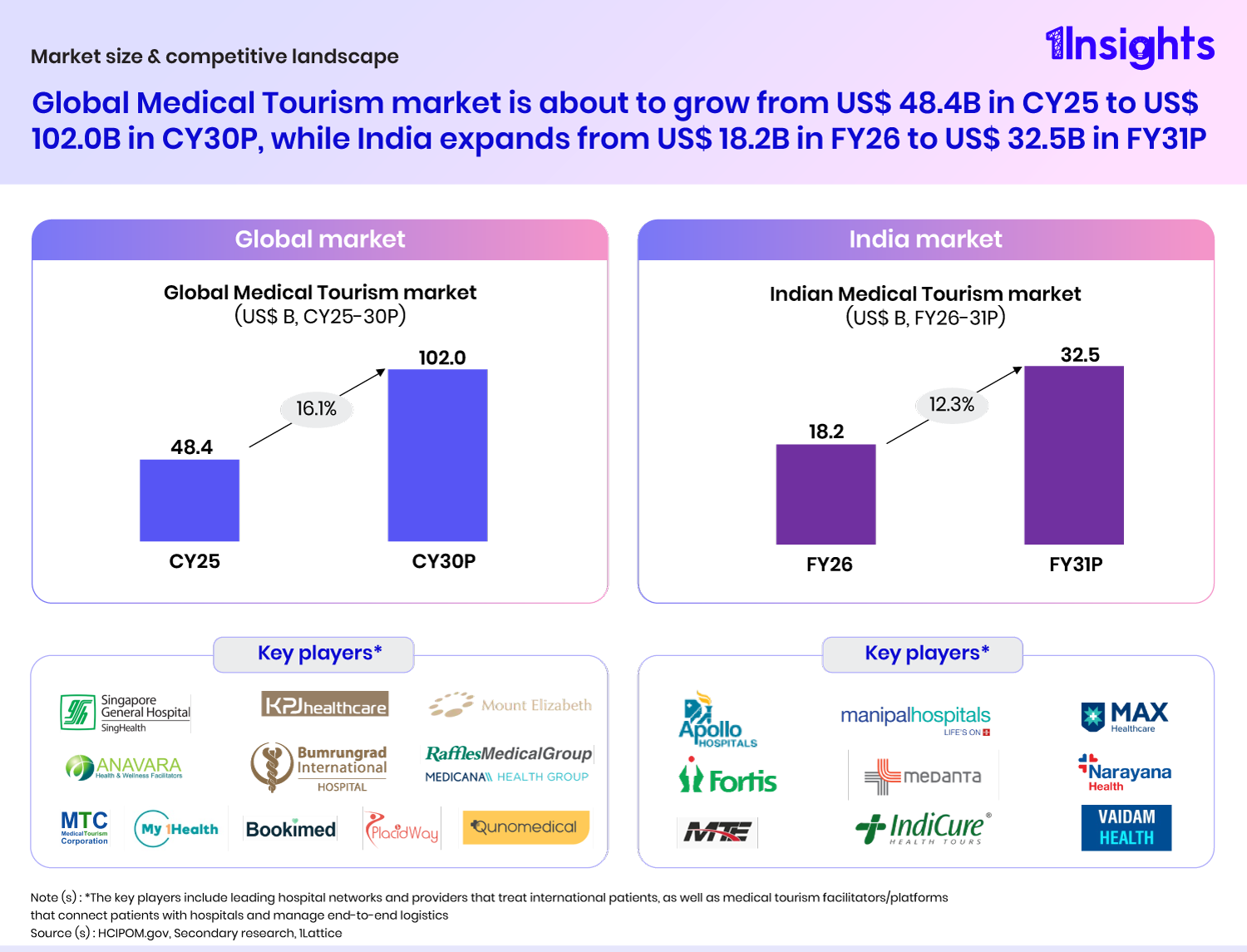
 The global medical tourism market is set for strong growth, expanding from US$ 48.4B in CY25 to US$ 102.0B by CY30 (16.1% CAGR), while India’s market is projected to grow from US$ 18.2B in FY26 to US$ 32.5B by FY31P (12.3% CAGR), highlighting India’s increasing but relatively moderate growth within the global landscape; globally, the ecosystem is driven by hospitals/providers such as Singapore General Hospital, KPJ Healthcare, Mount Elizabeth Hospital, Raffles Medical Group, Bumrungrad International Hospital, and Medicana Health Group, alongside facilitators/platforms such as ANAVARA, Medical Tourism Corporation, My 1Health, Bookimed, Qunomedical, and PlacidWay; in contrast, India’s market is driven by hospital chains such as Apollo Hospitals, Manipal Hospitals, Fortis Healthcare, Medanta, Narayana Health, and Max Healthcare, supported by facilitators like IndiCure Health Tours and Vaidam Health, reflecting a mix of provider-led and aggregator-driven competition.
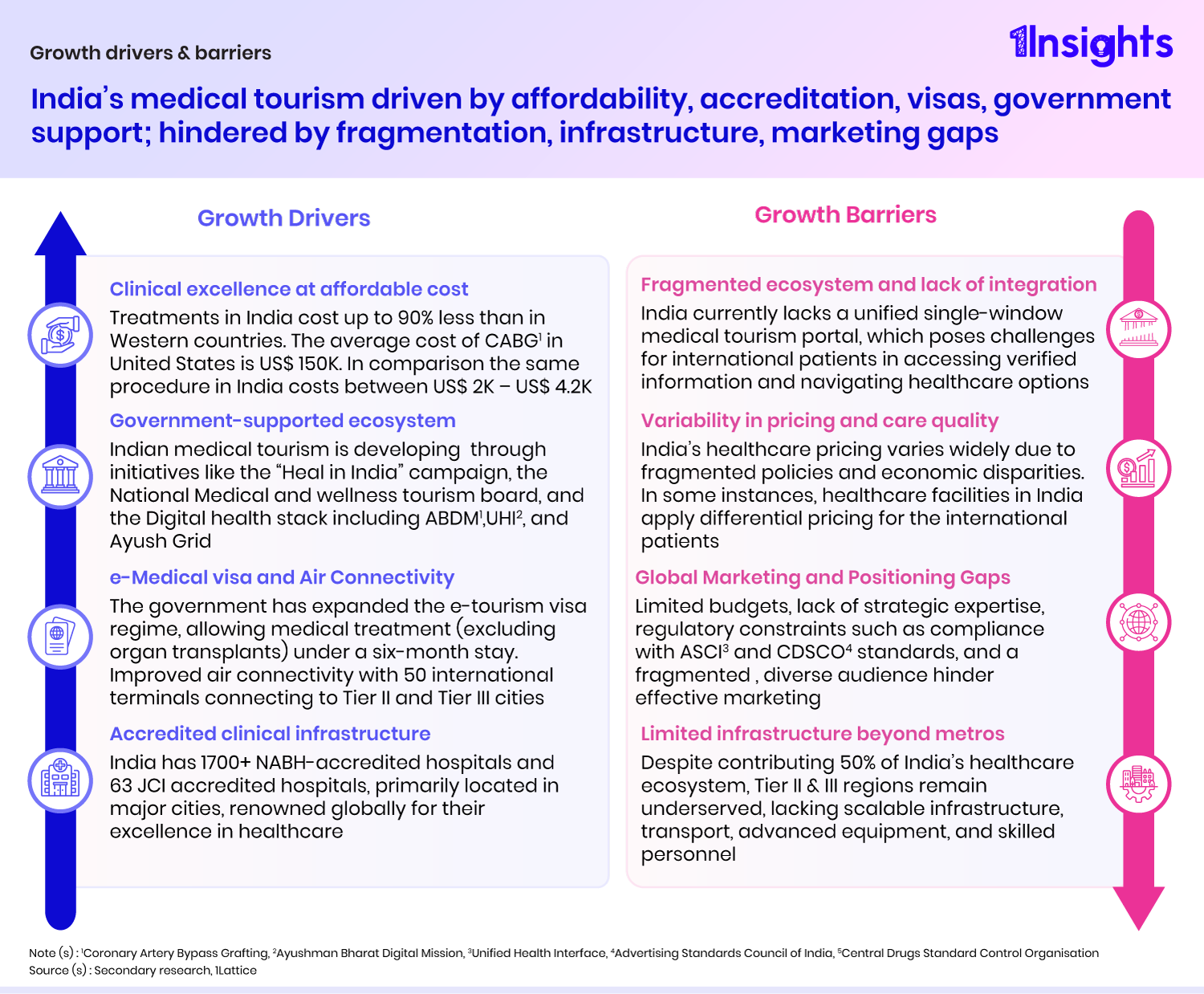
India’s medical tourism growth is driven by strong cost advantages (up to 90% cheaper than Western markets), high-quality accredited infrastructure (NABH/JCI hospitals), improved visa access and air connectivity, and active government support through initiatives like Heal in India and digital health platforms. However, growth is constrained by a fragmented ecosystem lacking a unified access platform, variability in pricing and care quality, limited infrastructure beyond metro cities, and gaps in global marketing and positioning due to regulatory constraints and limited strategic outreach.
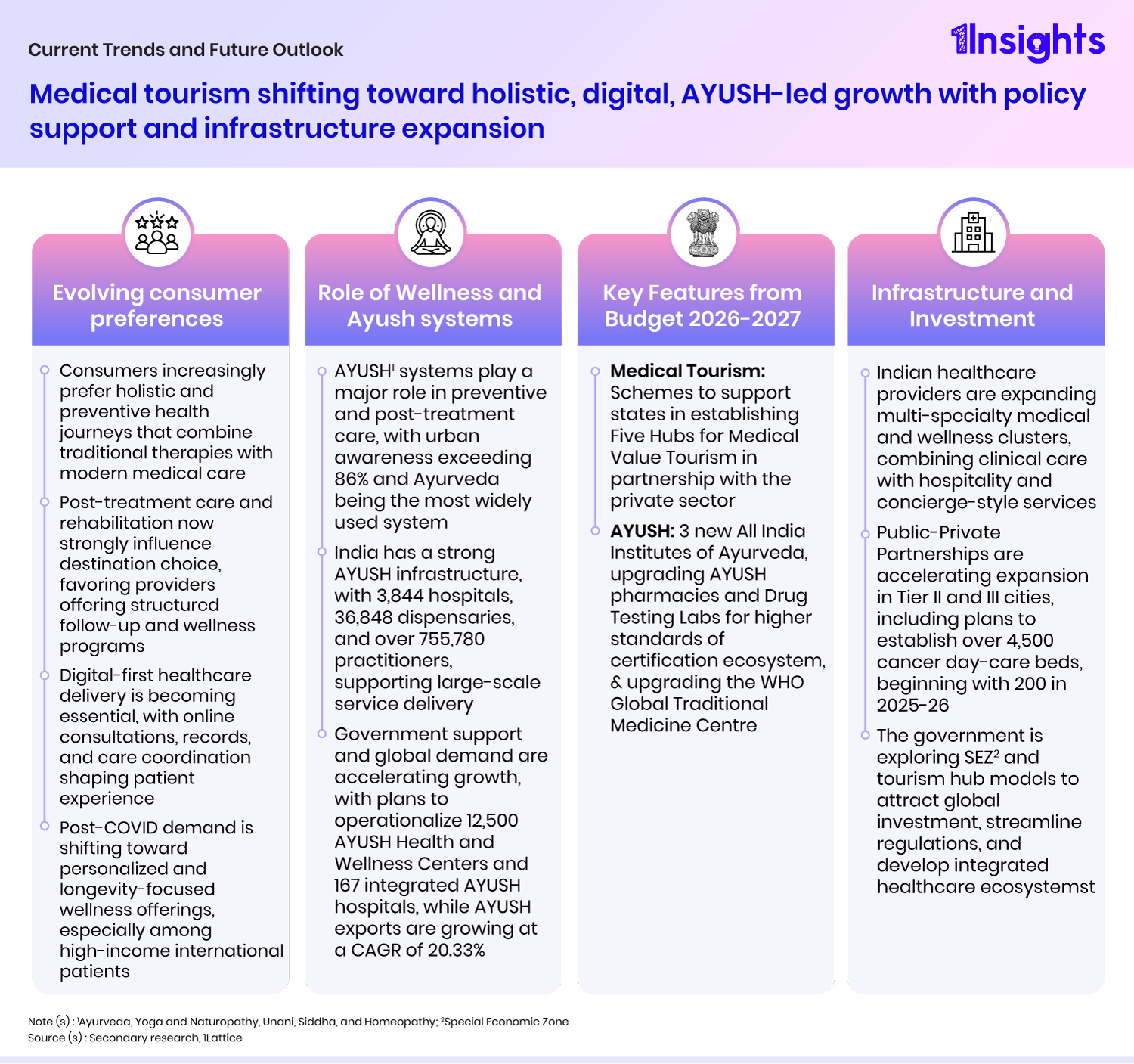
 India’s medical tourism is evolving toward a holistic, digital, and AYUSH-driven model, shaped by shifting consumer preferences for preventive, personalized, and post-treatment care, alongside increasing adoption of digital health solutions. AYUSH systems are gaining prominence due to strong infrastructure, rising global demand, and government support, positioning India as a hub for integrative care. Policy initiatives (Budget 2026-27) further boost the sector through medical tourism hubs and AYUSH ecosystem strengthening, while expanding healthcare infrastructure, public-private partnerships, and investment in Tier II and Tier III cities are expected to enhance capacity, accessibility, and global competitiveness.