With capabilities ranging from heart rate, blood oxygen, body temperature, step tracking, to stress monitoring, these devices are bridging the gap between fitness and clinical wellness. In 2024, global adoption of wearables exceeded 400 million active users, reflecting strong consumer demand and integration into healthcare ecosystems.
The wearable medical devices market is segmented across multiple dimensions. By type, active wearables such as smartwatches (e.g., Apple Watch, Fitbit) provide real-time health insights, while passive wearables (e.g., Oura Ring) store data for retrospective analysis. By technology, IoT-enabled devices drive remote monitoring, AR/VR solutions support rehabilitation, and Bluetooth-based fitness devices enhance syncing and usability. By application, wearables are widely adopted across fitness, chronic disease management (e.g., continuous glucose monitors), and rehabilitation therapies. By end use, they are increasingly deployed across home healthcare, hospitals, and wellness centers, enabling seamless integration into patient lifestyles.
As healthcare shifts toward preventive and connected care, wearables are poised to play a pivotal role in driving better health outcomes and reducing system-wide costs. With innovations in AI, cloud-based data analytics, and integration into electronic health records, wearable medical devices are moving beyond wellness indicators to become critical tools in patient care management.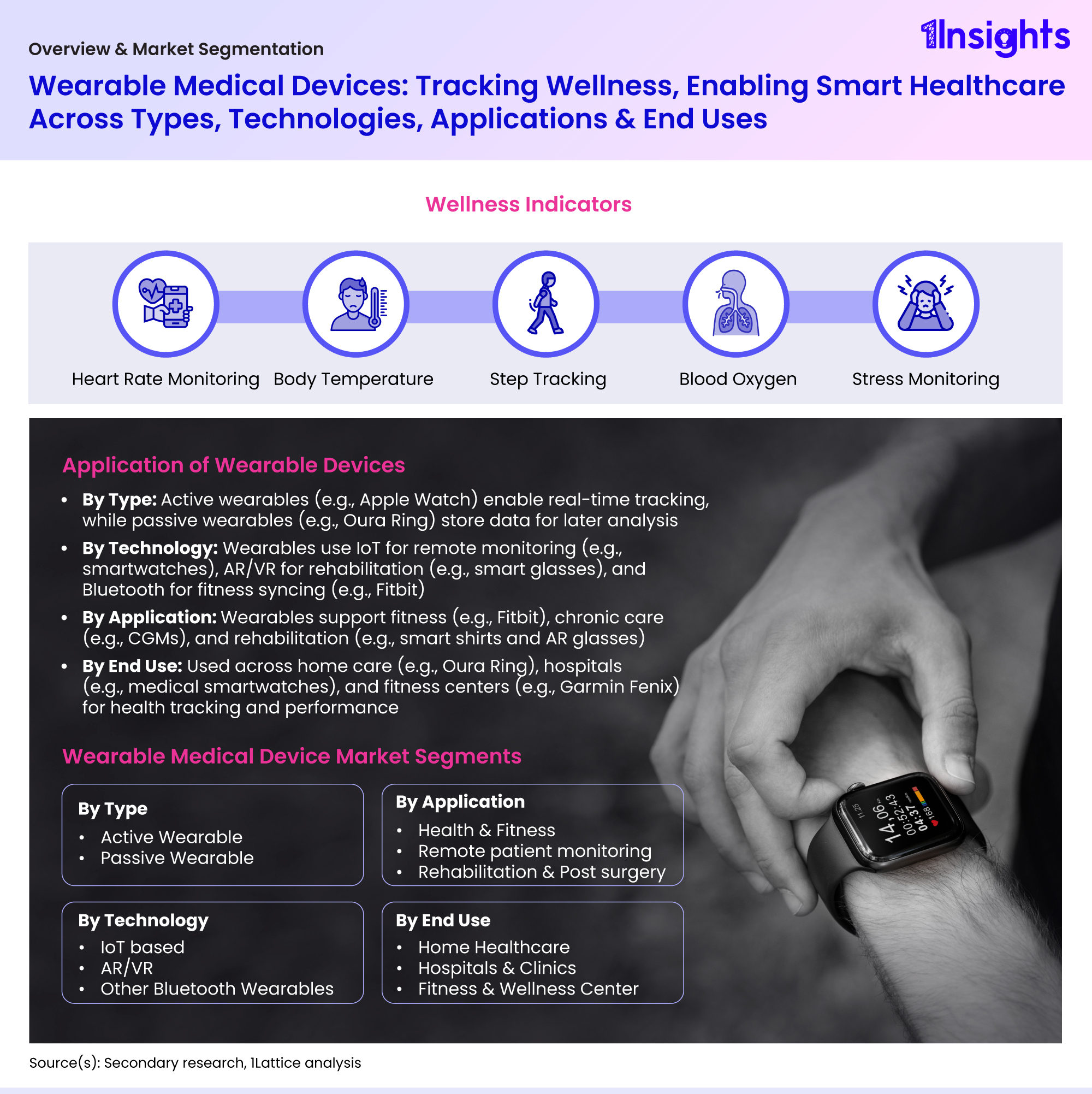
The global wearable device market is projected to reach USD 177.6 billion (INR 14,774 B) by 2030, growing at a CAGR of 16% from USD 83.6 billion in 2025. The Indian market is expected to follow a similar trajectory, expanding at a CAGR of 16% to reach USD 4.1 billion (INR 340 B) by 2030 from USD 1.96 billion in 2025.
The global competitive landscape features leading players such as Medtronic, GE Healthcare, Dexcom, Philips Healthcare, Abbott, Masimo, Polar, Omron, Zoll, Whoop, Vivalink, VitalConnect, and VivoSensMedical. Meanwhile, the Indian market showcases a strong mix of emerging domestic innovators and growth-stage startups, including Ultrahuman, Ayati Devices, BionN, AiSteth, Lifespark Technologies, Astrek Innovations, Briota, Dr. Store, and Cardiac Design Labs.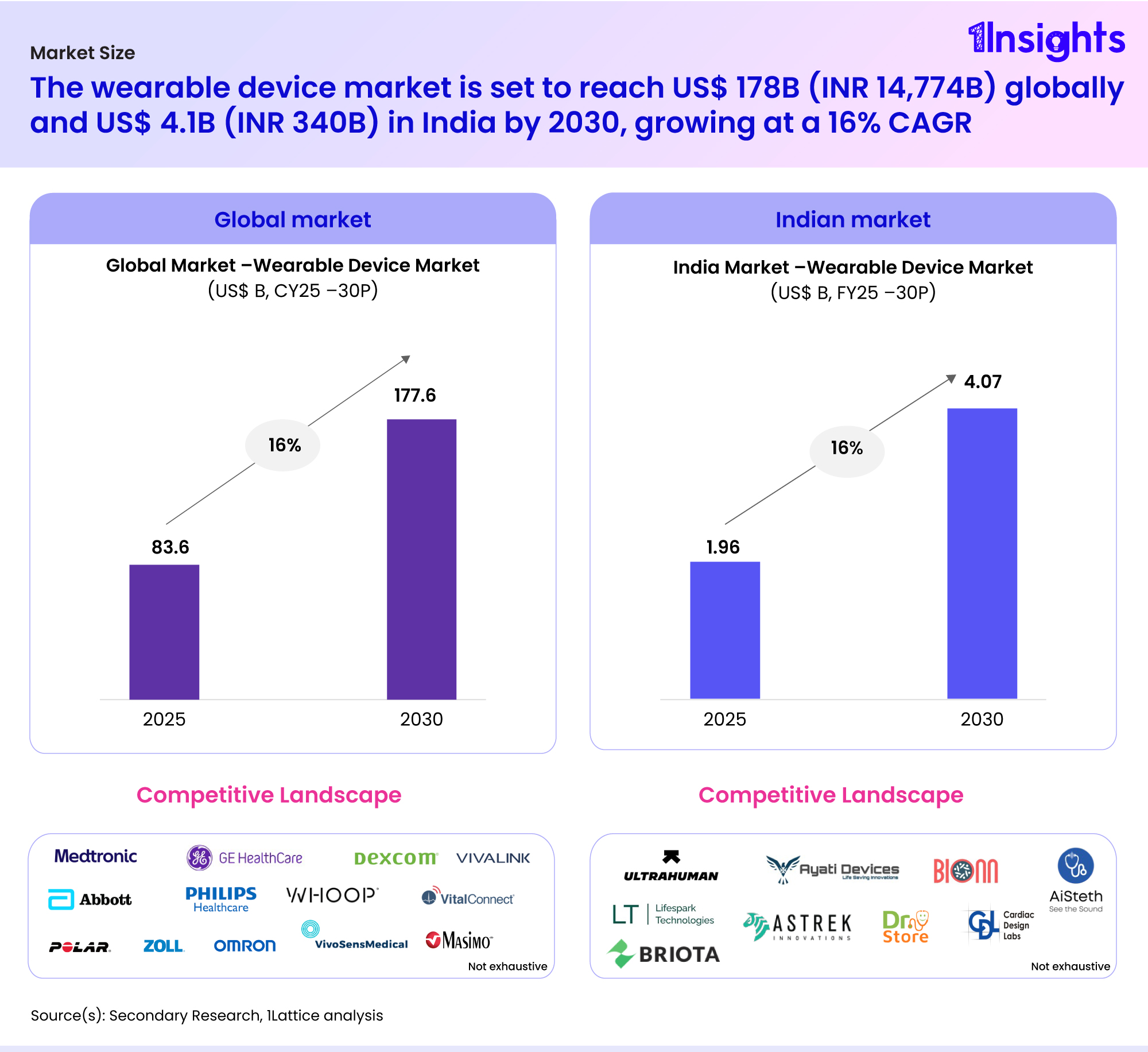 The Indian wearable device market is being propelled by multiple innovative applications addressing real-world healthcare needs. Solutions like Lifespark Technologies’ WALK device are enabling fall prevention in elderly care by combining AI with motion sensors to provide real-time alerts and reduce hospitalizations. Similarly, Cardiac Design Labs’ Padma Rhythms is advancing cardiac monitoring through wearable ECG patches that deliver clinical-grade accuracy and AI-driven arrhythmia detection, reducing the need for frequent hospital visits. On the consumer side, Ultrahuman’s Ring AIR exemplifies the shift toward preventive wellness, using temperature, SpO2, and metabolic tracking to empower individuals with personalized insights for fitness and recovery. Together, these devices highlight India’s growing strength in health-tech innovation across elder care, chronic disease management, and lifestyle optimization.
On the other hand, the sector continues to face significant adoption barriers. These include regulatory complexity, where navigating multi-country compliance slows market entry; device limitations, such as short battery life, high cost, and lack of interoperability; and sustainability concerns, with rising e-waste and limited product lifespans presenting long-term risks. Addressing these challenges through collaborative R&D, policy support, and ecosystem partnerships will be essential for scaling India’s wearable healthcare industry and unlocking its potential impact on population health.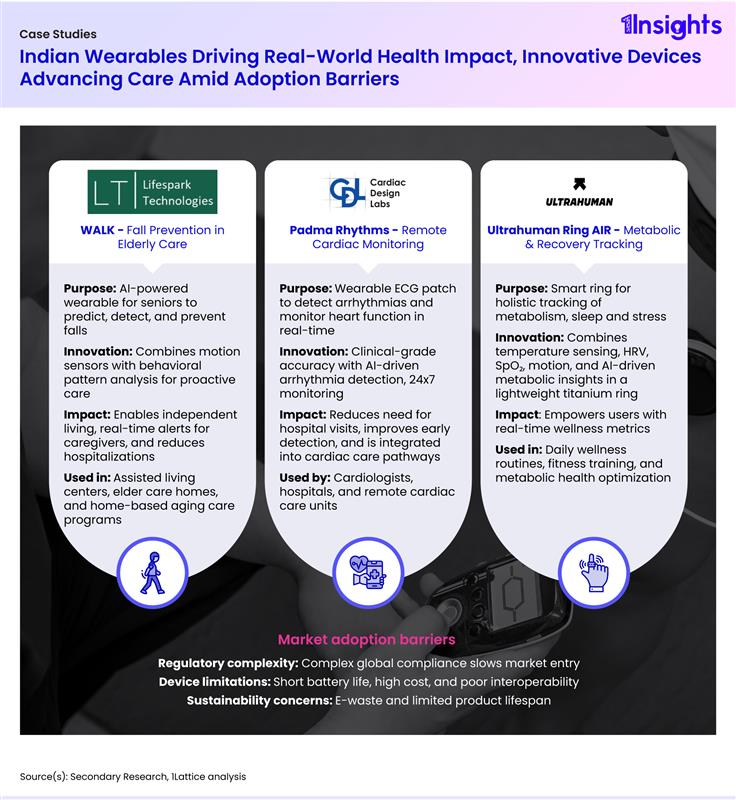
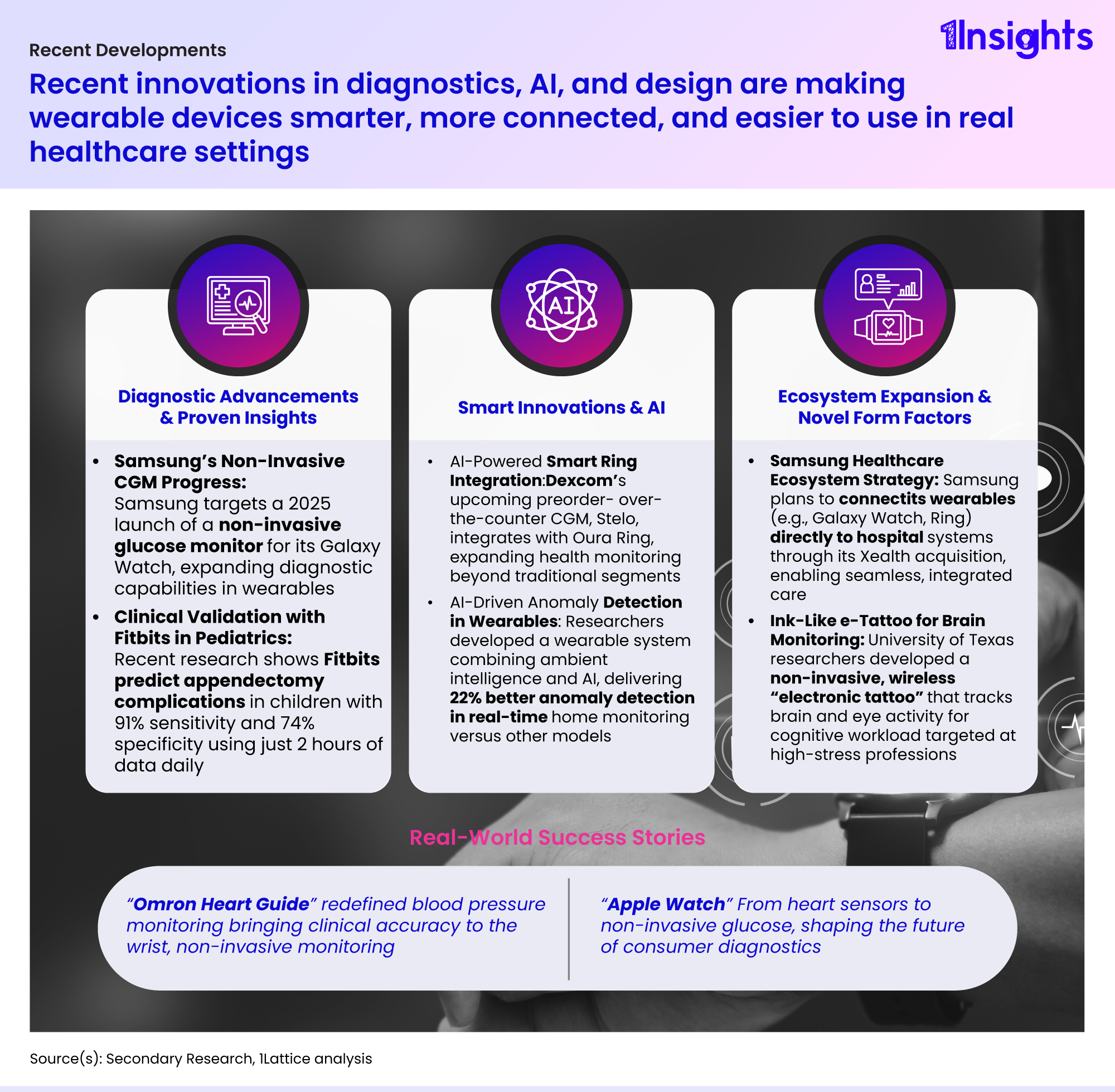
Recent innovations are transforming the wearable device landscape, making them smarter, more connected, and easier to use in real healthcare settings. Diagnostic advancements such as Samsung’s upcoming non-invasive glucose monitor for the Galaxy Watch and Fitbit’s clinical validation in paediatrics are expanding the scope of wearables from wellness into clinically validated healthcare applications. These developments highlight how wearables are increasingly capable of delivering real-time diagnostic insights with high sensitivity and specificity.
Complementing this, AI-driven innovations are reshaping device intelligence. Dexcom’s smart ring integration with Oura extends continuous glucose monitoring into consumer wearables, while AI-powered anomaly detection in wearables has demonstrated 22% better accuracy in real-time home monitoring compared to existing systems. Beyond diagnostics, ecosystem expansion is creating new healthcare touchpoints. Samsung’s healthcare strategy integrates wearables directly with hospital systems, and novel form factors such as wireless electronic tattoos developed by the University of Texas open new frontiers in brain and cognitive workload monitoring.
Real-world success stories like the Omron Heart Guide, which redefined blood pressure monitoring at the wrist, and the Apple Watch, which continues to pioneer non-invasive sensing capabilities, underscore the potential of wearables to transform everyday healthcare. Together, these innovations are paving the way for wearables to evolve into trusted, clinically relevant tools shaping the future of preventive and personalized medicine.