
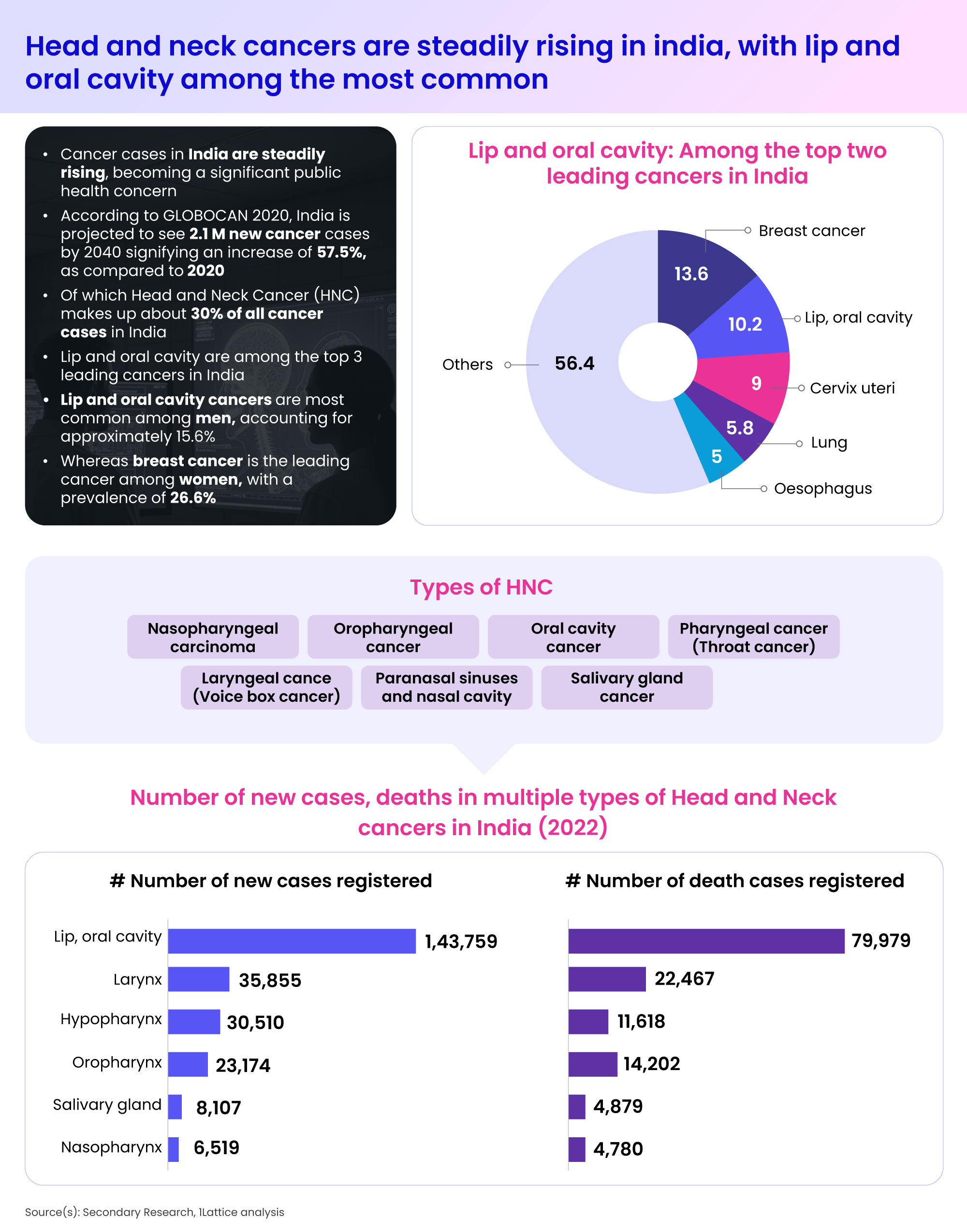
According to GLOBOCAN 2020, cancer cases in the country are projected to reach 2.1 million by 2040, marking a 57.5% increase from 2020. HNC accounts for roughly 30% of all cancer cases in India, with lip and oral cavity cancers being the most common among men.
In 2022, over 1.4 lakh new cases of HNC were registered, and nearly 80,000 deaths occurred due to these cancers.
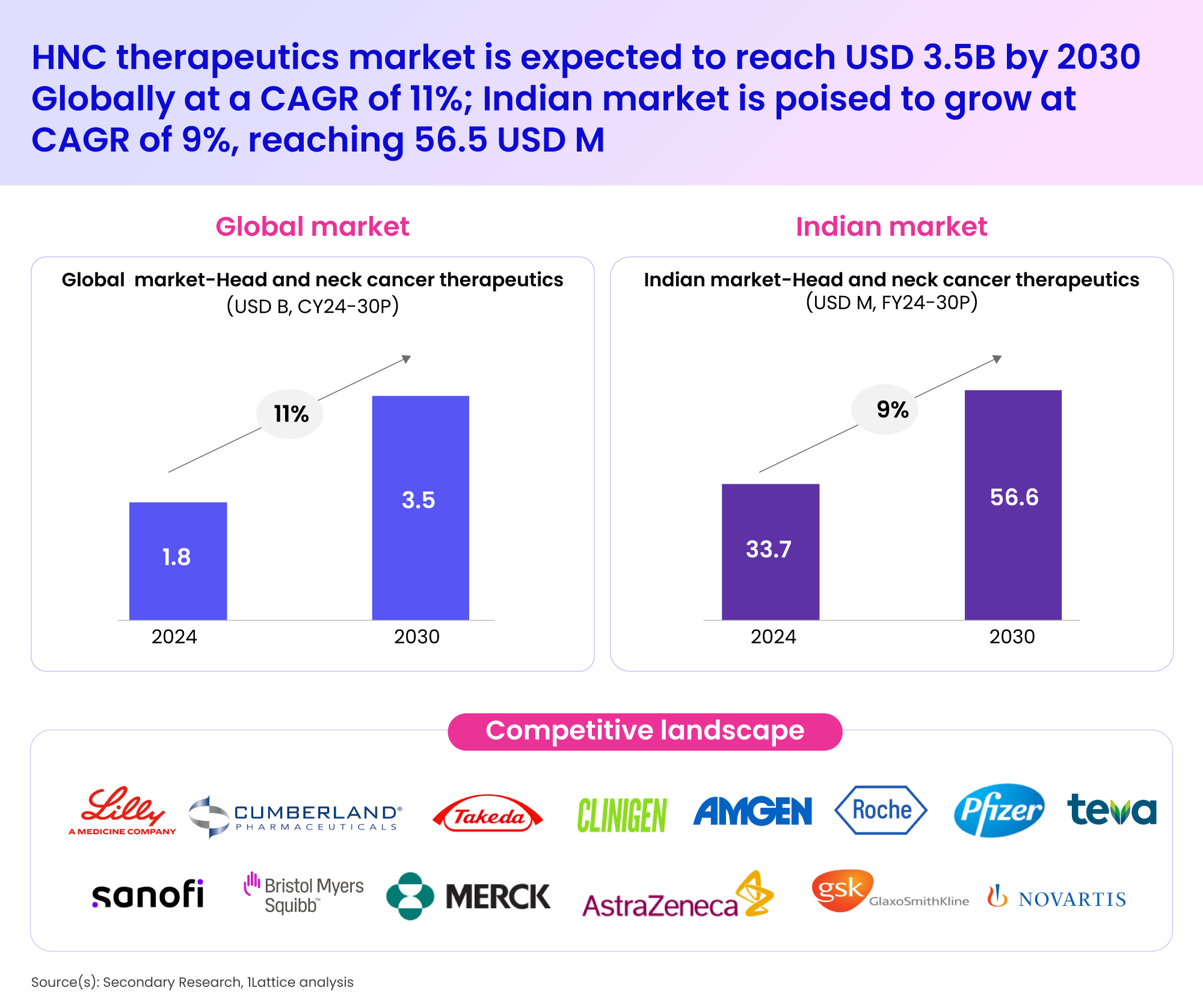
The Indian HNC therapeutics market is expected to grow at a 9% CAGR, rising from USD 33.7M in 2024 to USD 56.6M by 2030, while the global market is projected to grow at an 11% CAGR to reach USD 3.5B in the same period.
Key players driving innovation globally include Pfizer, Novartis, AstraZeneca, Merck, Roche, Amgen, Takeda, Sanofi, Lilly, and Teva, among others.
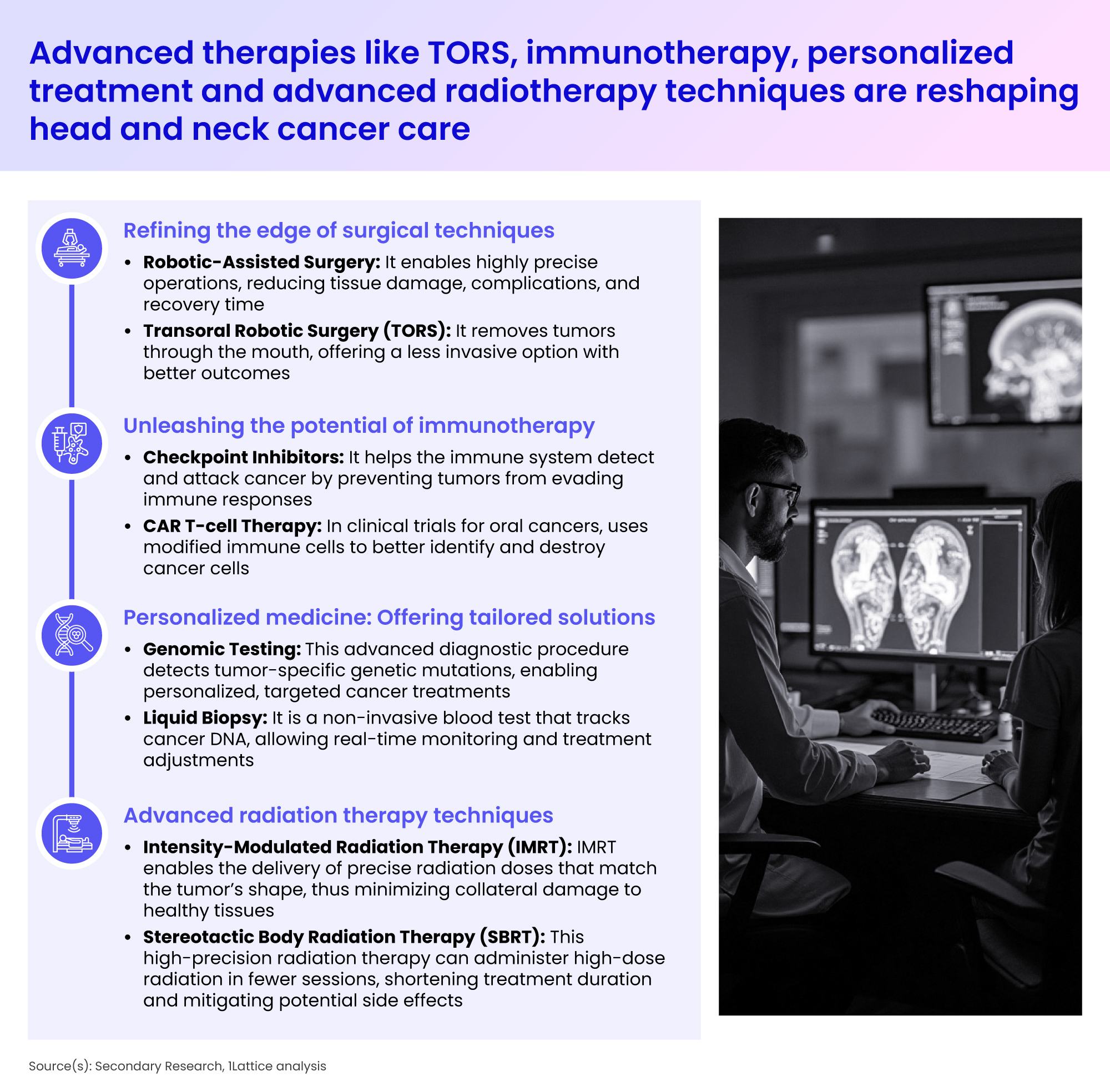
Minimally Invasive Surgical Advancements:
Surge in Robotic-Assisted Surgery and Transoral Robotic Surgery (TORS)
TORS is enabling highly precise tumor removal with less tissue damage, shorter hospital stays, and faster recovery
Next-Gen Immunotherapies:
Checkpoint inhibitors are transforming treatment by helping the immune system target cancer cells more effectively. CAR T-cell therapies, still in trials for HNC, show potential in enhancing immune targeting of oral cancers
Personalized & Precision Oncology:
Widespread adoption of genomic testing and liquid biopsy is enabling real-time, mutation-specific treatment strategies-marking a shift toward precision medicine
Radiation Therapy Reimagined:
Techniques like IMRT (Intensity-Modulated Radiation Therapy) and SBRT (Stereotactic Body Radiation Therapy) are improving accuracy in radiation delivery, reducing side effects, and enhancing tumor control
Noteworthy Trends in India
Adoption of Robotic Surgery
A study in the Indian Journal of Cancer reports a 30% rise in robotic-assisted surgeries for HNC over five years, signaling broader acceptance among surgical oncologists
Surge in Immunotherapy Utilization
An ISHNO survey highlights a 40% growth in immunotherapy use for treating advanced HNC over the past two years, particularly checkpoint inhibitors
Proton Therapy Gains Momentum
Data from Tata Memorial Hospital shows 20% improved survival rates using proton therapy versus conventional radiation, reinforcing its role in managing complex HNC cases
Multidisciplinary Care Improves Outcomes
NCRP data shows 25% higher survival rates for patients treated through multidisciplinary teams versus isolated specialist care, emphasizing integrated treatment approaches
Imaging Accuracy Enhances Staging & Planning
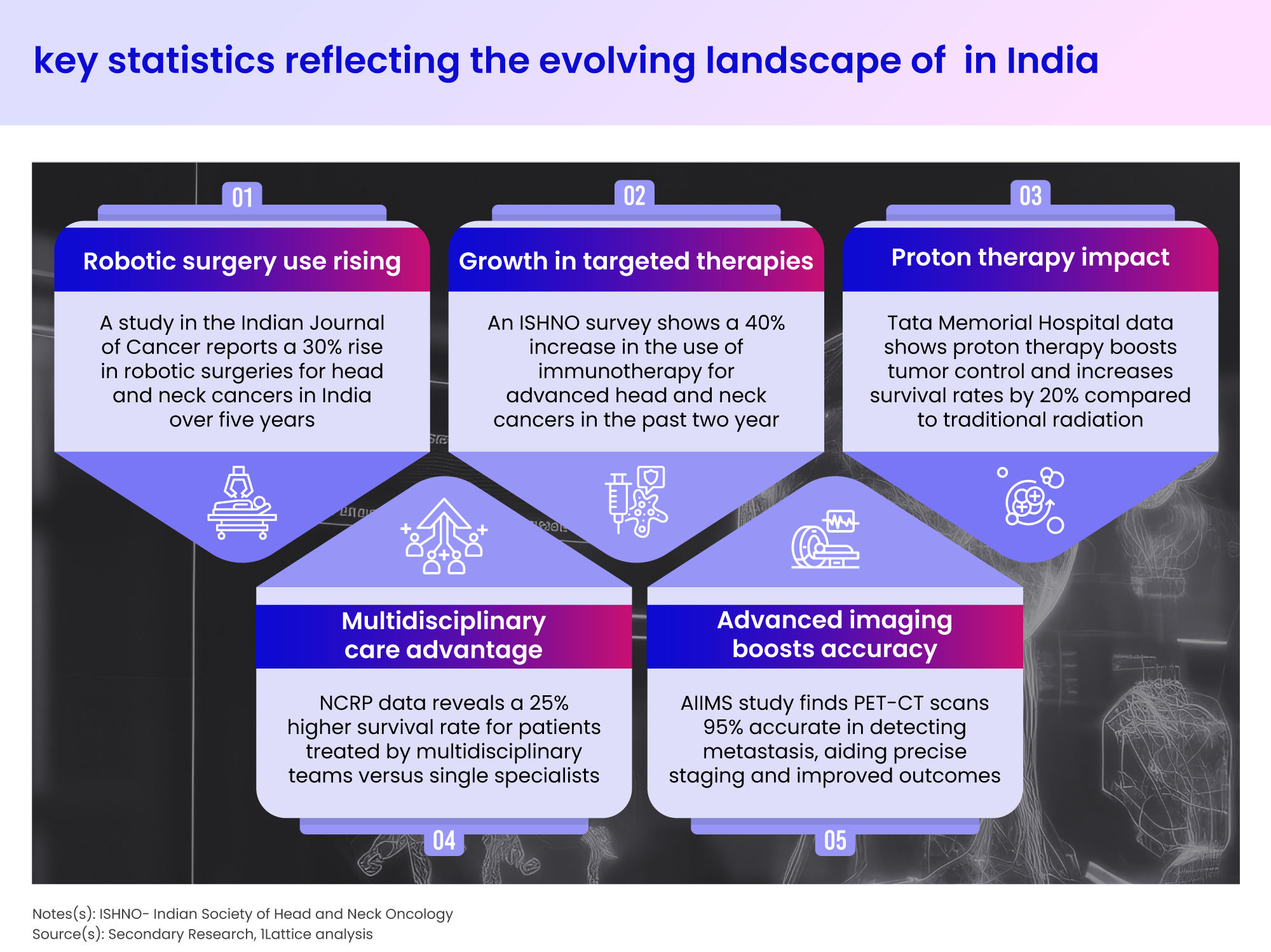
An AIIMS study found PET-CT scans to be 95% accurate in detecting metastasis, leading to better staging precision and tailored treatment strategies