
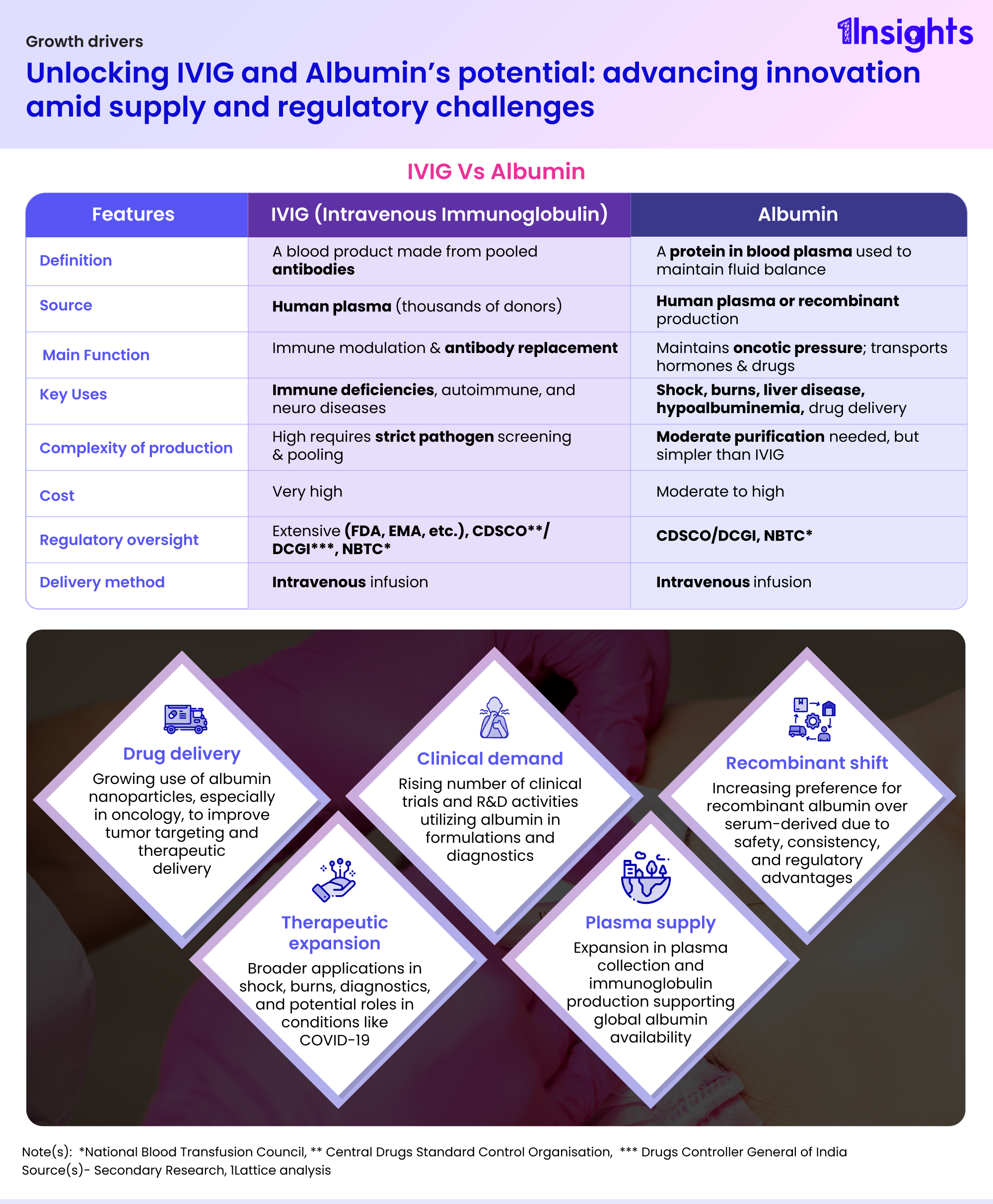
IVIG is derived from pooled human plasma, functions in immune modulation and antibody replacement, used mainly for immune deficiencies and autoimmune or neurological disorders. Whereas Albumin is a plasma protein produced from human or recombinant sources, it maintains oncotic pressure and supports drug transport, with key applications in shock, burns, liver disease, and hypoalbuminemia. IVIG production is complex and costly, requiring strict pathogen screening and extensive regulatory oversight, while albumin manufacturing is comparatively simpler and moderately priced. Growth in both markets is driven by expanding drug delivery applications, rising clinical demand, a shift toward recombinant formulations, therapeutic expansion across multiple conditions, and increasing plasma supply to support global availability.
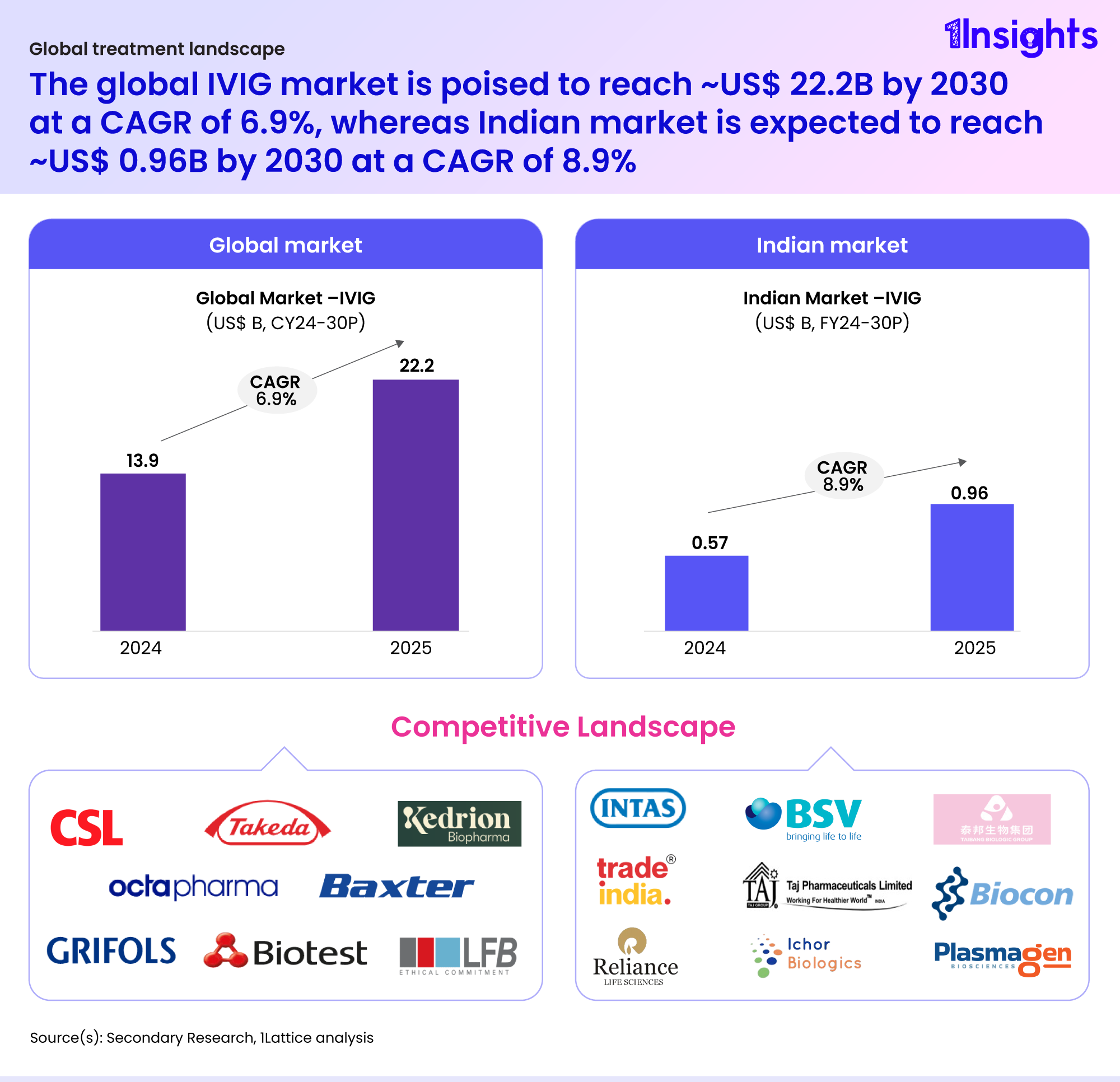
 The global IVIG (Intravenous Immunoglobulin) market is projected to grow from US$ 13.9B in 2024 to ~US$ 22.2B by 2030, reflecting a CAGR of 6.9%. In comparison, the Indian IVIG market, though significantly smaller, is expected to grow at a faster pace. The plasma therapy market in India is expected to grow from US$ 0.57B in 2024 to around US$ 0.96B by 2030, with a CAGR of 8.9%. The majority of global market share is dominated by key players, including Baxter, Grifols, Octapharma, CSL, Takeda, Biotest, Kedrion Biopharma, and LFB. The Indian market is dominated by key players like INTAS, BSV, Biocon, Trade India, Reliance Life Sciences, Taj Pharmaceuticals, Ichor Biologics, and Plasmagen, etc.
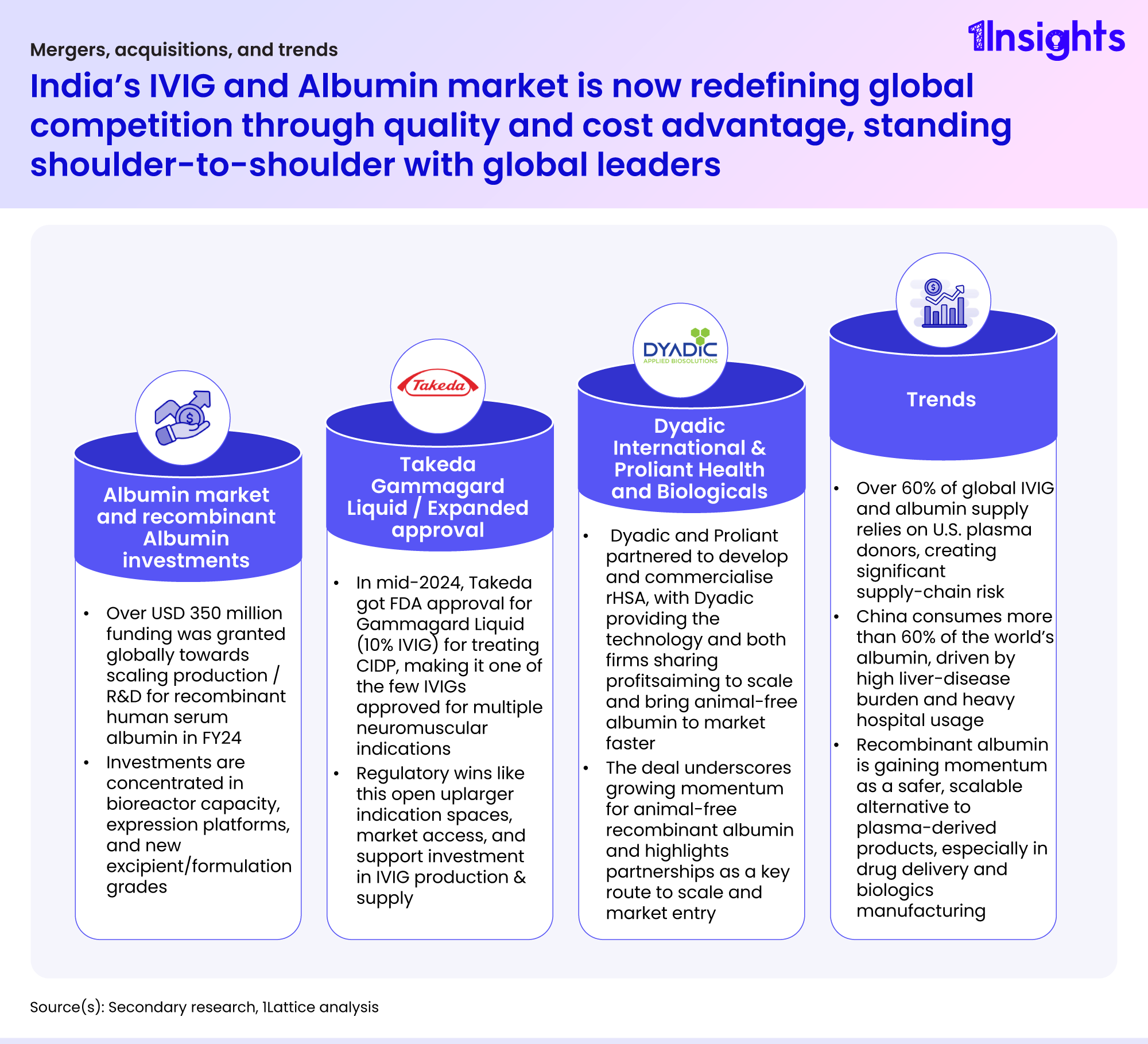
 India's market is evolving rapidly, aligning itself with global leaders through advancements in quality and cost efficiency. In FY24, over US$ 350M was invested globally to scale production and R&D for recombinant human serum albumin, focusing on bioreactor capacity, expression platforms, and formulation innovations. In mid-2024, Takeda received FDA approval for Gammagard Liquid (10% IVIG) to treat CIDP, supporting broader use across neuromuscular conditions and encouraging further investment in IVIG production. Additionally, Dyadic International and Proliant Health & Biologicals entered a collaboration in June 2024 to develop and commercialize recombinant albumin, reflecting a growing shift towards animal-free, scalable solutions. Industry trends show a heavy reliance on U.S. plasma donations for IVIG and albumin, posing supply risks, while China remains the top consumer due to high liver disease rates and hospital use. As a result, recombinant albumin is gaining ground as a safer, scalable alternative in biologics and drug delivery.
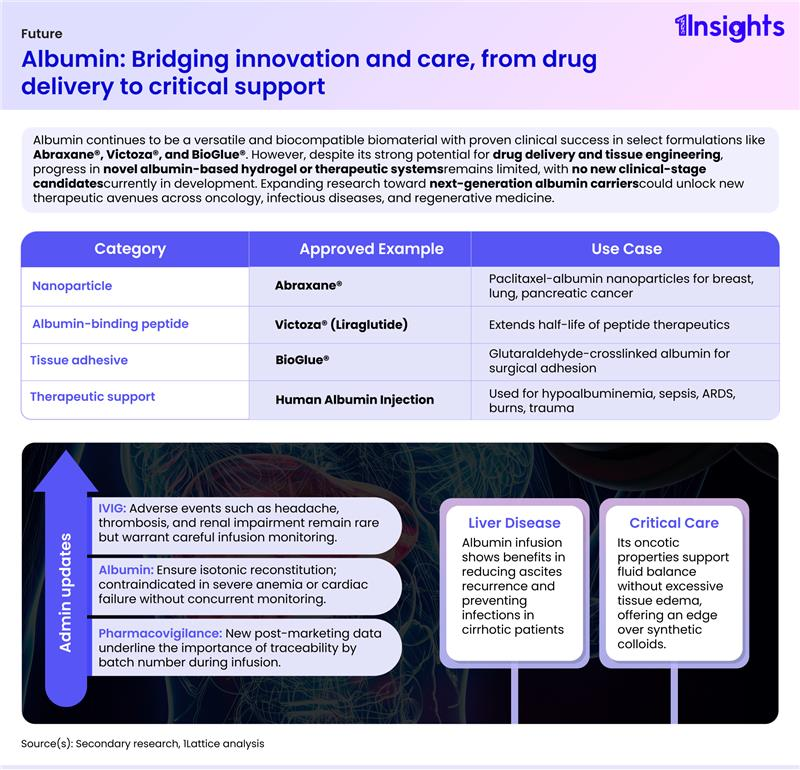
 Albumin is emerging as a versatile and biocompatible biomaterial with successful clinical applications in drug delivery and tissue engineering. Approved formulations like Abraxane® (for cancer treatment), Victoza® (to extend peptide therapeutic half-life), BioGlue® (for surgical adhesion), and Human Albumin Injection (for treating hypoalbuminemia, sepsis, burns, and trauma) demonstrate its broad utility. However, despite its potential, innovation in albumin-based hydrogels or therapeutic systems remains limited, with no new clinical-stage candidates yet. Albumin’s role is especially critical in liver disease, where it reduces ascites and infections, and in critical care, where its oncotic properties help maintain fluid balance better than synthetic colloids. Admin updates highlight the need for careful IVIG infusion monitoring due to rare adverse events, appropriate albumin use in specific conditions, and improved pharmacovigilance to ensure traceability during infusions.
Overview