What happens when a market growing at 21% a year meets one of the world's largest healthcare systems? India's surgical robotics sector is about to find out.
Executive Summary
India's surgical robotics market is on track to nearly triple from US$ 1.5B in FY26 to US$ 4B by FY31P growing at a 21% CAGR, faster than the global market's own strong trajectory. Once reserved for the most complex procedures, robotic-assisted surgery is rapidly expanding into cardiac, urology, gynecology, orthopedics, and general surgery. This report examines the market outlook, key growth drivers, recent investments, and the barriers that will determine how quickly this technology moves from premium hospitals to mainstream care.
Robotic-assisted surgery is reshaping modern surgical care by combining surgeon expertise with advanced robotic precision to improve clinical outcomes across a wide range of specialties. The technology enables minimally invasive procedures through enhanced visualization, greater instrument dexterity, and improved control, resulting in smaller incisions, reduced blood loss, lower postoperative pain, shorter hospital stays, and faster patient recovery. While initially adopted for complex procedures, robotic systems are now being increasingly utilized across cardiac, urology, gynecology, orthopedics, and general surgery, with leading platforms from global and domestic players expanding access to robotic-assisted care.
Overview
Robotic surgery uses computer-controlled instruments enabling minimally invasive procedures, faster recovery, reduced pain and diverse applications
- Robotic surgery or robot-assisted surgery is a type of minimally invasive surgery that allows surgeons to perform surgery using very small tools attached to a robotic arm. The surgeon controls the robotic arm with a computer
This cutting-edge approach uses specialized technology that centres on three key elements: the surgeon’s console, the patient’s cart fitted with mechanical arms holding tiny surgical instruments, and a high-definition 3D camera that delivers magnified, immersive views of the operative field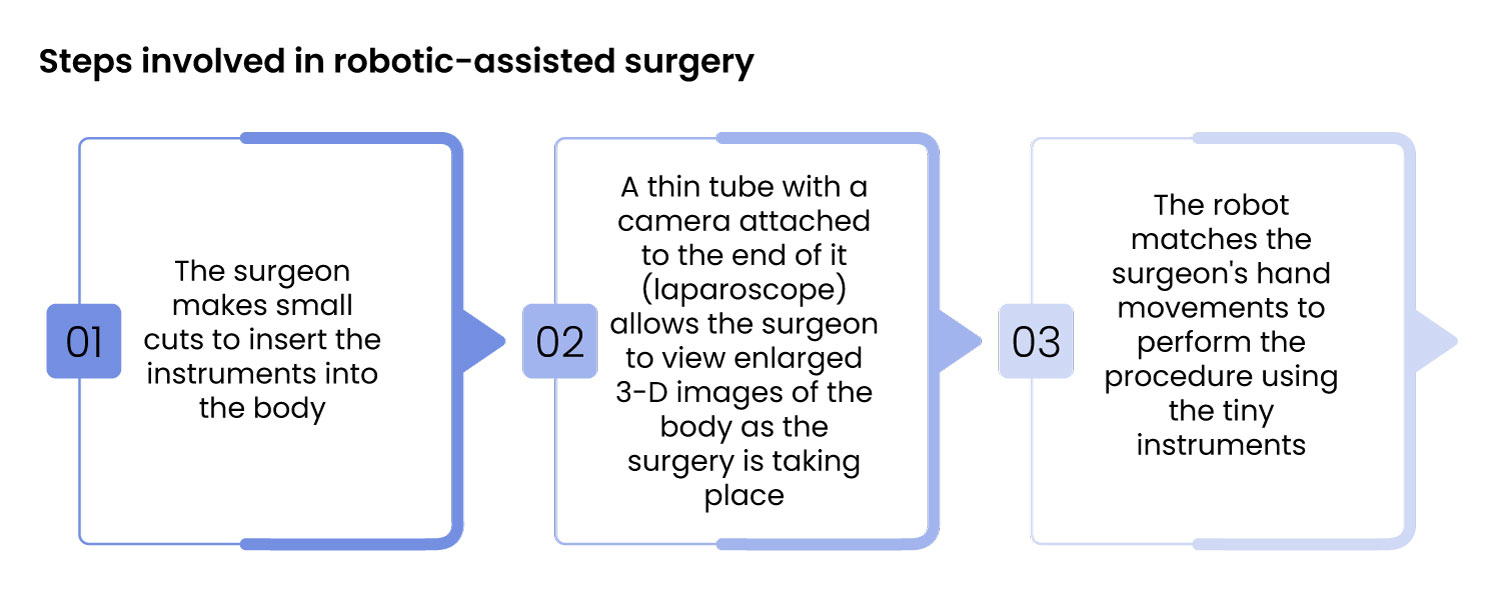
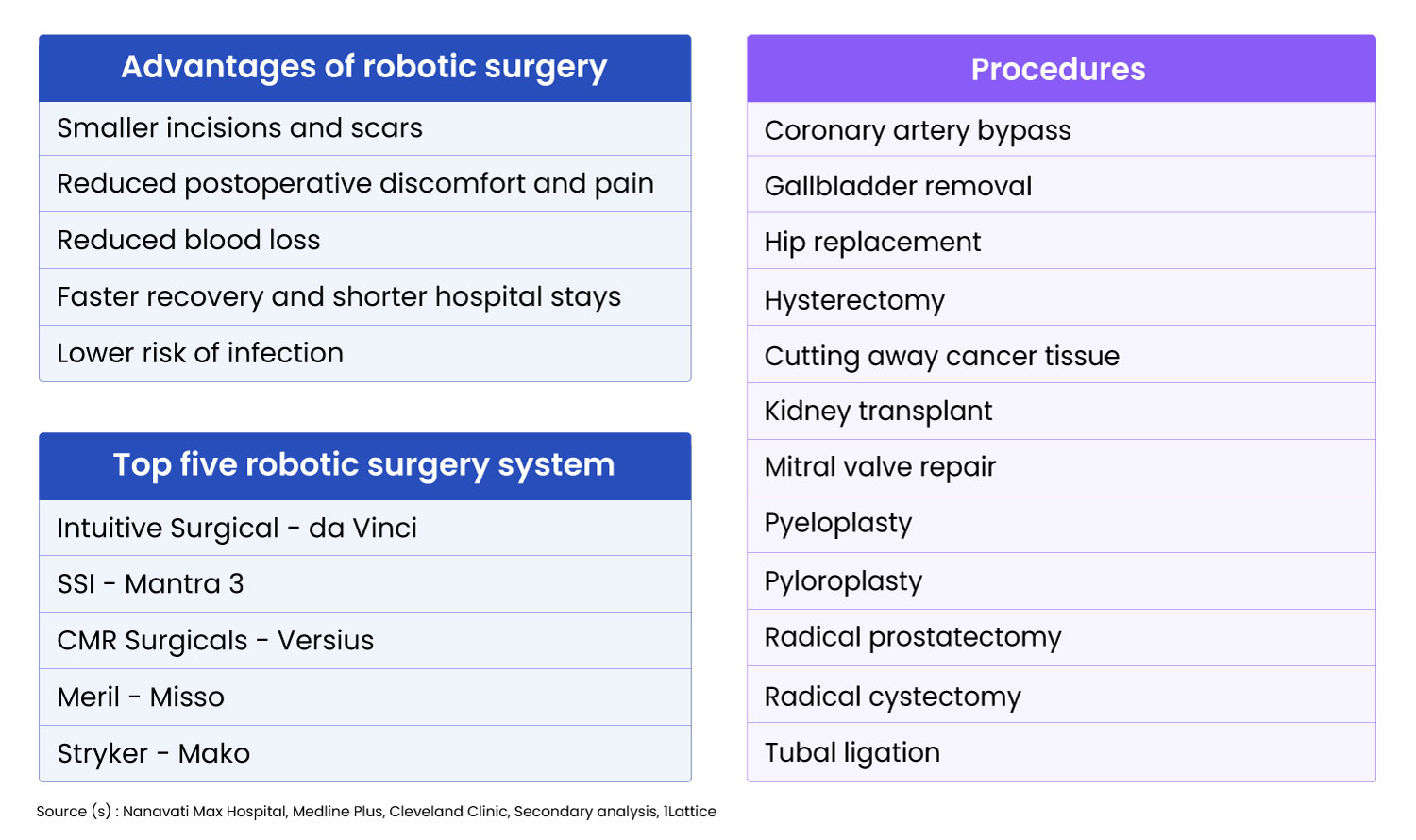
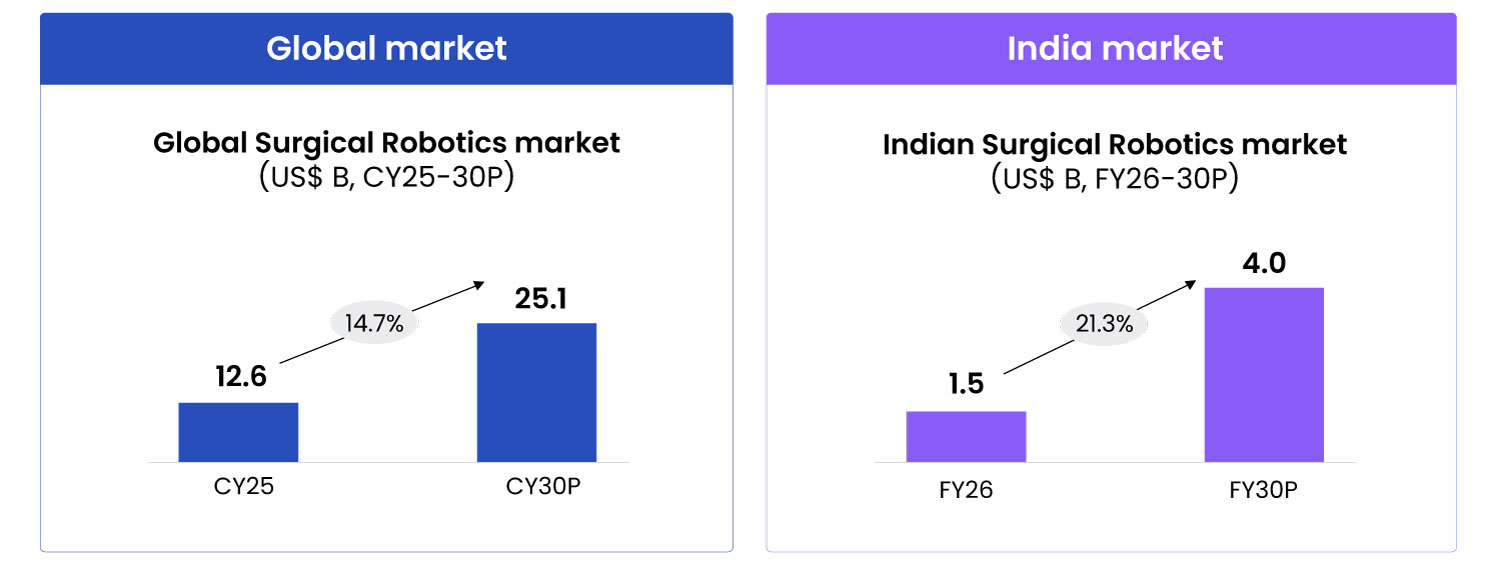
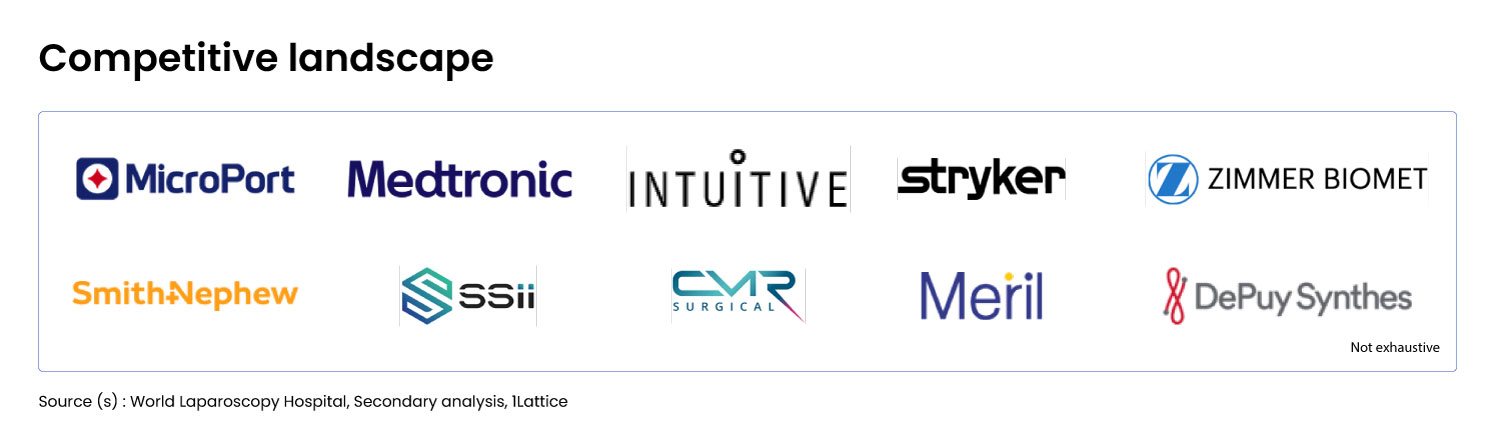
The global surgical robotics market is witnessing robust growth, driven by increasing demand for minimally invasive procedures, rapid technological advancements, and expanding investments in healthcare infrastructure. While the global market is projected to grow from US$12.6B in CY25 to US$25.1B by CY30P, India is expected to outpace global growth, expanding from US$1.5B in FY26 to US$4.0 B by FY31 at a 21.3% CAGR. The competitive landscape is led by global players such as Intuitive Surgical, Stryker, Medtronic, Zimmer Biomet, DePuy Synthes, Smith+Nephew, and MicroPort, while Indian companies including Meril, SS Innovations (SSIi), and CMR Surgical are strengthening their presence through indigenous innovation, cost-effective solutions, and expanding clinical adoption.
Market size
Global surgical robotics grows from ~US$ 13B in CY25 to ~US$ 25B in CY30P, while India expands from US$ 1.5B in FY26 to US$ 4B in FY31P with ~21% CAGR
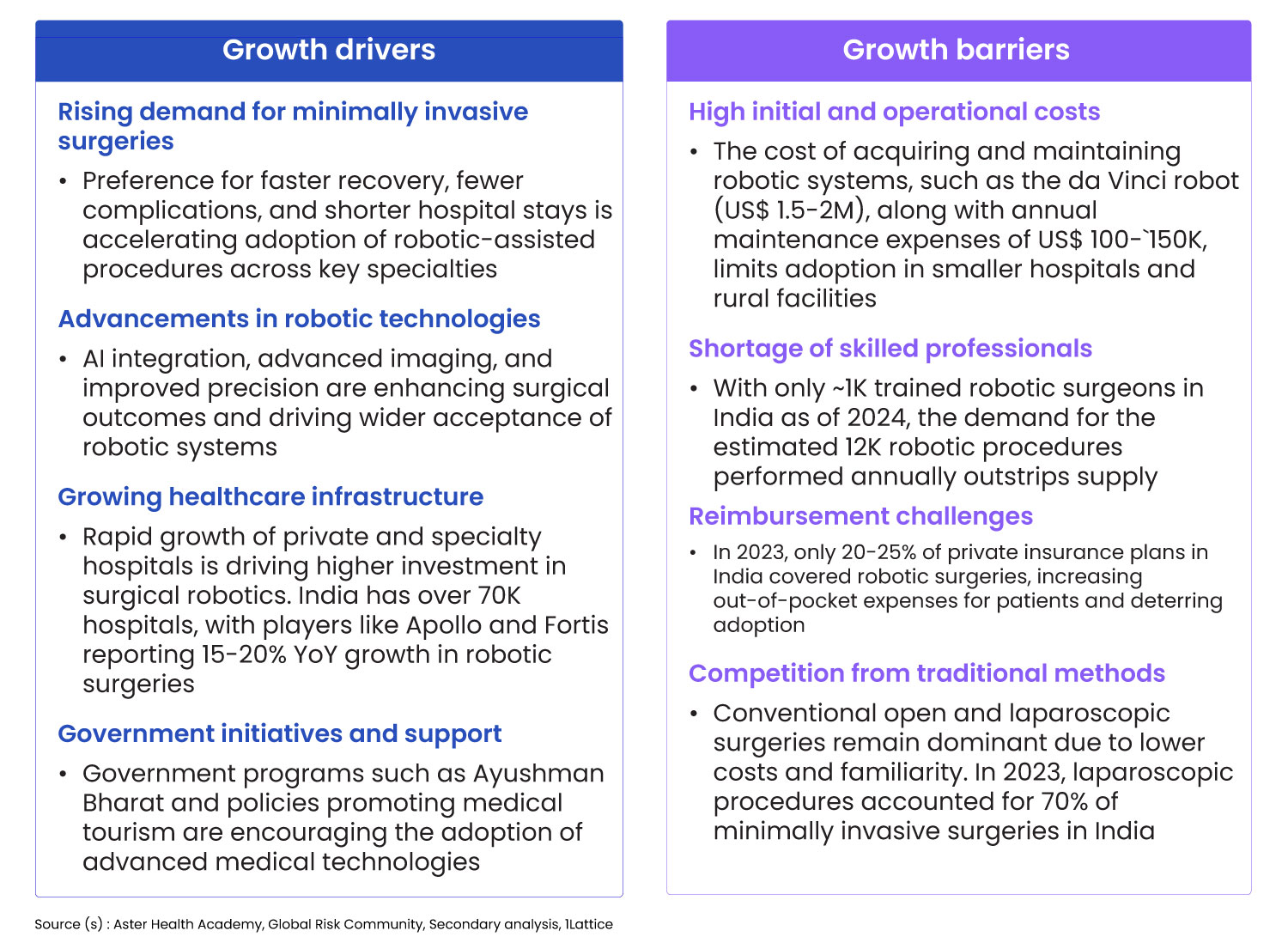
The future growth of surgical robotics in India will depend on how effectively the ecosystem balances innovation with accessibility. While increasing clinical confidence, expanding hospital investments, and next-generation robotic platforms are creating strong momentum, widespread adoption will require overcoming economic and operational hurdles. Improving affordability through indigenous manufacturing, expanding surgeon training programs, strengthening reimbursement coverage, and enhancing infrastructure in tier II and III cities will be critical to unlocking the next phase of market growth. As these barriers are gradually addressed, robotic-assisted surgery is expected to transition from a premium offering to a more mainstream surgical modality across India
Growth Drivers and Barriers
Rising demand, technological advancements and infrastructure drive growth, while high costs, limited skilled workforce and reimbursement challenges restrain growth
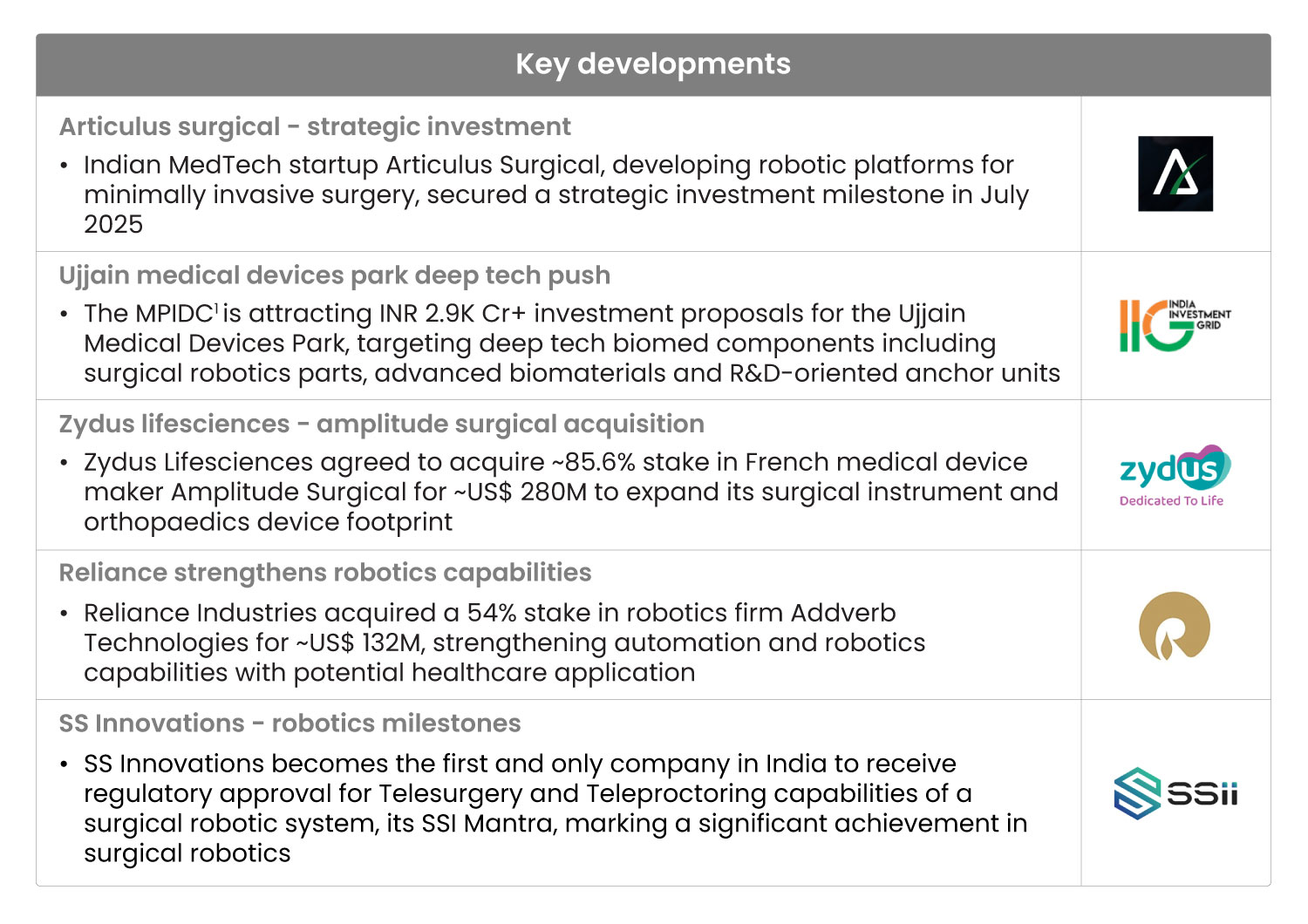
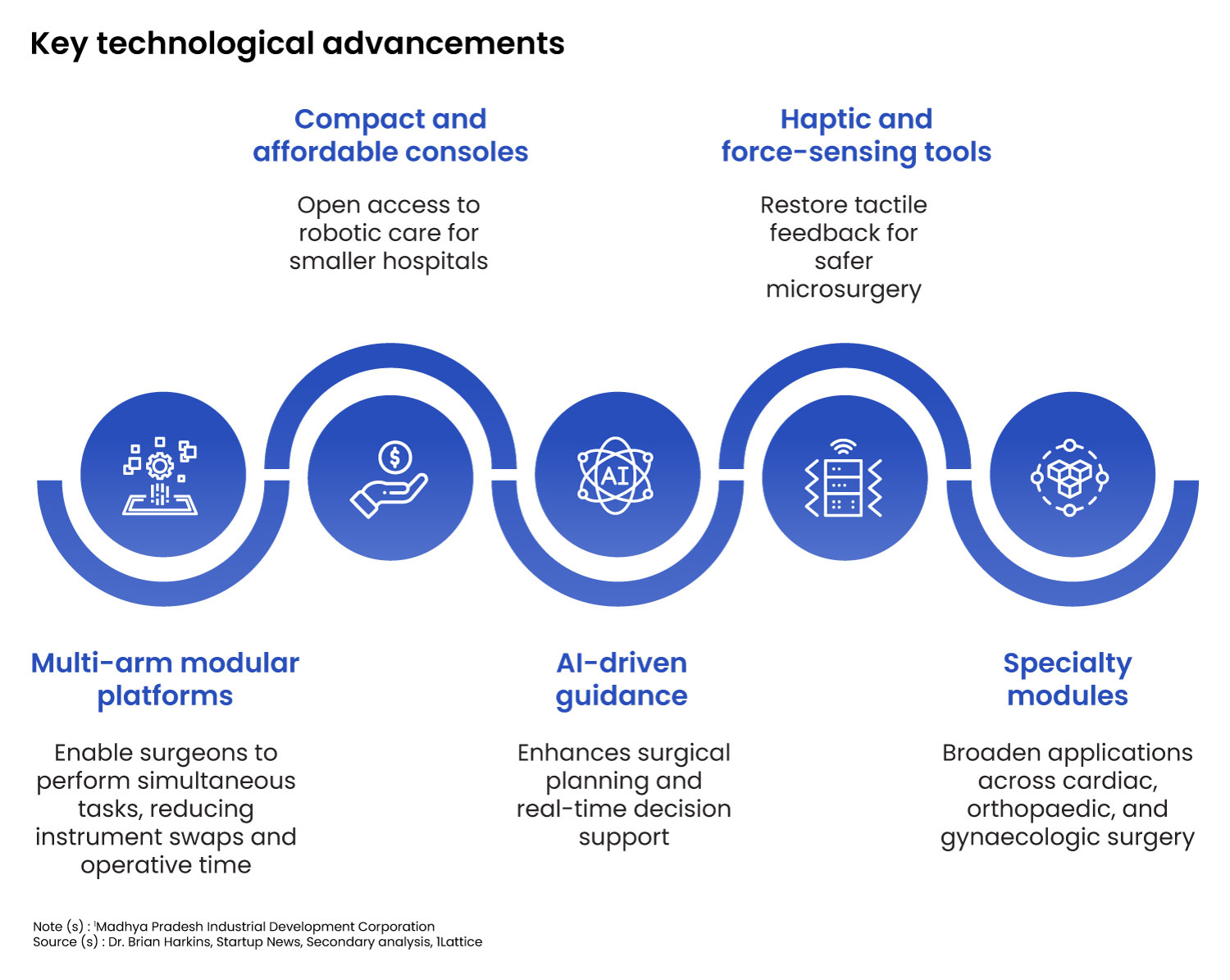
India's surgical robotics ecosystem is gaining momentum through strategic investments, acquisitions, and technological innovation. Key developments include Articulus Surgical's strategic investment (July 2025) of over INR 2.9K crore in investment proposals for the Ujjain Medical Devices Park; Zydus Lifesciences' ~US$ 280M acquisition of an 85.6% stake in Amplitude Surgical; and Reliance Industries' ~US$ 132M investment in Addverb Technologies. Additionally, SS Innovations' regulatory approval for telesurgery and teleproctoring marks a major milestone. Together with advancements in AI-enabled guidance, modular platforms, and affordable robotic systems, these developments are accelerating innovation and strengthening India's position in the global surgical robotics market.
Key developments and technological advancements
Indian surgical robotics advances via investments, acquisitions, medical device sparks, and innovations alongside modular, AI-driven and affordable technologies