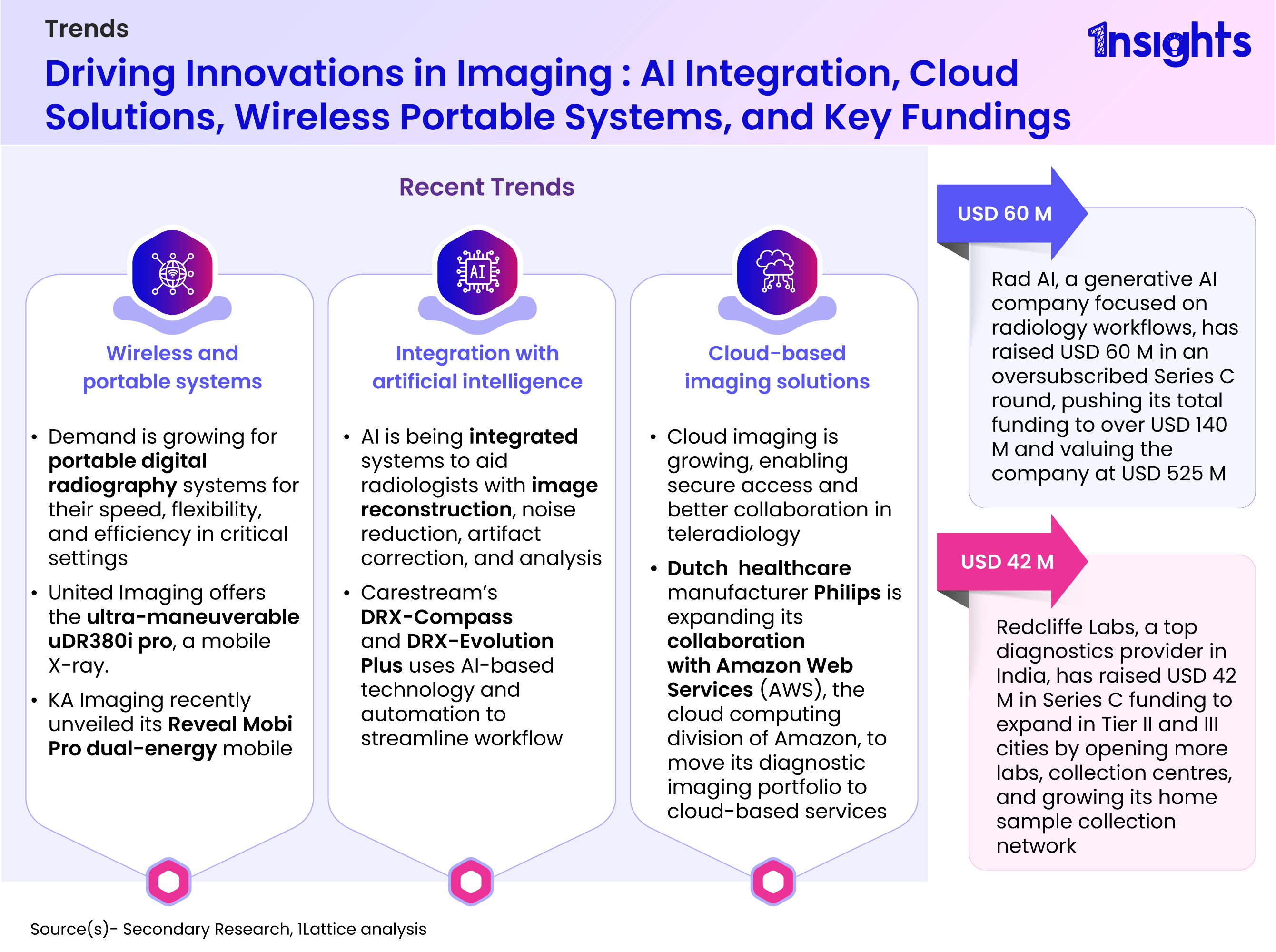
Radiology plays a crucial role in modern healthcare by offering non-invasive, advanced imaging techniques that aid in the detection, diagnosis, and monitoring of various medical conditions with speed and accuracy.
Radiology's impact is further enhanced by AI-powered Remote Patient Monitoring (RPM), enabling real-time tracking and reducing the need for frequent in-person visits through remote health monitoring.
India has registered a total of 1,48,198 radiology devices, with Maharashtra leading the adoption at 20,590 registrations, followed by Tamil Nadu (15,267) and Uttar Pradesh (12,236). These states reflect the highest uptake of diagnostic tools, marking a strong shift toward advanced healthcare infrastructure across the country
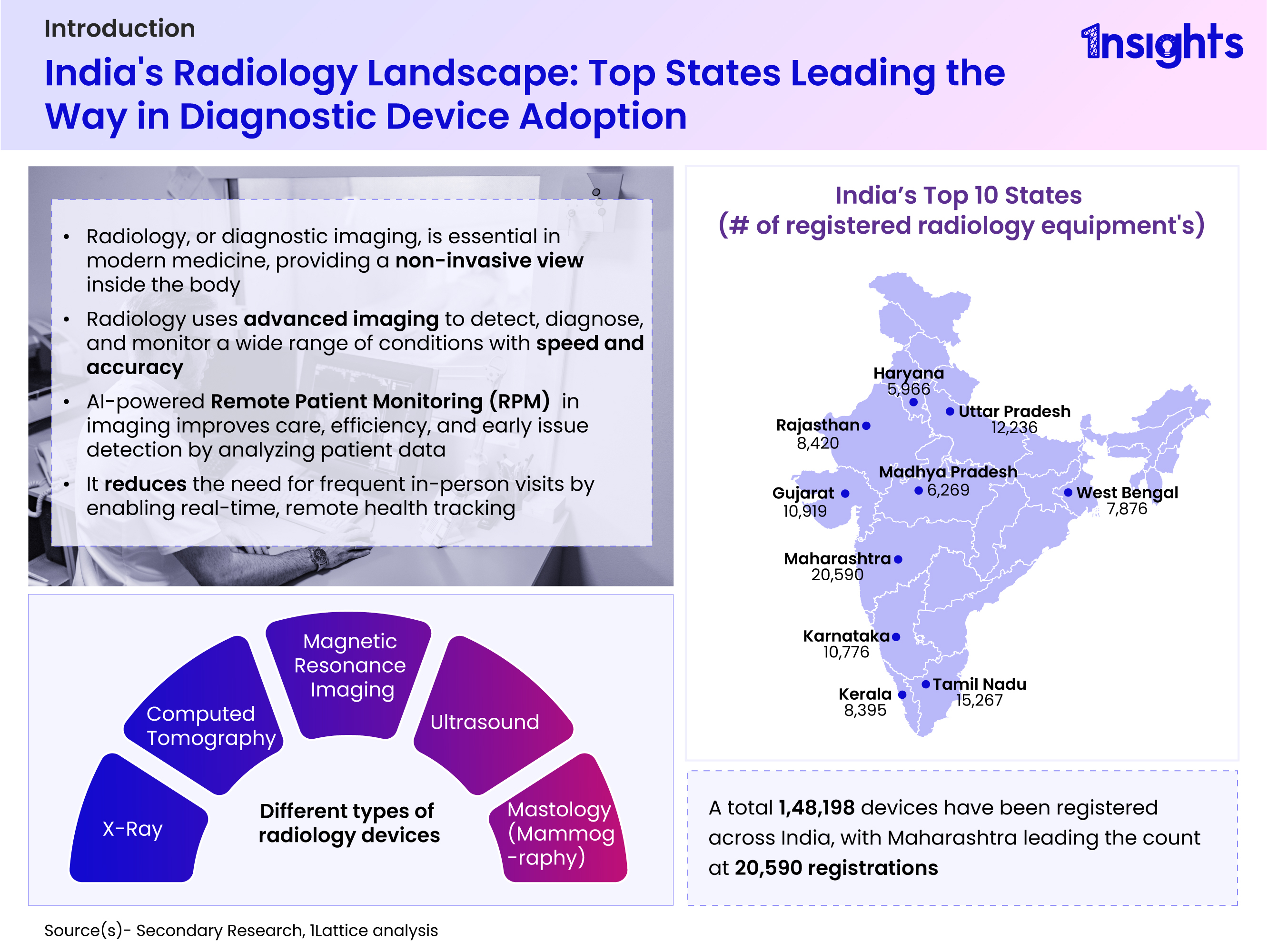
Advanced imaging technologies are propelling market expansion, but challenges related to cost, access, and safety persist.
Growth drivers include –
• Technology Advancements – Innovations like digital radiography and 3D/4D ultrasound enhance image quality and reduce exam time.
• Increasing Prevalence of Chronic Diseases – Rising cases of cancer, cardiovascular conditions, and other chronic illnesses are driving demand for early diagnostic imaging.
• Government Initiatives – Schemes like Ayushman Bharat and the National Digital Health Mission (NDHM) are promoting affordability and access to diagnostic imaging in underserved regions.
Barriers include –
• High Costs of Imaging Equipment – Expensive MRI and CT machines hinder adoption, especially in smaller healthcare facilities.
• Radiation Exposure – Techniques like X-rays and CT scans raise concerns due to ionizing radiation exposure, despite minimal risk.
• Limited Access to Imaging Technologies – While urban centers benefit from cutting-edge imaging, rural areas face limited availability, affecting equitable healthcare delivery
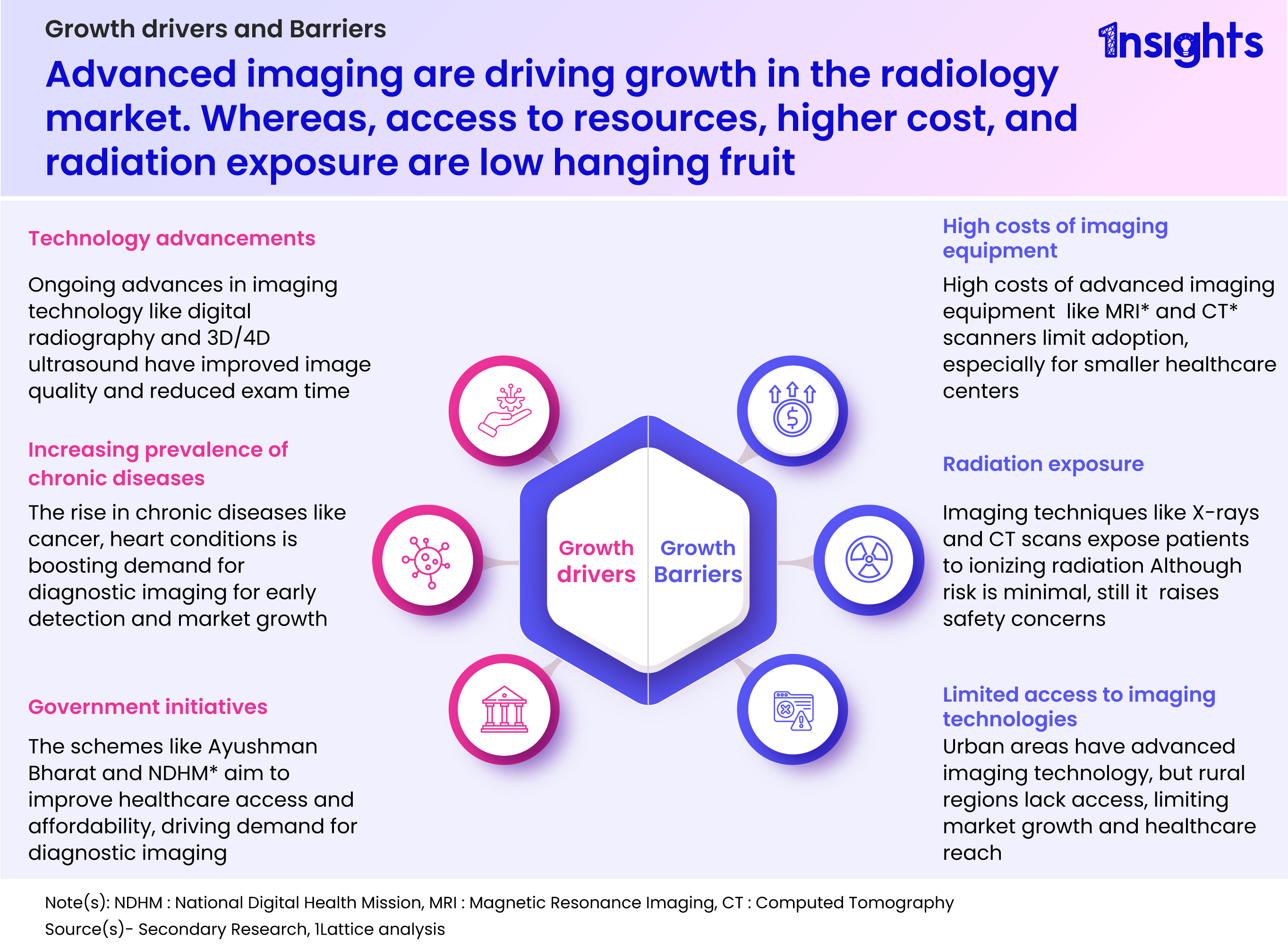
The radiology equipment market is poised for strong growth, with the global market projected to rise from USD 34 billion in 2025 to USD 43 billion by 2030, reflecting a 5% CAGR. In comparison, the Indian market is expected to grow from USD 7.1 billion in FY2025 to USD 13.5 billion in FY2030, registering a higher 10% CAGR. This growth is being driven by increasing healthcare demand, a growing disease burden, and expanding access to diagnostic services across regions.
The competitive landscape is a blend of global giants, regional players, and emerging companies. Major global leaders include Siemens Healthineers, GE Healthcare, Philips, Canon, Fujifilm, and Samsung, all with a strong presence in diagnostic imaging technologies. Other key contributors to the market include Medtronic, United Imaging, Hologic, Toshiba, and BPL Medical, offering a range of advanced imaging solutions. Additionally, several emerging and niche players such as Iatome, Ziehm Imaging, Prognoss, Osstem, Adonis, and Gnatus are gaining traction with innovative and cost-effective products. As competition intensifies, success in this market will depend on technological innovation, affordability, and expanding geographic reach
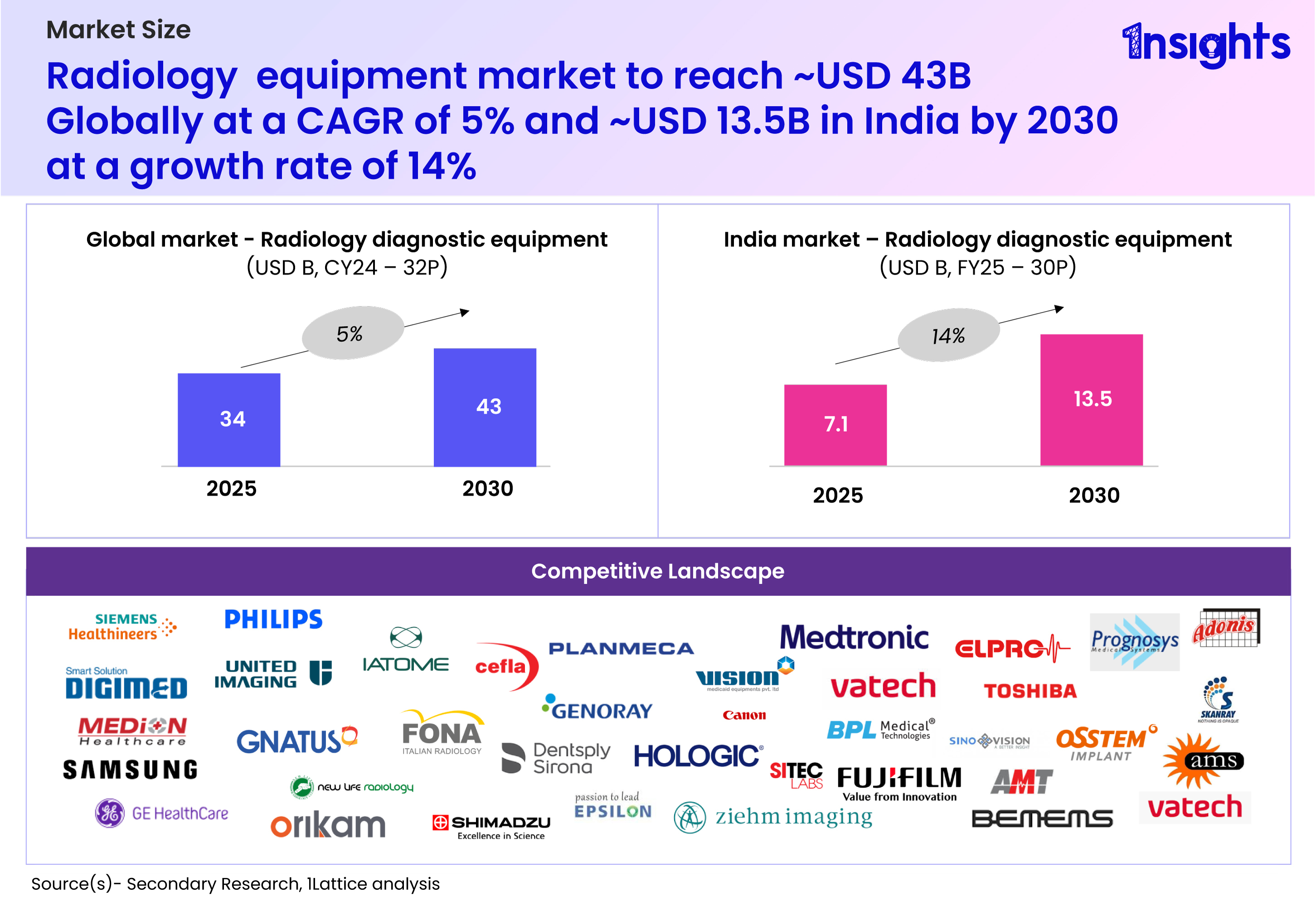
The radiology sector is witnessing rapid innovation across hardware, AI, and cloud technologies. Wireless and portable systems are gaining traction due to their speed, flexibility, and suitability in critical care settings. Devices like United Imaging’s ultra-maneuverable uDR380i pro and KA Imaging’s Reveal Mobi Pro dual-energy mobile X-ray are enhancing accessibility in emergency and rural contexts.
Artificial intelligence is being increasingly integrated into radiology equipment, driving improvements in image reconstruction, artifact correction, and workflow automation. Notably, Carestream’s DRX-Compass and DRX-Evolution Plus are leveraging AI for efficient diagnostics and enhanced image clarity.
Cloud-based imaging is also transforming the space. Philips is working with Amazon Web Services (AWS) to scale its diagnostic imaging services via the cloud, offering secure access and improved collaboration in teleradiology.