Over the past two decades, percutaneous catheter-based procedures have increased dramatically for a wide spectrum of structural heart diseases. A large number of patients who in the past would have required open heart surgery can now be treated with alternative, non-surgical therapies performed in cardiac catheterization laboratories.
Trends in interventional cardiology include the integration of Artificial intelligence which has a precise risk assessment and helps in early disease detection and formulation of personalized treatment strategies. Advancement in cardiovascular MedTech devices extends to robotics technology, 3D-printed patient-specific models, and wearables for continuous monitoring and early detection. Along with that, advancements in imaging technologies and digital simulation are revolutionizing the field of interventional cardiology. 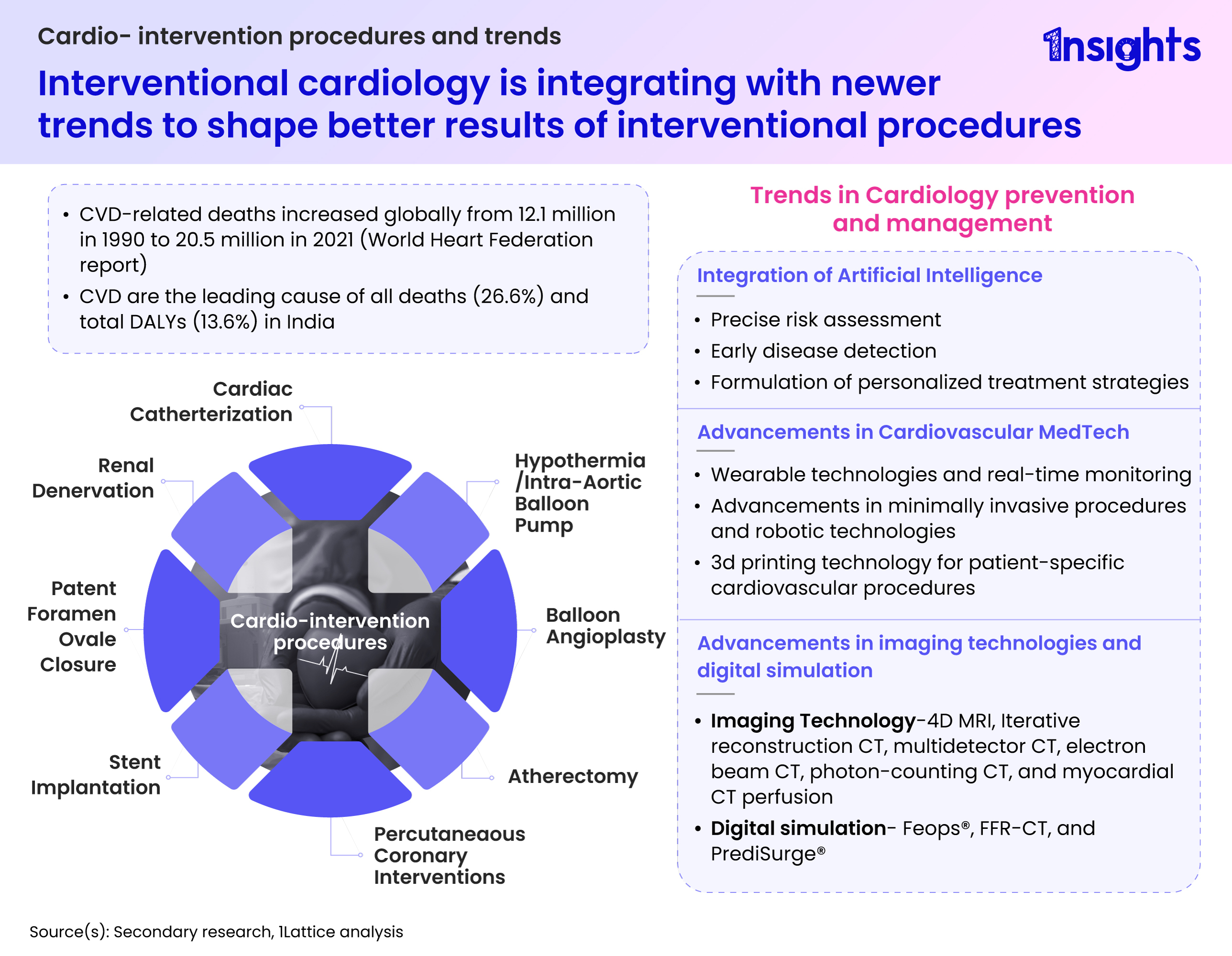
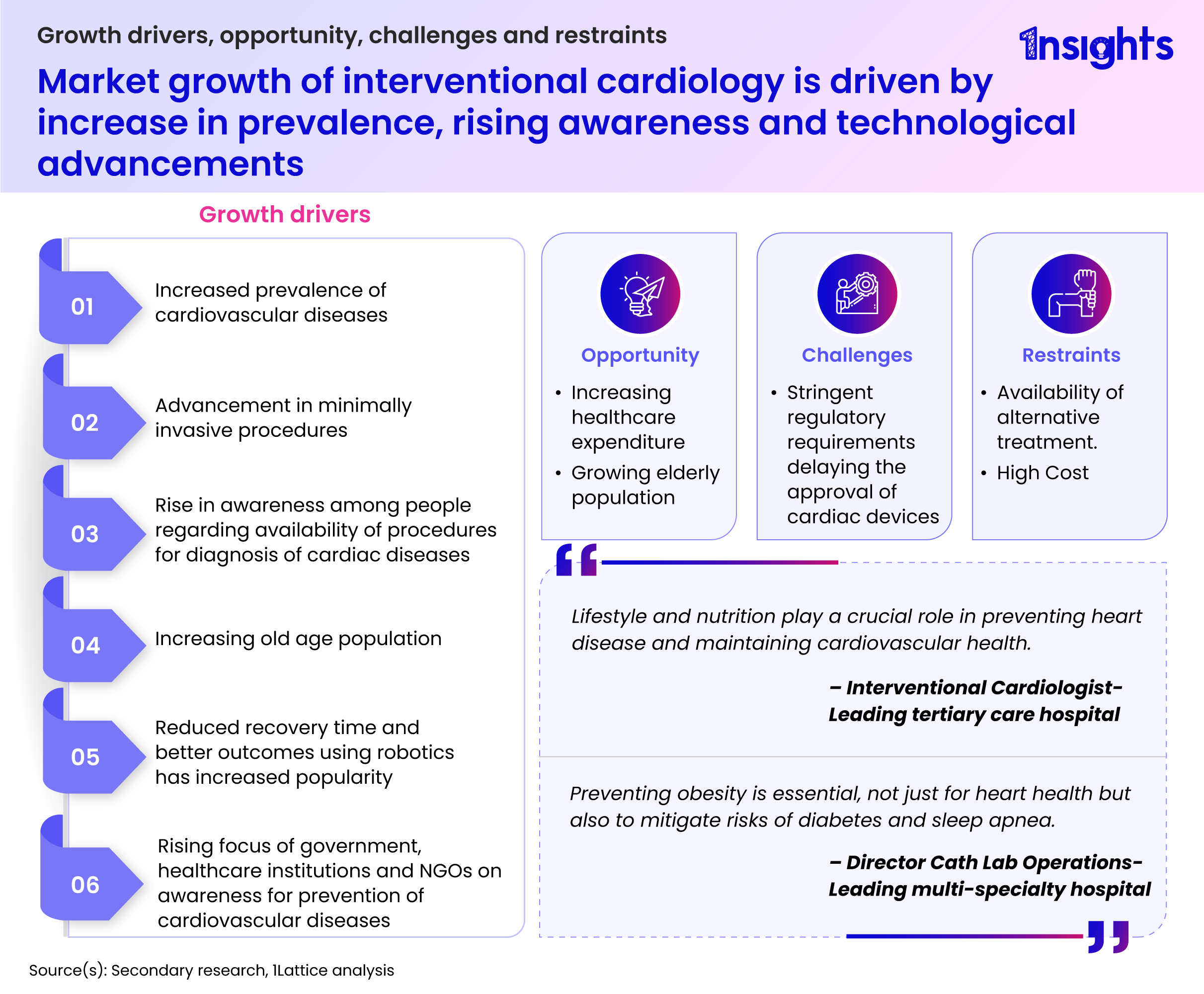
Growth drivers of the Interventional cardiology market:
Increased prevalence of cardiovascular diseases
Advancement in minimally invasive procedures
Rise in awareness among people regarding the availability of procedures for the diagnosis of cardiac diseases
Increasing old age population
Reduced recovery time and better outcomes using robotics have increased the popularity
Rising focus of government, healthcare institutions, and NGOs on awareness for prevention of cardiovascular diseases.
Increasing healthcare expenditure and a growing elderly population is the opportunities in the market but the availability of alternative treatment and high cost are major restraints. The major challenge of the interventional cardiology market is stringent regulatory requirements that delay the approval of new cardiac devices.
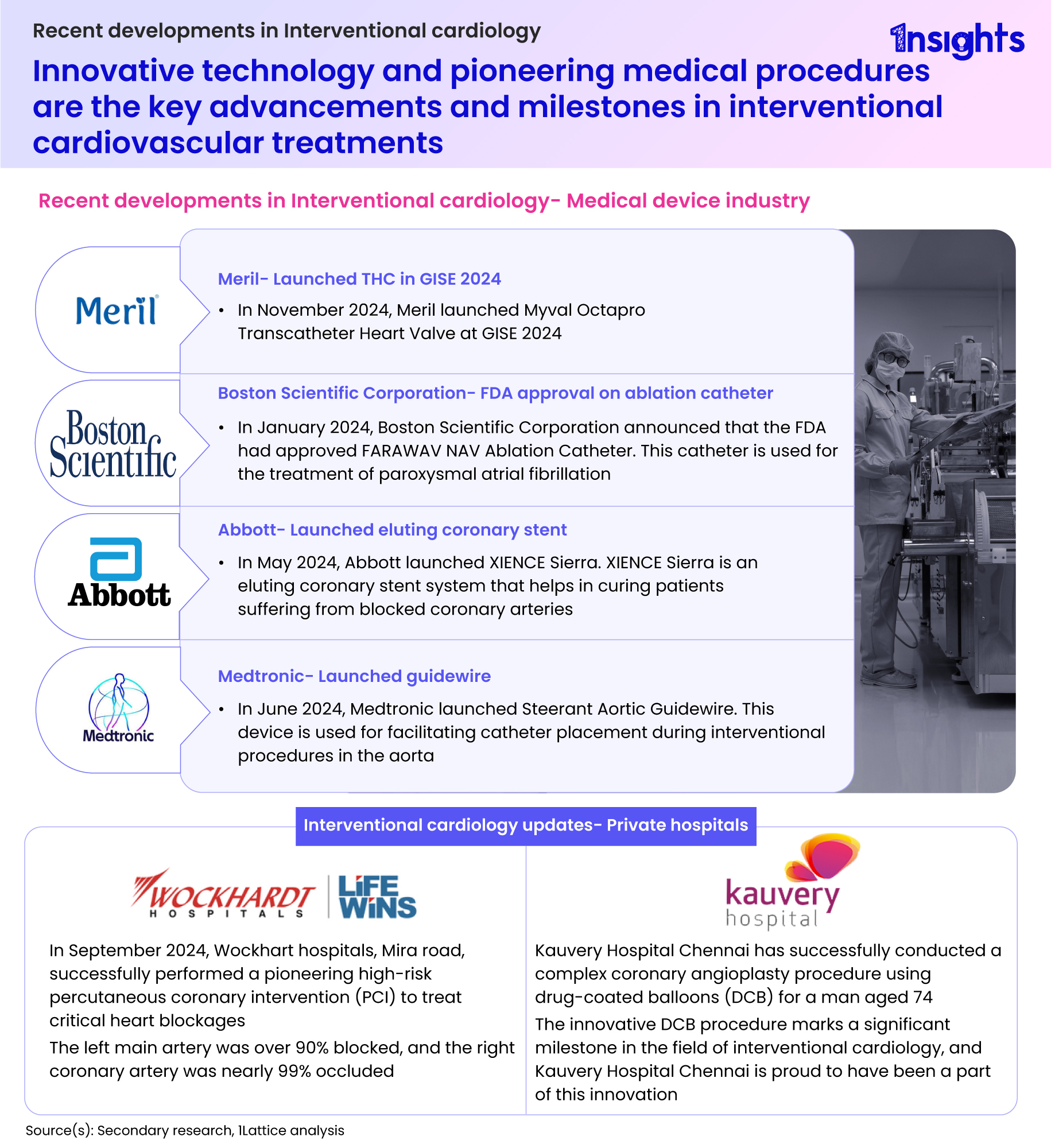
 The medical device industry dealing in cardio-interventional devices is developing and launching new technologies In November 2024, Meril launched Myval Octapro Transcatheter Heart Valve at GISE 2024.
In January 2024, Boston Scientific Corporation announced that the FDA had approved the ARAWAV NAV Ablation Catheter. This catheter is used for the treatment of paroxysmal atrial fibrillation. In May 2024, Abott launched XIENCE Sierra. XIENCE Sierra is an eluting coronary stent system that helps in curing patients suffering from blocked coronary arteries. In June 2024, Medtronic launched Steerant Aortic Guidewire. This device is used for facilitating catheter placement during interventional procedures in the aorta.
MedIQ has a detailed mapping of India’s healthcare industry across 13 major specialties, including cardio interventions. MedIQ covers ~95% of medium and large hospitals with a total number of ICU beds, OT, and cath lab details. MedIQ covers several surgeries and procedures across ownership, hospital size, city class, and type of hospital. MedIQ interprets that in the covered 45 cities, ~51% of cath labs are present in Metro cities, ~31% in Tier-1 cities, and only ~20% in tier-2 cities. Maximum number of cathlabs has been seen in standalone hospitals.