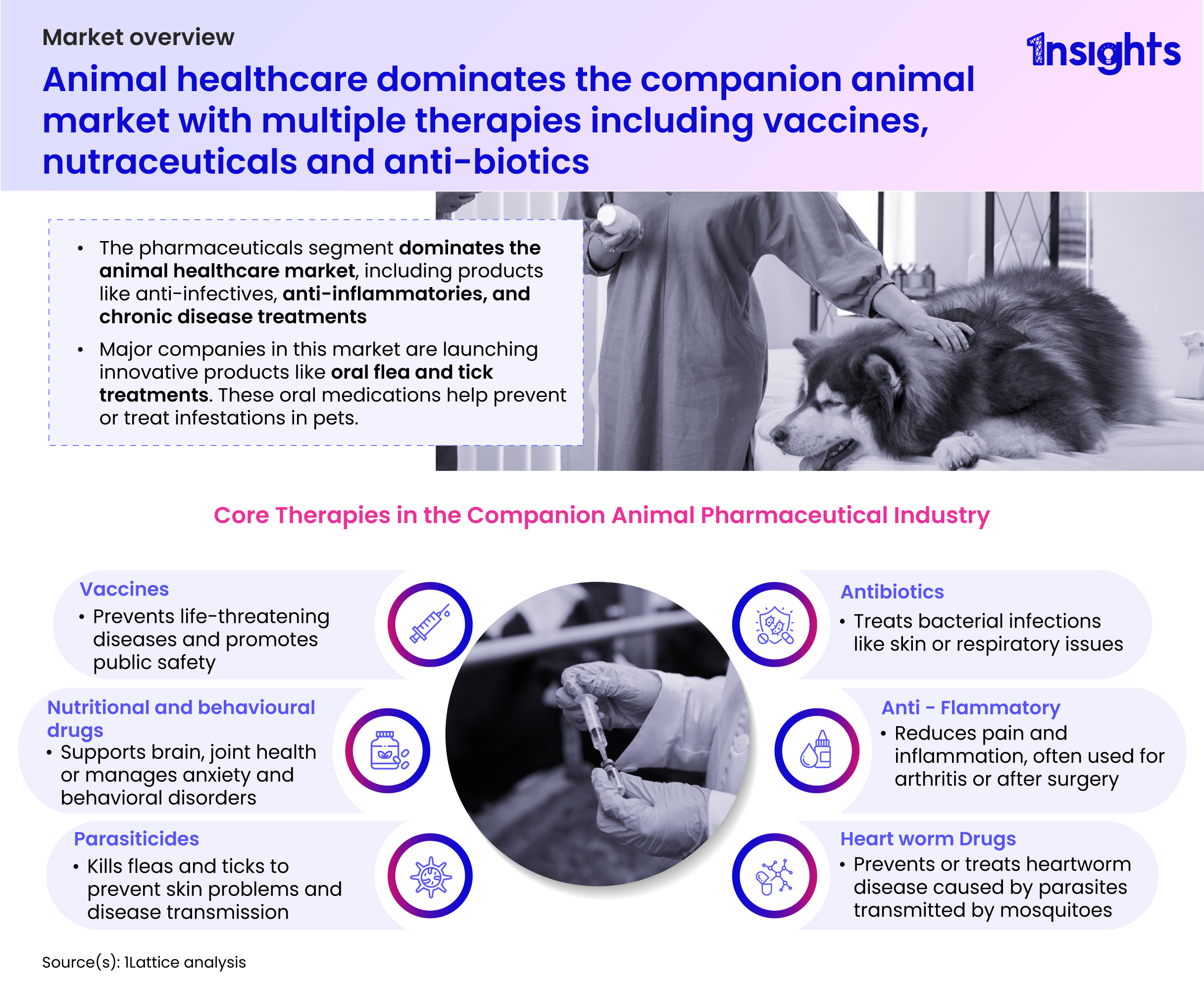
The companion animal pharmaceutical market is a specialized segment within the veterinary healthcare industry that focuses on the development and distribution of medicines and health products for domesticated pets, such as dogs and cats. Key therapies include antibiotics, vaccines, anti-inflammatory drugs, and parasiticides. These products help prevent life-threatening diseases and control pain, parasites, and behavioural issues. This market plays a crucial role in the broader pet care ecosystem, offering medical solutions that address a variety of conditions from routine infections to chronic diseases.
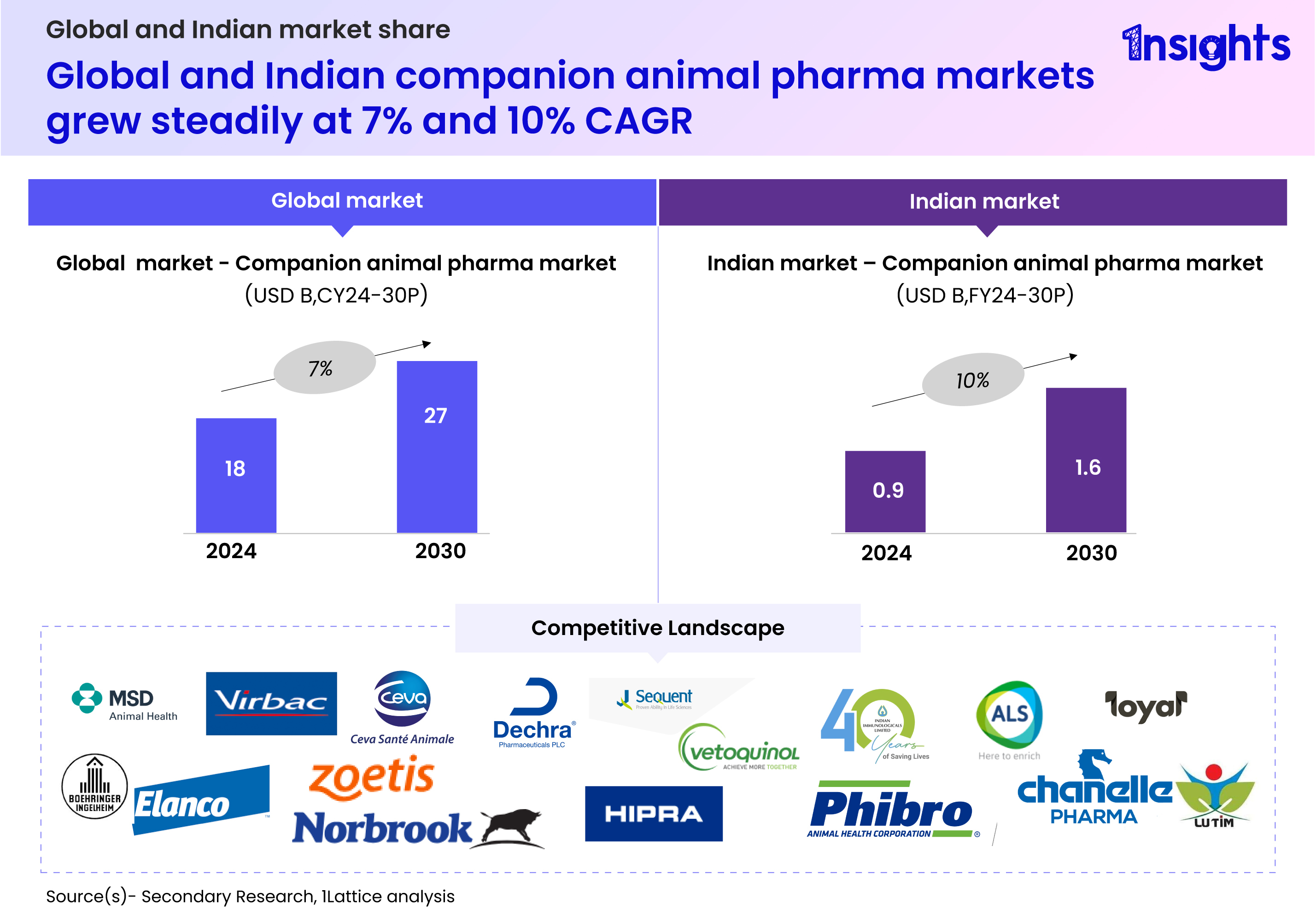
In 2024, the Global market stood at USD 18B and is expected to grow at a CAGR of 7%,
reaching USD 27 B in 2030. The Indian market is also witnessing rapid growth, expected to increase from USD 0.9 B in 2024 to USD 1.6 B by 2030, representing a CAGR of 10%
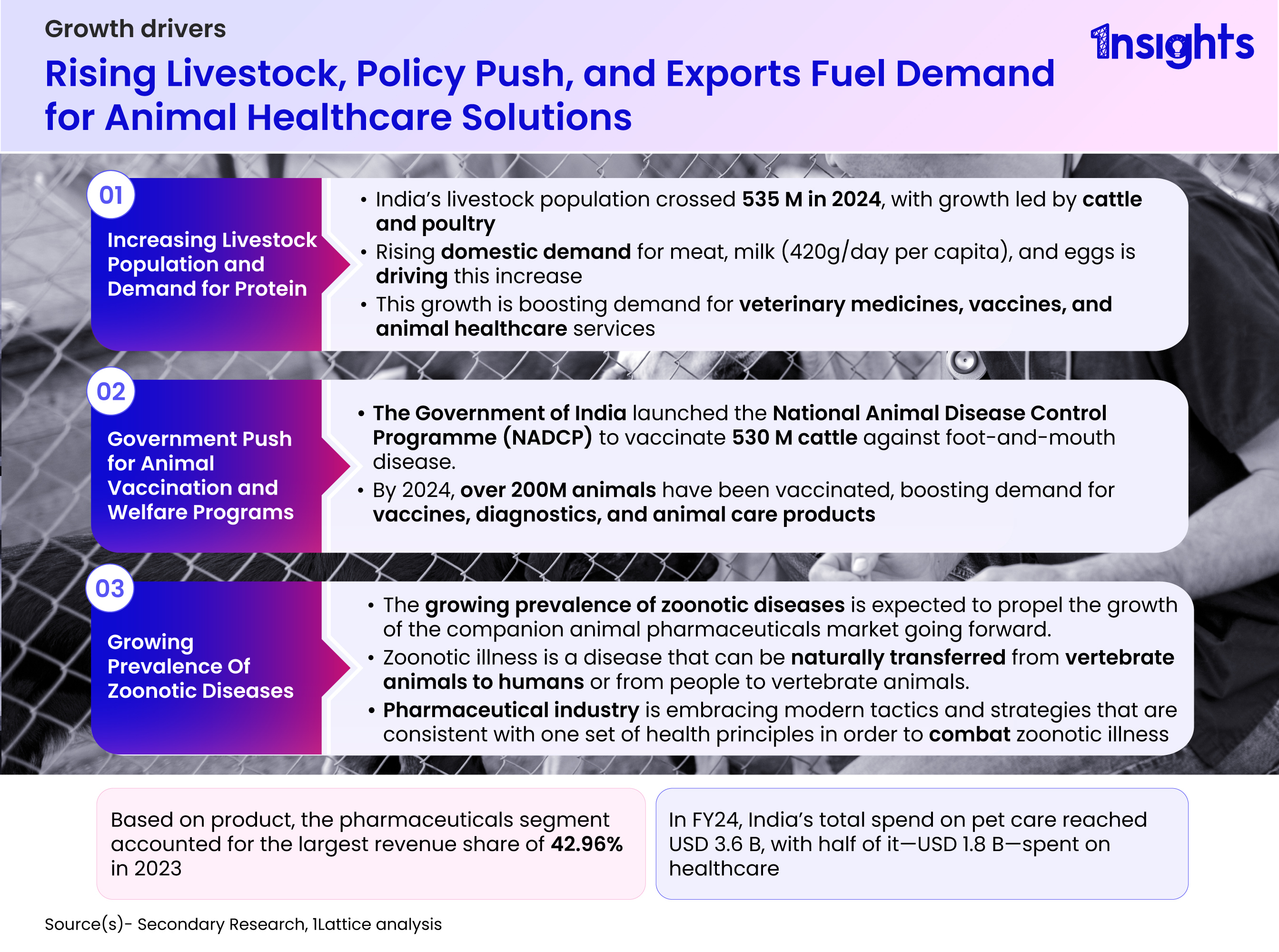
The key growth drivers of the companion animal pharma market
The companion animal pharma market in India is witnessing strong growth, driven by evolving consumer behavior and improved veterinary services
Rising urbanization and a growing middle class have led to increased pet ownership, especially in metro and tier-2 cities
Among the key growth drivers, the growing prevalence of zoonotic diseases stands out, as it has significantly heightened the focus on preventive and therapeutic care for pets
Additionally, the government's proactive efforts through large-scale vaccination and welfare programs such as the National Animal Disease Control Programme (NADCP) are boosting demand for animal vaccines, diagnostics, and pharmaceuticals
This is further supported by the entry of domestic and international pharma companies, the expansion of veterinary clinics, and increasing availability of pet insurance, collectively driving the demand for specialized, high-quality companion animal healthcare products in India.
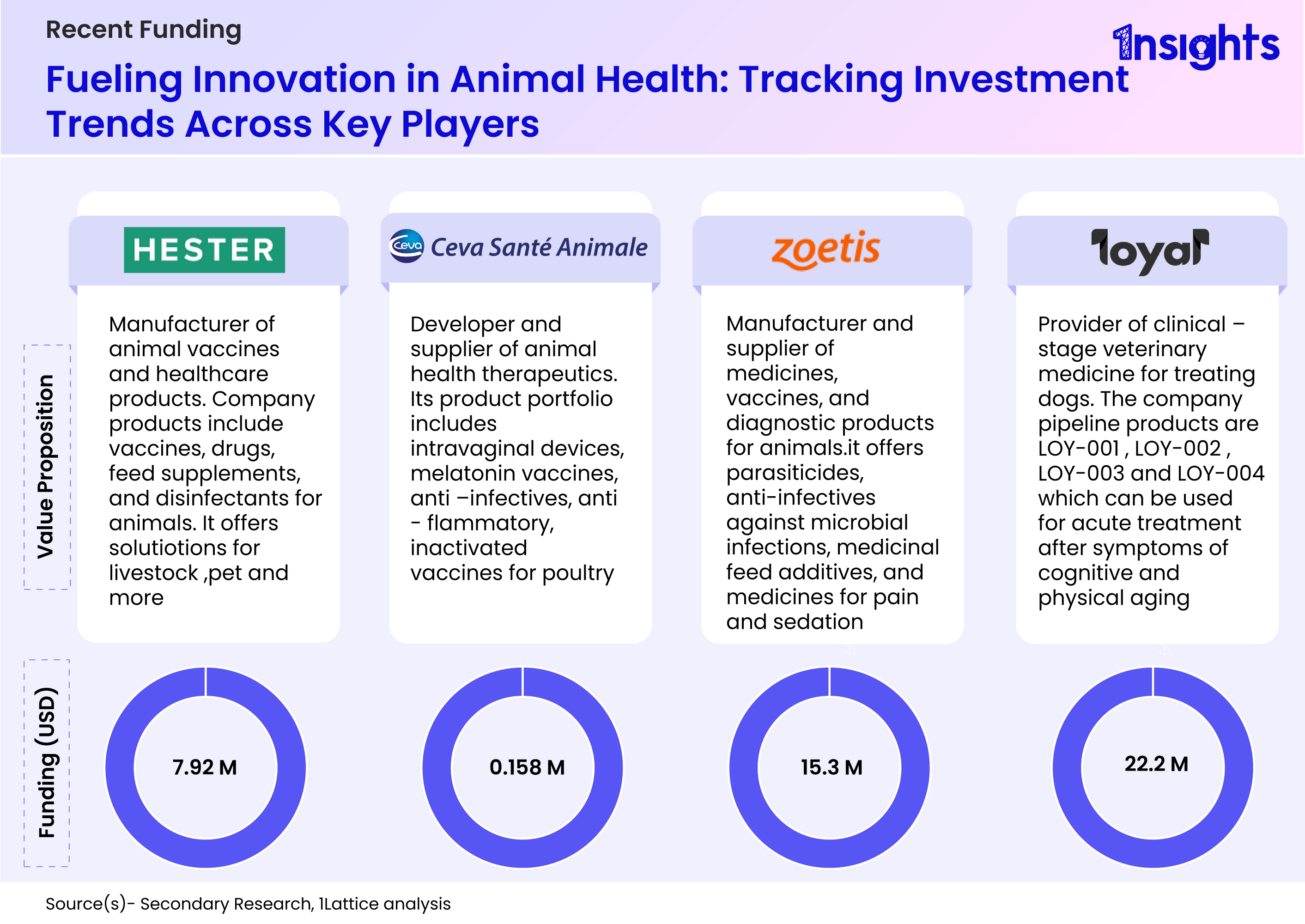
Recent funding trends reflect growing investor confidence in the animal health sector, as companies across the globe secure capital to accelerate innovation and scale operations. This influx of funding is helping players expand their therapeutic pipelines, develop targeted formulations, and enhance delivery mechanisms tailored to animal care