
India’s SpaceTech sector is entering a transformative phase, marked by rapid technological advancements, expanding private participation, breakthrough startup activity, and a renewed push toward becoming a major player in the global space economy. It captures the latest advancements across launch services, satellite technologies, space infrastructure, and downstream applications, offering insights into the growth and future potential of India’s space economy.
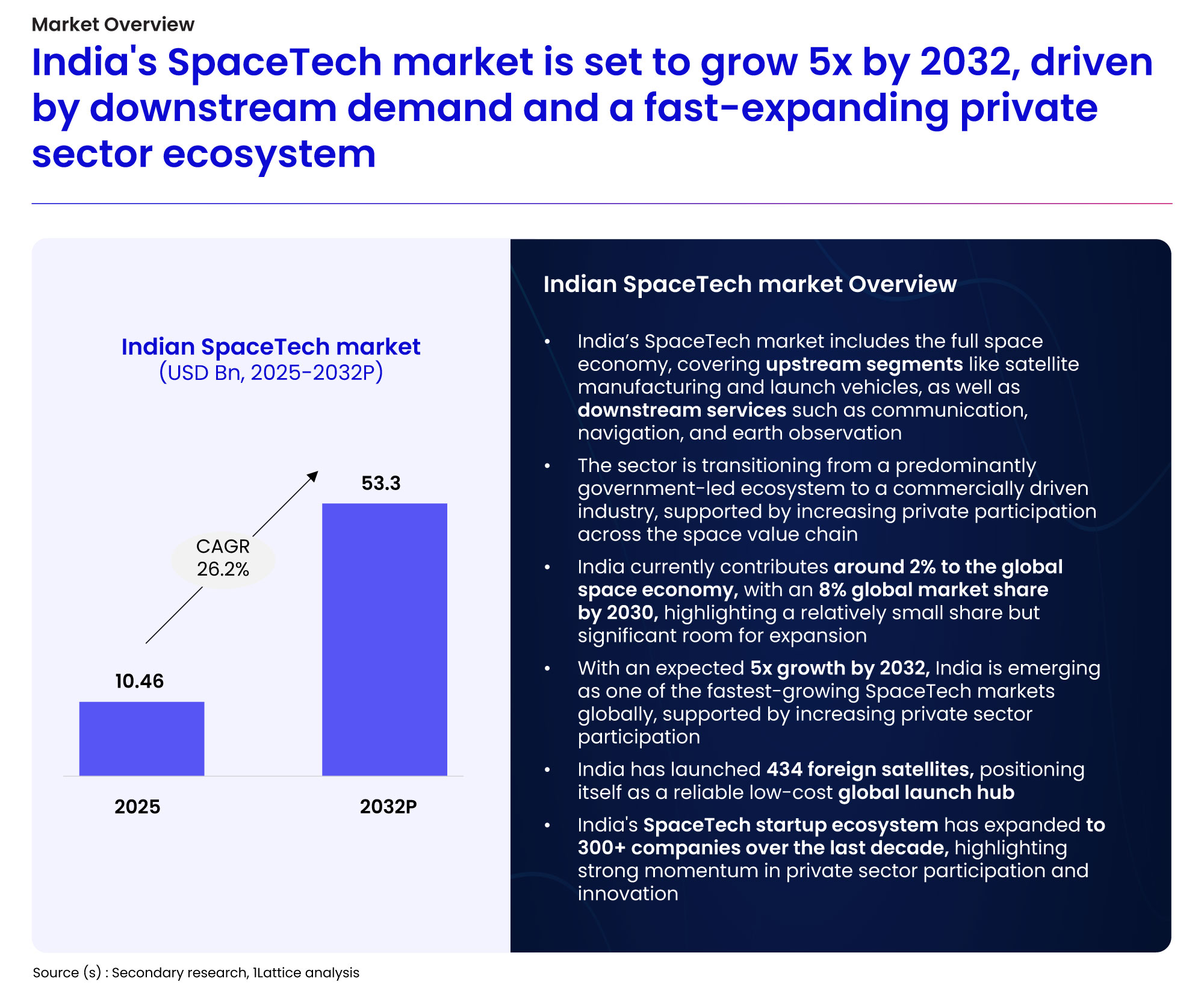
India's SpaceTech market is expected to grow nearly 5x by 2032, driven by increasing demand for satellite communication, earth observation, and navigation services. Supported by policy reforms, private sector participation, and a rapidly expanding startup ecosystem, India is strengthening its position as a global SpaceTech hub with strong growth across both upstream and downstream segments. The country currently contributes around 2% of the global space economy and is expected to increase its share to 8% by 2030.
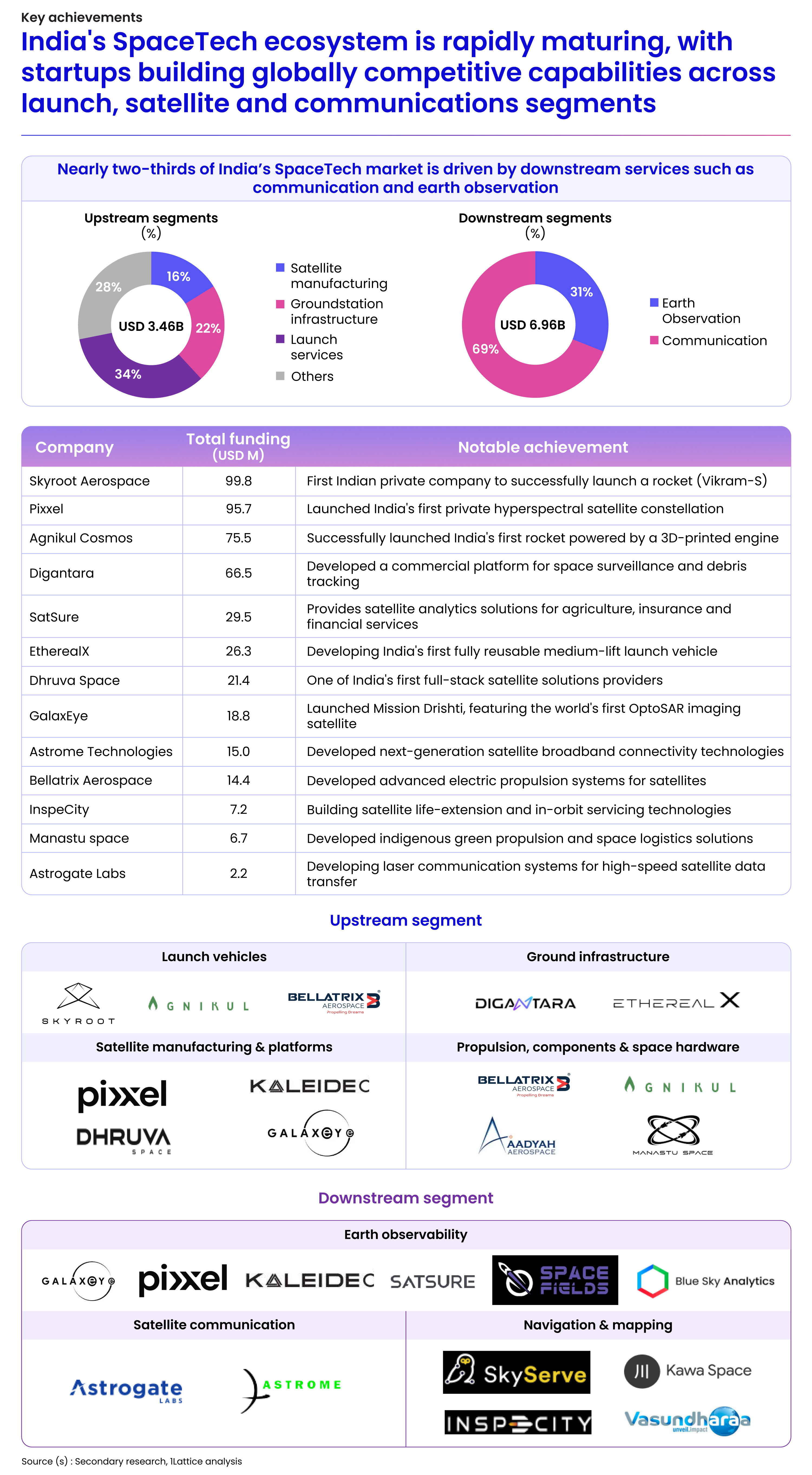
India's SpaceTech startup ecosystem has expanded across both upstream and downstream segments, with companies developing capabilities in launch vehicles, satellite manufacturing, ground infrastructure, propulsion systems, earth observation, communication, and navigation services.
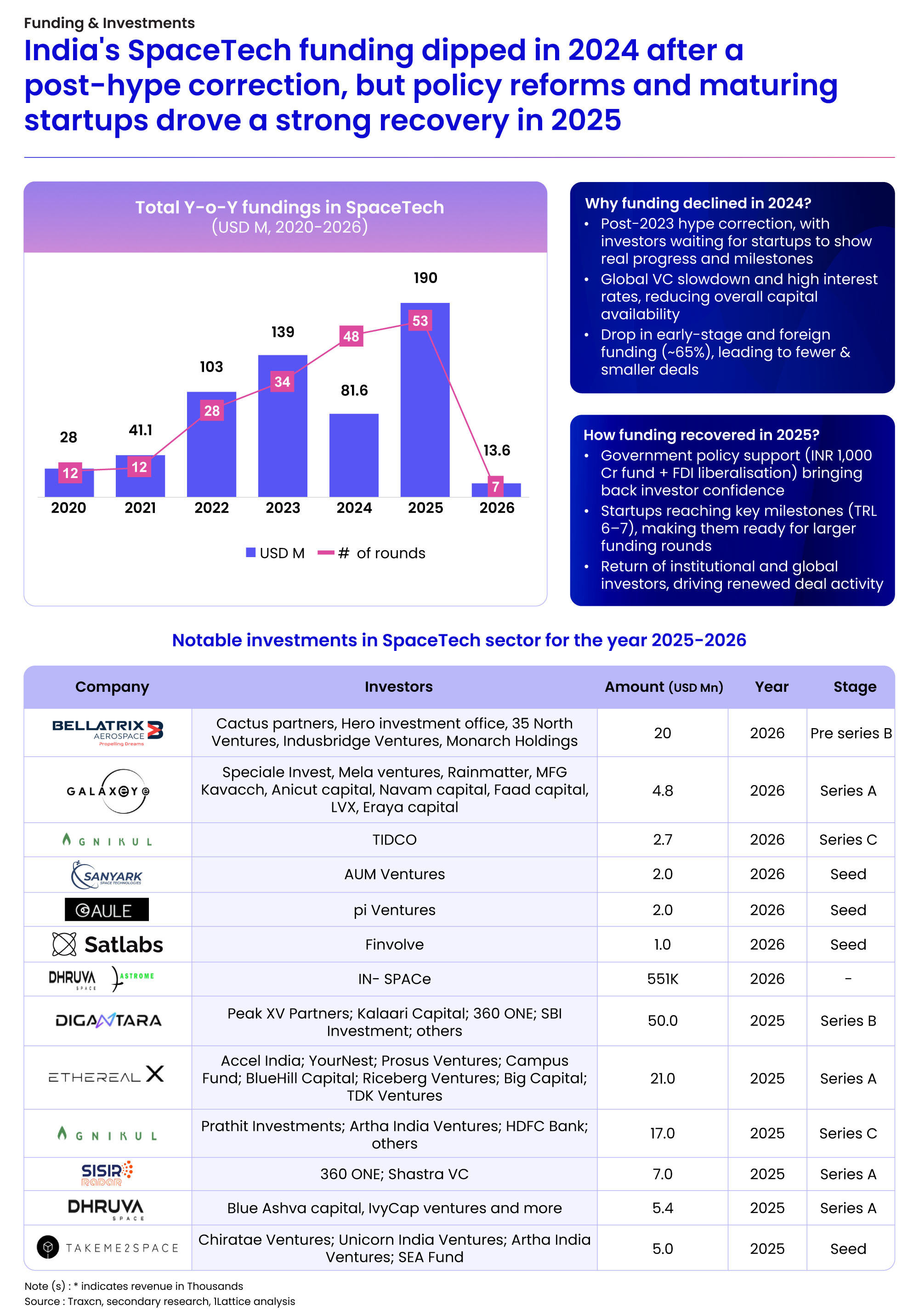
India's SpaceTech funding landscape witnessed a sharp decline in 2024, with funding falling to USD 7M across 7 deals, compared with USD 53M across 53 deals in 2023, reflecting a broader venture capital slowdown, higher interest rates, and increased investor focus on business traction and profitability. However, funding activity has begun to recover in 2025, supported by government initiatives such as the INR 1,000 crore Venture Capital Fund, liberalized FDI norms, and growing investor confidence in the sector.