
Having a ‘positive’ presence on social media has become imperative for any brand – especially so for D2C consumer players. Beyond customer ratings and NPS scores, a positive presence could entail favorable customer reviews, word-of-mouth, or other similar qualitative sentiments across forums. But how does one ‘measure’ such qualitative inputs and make them actionable? At PGA Labs, we have developed a proprietary toolkit to objectively track these subjective inputs – in the form of ‘Social Listening’.
Social Listening as a methodology enables brands to keep a track of their online mentions and conversations, monitor campaigns, brand reach, and real-time user sentiment analysis. Actively tracking online behavior assists leaders in understanding customer engagement, assessing customer insights, and measuring brand reach to their target audience – assisted through influencers or other channels of mass media.
Key inputs for Social Listening
Social Listening actively measures 3 key inputs for any brand
- User sentiment
- Historical reviews and feedback
- Competitive benchmarking
User sentiment captures positive, neutral, and negative mentions at an overall level across online channels/platforms. A sentiment score is calculated as % positive mentions - % negative mentions (akin to an NPS score), to cull out the scoring for Target vs competing brands. For instance, in the below example we understand sentiment scores for an evolving D2C brand across Twitter, LinkedIn, YouTube, Facebook, Web Search, and other online discussion forums/blogs.
Quick snapshot on how Social Listening enables brands to monitor their positioning and user sentiments across social media platforms.
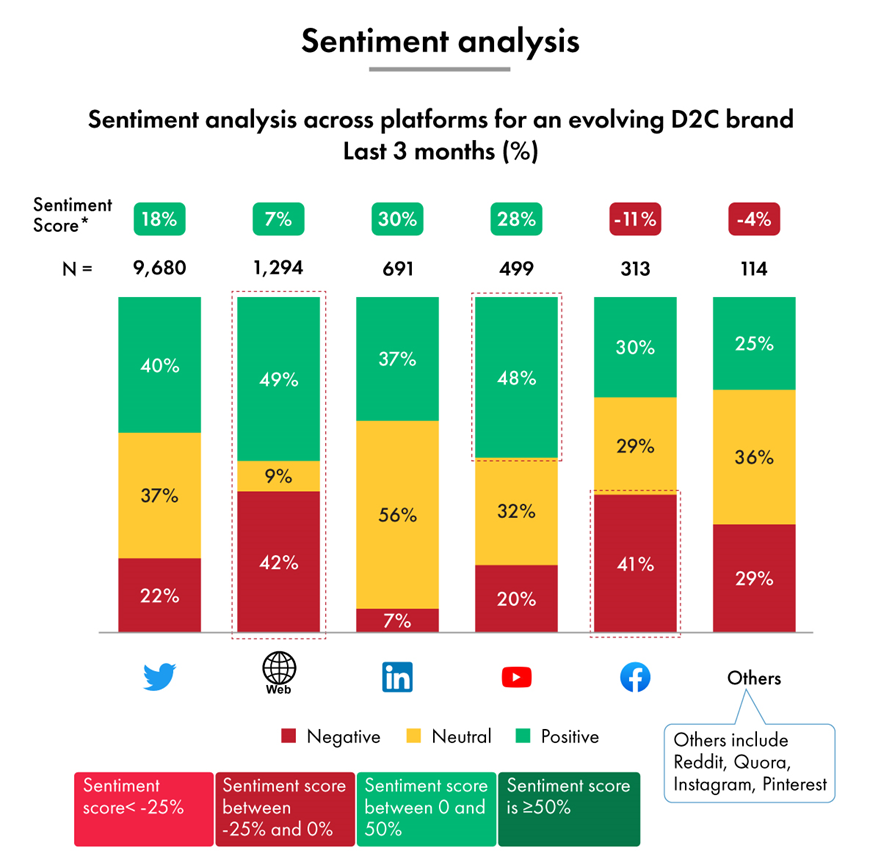
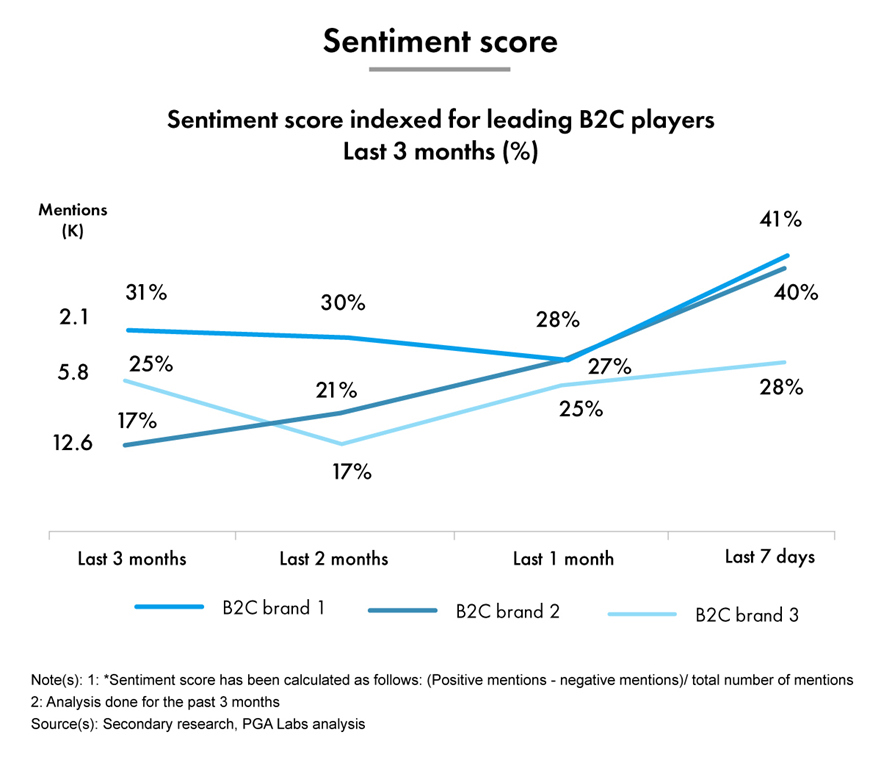
Sentiment score evaluation emerges as one of the top by-products of Social Listening to understand the perception of your Target brand vs competitors. The data extraction enabled score indexing assists stakeholders to understand disrupting trends in the market and derive positive leverage out of the customer sentiment.
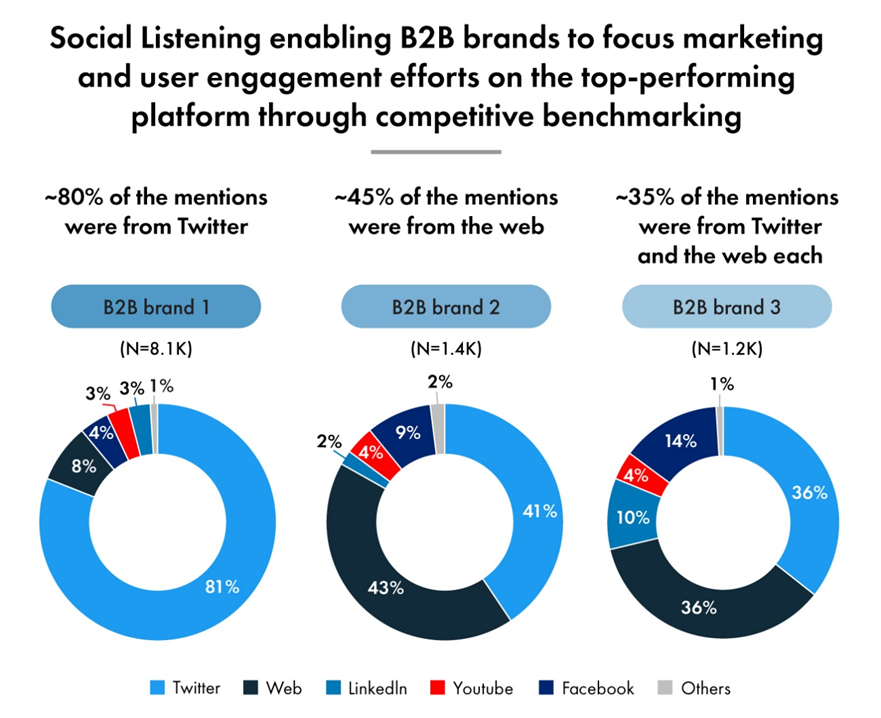
Benchmarking these sentiment scores against traditional brands (in the same industry) and other competing brands (in the same segment) enables target brands to understand how it fares at an absolute and relative level against their competitors. For instance, in the below example we understand how Social Listening enables B2B brands to focus marketing and user engagement efforts on platforms having high public mentions.
With growing competition in the
influencer-driven awareness and sentiment market, brands are finding it
critical to track customer sentiments at all stages – from PMF to scaling
growth. Going forward, we anticipate Social Listening to become an integral
part of investment diligence, especially for Internet-first brands around
Ecommerce, Media & Entertainment, or any other consumer-first platform.