Overview
Lately, ESG assessment is becoming an integral part of new-investment theses and evaluations. Investors are now tracking environmental, social, and governance issues as part of their financial analysis while evaluating companies to identify material risks and growth opportunities. While this is understandable for ClimateTech-focussed investors, what makes ESG important for financial sponsors overall?
In the following sections, we look to understand why is ESG analysis becoming a critical value for investors – not just for ClimateTech-focussed investments but for the overall portfolio.
What is ESG?
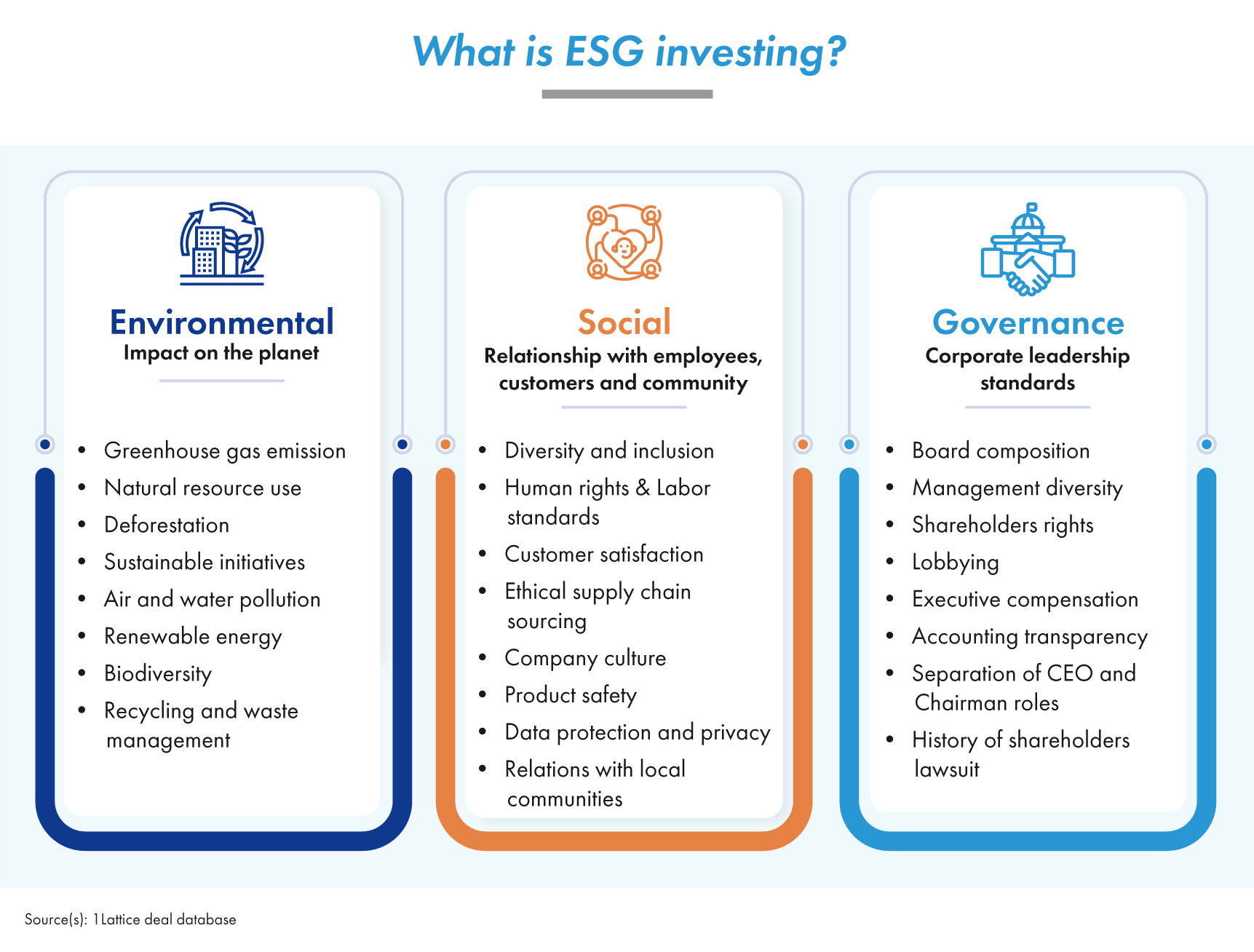
ESG actively measures 3 key inputs:
- Environment – Impact on the planet
- Social – Relationship with employees, customers, suppliers, and community
- Governance – Corporate leadership standards
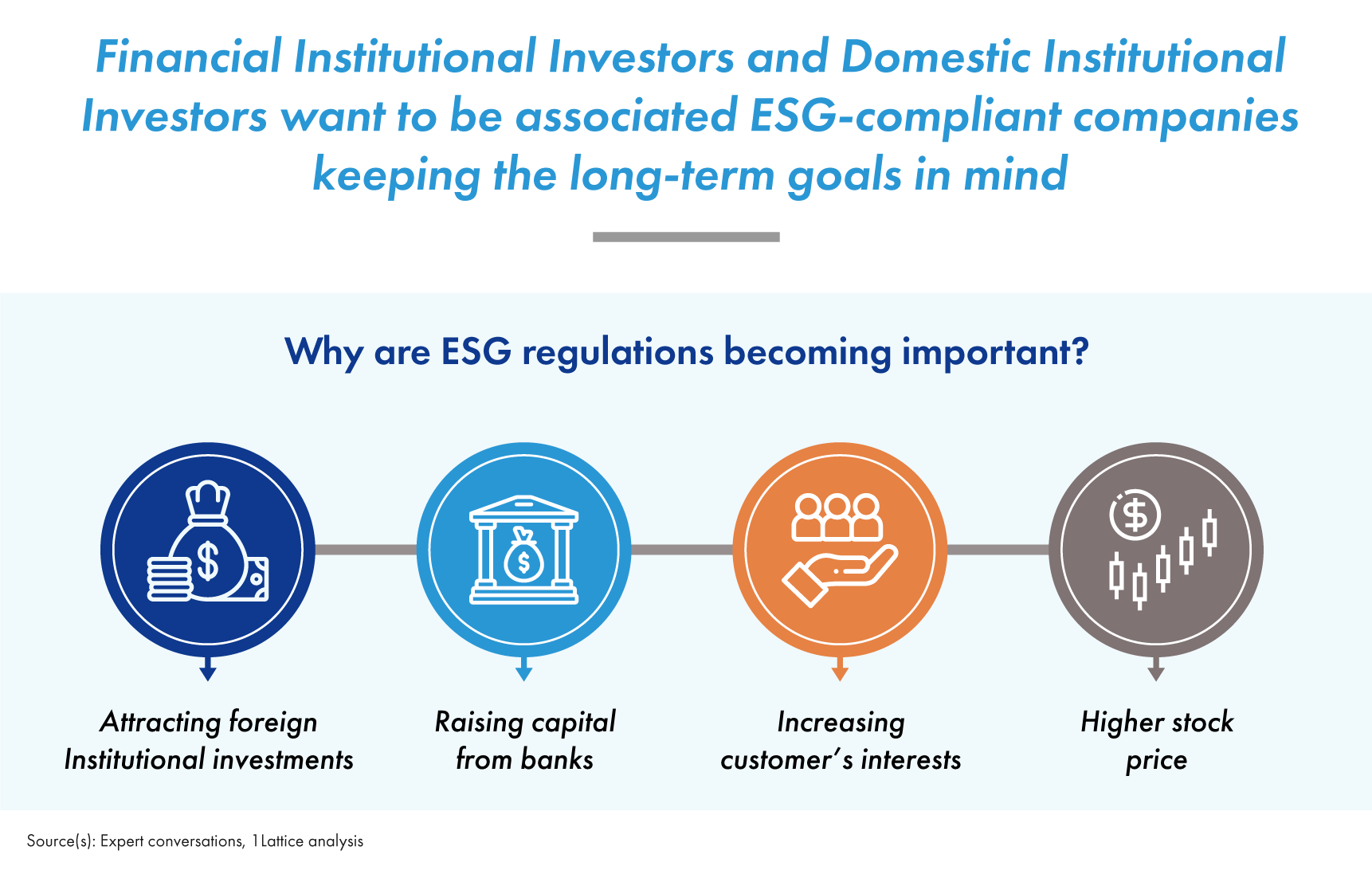
Over the last few quarters, Investment Committees on some of the large investment funds are closely monitoring “ESG-compliance” of their portfolio (and potential target investments), keeping their long-term goals in mind. Several leading investment funds are committed to making their overall portfolio net-zero in the long-term, and hence evaluating global ESG reporting & norms regularly. This not only impacts funds focusing on ClimateTech as a space, but even their pipeline and upcoming investments across sectors overall.
While adoption and awareness on ESG is still evolving, we have seen some developments at a global stage along these lines. For instance, many banks, including Asian Banks like in South Korea & Japan, are denying lending short-term finances to companies if they are not complying with ESG norms in turn affecting day-to-day operations at organizations. Moreover, aware and environment-conscious customers want to be associated with companies with sustainable products and are compelling companies to follow ESG norms more closely. A lot of global B2B customers in the Americas & Europe have already committed to reducing their carbon emissions.
Diligent & transparent reporting in BRSR with full disclosures affects the brand & image of the company. Many Foreign & Domestic institutional investors are developing hesitance to invest in an ESG non-compliant organizations – both in private and public markets.
While adoption and awareness on ESG is still evolving, we have seen some developments at a global stage along these lines. For instance, many banks, including Asian Banks like in South Korea & Japan, are denying lending short-term finances to companies if they are not complying with ESG norms in turn affecting day-to-day operations at organizations. Moreover, aware and environment-conscious customers want to be associated with companies with sustainable products and are compelling companies to follow ESG norms more closely. A lot of global B2B customers in the Americas & Europe have already committed to reducing their carbon emissions.
Diligent & transparent reporting in BRSR with full disclosures affects the brand & image of the company. Many Foreign & Domestic institutional investors are developing hesitance to invest in an ESG non-compliant organizations – both in private and public markets.
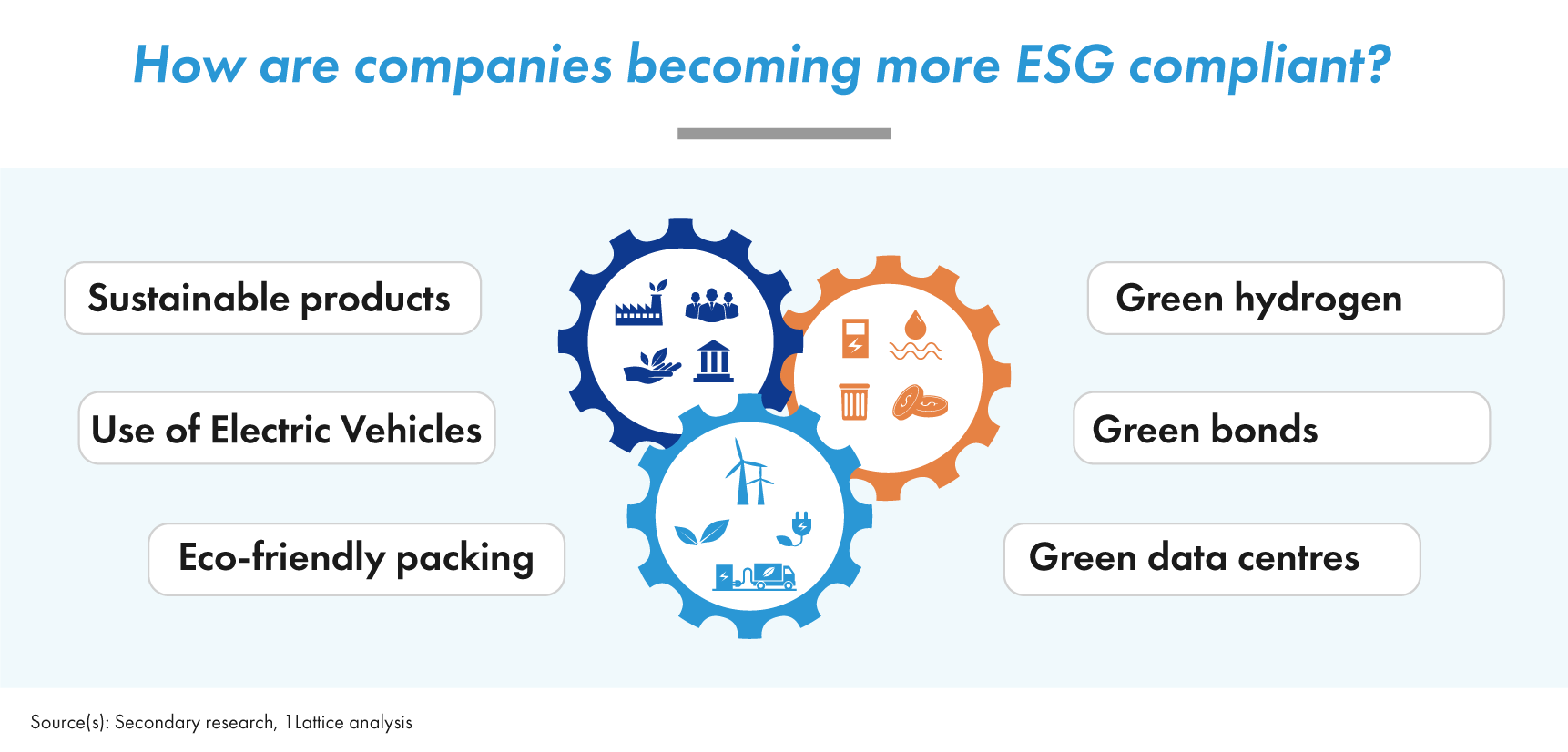
How are organizations driving ESG compliance?
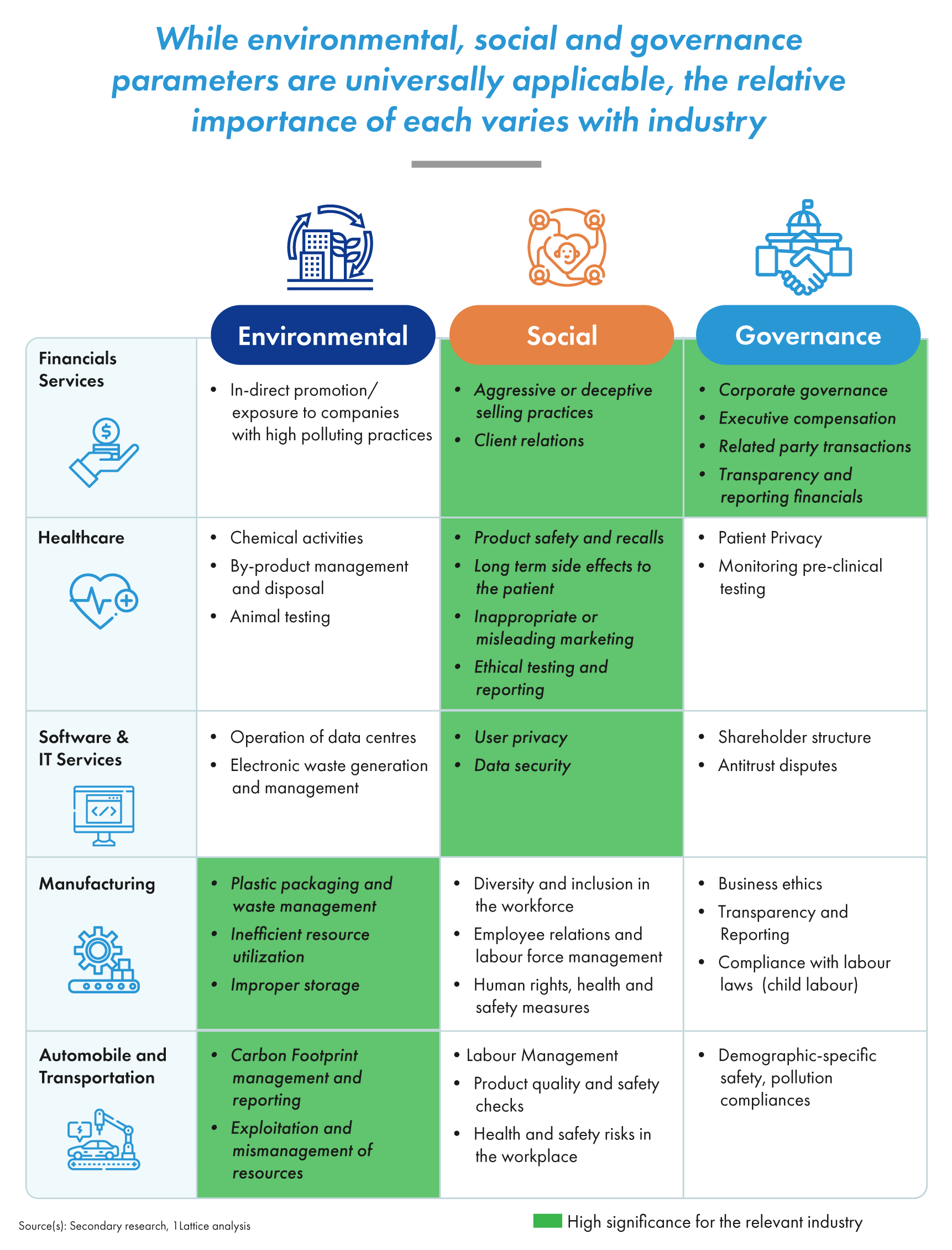
While there is no defined approach to calculate ESG, there are multiple analytical frameworks to address these considerations. The relative importance of each metric varies across different industries, hence it is also important to understand and evaluate metrics on an industry level to form a complete picture of risks and opportunities for each industry. For example, some of the important metrics to evaluate a healthcare player include product safety & recalls, long-term side effects to the patient, inappropriate or misleading marketing, and ethical testing and reporting – whereas corporate governance, related party transactions and transparency and reporting financials become critical for a financial services player.
1Lattice proprietary methodology to rate and monitor ESG compliance
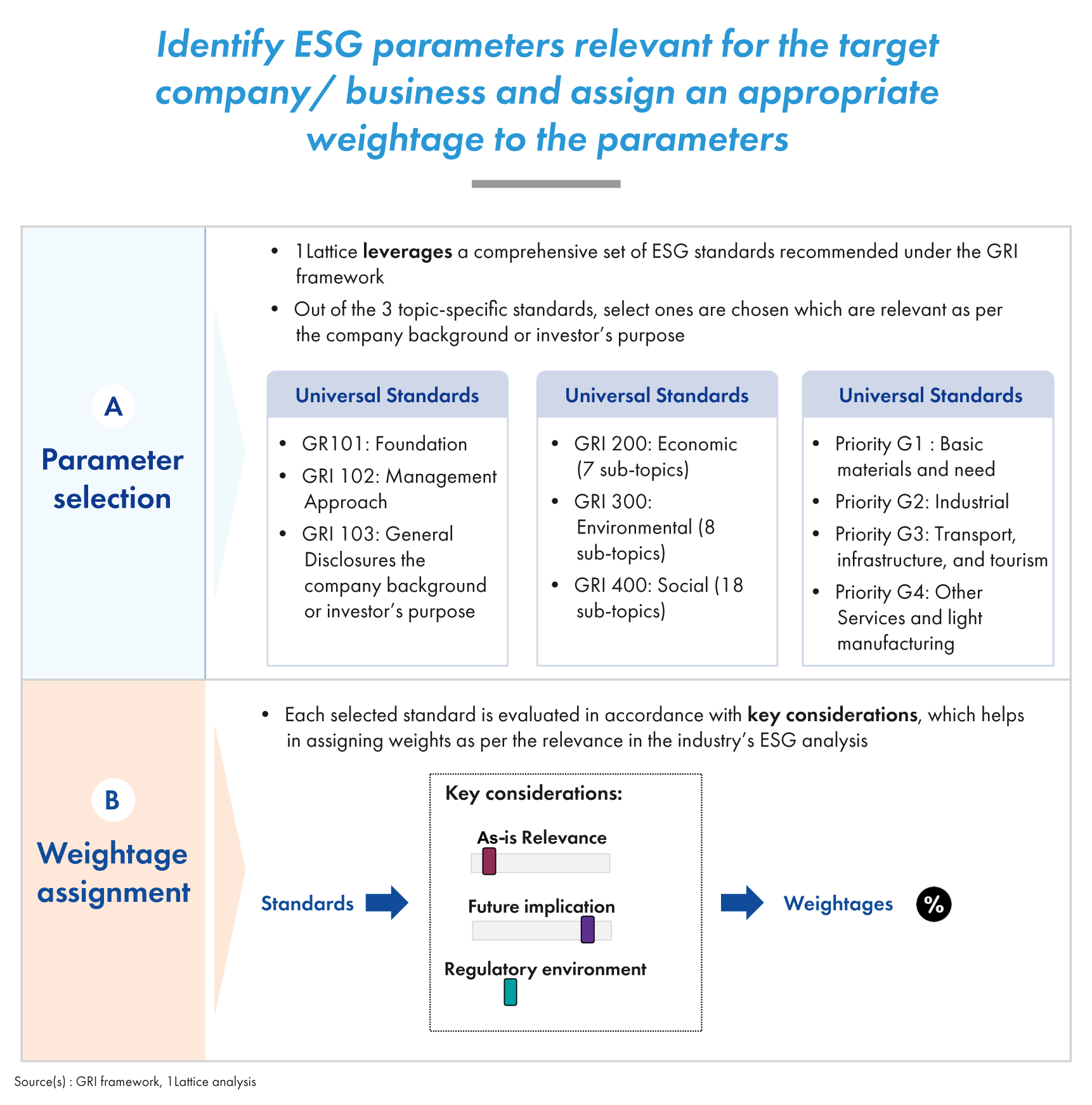
- At 1Lattice, we have designed a detailed toolkit to evaluate ESG compliance based on a proprietary assessment methodology along the E-S-G parameters – both at an overall level + vertical-specific sub-segments
- Identify industry-specific parameters, attributing a weightage to each basis relevance and key considerations
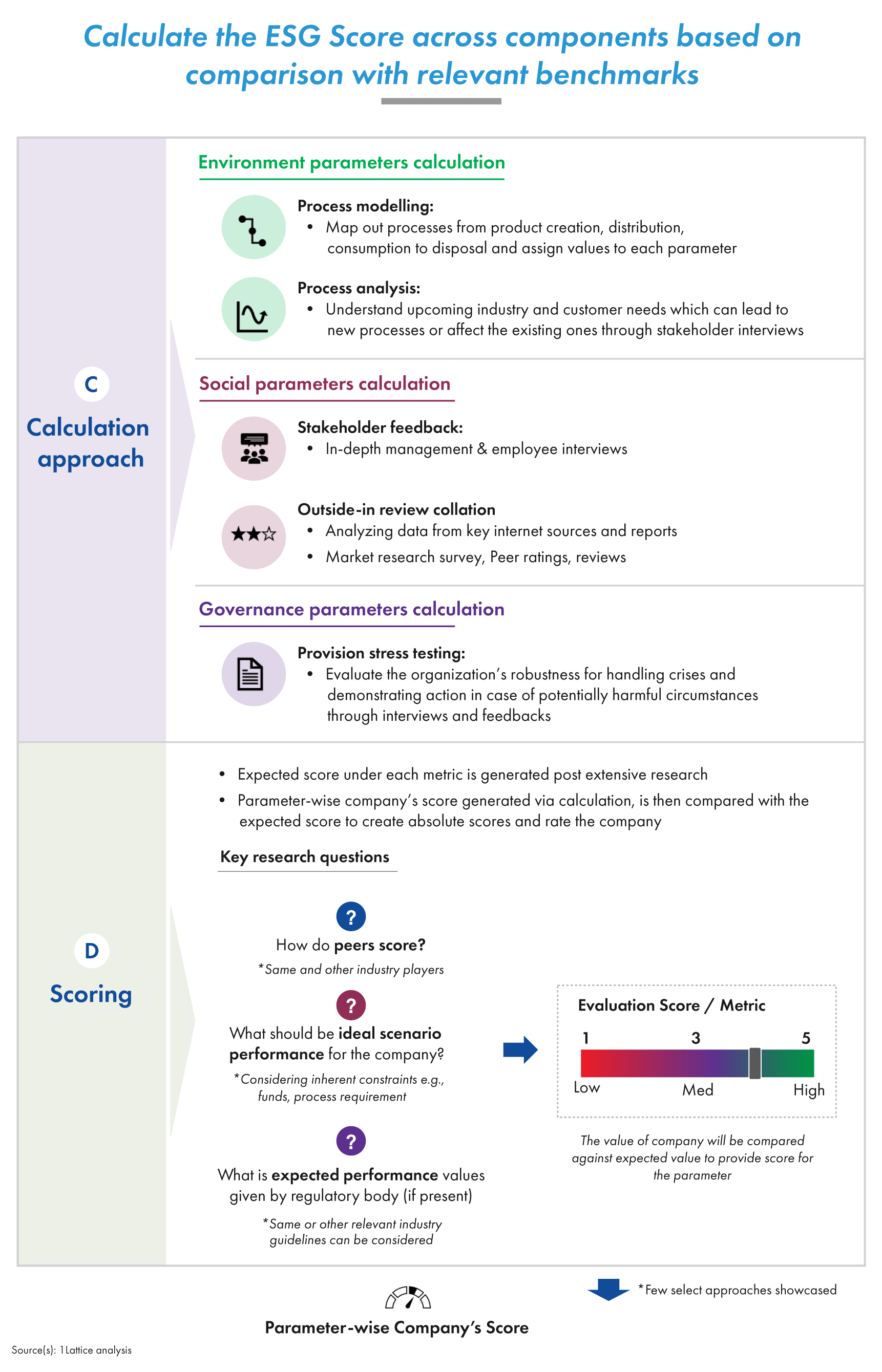
- Design a calculation methodology across the Environment, Government and Social parameters – accounting the purpose of investor/investments
- Conduct extensive primary interviews with relevant stakeholders (and secondary/literature research on the sector) to rate the target across each metric
- Compile the overall scorecard + report with detailed, actionable insights across key segments