
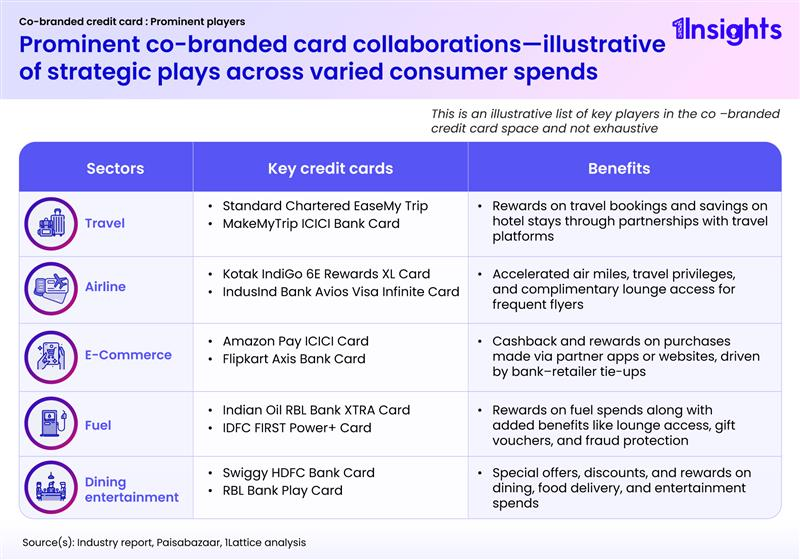
They offer accelerated rewards and exclusive benefits when used with partner brands across sectors such as e-commerce, fuel, entertainment, travel, and more. These partnerships create a distinct value proposition for cardholders by enhancing personalization and aligning benefits with specific brand ecosystems. Unlike traditional credit cards designed for general usage, co-branded cards encourage brand-specific spending, thereby driving stronger customer engagement and long-term loyalty.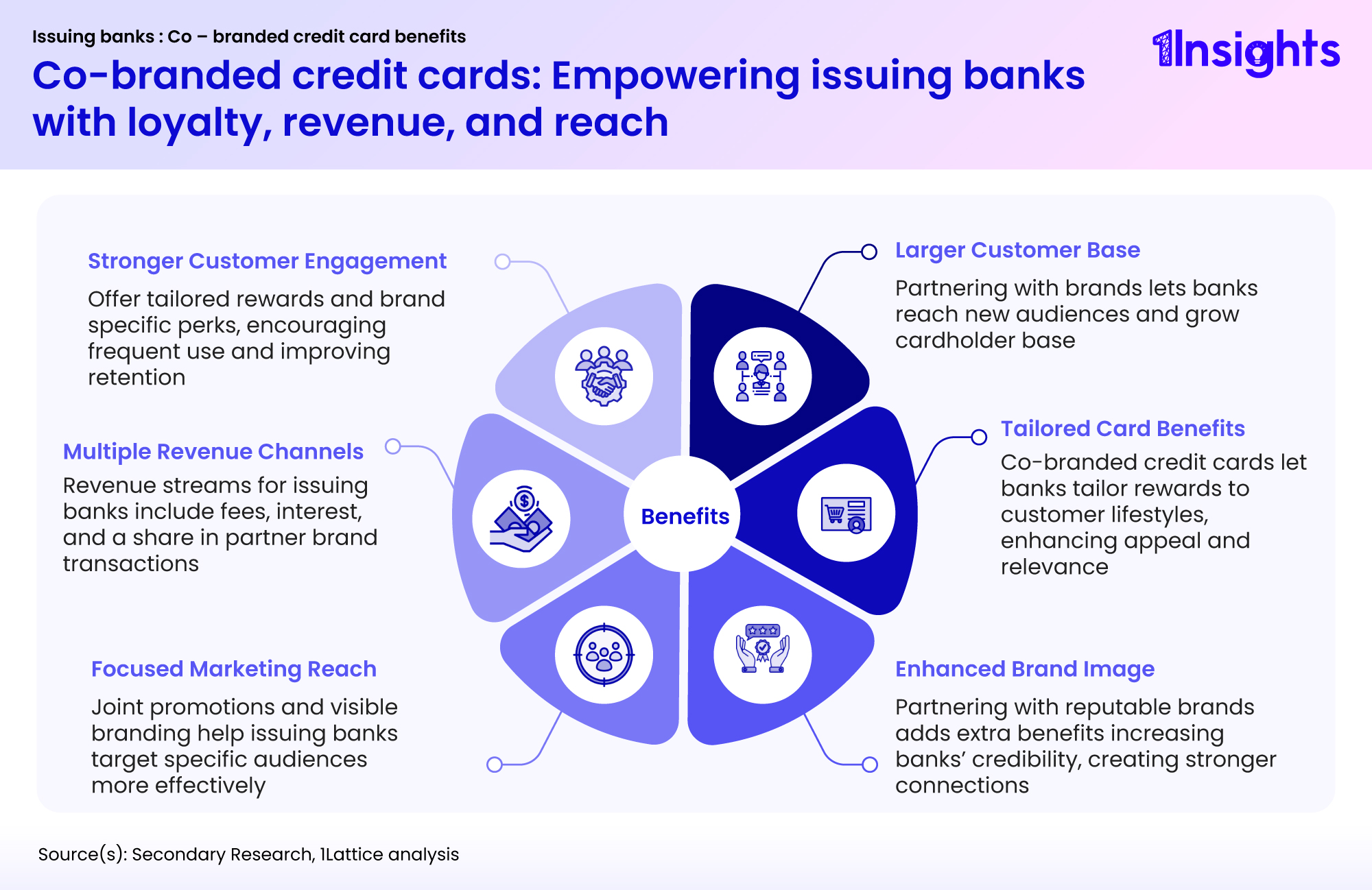 Co-branded credit cards have gained prominence across multiple consumer sectors, with banks partnering with brands in travel, airlines, e-commerce, fuel, and dining. These partnerships are designed to offer targeted benefits such as rewards, discounts, and privileges tailored to specific spending categories, enhancing customer engagement and loyalty through sector-specific value propositions. Below are some illustrative examples of co-branded credit card partnerships across these key sectors
 Co-branded credit cards are evolving rapidly, fuelled by demand for personalized rewards and the rise of Card-as-a-Service (CaaS) platforms. CaaS removes traditional barriers by offering end-to-end solutions covering compliance, fraud prevention, and card management. With Application Programming Interfaces (APIs) and Software Development Kits (SDKs), businesses can quickly embed features such as virtual cards, wallets, and real-time analytics without building infrastructure from scratch. This reduces time to market, enhances customer engagement, and opens new revenue streams. The future of co-branded cards lies in speed, personalization, and customer-centric experiences rather than scale alone.
Overview